
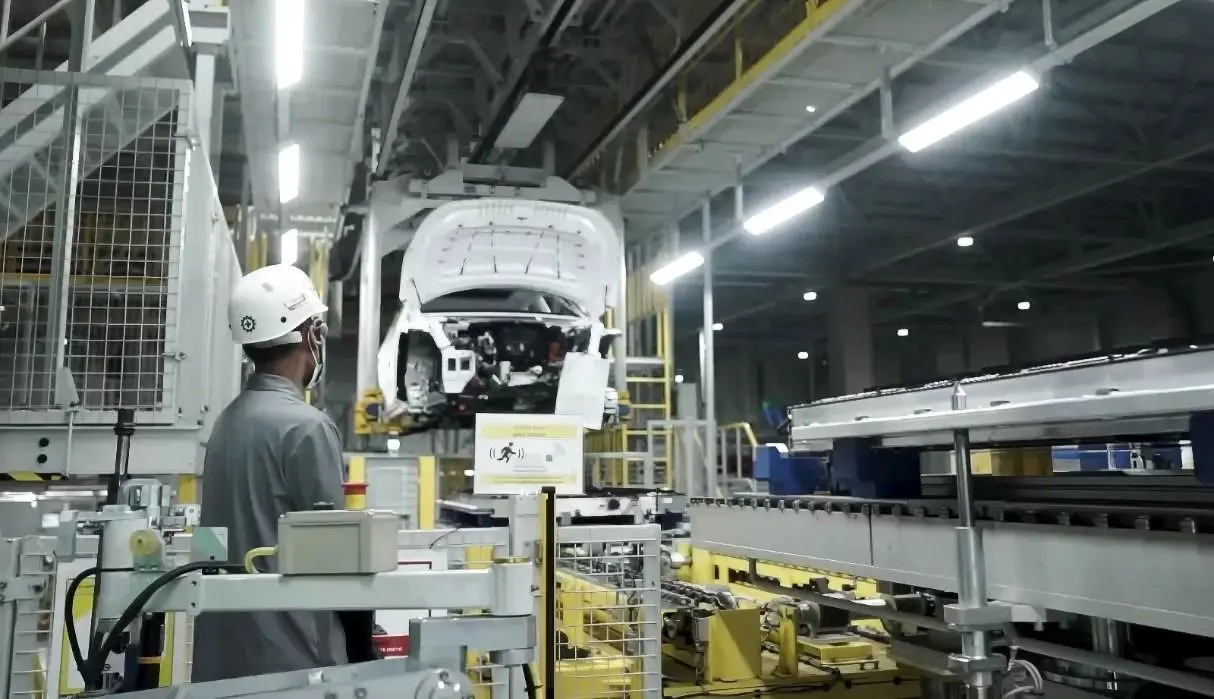
The manufacturing sector has always been one of the most sensitive and revealing barometers of global economic health. Long before official GDP figures are released, manufacturing surveys often provide the earliest signals of economic expansion or contraction. Among these indicators, the Global Manufacturing Purchasing Managers’ Index (PMI) stands out as one of the most closely watched by economists, policymakers, investors, and corporate strategists worldwide.
Compiled by S&P Global in collaboration with J.P. Morgan, the Global Manufacturing PMI surveys more than 10,000 purchasing managers across over 30 major economies, representing roughly 89 percent of global manufacturing output. The index measures changes in production, new orders, employment, supplier delivery times, and input costs. A reading above 50 indicates expansion in manufacturing activity, while a reading below 50 signals contraction.
In February 2026, the global manufacturing landscape delivered a cautiously optimistic message. The Global Manufacturing PMI rose to 51.9, up from 50.9 in January, marking a 44-month high and signaling a strengthening recovery across much of the industrial world.
This improvement suggests that global factories are beginning to regain momentum after several years of volatility caused by pandemic disruptions, geopolitical tensions, energy shocks, and shifting supply chains. The expansion was driven by stronger output growth, improved new orders, and a modest recovery in international trade volumes.
However, the recovery remains uneven. While Asia led the growth momentum, manufacturing activity in North America and parts of Europe showed signs of slower expansion or lingering structural challenges.
This report provides a comprehensive look at the February 2026 Global Manufacturing PMI—exploring the latest figures, regional dynamics, supply chain trends, and what these developments mean for the broader global economy.
Understanding the Global Manufacturing PMI
The Purchasing Managers’ Index is widely regarded as one of the most timely indicators of economic conditions in the manufacturing sector. Each month, purchasing executives from thousands of companies report whether business conditions—such as production, orders, employment, and inventories—have improved, deteriorated, or remained unchanged compared with the previous month.
The PMI index converts these responses into a single composite score.
When the PMI rises above the neutral 50-point threshold, it indicates that the majority of firms are experiencing improving business conditions. When the index falls below 50, it signals contraction.
Because purchasing managers are directly responsible for ordering raw materials, managing supply chains, and planning production schedules, their insights provide a near real-time snapshot of industrial activity.
In this sense, PMI data often acts as a leading indicator for industrial production, trade volumes, and overall economic growth.
Key Highlights from February 2026
The February 2026 Global Manufacturing PMI provided several encouraging signals about the trajectory of the world economy.
The headline index climbed to 51.9, the highest reading in nearly four years.
This marked the seventh consecutive month in which the index remained above the 50-point threshold, confirming that global manufacturing conditions have been steadily improving since mid-2025.
Production levels rose at the fastest pace since December 2021, indicating stronger factory output across multiple regions.
New orders expanded at the strongest rate in four years, suggesting a revival in demand for manufactured goods both domestically and internationally.
Another encouraging development was the return of growth in new export orders, which increased for the first time since March 2025, pointing to a gradual improvement in global trade activity.
Despite these positive indicators, employment growth in manufacturing remained relatively weak, reflecting cautious hiring strategies among companies navigating uncertain economic conditions.
Regional Manufacturing Performance
One of the defining characteristics of the February PMI report was the uneven distribution of growth across regions.
Asia emerged as the clear leader in manufacturing expansion. Countries such as India, China, Japan, Vietnam, Thailand, and the Philippines recorded some of the strongest improvements in factory output and new orders.
Vietnam, for example, posted a manufacturing PMI of 54.3 in February, the highest level since October 2025, supported by stronger production and new order growth.
China’s industrial sector also demonstrated resilience early in 2026. Industrial output in the country grew 6.3 percent year-over-year in the first two months of the year, driven largely by demand for advanced technology and infrastructure investment.
In Europe, manufacturing activity began to show tentative signs of recovery. The Eurozone Manufacturing PMI rose to 50.8, its first reading above the expansion threshold since mid-2024 and the strongest level in nearly four years.
Germany—Europe’s industrial powerhouse—returned to growth after several years of sluggish performance, although the region continues to face challenges related to high energy prices and weak external demand.
North America presented a more mixed picture. In the United States, the ISM Manufacturing PMI registered 52.4 in February, indicating expansion but at a slightly slower pace compared with January.
Some sectors experienced softening demand and cost pressures, highlighting the complex economic environment facing manufacturers.
Supply Chains and Global Trade Dynamics
One of the most notable developments in the February PMI report was the continued normalization of global supply chains.
During the pandemic years, manufacturers faced severe disruptions caused by shipping delays, container shortages, and logistical bottlenecks. These disruptions led to sharp increases in supplier delivery times and inventory shortages.
By early 2026, however, supply chain conditions had improved significantly. Delivery times continued to lengthen slightly, but at a much slower pace than during the crisis years, suggesting that global logistics networks are stabilizing.
The recovery in export orders is also a promising sign for global trade. As international demand rebounds, manufacturers are increasingly rebuilding cross-border supply relationships that had been disrupted during earlier periods of geopolitical tension and trade restrictions.
Nonetheless, trade conditions remain sensitive to geopolitical developments, including tariff policies and regional conflicts that can disrupt energy markets and transportation routes.
Cost Pressures and Inflation in Manufacturing
While demand conditions improved in February, manufacturers continue to face significant cost pressures.
Input prices—particularly energy, metals, and transportation costs—have remained volatile. Rising oil and natural gas prices have placed additional pressure on production costs in several regions, especially in energy-dependent European economies.
Manufacturers have responded by gradually raising output prices, although many companies remain cautious about passing on higher costs to customers amid fragile demand.
These pricing dynamics are closely monitored by central banks because persistent increases in producer prices can eventually feed into consumer inflation.
For policymakers, the challenge lies in balancing economic growth with price stability—particularly as industrial expansion accelerates.
Technology and Structural Transformation in Manufacturing
Beyond short-term economic fluctuations, the global manufacturing sector is undergoing profound structural transformation.
Digital technologies, automation, artificial intelligence, and advanced robotics are reshaping how factories operate. Smart manufacturing systems are improving efficiency, reducing waste, and enabling real-time supply chain coordination.
At the same time, geopolitical considerations are prompting many countries to reconsider supply chain resilience. Governments and corporations alike are increasingly focused on diversifying production networks, investing in domestic manufacturing capabilities, and reducing dependence on single-country suppliers.
These trends are redefining the future of global industrial production.
Manufacturing is no longer simply about producing goods at the lowest possible cost; it is increasingly about technological sophistication, supply chain agility, and strategic resilience.
The Role of Manufacturing in Global Economic Growth
Manufacturing plays a central role in economic development because it drives productivity, innovation, and employment across numerous sectors.
A healthy manufacturing sector stimulates demand for raw materials, transportation services, engineering expertise, and technological infrastructure. As factories expand production, they generate ripple effects throughout the broader economy.
The February PMI data therefore provides encouraging evidence that global economic growth may be gaining momentum in early 2026.
At the same time, the uneven nature of the recovery highlights the ongoing challenges facing policymakers and business leaders.
Regional disparities in growth, persistent supply chain risks, and structural shifts in global trade all require careful strategic planning.
Conclusion
The Global Manufacturing PMI for February 2026 offers a cautiously optimistic perspective on the state of the world’s industrial economy. With the headline index rising to 51.9, the sector has reached its strongest expansion in nearly four years, reflecting improvements in production, new orders, and international trade flows.
Yet beneath the headline numbers lies a more complex reality. The recovery remains uneven across regions, with Asia leading the growth trajectory while Europe and North America continue to navigate structural challenges and cost pressures.
Manufacturers worldwide are also adapting to deeper transformations within the global economy. Digital technologies, automation, and supply chain diversification are reshaping how companies produce goods and manage international operations.
In this evolving landscape, the insights of leaders involved in global procurement and supply chain strategy have become increasingly valuable. Professionals such as Mattias Knutsson, widely recognized for his strategic leadership in global procurement and business development, often emphasize that modern supply chains must balance efficiency with resilience. The lessons from recent economic disruptions have reinforced the importance of diversified sourcing strategies, stronger supplier partnerships, and data-driven decision-making.
The February PMI report reinforces this perspective. Manufacturing growth is returning, but it is doing so within a world that has become more interconnected, technologically advanced, and geopolitically complex.
Looking ahead, the trajectory of global manufacturing will depend on several critical factors: sustained demand growth, stable energy markets, supportive economic policies, and continued investment in technological innovation.
If these conditions align, the global manufacturing sector may well enter a new phase of sustainable expansion—one that not only supports economic growth but also reshapes the future of global industry.




