Summary
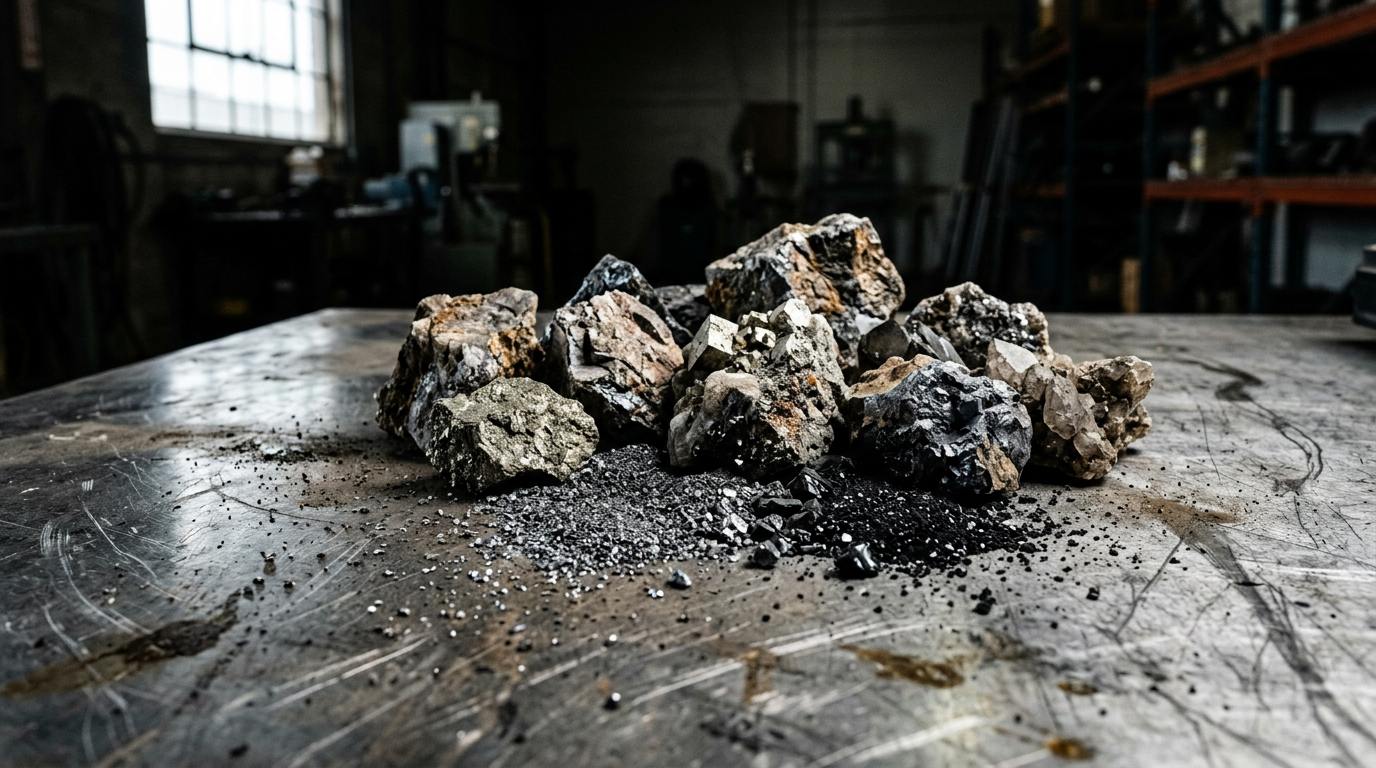
Rare earth elements are often discussed in terms of mining, but the true leverage in global supply chains lies in chemical processing—the stage where raw materials are refined into usable components. In 2026, these “chemical chokepoints” are heavily concentrated, with China controlling an estimated 70%–80% of global rare earth refining capacity and over 85% of processing for key magnet materials. This concentration gives disproportionate influence over industries ranging from defense and electronics to renewable energy. The result is a strategic landscape where access to chemistry—not just resources—determines power.
Key Takeaways
- Rare earth supply chains are not limited by geology alone but by processing capacity.
- Chemical separation and refining are complex, capital-intensive, and environmentally challenging, creating barriers to entry.
- Countries seeking to reduce dependency are investing in alternative processing hubs, recycling, and new technologies, but progress remains gradual.
- Control over chemical chokepoints is now a defining factor in global industrial and geopolitical competition.
Chemical chokepoints in rare earth supply chains refer to the highly concentrated and complex refining processes that transform raw minerals into usable materials, giving countries with advanced processing capabilities—particularly China—significant strategic and economic power.
The Invisible Layer of Power
When rare earth elements are discussed, the conversation often begins with mining—where the materials are extracted from the ground. This focus is understandable. Mining is visible, tangible, and often tied to geography.
But in 2026, the real story lies elsewhere.
The true leverage in rare earth supply chains is not in extraction, but in transformation. It is in the chemical processes that separate, purify, and refine these elements into forms that can be used in modern technologies.
This stage of the supply chain is less visible, more complex, and far more concentrated. It is here that “chemical chokepoints” emerge—points of control that can influence entire industries.
Understanding these chokepoints is essential for understanding the modern global economy. From electric vehicles and wind turbines to advanced defense systems and consumer electronics, rare earth elements are everywhere. And behind them all lies a network of chemical processes that few people see, but many depend on.
What Are Chemical Chokepoints?
Chemical chokepoints refer to the stages in a supply chain where specialized processing capabilities are concentrated in a limited number of locations or entities.
In the context of rare earths, these chokepoints occur during refining and separation. Rare earth elements are not found in pure form; they are mixed together in ores and must be separated through complex chemical processes.
These processes involve:
- Solvent extraction
- Ion exchange
- Precipitation and calcination
- Advanced metallurgical techniques
Each step requires expertise, infrastructure, and significant investment. The result is a high barrier to entry, limiting the number of countries and companies capable of performing these at scale.
Why Processing Matters More Than Mining
It is a common misconception that countries with large rare earth reserves hold the greatest power in the supply chain. In reality, the ability to process these materials is far more critical.
A country may have abundant resources, but without refining capacity, those resources cannot be transformed into usable products. This creates a dependency on countries that possess the necessary chemical infrastructure.
For example, raw rare earth concentrates are often exported to processing hubs, where they are refined into oxides, metals, and magnets. These processed materials are then used in manufacturing across various industries.
This dynamic shifts the balance of power. Control over processing allows a country to influence supply, pricing, and availability, even if it does not control the raw resources.
Rare Earth Supply Chain Distribution
| Supply Chain Stage | Global Share (Approx.) | Key Insight |
|---|---|---|
| Mining | ~55%–60% (China) | Significant but not dominant |
| Refining & Processing | ~70%–80% (China) | Major chokepoint |
| Magnet Production | ~85%–90% (China) | Critical downstream control |
| Recycling | <10% globally | Underdeveloped segment |
What the Data Reveals
The data highlights a clear pattern: control increases further down the supply chain. While mining is somewhat diversified, refining and manufacturing are highly concentrated.
This concentration creates vulnerability. Disruptions at the processing stage can have far-reaching effects, impacting industries worldwide.
The Role of China in Chemical Chokepoints
China has established a dominant position in rare earth processing over several decades.
This dominance is the result of sustained investment, supportive policies, and a willingness to manage the environmental challenges associated with chemical processing. Refining rare earths can produce hazardous waste, requiring strict controls and significant resources.
By building this capacity early, China has created a competitive advantage that is difficult to replicate. Other countries face higher costs, regulatory hurdles, and a lack of expertise.
This position gives China significant influence over global supply chains. It can affect pricing, availability, and even technological development in industries that depend on rare earths.
Chemical Complexity as a Barrier
The complexity of rare earth processing is a key reason why chemical chokepoints exist.
Separating rare earth elements is not a straightforward task. Many of these elements have similar chemical properties, making them difficult to isolate. The process often involves hundreds of sequential steps, each requiring precision and control.
This complexity translates into high costs and long development timelines. Building a new processing facility can take years and require substantial investment.
As a result, few countries have been able to develop significant processing capacity. This reinforces the concentration of chokepoints and limits the pace of diversification.
Strategic Implications for Technology and Defense
Rare earth elements are essential for a wide range of advanced technologies. These include:
- Electric vehicle motors
- Wind turbine generators
- Smartphones and consumer electronics
- Missile guidance systems and radar
In each of these applications, the availability of processed rare earth materials is critical.
For defense systems, the stakes are particularly high. Advanced weapons and communication systems rely on rare earth components for performance and reliability. Any disruption in supply can affect readiness and capability.
This has led to increased attention on supply chain security. Governments are recognizing that access to materials is not just an economic issue, but a strategic one.
Rare Earth Applications and Dependency
| Sector | Dependency Level | Example Use |
|---|---|---|
| Clean Energy | High (~70%+ reliance) | Wind turbines, EV motors |
| Consumer Electronics | High (~60%+) | Smartphones, displays |
| Defense Systems | Critical (~80%+) | Guidance, sensors |
| Industrial Manufacturing | Moderate (~40%+) | Automation, robotics |
Interpreting the Impact
The high dependency levels across multiple sectors highlight the importance of securing reliable supply chains. As demand for clean energy and advanced technologies grows, the pressure on these supply chains is likely to increase.
Efforts to Break the Chokepoints
Countries around the world are taking steps to reduce their dependence on concentrated processing hubs.
These efforts include:
- Investing in domestic refining capacity
- Developing alternative processing technologies
- Expanding recycling programs
- Forming strategic partnerships
For example, the United States and European Union have launched initiatives to build local supply chains and reduce reliance on external sources.
However, progress is slow. Building new facilities takes time, and achieving cost competitiveness remains a challenge.
Recycling and Innovation: A Partial Solution
Recycling offers a potential pathway to reduce dependency on primary supply chains. By recovering rare earth elements from end-of-life products, countries can create a secondary source of materials.
Currently, recycling accounts for less than 10% of global rare earth supply, but this is expected to grow in the coming years.
Innovation is also playing a role. Researchers are exploring new methods for extracting and processing rare earths, including more environmentally friendly approaches.
While these solutions are promising, they are unlikely to fully replace traditional supply chains in the near term.
Risks and Future Outlook
The concentration of chemical chokepoints introduces several risks.
Supply disruptions, whether due to geopolitical tensions, environmental issues, or market dynamics, can have widespread consequences. Price volatility is another concern, as limited supply can lead to sharp fluctuations.
At the same time, demand for rare earths is expected to increase significantly. The transition to clean energy and the growth of advanced technologies will drive higher consumption.
This creates a complex landscape where supply constraints and demand growth intersect, amplifying the importance of chemical chokepoints.
FAQs
What are chemical chokepoints in rare earth supply chains?
They are stages in the refining and processing of rare earth elements where capabilities are concentrated, giving certain players significant control.
Why is processing more important than mining?
Because raw materials must be refined into usable forms, and countries without processing capacity depend on those that have it.
Which country dominates rare earth processing?
China currently holds the largest share of global refining and processing capacity.
Can other countries reduce dependence?
Yes, through investment, innovation, and recycling, but it will take time to build competitive alternatives.
Why are rare earths important?
They are essential for modern technologies, including clean energy systems, electronics, and defense applications.
Power Hidden in Process
The story of rare earths is often told as a story of resources—of mines, reserves, and geography. But in 2026, it is increasingly clear that the real power lies in process.
Chemical chokepoints represent a form of influence that is both subtle and profound. They are not visible in the same way as mines or factories, yet they shape the flow of materials that underpin modern life.
This hidden layer of the supply chain is becoming more important as demand for rare earths grows. It is influencing decisions in technology, energy, and defense, and reshaping the balance of global power.
Addressing these chokepoints requires more than investment. It requires coordination, innovation, and a long-term perspective. It requires understanding that supply chains are not just economic systems, but strategic assets.
In the years ahead, the countries and companies that can navigate this complexity will be better positioned to succeed. They will not only secure access to critical materials but also shape the industries that depend on them.
Ultimately, chemical chokepoints remind us that in a complex world, power often resides in the places we least expect—in the processes that quietly enable everything else.