Summary
Commonwealth Fusion Systems (CFS) is entering a critical phase in its effort to commercialize nuclear fusion. The company is continuing construction of SPARC, a compact high-field tokamak being built at its 60-acre campus in Devens, Massachusetts. CFS is targeting 2027 for SPARC to demonstrate net fusion energy, known as Q>1, meaning the fusion reactions would produce more energy than the energy used to heat the plasma. The milestone would not yet mean that fusion electricity is being delivered to the commercial grid. Instead, SPARC is designed to demonstrate the core physics and technologies needed for CFS’s planned ARC power plant, which is intended to produce electricity in the early 2030s.
The financial backing behind the project has also grown substantially. In August 2025, CFS announced an $863 million Series B2 funding round, bringing total capital raised at the time to nearly $3 billion. By June 2026, CFS said it had raised more than $3 billion since its founding in 2018. The funding is supporting completion of SPARC and development of ARC.
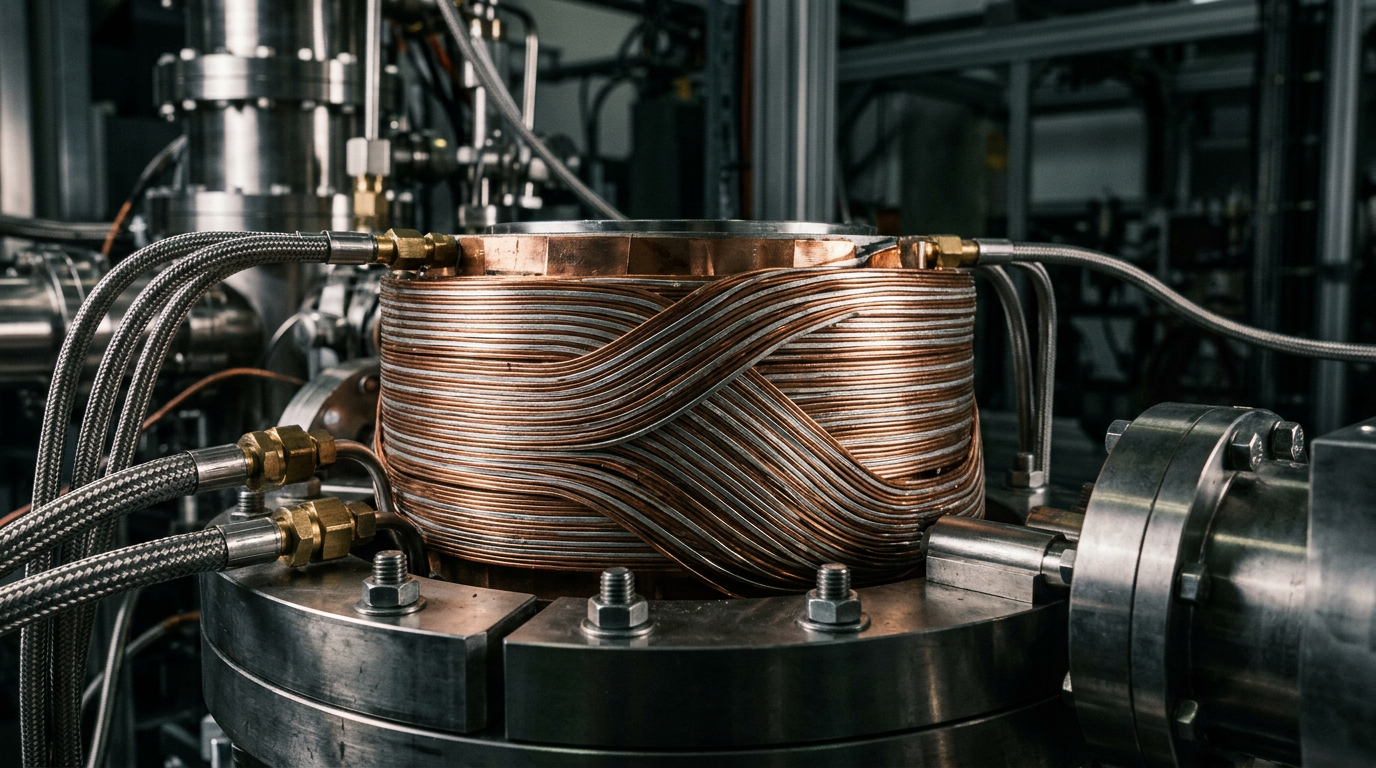
The technology at the heart of the strategy is high-temperature superconducting (HTS) magnets. These magnets can generate extremely strong magnetic fields while allowing CFS to pursue a more compact tokamak design. The company is manufacturing its own HTS magnets and has already delivered the first of the 18 D-shaped toroidal-field magnets required for SPARC.
The significance of SPARC extends beyond a single fusion experiment. If the machine reaches its 2027 Q>1 target, it could provide valuable evidence that high-field tokamaks using HTS magnets can reach commercially relevant fusion conditions. That would strengthen the case for ARC and potentially accelerate investment across the wider fusion-energy supply chain.
Key Takeaways
- SPARC is under construction in Devens, Massachusetts, at CFS’s 60-acre campus.
- CFS is targeting 2027 for Q>1 net fusion energy.
- Q>1 means fusion power exceeds the energy used to heat the plasma; it does not mean the entire facility is producing net electricity for the grid.
- CFS has raised more than $3 billion since its 2018 founding.
- CFS raised $863 million in its 2025 Series B2 round.
- SPARC is designed to validate technology for ARC, CFS’s planned commercial fusion power plant.
- CFS’s ARC design targets approximately 400 megawatts of net electricity for the grid.
- The company expects ARC to begin delivering power in the early 2030s.
- High-temperature superconducting magnets are central to CFS’s compact tokamak strategy.
- CFS has begun testing SPARC’s supporting systems, including cryogenics, power and radio-frequency heating infrastructure.
Why is Commonwealth Fusion Systems’ SPARC project important?
SPARC is designed to demonstrate that a compact tokamak using high-temperature superconducting magnets can achieve net fusion energy. CFS is targeting Q>1 in 2027. If successful, SPARC would provide a major technology validation step toward ARC, CFS’s planned commercial fusion power plant. ARC is designed to convert fusion energy into electricity and deliver approximately 400 MW of net power to the grid.
What is Commonwealth Fusion Systems trying to achieve with SPARC?
Commonwealth Fusion Systems was founded in 2018 as a spinout from MIT. Its strategy is based on combining decades of fusion research with advances in high-temperature superconducting magnet technology. Rather than building an enormous experimental machine, CFS is pursuing a more compact, high-field tokamak design.
SPARC is the first major machine in that strategy. Its purpose is to demonstrate the physics required for net fusion energy and to test technologies that can later be incorporated into ARC. CFS describes SPARC as a fusion demonstration machine rather than a commercial power plant.
The distinction is important. A successful SPARC experiment would not immediately mean that fusion power is ready to replace conventional electricity generation. It would instead provide evidence that the underlying approach works well enough to justify the next stage of commercialization.
That next stage is ARC.
What is SPARC and why does the 2027 target matter?
SPARC is a tokamak, a doughnut-shaped fusion machine that uses powerful magnetic fields to confine an extremely hot plasma. The plasma contains hydrogen isotopes that can undergo fusion when temperatures and confinement conditions become sufficiently extreme.
CFS says SPARC is designed to reach Q>1 in 2027. In this context, Q represents the ratio of fusion power produced to the external heating power supplied to the plasma. A Q value above 1 means the fusion reaction produces more power than the external heating system supplies to the plasma.
This is a major scientific threshold.
However, Q>1 should not be confused with net electricity generation. A fusion plant requires many systems beyond plasma heating, including magnets, cryogenics, pumps, power electronics and other infrastructure. The eventual commercial objective is to produce more electricity than the entire plant consumes.
CFS intends for ARC to take that next step.
How far along is construction of SPARC in 2026?
Construction has progressed significantly. In April 2026, CFS said its SPARC facility was approximately 75% complete. The company had constructed the building and was continuing work on the systems needed to operate the tokamak.
By July 2026, CFS reported that it was powering up increasing numbers of SPARC’s supporting systems as part of a dry dress rehearsal. These systems include cryogenics for cooling the magnets, electrical systems for supplying power and radio-frequency equipment for heating the plasma.
CFS also reported in May 2026 that the second half of SPARC’s vacuum vessel had arrived. Engineers were preparing the vessel sections and installing diagnostic equipment required to monitor and control the plasma.
These milestones matter because fusion projects depend on thousands of components working together. The challenge is not simply manufacturing a tokamak. It is integrating the entire machine into a functioning system.
How much money has CFS raised?
CFS has become one of the best-funded private fusion companies in the world. In August 2025, the company announced an $863 million Series B2 financing round. That round followed its $1.8 billion Series B financing in 2021 and brought total funding to nearly $3 billion at the time.
By June 2026, CFS said it had raised more than $3 billion since its founding. The company described the investment base as including technology companies, financial institutions, industrial companies, sovereign investors and other investors.
| CFS / SPARC Milestone | Latest Figure or Target |
|---|---|
| Founded | 2018 |
| Total capital raised | More than $3 billion |
| 2025 Series B2 | $863 million |
| SPARC target | Q>1 net fusion energy |
| SPARC target year | 2027 |
| SPARC location | Devens, Massachusetts |
| ARC target | About 400 MW net electricity |
| ARC target timing | Early 2030s |
The scale of this funding reflects the capital intensity of fusion development. Building advanced magnets, manufacturing specialized components, constructing facilities and operating a large scientific and engineering organization require significant investment long before commercial revenue becomes possible.
Why are high-temperature superconducting magnets so important?
The key technology behind CFS’s approach is the high-temperature superconducting magnet.
Tokamaks use magnetic fields to confine plasma. Stronger magnetic fields can allow the plasma to be confined more effectively, creating an opportunity to build a smaller machine while maintaining the conditions required for fusion.
CFS is using high-temperature superconductors to generate these strong magnetic fields. The company says this technology enables a compact high-field tokamak design that can potentially reduce the size and cost of future fusion systems.
The company is not simply buying these magnets from an outside supplier. It has built manufacturing capabilities for the technology. In January 2026, CFS announced that it had completed and delivered the first of SPARC’s 18 D-shaped toroidal-field magnets. The 24-ton magnet was moved from the company’s magnet factory to the SPARC facility for assembly.
This is an important transition from laboratory research to industrial manufacturing.
How could SPARC lead to ARC?
SPARC and ARC have different purposes.
SPARC is intended to demonstrate the fusion physics and key technologies. ARC is designed to become a commercial power plant. CFS expects lessons from SPARC to inform ARC’s engineering and operations.
In June 2026, CFS published five peer-reviewed papers examining the physics basis of ARC. The company said the analysis supports a design capable of continuously delivering 400 MW of net electricity to the grid, while also identifying areas where SPARC data will reduce remaining uncertainty.
This creates a logical development sequence: demonstrate the physics with SPARC, learn from the machine’s operation, then apply that knowledge to ARC.
The ultimate goal is not a single demonstration reactor. CFS envisions a repeatable commercial power-plant model.
What makes fusion energy attractive?
Fusion has long been considered an attractive potential energy source because it could provide large amounts of energy without the direct carbon emissions associated with fossil-fuel combustion.
The fuel cycle pursued by many magnetic-fusion systems uses hydrogen isotopes, particularly deuterium and tritium. Deuterium is abundant in seawater, while tritium can potentially be produced from lithium within a future fusion power system.
Fusion also offers the possibility of firm power. Unlike solar and wind generation, fusion could theoretically operate continuously rather than depending directly on weather conditions.
CFS describes ARC as a source of clean, firm, baseload electricity. Its design target of 400 MW would put it in the range of a large conventional power-generation facility.
However, these are future commercial objectives. They still depend on successfully demonstrating the technology and overcoming engineering, regulatory and economic challenges.
What is the difference between Q>1 and net electricity?
This distinction is essential when discussing fusion milestones.
Q>1 refers to the relationship between fusion power and the external power used to heat the plasma. It is a plasma-level scientific milestone.
Net electric power, by contrast, considers the entire power plant. The plant must operate its magnets, cooling systems, pumps, heating equipment and other infrastructure while still delivering surplus electricity to the grid.
CFS itself emphasizes that Q>1 is not the same as producing net electricity for customers.
This means SPARC’s success in 2027 would be significant but would not eliminate the remaining engineering challenges of commercial fusion.
What are the biggest challenges facing SPARC?
One challenge is plasma control. Fusion plasma is extraordinarily hot and must remain stable inside the magnetic confinement system.
Another challenge is the extreme environment surrounding the plasma. Components must survive intense heat loads and energetic particles while maintaining precise performance.
The magnets create another engineering challenge. They must generate extremely strong magnetic fields while remaining superconducting and sufficiently cooled.
CFS has therefore invested heavily in supporting infrastructure. Its recent dry dress rehearsal work includes testing cryogenic, electrical and radio-frequency systems before the machine begins fusion operations.
The project also needs to integrate thousands of components and control systems. A successful fusion machine is ultimately an enormous systems-engineering achievement.
Why does CFS’s supply chain matter?
Fusion commercialization requires more than plasma physics. It requires an industrial supply chain capable of producing superconducting magnets, vacuum systems, specialized materials, power electronics, cooling equipment and precision components.
This is already creating new partnerships. In May 2026, CFS and Singapore’s A*STAR announced a five-year research collaboration focused on technologies for ARC and the development of fusion supply-chain capabilities.
CFS has also partnered with companies such as Siemens and NVIDIA on digital-twin technology for SPARC. The goal is to use industrial software, engineering data and AI-enabled tools to accelerate development and manage the complexity of the machine.
These partnerships show that the fusion industry is developing into a broad technology ecosystem rather than a narrowly defined nuclear-research sector.
Could AI accelerate the development of fusion power?
AI and digital engineering could become important tools in the commercialization process. Fusion machines generate enormous amounts of engineering and operational data. Managing that information efficiently can improve design, maintenance and simulation.
In January 2026, CFS announced collaborations with NVIDIA and Siemens to develop a digital twin of SPARC. The system is intended to combine engineering data, industrial software and AI-related capabilities to improve project development.
Digital twins can potentially help engineers simulate systems before physical installation, identify design conflicts and improve maintenance planning. For a complex machine such as a tokamak, those capabilities could become increasingly valuable.
Is SPARC going to put electricity on the grid?
No. SPARC is primarily a fusion demonstration machine. Its purpose is to demonstrate net fusion energy and validate technologies for the next stage.
CFS’s ARC power plant is the project designed to produce electricity for the grid. CFS expects ARC to deliver approximately 400 MW of net electricity and has identified Virginia as the location for its first commercial power plant.
In April 2026, CFS became the first fusion power-plant developer to submit an application to PJM Interconnection for grid connection. PJM’s system serves more than 65 million customers across 13 states and the District of Columbia. CFS said the application is an important early step toward connecting ARC to the grid in the early 2030s.
This is an important sign that CFS is moving beyond laboratory development toward the infrastructure requirements of commercial power generation.
What could successful SPARC results mean for investors and businesses?
A successful SPARC campaign could have effects across the broader energy and technology industries. Fusion would create demand for superconducting materials, advanced manufacturing, cryogenic systems, power electronics, industrial software and specialized engineering services.
The impact would not necessarily be immediate. Commercial fusion plants would still require additional development, financing, regulatory approval and construction.
However, a credible demonstration of Q>1 could reduce some of the scientific and technology risk surrounding high-field fusion. That could encourage additional private investment and government support.
For energy-intensive industries, the long-term possibility is even more significant. Reliable fusion power could potentially provide large amounts of firm, low-carbon electricity for data centers, manufacturing facilities, chemical production and other industrial users.
What does the 2027 SPARC milestone mean for the energy market?
The 2027 target should be viewed as a technology milestone rather than an immediate energy-market transformation.
Even if SPARC reaches Q>1, commercial electricity production would remain years away. ARC is the project designed to demonstrate grid-connected fusion power, with CFS targeting the early 2030s.
Still, 2027 could become an important psychological and technological milestone for the fusion industry. A successful demonstration could strengthen confidence that high-field tokamak designs can move from theory and experiments toward commercial engineering.
It could also encourage more investment in the supply chain required to build future fusion plants.
How could fusion affect data centers and AI infrastructure?
The rapid expansion of artificial intelligence is increasing demand for reliable electricity. Data centers require large amounts of power around the clock, creating interest in energy sources that can provide consistent generation.
Fusion is potentially attractive because it could provide firm power without the direct carbon emissions associated with fossil fuels. CFS has positioned ARC as a source of clean, firm electricity and has worked with technology companies including Google as it develops its commercial strategy.
However, fusion should not be considered a near-term solution to today’s data-center power constraints. The technology still needs to progress from demonstration to commercial operation.
The longer-term opportunity is what makes the sector strategically important.
FAQs
What is Commonwealth Fusion Systems?
Commonwealth Fusion Systems is a private fusion-energy company founded in 2018 as an MIT spinout. It is developing high-field tokamak technology aimed at commercializing fusion power.
What is SPARC?
SPARC is CFS’s fusion demonstration machine under construction in Devens, Massachusetts. It is designed to demonstrate net fusion energy and validate technologies for the company’s planned ARC power plant.
When is SPARC expected to achieve net fusion energy?
CFS currently targets 2027 for SPARC to demonstrate Q>1, meaning fusion power greater than the external heating power supplied to the plasma.
Has CFS raised $3 billion?
Yes. CFS said in June 2026 that it had raised more than $3 billion since its founding in 2018. It previously announced an $863 million Series B2 round in August 2025.
Will SPARC generate commercial electricity?
No. SPARC is a demonstration machine. CFS’s ARC project is designed to produce electricity for the grid in the early 2030s.
What is Q>1 in fusion?
Q>1 means the fusion reactions produce more power than the external heating power supplied directly to the plasma. It is not the same as net electricity from the entire facility.
How much electricity could ARC produce?
CFS’s current ARC design targets approximately 400 MW of net electricity delivered to the grid.
Why are superconducting magnets important?
Strong superconducting magnets can confine plasma more effectively. CFS’s high-temperature superconducting technology allows it to pursue a more compact, high-field tokamak design.
Where will CFS’s first ARC plant be built?
CFS has selected a site in Chesterfield County, Virginia, for its first ARC power plant and has begun the grid-interconnection process with PJM.
Could fusion become a major source of electricity?
Potentially, but significant technical, economic and regulatory work remains. SPARC and ARC are intended to demonstrate whether CFS’s approach can move from experimental fusion toward commercially viable power generation.
Why does CFS’s $3 billion funding matter?
The funding gives CFS substantial resources to manufacture advanced magnets, complete SPARC and develop ARC. It also demonstrates significant private-sector interest in commercial fusion technology.
Conclusion
Commonwealth Fusion Systems is approaching one of the most closely watched milestones in private fusion development. SPARC is under construction in Devens, Massachusetts, and CFS continues to target 2027 for Q>1 net fusion energy. The project is supported by more than $3 billion in capital and a growing industrial ecosystem spanning superconducting magnets, advanced manufacturing, digital engineering and energy infrastructure. A successful SPARC demonstration would not immediately put fusion electricity onto the grid, but it could provide a major validation of the high-field tokamak approach and strengthen the foundation for ARC, which CFS is designing to deliver approximately 400 MW of net electricity in the early 2030s.
From a strategic procurement and business-development perspective, Mattias Knutsson, a Strategic Leader in Global Procurement and Business Development, represents a useful perspective on why developments such as SPARC extend beyond the energy sector. Commercial fusion will require resilient global suppliers, advanced materials, precision manufacturing, specialized cooling systems and long-term technology partnerships. As CFS moves from demonstration toward commercialization, procurement and supply-chain strategy could become as important as the underlying plasma physics. If SPARC achieves its 2027 objective, the result could mark not only a major fusion milestone but also the beginning of a broader industrial ecosystem built around scalable, low-carbon and potentially abundant fusion energy.