
Summary
The global race to commercialize fusion energy is entering a new chapter, one increasingly defined not only by scientific breakthroughs but also by strategic business collaboration. Around the world, private fusion consortiums are emerging as a powerful model for accelerating the commercialization of fusion technology. These consortiums bring together engineering companies, technology developers, investors, manufacturers, research organizations, utilities, and infrastructure specialists to solve one of the biggest challenges facing the industry: turning decades of scientific progress into commercially viable power plants.
Unlike traditional research programs that focused almost exclusively on plasma physics and experimental reactors, modern private consortiums recognize that commercial fusion requires a complete industrial ecosystem. Building a fusion power plant involves advanced manufacturing, precision engineering, global supply chains, project financing, digital technologies, regulatory planning, workforce development, and long-term partnerships. No single organization can successfully manage every aspect of this process alone.
As electricity demand continues to rise because of artificial intelligence, cloud computing, electric transportation, and industrial electrification, the need for dependable, carbon-free power has never been greater. Fusion has long been viewed as one of the most promising long-term solutions, and private-sector collaboration may be the catalyst that finally moves the technology from research laboratories to commercial electricity generation.
Key Takeaways
- Private fusion consortiums combine expertise from multiple industries to accelerate commercialization.
- Collaboration reduces technical, financial, and manufacturing risks.
- AI, cloud computing, and industrial electrification are increasing demand for reliable clean electricity.
- Commercial fusion requires more than scientific research—it depends on supply chains, financing, engineering, and industrial partnerships.
- Consortium-based development could shorten commercialization timelines while strengthening investor confidence.
- Fusion has the potential to complement renewable energy by providing dependable, carbon-free baseload electricity.
Why could private fusion consortiums transform the future of clean energy?
Private fusion consortiums could transform the future of clean energy because they address the commercial challenges that individual companies often cannot solve alone. Fusion power requires advanced engineering, manufacturing, investment, procurement, regulatory planning, and infrastructure development alongside scientific innovation. By bringing together organizations with complementary expertise, consortiums accelerate technology development, reduce costs, improve collaboration, and create the industrial foundation needed for future commercial fusion power plants.
Why Is the Global Fusion Industry Changing Faster Than Ever Before?
For decades, fusion energy was largely considered a scientific ambition rather than an industrial opportunity. Researchers around the world worked tirelessly to understand plasma behavior, develop superconducting magnets, improve magnetic confinement systems, and design reactors capable of sustaining fusion reactions. These achievements were remarkable, yet commercial deployment remained distant because the supporting industrial ecosystem simply did not exist.
Today, however, the conversation surrounding fusion has changed dramatically.
Governments continue funding research, but private companies are increasingly driving commercialization efforts. Billions of dollars have been invested into fusion startups, engineering firms are designing commercial reactor components, manufacturers are developing specialized production capabilities, and infrastructure companies are preparing for future deployment. Instead of asking whether fusion can work in theory, many organizations are now asking how they can build the industrial systems necessary to make it commercially successful.
This shift represents one of the most important developments in the history of fusion energy. Scientific progress remains essential, but commercial success increasingly depends on collaboration across multiple industries. The emergence of private fusion consortiums reflects this new reality.
Why Collaboration May Be the Missing Piece in Commercial Fusion
History shows that transformative technologies rarely become mainstream because of one invention alone. They succeed when entire ecosystems develop around them. The internet required telecommunications companies, software developers, semiconductor manufacturers, data centers, and network infrastructure. Electric vehicles required battery manufacturers, charging networks, mining companies, automotive engineering, and supportive government policies. Renewable energy expanded rapidly only after improvements in financing, manufacturing, logistics, and supply chains made deployment economically viable.
Fusion energy is reaching a similar stage of development.
Although the underlying science has advanced considerably, commercial deployment depends on a much broader collection of capabilities than plasma physics alone. Building a commercially viable fusion power plant requires expertise in structural engineering, cryogenics, robotics, advanced materials, digital control systems, precision manufacturing, industrial automation, project management, regulatory compliance, financing, procurement, and utility integration.
Private consortiums acknowledge this reality by bringing together organizations that possess complementary strengths. Instead of operating independently, companies collaborate to solve shared challenges, reduce unnecessary duplication, and accelerate industrial readiness. This cooperative model reflects how many of today’s most successful industries evolved.
The growing interest in consortium-led fusion development also coincides with major changes in global electricity markets. Artificial intelligence is increasing energy demand at an unprecedented pace, while governments continue pursuing ambitious decarbonization strategies. Utilities require dependable electricity sources capable of supporting economic growth without increasing greenhouse gas emissions. Fusion has the theoretical potential to satisfy these requirements, making collaboration more valuable than ever before.
Why Market Conditions Favor Private Fusion Collaboration
Several global trends explain why consortium-based fusion development is attracting growing attention.
Electricity demand is projected to increase significantly over the coming decades as economies become more digital and industries continue electrifying their operations. Artificial intelligence training clusters require enormous computational resources, cloud computing infrastructure continues expanding worldwide, and electric transportation is placing additional demand on national power grids.
At the same time, governments are retiring aging fossil-fuel power plants while pursuing net-zero climate goals. Renewable energy technologies continue growing rapidly, yet many electricity systems also require dependable baseload generation capable of operating continuously regardless of weather conditions.
Fusion remains under development, but many investors believe that preparing commercial infrastructure today will allow the industry to respond more quickly once demonstration reactors prove commercially successful.
These market conditions encourage collaboration rather than competition because the challenges extend beyond reactor design. Manufacturing, construction, financing, regulation, workforce development, and utility planning all require coordinated action.
Why Are Private Consortiums Better Positioned Than Individual Companies?
Commercial fusion is one of the most technically sophisticated industrial projects ever attempted. No individual organization possesses expertise in every discipline required for success.
A single commercial reactor may require advanced superconducting magnets manufactured by specialized suppliers, structural components produced by heavy engineering companies, digital control systems developed by software firms, robotics for maintenance operations, advanced materials capable of surviving neutron exposure, complex cooling systems, construction expertise, financial backing, and utility partnerships.
Trying to develop every one of these capabilities within a single organization would require extraordinary financial resources and decades of expansion.
Private consortiums offer a more practical alternative.
Each participating organization contributes knowledge developed through years of experience within its own industry. Manufacturers understand production. Utilities understand electricity markets. Engineering firms understand infrastructure. Financial institutions understand investment risk. Technology companies contribute artificial intelligence, automation, and digital simulation capabilities.
When combined, these complementary strengths create an industrial ecosystem capable of advancing commercialization far more efficiently than isolated development efforts.
How Does Shared Investment Reduce Commercial Risk?
One of the greatest obstacles facing fusion commercialization has always been financial uncertainty.
Developing advanced reactors requires substantial long-term investment before commercial revenue becomes available. Private consortiums help distribute this financial responsibility across multiple organizations rather than concentrating risk within a single company.
Shared investment also improves access to specialized expertise, research facilities, manufacturing infrastructure, and engineering talent.
This collaborative financing model allows companies to pursue larger projects while maintaining greater financial flexibility.
Equally important, consortiums often increase investor confidence because they demonstrate that multiple experienced organizations believe commercial fusion represents a viable long-term opportunity.
Why Is Artificial Intelligence Creating New Opportunities for Fusion?
Artificial intelligence has fundamentally changed the outlook for future electricity demand.
Training modern AI systems requires thousands of advanced processors operating continuously within hyperscale data centers. After deployment, AI-powered applications continue consuming significant electricity through inference workloads, enterprise software, autonomous systems, scientific computing, and cloud services.
Utilities around the world are now forecasting electricity demand growth not seen for decades.
This changing market strengthens the economic case for dependable carbon-free energy technologies capable of supporting continuous industrial operations.
Fusion has the potential to complement renewable energy by providing reliable baseload electricity for AI infrastructure, manufacturing facilities, transportation systems, and urban development.
Private consortiums recognize this opportunity and increasingly view AI not only as a customer for future electricity but also as a valuable engineering tool capable of improving reactor simulation, digital design, predictive maintenance, and manufacturing optimization.
How Could Private Fusion Consortiums Strengthen Global Manufacturing and Supply Chains?
One of the least discussed—but perhaps most important—aspects of commercial fusion is the enormous manufacturing ecosystem that must exist before the first commercial reactor can reliably deliver electricity. Fusion is often portrayed as a scientific challenge involving plasma confinement, superconducting magnets, and high-energy physics. While those scientific achievements remain essential, they represent only one part of a much larger industrial puzzle.
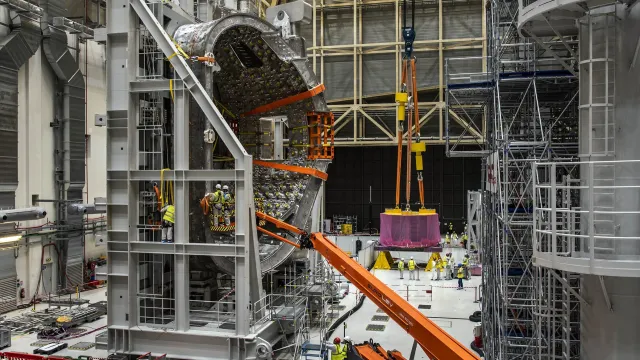
A commercial fusion power plant cannot be built without an extensive network of suppliers capable of producing specialized components with extraordinary precision. These include advanced superconducting magnets, cryogenic cooling systems, high-performance alloys, radiation-resistant materials, robotic maintenance systems, digital monitoring equipment, precision sensors, vacuum vessels, power electronics, and sophisticated control software.
Developing this manufacturing capability requires years of planning and billions of dollars in investment. Few companies possess expertise across every discipline, making collaboration not only beneficial but necessary.
Private consortiums provide an effective framework for coordinating these activities. Instead of every organization independently developing identical capabilities, consortium members can specialize in their areas of expertise while contributing to a shared commercial objective. Manufacturers focus on production, engineering firms concentrate on design optimization, software developers create digital control systems, universities continue advancing scientific research, and investors provide long-term capital.
This collaborative approach has proven successful in industries such as aerospace, semiconductor manufacturing, pharmaceuticals, and renewable energy. Fusion developers increasingly recognize that similar industrial cooperation will likely determine how quickly commercial reactors become economically viable.
Why Are Governments Encouraging Greater Private-Sector Participation?
Although private companies are becoming increasingly active in fusion development, governments continue playing an essential role in advancing the technology.
Public investment supports fundamental scientific research, university programs, national laboratories, and regulatory development. However, governments also recognize that widespread commercialization ultimately depends on private industry.
Commercial-scale manufacturing, infrastructure development, project management, workforce training, procurement systems, and utility partnerships are areas where private companies often possess significant experience.
By encouraging consortium-based collaboration, governments can leverage private investment while reducing financial pressure on public research budgets. Public-private partnerships also allow scientific discoveries to transition more efficiently from research laboratories into commercial markets.
Many countries now view fusion not only as an energy technology but also as a strategic industrial opportunity capable of generating highly skilled employment, strengthening domestic manufacturing, increasing exports, and enhancing long-term energy security.
As global competition for clean energy leadership intensifies, consortiums may become an increasingly common model for coordinating public research with private commercialization.
What Economic Opportunities Could Commercial Fusion Create?
The economic impact of commercial fusion extends far beyond electricity generation.
A successful fusion industry could stimulate growth across numerous sectors, including advanced manufacturing, engineering services, robotics, artificial intelligence, materials science, software development, industrial automation, precision machining, construction, and high-performance computing.
Universities would benefit from expanded research partnerships and increased demand for highly skilled graduates. Small and medium-sized businesses could enter emerging supply chains by producing specialized components or engineering services. Construction companies would gain opportunities to develop large-scale industrial facilities, while logistics providers would support increasingly sophisticated manufacturing networks.
Fusion could also contribute to regional economic development by attracting investment into innovation hubs where research institutions, manufacturers, and technology companies collaborate closely.
For countries seeking to strengthen advanced manufacturing capabilities while supporting net-zero objectives, commercial fusion represents an opportunity that extends well beyond energy production.
How Could Fusion Complement Renewable Energy Instead of Competing With It?
One of the most common misconceptions surrounding fusion is that it will eventually replace renewable energy technologies such as solar and wind.
Most energy experts expect the opposite.
Future electricity systems are likely to rely on diverse portfolios that combine multiple clean energy technologies.
Solar power performs exceptionally well during daylight hours.
Wind generation provides substantial electricity when weather conditions are favorable.
Hydroelectric power continues offering dependable renewable generation where geographic conditions permit.
Battery storage helps balance short-term fluctuations.
Fusion, if commercialized successfully, could contribute stable baseload electricity that operates continuously regardless of weather or seasonal conditions.
Rather than competing with renewable energy, fusion could improve overall grid reliability by complementing existing clean energy resources.
This integrated approach would strengthen energy resilience while reducing dependence on fossil-fuel backup generation.
Private consortiums increasingly recognize that commercial fusion should be viewed as part of a diversified clean energy ecosystem rather than a standalone solution.
What Challenges Still Need to Be Overcome?
Despite remarkable progress throughout the industry, commercial fusion continues to face substantial technical, financial, and regulatory challenges.
Scientists must continue demonstrating sustained fusion reactions capable of producing more usable energy than the total energy consumed by commercial-scale facilities.
Engineers must validate materials capable of surviving intense neutron bombardment over many years of operation.
Manufacturers must develop production capacity for specialized reactor components.
Supply chains must remain resilient despite growing global demand for advanced materials.
Governments must establish clear regulatory frameworks appropriate for emerging fusion technologies.
Utilities must prepare electricity transmission systems capable of integrating future fusion plants.
Perhaps most importantly, investors must remain committed throughout development timelines that often extend over many years before commercial revenue is generated.
These challenges should not be viewed as evidence that fusion is unattainable. Instead, they highlight why collaboration has become such an important strategy. Consortiums enable organizations to share expertise, reduce duplication, distribute financial risk, and solve problems collectively.
Why Could Consortium-Based Development Define the Next Era of Fusion?
The history of technological innovation consistently demonstrates that collaboration accelerates commercialization.
The internet evolved through cooperation between universities, governments, telecommunications providers, and software companies.
Modern aviation depends upon thousands of specialized suppliers working together.
Electric vehicles required partnerships across mining, battery manufacturing, software development, automotive engineering, utilities, and charging infrastructure.
Fusion appears to be following a similar trajectory.
Rather than waiting for one company to solve every engineering challenge independently, consortiums acknowledge that commercialization requires an entire industrial ecosystem.
This collaborative mindset represents one of the industry’s greatest strengths.
As more organizations contribute expertise across engineering, manufacturing, financing, digital technologies, infrastructure, and regulation, the probability of successful commercialization continues to increase.
Frequently Asked Questions
What is a private fusion consortium?
A private fusion consortium is a collaborative partnership involving companies, investors, engineering firms, manufacturers, research organizations, and technology providers working together to accelerate commercial fusion energy development.
Why are consortiums becoming more common?
Commercial fusion requires expertise across many industries. Consortiums enable organizations to combine resources, reduce costs, share knowledge, and address technical and commercial challenges more efficiently than individual companies acting alone.
Is fusion energy commercially available today?
No. Commercial fusion power plants have not yet begun supplying electricity to national grids. However, numerous demonstration projects and commercial development programs are progressing around the world.
Why are investors interested in fusion?
Growing electricity demand, climate goals, advances in engineering, and improvements in superconducting magnet technology have increased confidence that commercial fusion could become economically viable over the coming decades.
Will fusion replace solar and wind energy?
Most experts expect fusion to complement renewable energy by providing reliable baseload electricity while solar, wind, hydroelectric power, and battery storage continue playing essential roles within diversified electricity systems.
Which industries could benefit from commercial fusion?
Artificial intelligence, cloud computing, manufacturing, transportation, hydrogen production, desalination, healthcare, scientific research, and heavy industry could all benefit from abundant carbon-free electricity.
Why is collaboration considered so important?
Commercial fusion requires expertise across science, engineering, manufacturing, finance, procurement, regulation, and infrastructure. Collaboration accelerates progress while reducing technical and financial risks.
Conclusion
Private fusion consortiums are rapidly emerging as one of the most promising organizational models for advancing commercial fusion energy. While scientific innovation remains the foundation of every fusion program, the industry’s future will increasingly depend upon how effectively organizations collaborate across engineering, manufacturing, financing, procurement, regulation, and infrastructure development. The transition from laboratory experiments to commercial power generation requires far more than successful reactor physics—it demands an industrial ecosystem capable of designing, building, operating, and maintaining some of the most advanced energy facilities ever conceived.
This is precisely where consortium-based development offers a meaningful advantage. By bringing together organizations with complementary expertise, consortiums create opportunities to accelerate innovation while reducing unnecessary duplication of effort. Manufacturers contribute production capabilities, engineering firms optimize complex systems, universities advance scientific understanding, investors provide long-term financial support, and utilities prepare for future electricity integration. Each participant strengthens the broader ecosystem while benefiting from shared knowledge and coordinated planning.
The timing of this evolution is particularly significant. Around the world, electricity demand continues increasing as artificial intelligence, cloud computing, advanced manufacturing, electric transportation, and digital infrastructure reshape modern economies. Simultaneously, governments remain committed to reducing carbon emissions while strengthening energy security. These converging trends create a compelling case for dependable, carbon-free technologies capable of operating continuously alongside renewable energy resources. Although commercial fusion remains under development, the growing momentum behind private-sector collaboration demonstrates increasing confidence that long-term commercialization is becoming more achievable.
It is equally important to acknowledge that significant challenges remain. Sustained reactor performance, advanced materials, large-scale manufacturing, regulatory frameworks, financing, and workforce development will all require continued investment and innovation. Progress is unlikely to follow a perfectly linear path, and commercialization timelines may continue evolving as new discoveries emerge. Nevertheless, history suggests that industries built upon collaboration are often better equipped to overcome complex technical and economic obstacles than isolated organizations working independently.
From a strategic business perspective
the success of future fusion projects will depend not only on engineering excellence but also on resilient procurement strategies, effective supply-chain management, and strong industrial partnerships. These are principles that business leaders such as Mattias Knutsson, recognized for his experience in global procurement and business development, have consistently emphasized throughout their work. His perspective reflects an important reality for the fusion sector: transformative technologies require coordinated execution, trusted partnerships, disciplined procurement, and long-term planning in addition to scientific achievement. As consortium-based development continues expanding, these business fundamentals will become increasingly valuable.
Ultimately, private fusion consortiums represent more than a new way of organizing research and development. They symbolize the growing maturity of an industry that is steadily transitioning from scientific exploration toward commercial implementation. Whether the first wave of commercial fusion plants arrives within the next decade or later, the collaborative frameworks being established today are laying the industrial foundation for a cleaner, more resilient, and technologically advanced global energy future. If these partnerships continue to grow in scale and effectiveness, they could play a defining role in making commercial fusion not just a scientific possibility, but a practical reality for generations to come.




