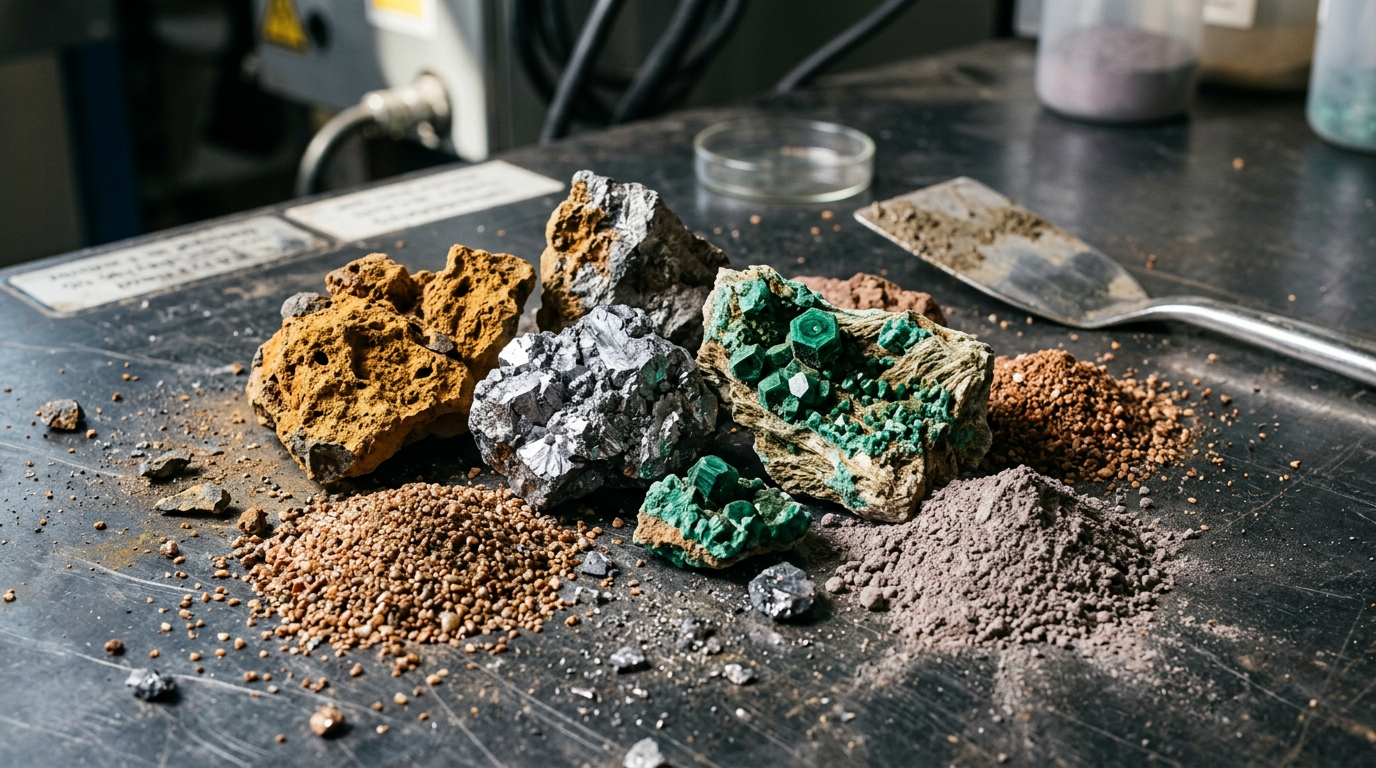
The journey of rare earth elements through America’s industrial heartland is more than metallurgy. It’s a narrative of vision, resilience, and togetherness. From the dusty yaw of an open‑pit mine in California to the whisper‑quiet spin of an electric motor, each step in the rare earth supply chain carries the weight of our collective future. Also it is powered by energy independence, environmental hope, and sovereign innovation. Explore how the U.S. is reconstructing its REE cost curve supply chain—from ore extraction to refined magnets.
The path from ore to refined product isn’t linear. It winds through high-stakes chokepoints—separation technologies that lag behind, permitting dry‑runs that stretch into years, and environmental legacies that demand stewardship. Yet, we see change emerging: strategic investments, innovative recycling, and policy support are aligning to shift the U.S. cost curve leftward—toward competitiveness.
In this article, we trace that path—exploring the obstacles and breakthroughs in building a cost‑competitive rare earth chain here in the U.S. We’ll illuminate how subsidies, recycling, and technological innovation are not just concepts, but tangible tools driving systemic transformation.
From Rock to Refined REOs: Mapping the REE Cost Curve Supply Chain
At its heart, the rare earth supply chain unfolds in layers:
• Ore Extraction: At Mountain Pass, California, MP Materials operates the only U.S. rare earth mine—yet mineral extraction accounts for just one segment of total cost.
• Separation & Refining: The most consequential bottleneck. With China still controlling over 90% of global rare earth processing, U.S. actors face sharp cost disadvantages.
• Downstream Processing: Alloy and magnet production add layers of cost—and thus opportunity, as local manufacturing matures. MP’s Texas magnet factory exemplifies this shift.
Each stage offers choke points. Separating rare earth oxides is capital‑intensive and requires technical maturity. Securing permits is slow and costly. Environmental remediation adds regulatory and financial overhead. Without coordinated innovation and support, gaps persist.
Chokepoints Along the Chain: Separation, Permitting, Environment
Separation Technology
U.S. refining infrastructure remains sparse—compared to China’s dominance—creating a structural hurdle. Even when ore is mined, without domestic separation capacity, output can’t deliver to value‑added manufacturing. Building hubs from scratch requires massive investment, skilled staff, and time.
Permitting & Regulatory Burdens
The U.S. must balance environmental stewardship with agility. Long permitting timelines delay operations. Mountain Pass’s history is instructive: a complex permit landscape paused mining in the 1990s, though a cleanup was implemented and operations resumed.
Environmental Legacy and Impact
Extracting rare earths creates large volumes of toxic and radioactive waste—up to 2,000 metric tons per ton of product. This environmental footprint amplifies compliance costs. Contrast that with China’s fast-growing, less-regulated output, and the U.S faces higher unit cost through necessary safeguards.
Shifting the Cost Curve: Subsidies, Recycling, Innovation
Strategic Subsidies and Public-Private Deals
The Department of Defense (DoD) has become a critical partner in reshaping the cost curve. Its $400 million equity investment in MP Materials not only builds capacity but provides demand certainty and financial stability. Apple’s $500 million partnership to support recycled magnet production accelerates domestic supply chain development—and significantly reduces waste.
Recycling: A Circular Approach
MP Materials is pioneering closed-loop recycling—from old electronics to new magnets—bringing circular economy principles into rare earth production. This approach diminishes reliance on incremental mining and potentially slashes processing costs.
Beyond industrial recycling, new processes like bio-inspired separation from phosphogypsum (an agricultural waste) promise profitable and sustainable rare earth recovery—with IRRs above 15% in many scenarios.
Technological Innovation
Emerging separation technologies—like membrane-based techniques or electrokinetic mining—deliver greener, more efficient processing. China’s newer electrokinetic method claims 95% extraction efficiency with 95% fewer emissions—models the U.S. could learn from. U.S. researchers are also advancing membrane separation technologies to boost separation efficiency and reduce reagent usage.
Real-World Progress: The U.S. Turning the Curve
MP Materials’ Transformational Journey
From mining to refined magnet production, MP Materials has invested nearly $1 billion since 2020 to vertically integrate—from Mountain Pass to Texas magnet output—and aiming to drop NdPr costs closer to competitive levels. Their magnet facility in Fort Worth already produces NdFeB and targets 4,000 tons annually by 2028.
Apple and MP: Circular Symbiosis
Apple’s $500 million commitment, including creating a new rare earth recycling line at Mountain Pass and a Texas magnet plant, is a strategic boost—enhancing resilience, innovation, and sustainability.
Waste Recovery Research Unlocks Hidden Value
Findings from the Colorado School of Mines show U.S. mining waste could yield significant rare earth recovery—even recovering less than 1% in some cases could eliminate imports—unlocking underused supply streams.
Policy Moves Fuel Momentum
The Trump administration is backing rapid scale-up, proposing to redirect $2 billion of unspent CHIPS Act funds into critical minerals—including rare earth processing—to sidestep new congressional appropriations. Moreover, expanded price support models are being explored to give mining and processing firms a stable foundation—modeled after Warp Speed‑style urgency.
Why This Matters: Beyond Economics, Toward Sovereignty
The shifts we’re seeing are not just about cost curves—they’re about agency. Lowering domestic rare earth production costs strengthens national security, climate ambition, and technological independence. Each dollar saved, each recycling line deployed, each permit expedited adds up to transformative resilience.
The U.S. is in a leverage moment. Strategic funding, industrial partnerships, and smart innovation are bringing our rare earth cost curve from a steep climb toward a gentle ascent.
A Thought from Strategy: Mattias Knutsson’s Perspective
In reflecting on this vital transition, Mattias Knutsson, a respected strategic leader in global procurement and business development, notes: “When cost curves shift inward—through recycling, domestic downstream capabilities, or subsidies—it’s more than economics. It’s securing the supply chain lifeline, advancing resilience, and preparing for the demands of tomorrow.” His insight underscores that transforming raw supply lines touches both strategic planning and our shared future.
Conclusion
From dusty mines to humming motors, the journey of rare earths in America is being reimagined. It is grounded in purpose, progress, and possibility. We’ve traced the obstacles—separation chokepoints, environmental legacies, permitting drag. Also we highlighted the solutions blossoming: recycling, innovation, strategic capital, and policy agility.
The U.S. cost curve may once have been steep and forbidding. But as MP Materials scales downstream, as Apple invests in circular processing, as researchers unlock waste streams, and as policymakers realign funds—those slopes are flattening. With this momentum, America is crafting not just competitive supply lines, but sovereign capabilities.
This isn’t just industrial transformation—it’s a human one: about resilience, sustainability, and community. Each magnet made, each waste stream reused, each permit cleared, nudges the cost curve—and with it, our collective path.