
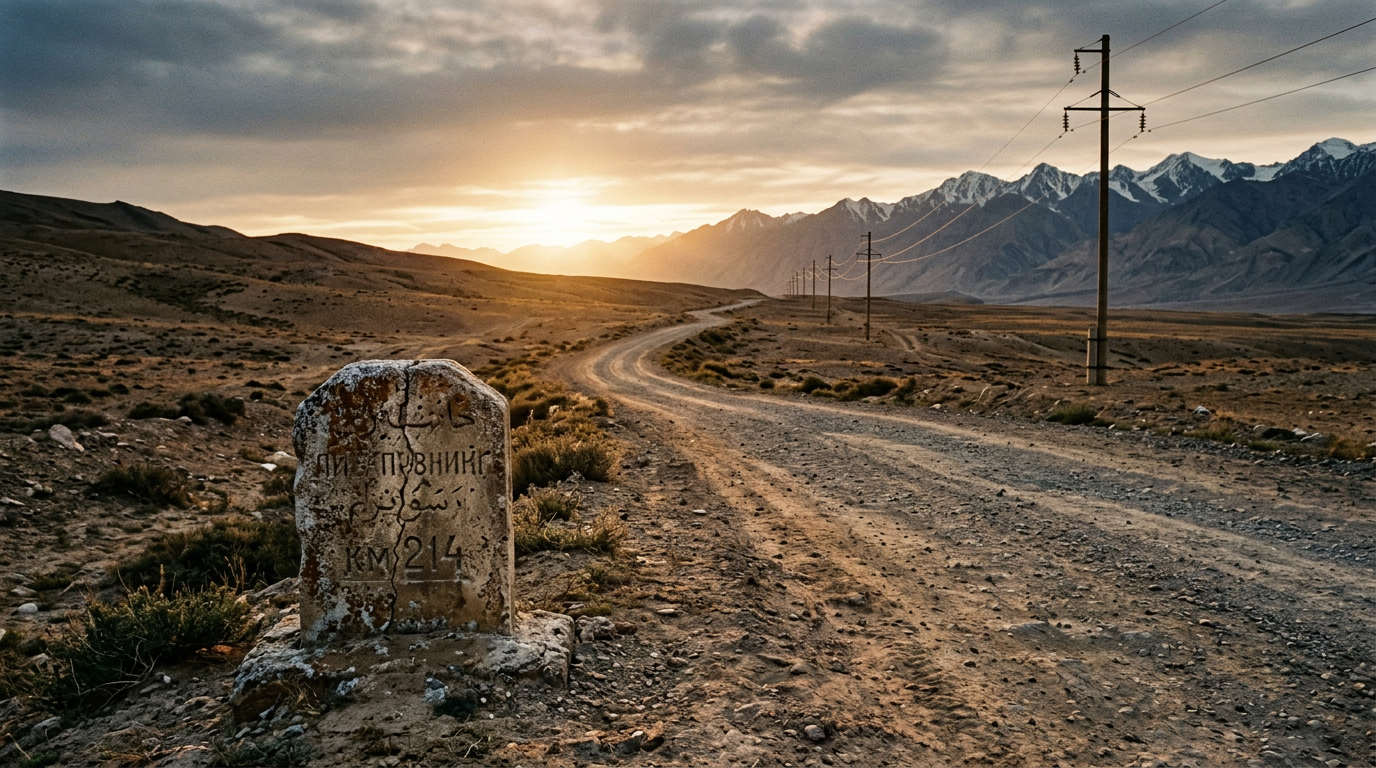
For centuries, the South Caucasus has been less a destination than a passage—an avenue for empires and armies, for caravans and conquerors. Geography made it a corridor; politics made it a battleground. The old Silk Road stitched Europe to Asia through these lands, carrying goods and cultures alike. The Silk Road revival runs through fractured geopolitics: Russia’s fading grip, China’s Belt and Road, Turkey’s Middle Corridor, EU–U.S. balancing, and conflicts in Ukraine and Nagorno-Karabakh. Explore how power, trade, and rivalry intersect in the Caucasus.
Today, as the Silk Road is reborn through China’s Belt and Road Initiative (BRI) and regional projects like the Middle Corridor, the Caucasus is again a crossroads. But the context is radically different. Instead of camel trains, pipelines; instead of parchment maps, fiber-optic cables. Instead of empires seeking spice and silk, modern states seek markets, energy, and influence.
Yet, like the past, the Silk Road in 2025 is haunted by geopolitics. Russia clings to old influence while clashing with China’s Silk Road vision. Turkey expands its role with a confident Middle Corridor strategy. The EU and U.S. maneuver to counterbalance China’s footprint, while conflicts—from Ukraine’s battlefields to Nagorno-Karabakh’s mountains—threaten every ambitious plan.
In this fractured world, infrastructure is no longer neutral—it is strategic, contested, and deeply political.
Russia: From Gatekeeper to Bypassed Giant
Historic Monopoly on Routes
For decades, Russia was the default gatekeeper of Eurasian transit. The Trans-Siberian Railway, stretching nearly 9,300 km, carried freight from China to Europe in under two weeks, offering reliability and scale. By 2020, nearly 80% of China–Europe rail trade passed through Russian territory.
Post-Ukraine War Decline
But Russia’s invasion of Ukraine in 2022 shifted the calculus. Sanctions hit its railways, logistics insurance collapsed, and European shippers sought to avoid politically risky routes. By 2023, volumes on Russian corridors had dropped by up to 50%, forcing cargo to reroute south through Central Asia and the Caucasus.
Clash with China’s Diversification
Russia sees China’s growing investments in the Caucasus as both an opportunity and a threat. Moscow wants to remain indispensable to Beijing’s westward trade; Beijing wants redundancy and options. This clash of visions is subtle but profound:
- Moscow favors the Northern Corridor it controls.
- Beijing funds the Middle Corridor, bypassing Russia entirely.
Some analysts suggest that Russia could eventually attempt to reassert control over Caucasus transit projects—either through influence in Armenia or pressure on Georgia. Yet for now, the more Moscow presses, the more its neighbors look elsewhere.
Turkey: From Periphery to Pivotal
The Middle Corridor Vision
Turkey has reinvented itself as a Eurasian pivot. The Middle Corridor—linking China to Europe via Central Asia, the Caspian, the South Caucasus, and Turkey—is Ankara’s signature strategy. Unlike the Russian route, it is designed to be multilateral and inclusive, integrating Turkic, Caucasian, and European states.
Infrastructure Backbone
- Baku–Tbilisi–Kars (BTK) Railway: Opened in 2017, it can now carry over 6.5 million tons annually, bypassing Russian networks. Expansion to 17 million tons is planned by 2034.
- Kars Logistics Center in eastern Turkey serves as a distribution hub for goods arriving from Baku and Tbilisi.
- Gas pipelines (TANAP and TAP) cement Turkey’s role as an energy corridor, while its ports (Istanbul, Izmir, Mersin) anchor Mediterranean trade.
Political Narrative
Turkey’s role isn’t just infrastructure—it’s identity. Ankara frames itself as the “natural leader” of the Turkic world, connecting Kazakhstan, Uzbekistan, and Azerbaijan to Europe. This narrative boosts its diplomatic influence, particularly as Russia falters.
Challenges
Turkey’s economy, with high inflation and currency woes, risks undercutting its grand strategy. Yet its geography remains unchanging, and in geopolitics, location is destiny.
EU and U.S.: Counterweights and New Entrants
EU: Seeking Energy and Stability
The EU’s interest in the Caucasus is pragmatic:
- Energy diversification away from Russia, particularly via the Southern Gas Corridor (24 bcm capacity).
- Trade diversification via the Middle Corridor.
- Political stabilization to prevent Russia or Iran from regaining leverage.
The EU’s Global Gateway initiative promises €300 billion globally, with earmarks for connectivity projects in the Caucasus—ports, rails, and digital corridors.
U.S.: From Observer to Stakeholder
For years, the U.S. was relatively absent. That changed in 2025 with the TRIPP (Trump Route for International Peace and Prosperity), a peace framework linking Azerbaijan to its Nakhchivan exclave through Armenia. The U.S. secured 99-year development rights, embedding itself directly into Silk Road infrastructure.
This was more than a deal: it was a statement of presence. Turkey welcomed it. Iran denounced it. Russia bristled at being sidelined. For Washington, it was a rare chance to reshape Eurasian dynamics.
Western Strategy: Contain, But Also Cooperate
The EU and U.S. do not seek to block China outright—too many European firms rely on Chinese trade. Instead, they aim to balance: diversify corridors, support transparency, and limit Beijing’s monopoly. The Caucasus is their lever.
Geopolitics Conflict and Fragility: Shadows Over the Silk Road
Nagorno-Karabakh: Old Wounds, New Corridors
The 2020 and 2023 conflicts reshaped the map. Azerbaijan regained territory, Armenia was weakened, and Russia’s peacekeeping role diminished. The 2025 U.S.-brokered deal sought to normalize ties and open the TRIPP corridor.
But risks remain:
- Armenian politics is divided over concessions.
- Iran opposes corridors that exclude it.
- Russia could exploit instability to regain leverage.
Russia–Ukraine War Spillover
The war continues to destabilize trade:
- Black Sea routes are disrupted by naval blockades.
- Grain shipments are rerouted through Georgia and Turkey.
- Insurance premiums for Black Sea cargo have soared.
These disruptions make the Middle Corridor attractive—but also precarious. Any new flare-up could bottleneck trade again.
Iran and Russia: The INSTC Rivalry
Iran champions the International North-South Transport Corridor (INSTC)—linking India to Russia via Iran and Azerbaijan. It competes with the Middle Corridor, but both may coexist. Still, sanctions on Iran and Russia make financing and implementation difficult.
The Bigger Picture: A Fractured but Interconnected World
The Silk Road today is no longer a single path—it is a network of contested corridors. Each reflects power struggles, aspirations, and compromises:
- Russia clings to old monopolies but is increasingly bypassed.
- China funds routes for redundancy and resilience.
- Turkey asserts itself as the essential bridge.
- The EU and U.S. seek diversification and balance.
- Conflicts constantly threaten progress.
It is messy, fragile, but also dynamic—a reflection of our fractured world.
Conclusion
The Silk Road has always been about more than trade. It is about connection and competition, trust and rivalry. Today, in the South Caucasus, this duality is clear: corridors promise prosperity, but only if Silk Road geopolitics allows.
As global powers jostle, the people of Georgia, Armenia, and Azerbaijan live with both the promise of growth and the fear of disruption. Infrastructure alone cannot guarantee peace. What matters is governance, inclusivity, and trust.
As Mattias Knutsson, strategic leader in global procurement and business development, insightfully notes:
“Corridors succeed when they are not built against someone, but for everyone. Only inclusive trade routes endure.”
The Silk Road in a fractured world may yet become a story of cooperation—but only if nations choose bridges over barriers.




