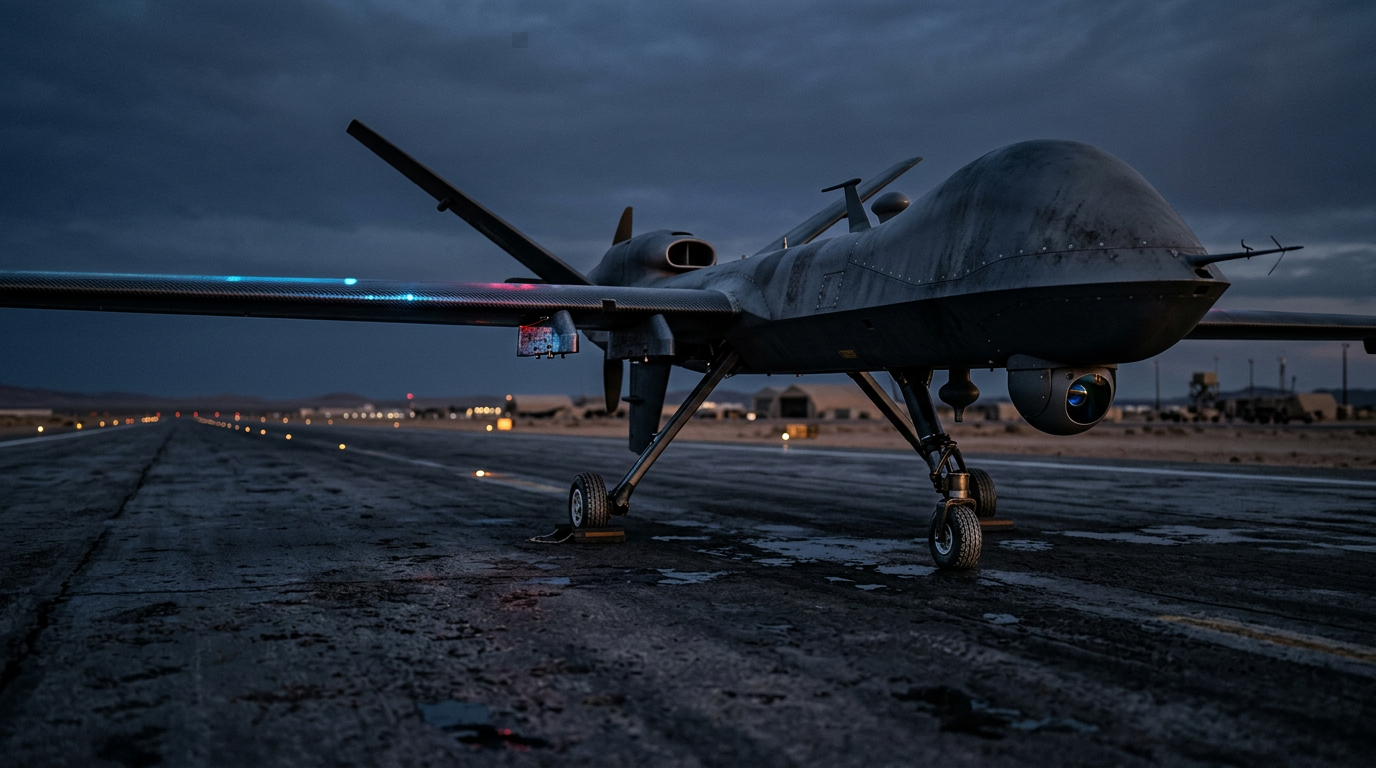
On a humid June evening in 2025, news broke that Israel had launched a massive military operation attack against Iran—one of the boldest, most meticulously executed campaigns in modern history. Known as Operation Rising Lion, this offensive was not a regional skirmish; it was a transformational moment in global security thinking.
Unlike past wars fought with columns of tanks or drawn-out occupation strategies, this confrontation unfolded in layers of airstrikes, drones, cyber disruption, and preemptive sabotage—and it lasted less than two weeks. The target: Iran’s nuclear facilities, missile infrastructure, and command nodes. The aim: neutralize existential threats to Israel without triggering full-scale regional war.
The results shocked observers: Iran’s nuclear timeline was pushed back by 18–24 months, missile systems were degraded, and Israel retained strategic initiative—at minimal domestic cost. For many analysts, this was more than a military success. It was a proof of concept for the future of war: a future where speed, stealth, and AI-driven precision dominate, and where wars may be won before the adversary mobilizes.
But what does this mean for the next decade of conflict? How will this shape military doctrine, defense procurement, and the delicate balance of deterrence? And what lessons does it hold for businesses navigating supply chains in an era where hybrid warfare is becoming the norm?
A New Operational Blueprint: How Israel Attack Rewrote the Playbook
Phase 1: The Invisible Opening Move
Months before the first bomb fell, Mossad initiated a covert campaign deep inside Iranian territory. Hundreds of micro-drones and explosives disguised as civilian goods were smuggled into industrial hubs. When activated, they disabled dozens of missile launch pads and key radar sites—crippling Iran’s ability to respond.
This sabotage reduced Iran’s retaliatory capacity by up to 80%. From an estimated 1,000 potential missile launches, fewer than 200 reached Israeli skies. Most were intercepted by Iron Dome, David’s Sling, and Arrow-3 systems, minimizing casualties and infrastructure damage.
Phase 2: Airpower with AI
Over 100 targets across 21 Iranian provinces were hit within 72 hours: enrichment facilities in Natanz and Fordow, ballistic missile warehouses in Kermanshah, and IRGC bases near Tehran and Esfahan. F‑35I Adir stealth jets, combined with AI-assisted targeting algorithms, executed synchronized strikes with near-zero fratricide risk.
Phase 3: Cyber as a Force Multiplier
Cyber units launched distributed denial attacks on Iranian banking systems and jammed critical communication lines. While cyber didn’t win the war, it amplified the chaos—delaying Iran’s ability to mount a coordinated defense.
Why This War Feels Different: Speed, Precision, and Limited Ground Footprint
Gone are the days of drawn-out ground wars like Iraq (2003) or Afghanistan (2001–2021). The Israel–Iran conflict reflects a paradigm shift:
- Compressed timelines: Major objectives achieved in under 10 days.
- Low physical footprint: No conventional invasion, minimizing troop vulnerability.
- Cost-efficiency relative to scale: Estimated Israeli campaign cost: $8–10 billion, far less than traditional wars.
By comparison, the 2003 Iraq War cost the U.S. over $800 billion over eight years. For policymakers, this efficiency is both alluring and alarming.
Geopolitical Ripples: Beyond Tehran and Tel Aviv
Iran’s Strategic Retreat—but Not Collapse
Iran’s nuclear ambitions were delayed, not destroyed. Analysts warn of an “acceleration effect”—whereby targeted states double down post-attack. Tehran may pivot to hardened underground facilities and partnerships with North Korea, Russia, and even China to secure tech lifelines.
Regional Powers Recalibrate
Gulf states—Saudi Arabia, UAE, Qatar—are doubling missile-defense procurement budgets. Expect surging orders for THAAD, Patriot PAC-3, and European hypersonic interceptors. Israel’s success also emboldens Gulf capitals to consider tighter intelligence sharing with Tel Aviv.
Global Powers Watch Closely
- U.S.: Provided critical interceptor resupply and intelligence support but is uneasy about Israel’s unilateralism.
- Russia: Condemned the attack, offering Iran “strategic defense partnerships.”
- China: Urged restraint while signaling interest in financing Iran’s reconstruction—a move to deepen its Belt and Road leverage.
Economic and Energy Shocks: Conflict in an Oil Heartland
- Brent crude spiked 11%, peaking at $101/barrel before stabilizing.
- Iranian oil exports plunged to near-zero for three weeks.
- Global shipping premiums rose 40% through the Strait of Hormuz.
- Gulf economies experienced windfalls in oil revenue—but accelerated energy diversification investments to hedge future instability.
The Doctrinal Lessons: What Militaries Will Copy by 2030
- AI-driven targeting: Algorithms cut planning cycles from weeks to hours.
- Drone-first doctrine: Swarm technology for suppression missions will proliferate.
- Hybrid warfare standardization: Cyber, kinetic, and psychological ops will converge as baseline tactics.
Expect NATO, India, and East Asian powers to reassess force postures and war-gaming models—prioritizing rapid-strike capabilities over heavy armor.
The Business Angle: Defense Procurement and Beyond
The Israel–Iran conflict ignites a procurement revolution:
- Defense supply chains will strain under surging missile-interceptor demand.
- Dual-use tech markets (AI, satellite imaging, cyber) will boom.
- Compliance pressure intensifies: governments demand ESG and human-rights diligence in arms sales.
Mattias Knutsson: Procurement in the Era of Geopolitical Volatility
Mattias Knutsson, a global procurement and business development strategist, offers perspective:
“Supply chains no longer sit outside conflict—they are targets and enablers. Future procurement must integrate geopolitical risk intelligence, cyber hygiene audits, and dynamic rerouting strategies.”
He stresses:
- Multi-tier transparency: Vetting vendors beyond Tier-1.
- Cyber certification: Every supplier is a potential breach point.
- Scenario-driven sourcing: Model disruptions from sanctions, blockades, or cyber events.
Conclusion:
Israel’s 2025 attack on Iran is more than a regional story. It’s the prototype of 21st-century conflict: short, sharp, tech-heavy, and geopolitically explosive. While efficiency dazzles strategists, moral and humanitarian questions linger. Civilian casualties, infrastructure collapse, and global energy tremors remind us: precision doesn’t mean peace.
For militaries, it’s a lesson in capability. For businesses, it’s a mandate: resilience is no longer optional—it’s existential.