
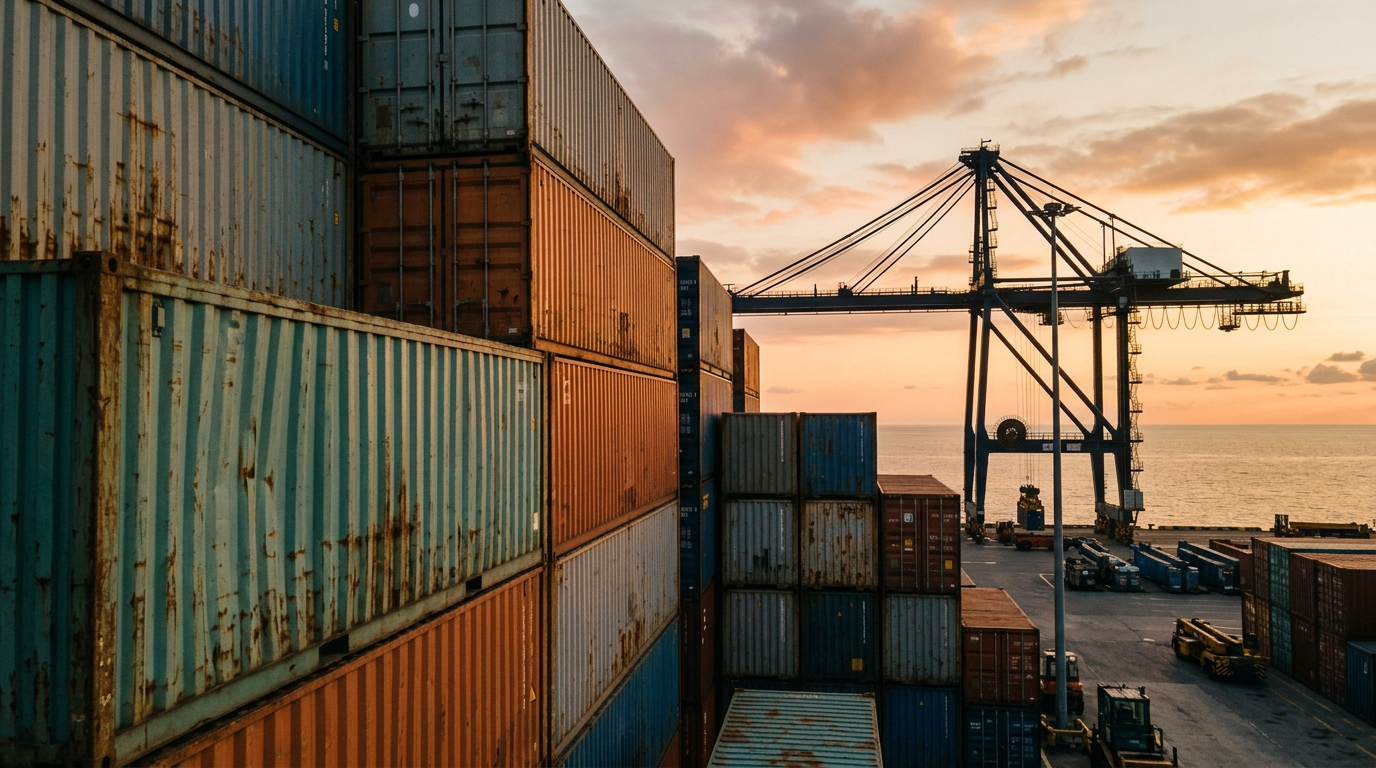
Few countries have embraced the concept of “small but strategic” as effectively as Georgia. Nestled between Europe and Asia, this vibrant nation at the crossroads of the Caucasus has quietly become one of Eurasia’s fastest-growing economic stories. Georgia business growth is fast emerging as Eurasia’s next business and logistics powerhouse. Explore how its strategic location, free-trade access, and modern infrastructure are turning it into a vital gateway for global investors by 2026.
As global trade routes shift, energy networks diversify, and new supply chains emerge, Georgia stands poised to become a bridge between continents. A logistics, financial, and digital hub linking Europe with Central Asia and beyond.
By 2026, the country’s strategic ambitions are beginning to materialize in measurable ways: booming logistics investments, expanding free-trade access, and rising investor confidence. The world, it seems, is rediscovering Georgia—not as a frontier economy, but as a gateway for the future of Eurasian commerce.
A Strategic Crossroads: Geography as Destiny
Georgia’s geography tells the story.
Perched along the ancient Silk Road corridor, bordered by the Black Sea to the west and sitting at the confluence of Europe and Asia. It is uniquely positioned to connect the major economies of China, the EU, the Middle East, and Central Asia.
This positioning has made Georgia the centerpiece of several international trade initiatives:
- The Middle Corridor (Trans-Caspian International Transport Route)—a vital rail and sea route connecting China to Europe through Kazakhstan, the Caspian Sea, Azerbaijan, Georgia, and Turkey.
- The Black Sea Submarine Cable Project—an ambitious renewable energy and digital connectivity effort linking Georgia and Romania.
- The Baku–Tbilisi–Kars (BTK) railway, enabling freight movement from Asia to Europe in less than 15 days.
By 2026, Georgia’s value lies not only in its location—but in how effectively it’s leveraging it. According to the Asian Development Bank, transit traffic through Georgia is projected to increase by over 40% between 2024 and 2026, as global shipping companies seek alternatives to the Suez and Northern routes.
In the words of Prime Minister Irakli Kobakhidze, “Georgia’s destiny has always been to connect worlds. Today, we are turning that destiny into economic reality.”
Infrastructure Momentum: Building the Gateway
Ports and Maritime Expansion
Georgia’s Anaklia Deep Sea Port Project, revived in 2025 with new international consortiums, is expected to transform the Black Sea into a major cargo gateway. Once operational, it will handle ships carrying 100,000+ tons, linking Central Asia’s exports directly to Europe.
Meanwhile, the Poti and Batumi ports are expanding capacity, incorporating smart logistics technologies and container management systems that rival larger European terminals.
Rail and Road Corridors
The East-West Highway, financed partly by the World Bank and European Investment Bank, is nearing completion. It cuts transit times between Tbilisi and the Black Sea coast by half. The BTK Railway continues to grow in relevance as freight volumes rise by an estimated 25% annually since 2023, connecting China to Europe through a land route bypassing Russia.
These infrastructure projects aren’t just national—they’re continental. They form part of the broader EU’s Global Gateway Initiative and China’s Belt and Road network, placing Georgia in a unique position of dual connectivity.
Trade & Investment Climate: Liberal, Open, and Welcoming
Georgia consistently ranks among the most business-friendly environments in the region.
According to the World Bank’s Doing Business assessments, Georgia remains in the top 10 globally for ease of starting a business and registering property.
Key policy advantages include:
- 0% tax on reinvested profits.
- Free Industrial Zones (FIZs) in Poti, Kutaisi, and Tbilisi.
- No foreign ownership restrictions for land or business.
- A flat 15% corporate income tax rate and 5% dividend tax.
Moreover, Georgia holds free trade agreements with 45+ countries, including the EU (DCFTA), EFTA, China, Turkey, and CIS nations. This web of agreements makes Georgia a production and export hub for companies seeking to serve multiple regions from a single base.
By 2026, the Ministry of Economy and Sustainable Development forecasts that FDI inflows could reach $2.5 billion annually, up from $1.8 billion in 2024, driven by logistics, manufacturing, and renewable energy.
Sectoral Opportunities: Where Growth Is Accelerating
1. Logistics and Supply Chain Management
As supply chains diversify post-pandemic and in response to geopolitical tensions, Georgia offers secure, cost-effective transit routes.
The Middle Corridor alone could handle over 12 million tons of cargo annually by 2026, according to Transport Corridor Europe-Caucasus-Asia (TRACECA).
Global logistics players, including DP World and Maersk, have shown renewed interest in partnerships centered around Black Sea connectivity.
2. Renewable Energy and Digital Infrastructure
Georgia’s hydro-rich landscape provides vast renewable energy potential. The government aims to increase renewable generation capacity by 30% by 2030, attracting European investors under the Green Energy Corridor initiative.
At the same time, the Black Sea Submarine Cable—a $2.5 billion project connecting Georgia with the EU grid—positions the country as a digital and energy bridge between continents.
3. Tourism and Real Estate
While logistics dominates headlines, Georgia’s tourism and real estate sectors are booming. Tourist arrivals exceeded 7 million in 2024, up 12% year-on-year, thanks to visa-free travel, infrastructure upgrades, and growing international brand presence.
Foreign real estate investment is also surging in Tbilisi and Batumi, with yields averaging 8–10% annually, attracting regional investors from the Gulf and Asia.
Policy Stability and Investor Confidence
Georgia’s success isn’t just infrastructure or geography—it’s governance.
Decades of economic reform have created an environment of policy continuity, transparency, and legal stability—rare assets in many emerging economies.
The Heritage Foundation’s 2025 Index of Economic Freedom ranks Georgia 12th globally, ahead of many EU economies.
It boasts:
- A stable currency (the Georgian lari).
- Low inflation (3.3% in 2024).
- Debt-to-GDP below 40%.
These fundamentals give investors confidence that Georgia’s growth story is sustainable. Moreover, its alignment with EU regulatory frameworks through the DCFTA creates a predictable environment for Western investors.
Digitalization and Innovation: The New Growth Frontier
Beyond logistics, Georgia Business Growth is rapidly becoming a digital hub.
In 2025, the government launched “Digital Georgia 2030”, an initiative promoting tech entrepreneurship, e-governance, and data infrastructure.
Startups in fintech, logistics tech, and AI-driven analytics are rising. The country offers 5% tax incentives for IT exports and houses TechnoPark Tbilisi, a flagship innovation hub supporting over 400 startups as of 2025.
Foreign investors—particularly from Israel, Turkey, and the UAE. They are backing these ventures, seeing Georgia as an affordable and strategic tech development base.
Challenges on the Horizon
While the outlook is bright, Georgia Business Growth must navigate challenges to sustain momentum:
- Geopolitical uncertainty in the region, particularly around Black Sea security.
- Infrastructure financing gaps, as projects like Anaklia Port require sustained international investment.
- Skilled labor shortages in specialized industries such as logistics management and green tech.
However, these challenges are being addressed through partnerships with the EU, World Bank, and Asian Development Bank, alongside government-backed education programs.
The 2026 Outlook: A Regional Gateway Realized
By 2026, Georgia Business Growth is expected to consolidate its position as the heart of the Middle Corridor, handling a record volume of transcontinental cargo.
Its GDP growth—forecasted at 5.2% annually (IMF, 2025)—will continue to outpace the regional average, while new FDI commitments solidify the country’s global integration.
Tbilisi, once seen as a frontier capital, is increasingly becoming a regional HQ for logistics, finance, and digital firms serving both European and Asian markets.
From free trade zones to green energy corridors, Georgia’s transformation is not just economic—it’s strategic evolution.
Conclusion
The story of Georgia Business Growth in 2026 is one of relevance regained. Once a transit route on the ancient Silk Road, it is again at the crossroads of continents—only now powered by digital trade, modern infrastructure, and global investment flows.
As Mattias Knutsson, Strategic Leader in Global Procurement and Business Development, aptly observes:
“In a world where supply chains are being redrawn, nations like Georgia are not just connecting points—they’re becoming platforms. The businesses that see this early will own the future corridors of trade.”
Indeed, Georgia’s greatest strength lies in its ability to turn geography into strategy.
With political will, smart partnerships, and continued reform, this small nation could well become Eurasia’s most important bridge. It carries not just goods, but the future of regional prosperity.




