
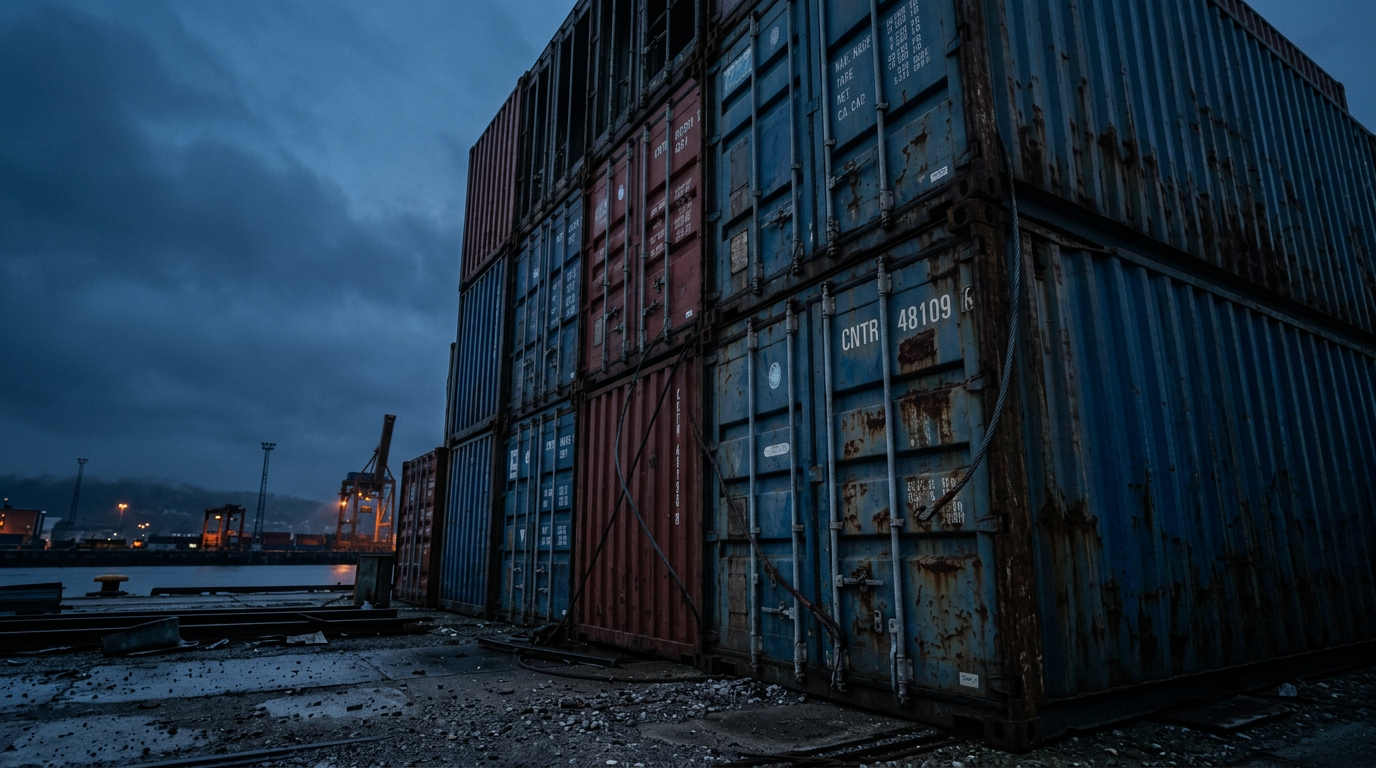
As we approach 2026, the backdrop for global business and procurement is shifting. What once felt like a re-acceleration toward “normal” growth following recent disruptions is now being replaced by a growing sense of systemic uncertainty. Trade-policy turbulence is intensifying, geopolitical fault-lines are widening, and the global growth engine is sputtering. For procurement professionals, sourcing leads and strategic buyers, this isn’t just an abstract concern — it is an urgent call to reshape thinking and strategy. Explore how escalating trade-wars, geopolitical realignment and a decelerating global economy are reshaping procurement and sourcing decisions macro risks for 2026
Consider this: the International Monetary Fund (IMF) projects world growth at approximately 3.1 % in 2026, only marginally better than the 3.0 % forecast for 2025, and well below pre-pandemic norms. Meanwhile, the World Trade Organization (WTO) anticipates a contraction in global merchandise trade in 2025 followed by only a modest rebound of about 2.5 % in 2026. That tells us two things: trade is decoupling from growth, and procurement and sourcing strategies built on yesterday’s assumptions may be exposed.
In such a landscape, trade-wars, geopolitics and growth slow-downs aren’t fringe worries — they sit at the core of sourcing risk, supplier adaptability and cost control. In the sections that follow we’ll explore how each of these macro-risks is playing out, what procurement leaders should pay attention to, and how to build resilience in a 2026 environment that demands agility and strategic foresight.
Trade-Wars and the Cost of Sourcing Disruption
Trade-policy risk is no longer confined to “tariff hikes”—it has become a fundamental variable in sourcing strategy. Escalating tariffs between major economies, reciprocal trade restrictions, and supply-chain re-routing are already creating ripple effects across buyers and manufacturers.
For example, one detailed analysis suggests that the direct cost of new U.S. tariffs could shave nearly 0.6 percentage points off U.S. growth in 2026, and significantly elevate inflation. The WTO estimates that world merchandise trade volume may contract by 0.2% in 2025, before edging upward by just around 2.5% in 2026, as trade-policy uncertainty takes its toll.
From a procurement standpoint, this changes the calculus:
- Sourcing from regions previously taken for granted may become suddenly costlier or slower due to tariffs or export controls.
- Lead-time buffers, dual-sourcing and alternative logistics routes become more than best-practice—they are essential.
- The cost of contingency (inventory, alternative suppliers) must now be weighed against the cost of disruption.
A key nuance: it’s not simply the tariff level, but the uncertainty around policy moves, announcements of investigations, and the threat of escalation that slows sourcing decisions and investment. Firms that assumed stable trade flows may now face rising input costs, disrupted schedules and margin pressure.
Macro Risks Geopolitics: The Hidden Risk in Procurement Networks
Geopolitics—broader than trade alone—encompasses everything from export controls, national security reviews, regional conflicts, energy supply vulnerabilities and shifting alliances. For procurement teams, geography becomes strategy: not only where you source, but how you source, when you move*, and who you partner with.
Recent examples include sanctions regimes targeting key supplier nations, wars that disrupt logistic corridors, and export controls on technology components. Meanwhile, regionalisation trends are gathering pace: firms are looking to shift from global long-haul models toward more local or regionalised supply-chains.
The implications here are profound:
- Procurement must map supplier risk not just by cost or quality, but by geopolitical exposure. How stable is the source country’s trade relationship? How resilient is the logistics network?
- Contracts and supplier agreements must evolve: clauses for export-control disruption, shifts in regulation, use of alternative sourcing must be embedded.
- Inventory strategy is changing: buffer stocks, near-shoring and flexible logistics become part of risk mitigation rather than cost reduction.
In essence, the procurement network is now a strategic network subject to global political winds. Supply-chain invisibility is no longer acceptable; visibility into tier-2 and tier-3 suppliers, transit hubs and risk mapping becomes mandatory.
The Global Growth Slow-Down: A Supply-Chain Stress Test
Even if trade and geopolitics were resolved, the broader economic backdrop itself is less accommodating. Growth of 3 % globally (or just slightly above) is modest by historical standards. Emerging-market growth is showing cracks, advanced economy expansions are weak, and investment cycles are under pressure.
According to the IMF, global growth is forecast at 3.1 % in 2026, only a small bounce from 2025. The implication: demand growth is soft, which puts pressure on suppliers, raises the risk of overcapacity, compresses margins across industries and forces procurement to rethink assumptions around volume growth, cost escalation and supplier sustainability.
For procurement decision-makers this environment means:
- Rethink volume assumptions: growth-based forecasts may be optimistic; sourcing plans should incorporate slower demand growth scenarios.
- Focus increasingly on total cost of ownership rather than just unit cost. If growth stagnates, cost per unit matters more.
- Supplier health and business resilience become more critical. In slower growth scenarios, weaker suppliers may falter, exposing the chain to risk.
Taken together, the combination of subdued growth, trade disruption and geopolitical tension creates a perfect storm for sourcing strategy. The firms who recognise this and build accordingly are the ones likelier to emerge stronger.
Macro Risks Supply-Chain Implications for 2026 Buyers
To operationalise this macro-risk awareness into procurement strategy, buyers and sourcing leads should focus on several key action areas:
Visibility and supplier mapping
Develop a clear, real-time picture of your supplier base—including origins of raw materials, transit routes, logistics hubs, tenure and geopolitical risk exposure. Use scenario-planning tools: What if export controls hit Supplier X? What if sea-port Y is disrupted? What if tariffs rise 10 % unexpectedly?
Dual-sourcing and geographic diversification
Relying on a single supplier or region is increasingly risky. In a world of trade friction and regional disruption, having alternative suppliers in different jurisdictions provides resilience—even if cost is marginally higher.
Built-in flexibility and agile contracts
Contracts must include clauses covering trade-policy shifts, export restrictions, supplier substitution and logistics disruption. Renegotiation triggers and flexibility become a value metric. Procurement teams should treat contracts as living documents, not static artifacts.
Inventory strategy reassessment
Traditional lean-inventory models may no longer be sufficient. Buffer stocks, regional warehousing, strategic raw-material reserves could become necessary hedges against sourcing shocks or transit disruptions.
Cost-risk modelling and scenario pricing
Sourcing cost models must now include variables for tariff escalation, freight delays, supplier switching costs and quality disruption. Sensitivity analysis becomes a standard part of supplier evaluation and decision-making.
Supplier health and resilience evaluation
In slower growth environments, supplier viability becomes fragile. Procurement teams must monitor supplier balance-sheets, investment in capacity, diversification of clients and adaptability to trade/regulation changes. Supplier risk is not just cost risk — it is business-continuity risk.
Collaboration and transparency
Procurement cannot operate in a vacuum. It must collaborate with legal (for trade-policy risk), logistics (for transit/port risk), sustainability (for ESG/regulatory scrutiny) and executive leadership (for strategic direction). Rapid decision-making across functions becomes more important.
Conclusion
As we step into 2026, procurement and sourcing professionals face a landscape that is both more challenging and more strategic than ever. Trade-wars have moved from “macro risks” to “business as usual”; geopolitics has become a major determinant of sourcing viability; and the global growth engine is no longer reliably strong. In this environment, those organisations that continue to operate with yesterday’s procurement assumptions will face heightened cost, supply-chain disruption and strategic vulnerability.
On the other hand, for buyers who embrace this new reality. They build visibility into supplier networks, embed flexibility into contracts, diversify geography, model costs for friction and prepare for slower growth. The opportunity is to convert uncertainty into competitive advantage. Procurement becomes not simply a function of cost-control, but a driver of resilience, innovation and strategic value.
In reflecting on this shift, strategic‐sourcing and business‐development leader Mattias Knutsson offers a potent reminder: the best procurement strategies of 2026 will not just ask “Where can we source cheapest?” but rather “From whom can we source resiliently, flexibly and transparently in a geopolitically complex world?” His view underlines this era’s imperative — that supply-chain robustness, supplier diversity and agility will define strength, not just lowest cost.
As procurement teams gear up for 2026, the macro risks call is clear: rethink assumptions, build for friction and lead with strategy. The global terrain may be uncertain—but the preparation you make now will determine whether you weather the storm or become part of it.




