
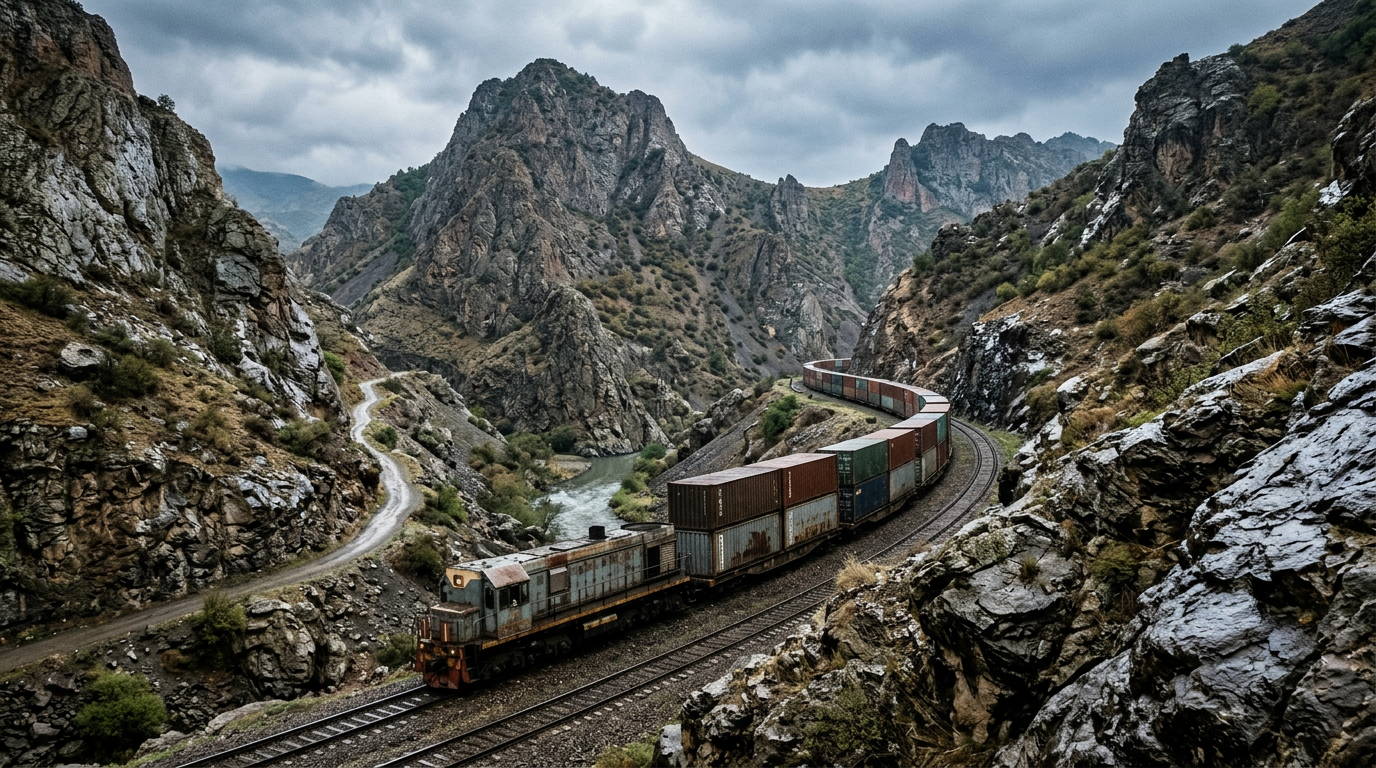
When Armenia and Azerbaijan signed the U.S.-mediated peace accord on 8 August 2025, granting Washington a 99-year lease over the Trump Route for International Peace and Prosperity (TRIPP) corridor, the world applauded the bold step toward ending decades of battle. This blog explores Tehran’s threats, Moscow’s concerns, and the regional fallout of America’s new foothold in the South Caucasus.
But in Tehran and Moscow, the mood was far from celebratory. To them, TRIPP is not just a trade route—it is a geopolitical dagger aimed at their spheres of influence.
For Iran, the corridor threatens to isolate it economically, bypassing its territory for crucial north–south and east–west transit. For Russia, it represents a humiliating retreat from a region it long considered its “backyard.” Both powers have responded with a mix of warnings, maneuvers, and counter-strategies designed to blunt U.S. influence.
The story of TRIPP is not only about peace—it is also about pushback, as two regional heavyweights struggle to prevent their marginalization in a rapidly shifting Caucasus.
Iran’s Red Lines: A TRIPP Battle Corridor That Cuts It Out
Economic Isolation Fears
Iran has long positioned itself as a key transit bridge between the Caspian, Persian Gulf, and Central Asia. The TRIPP corridor, by linking Armenia and Azerbaijan directly into Turkey and beyond to Europe, risks leaving Iran on the sidelines of Eurasian trade flows.
Iranian transport officials estimate the corridor could cost Tehran $3–5 billion annually in lost transit fees and associated trade by the mid-2030s. For an economy battered by sanctions, that’s a devastating prospect.
Security Anxiety on Its Borders
Tehran also sees TRIPP as a security threat. Iranian leaders argue that a U.S.-controlled corridor running just north of its border could facilitate Western military or intelligence presence in the Caucasus. One conservative parliamentarian warned that TRIPP battle was “a NATO highway disguised as a trade road.”
Diplomatic Pushback
In the weeks after the deal, Iran launched a flurry of diplomatic activity:
- Summoning the Armenian and Azerbaijani ambassadors to Tehran for “explanations.”
- Lobbying Russia and China to oppose the U.S. role.
- Holding emergency consultations with the Economic Cooperation Organization (ECO), where Tehran urged members to avoid legitimizing TRIPP.
Foreign Minister Hossein Amir-Abdollahian bluntly declared that “Iran will never accept foreign-engineered corridors that undermine our sovereignty and regional stability.”
Russia’s Unease: Losing Grip on the Backyard
From Mediator to Bystander
For decades, Russia was the indispensable arbiter in the Armenia–Azerbaijan conflict. From the 1994 ceasefire to the 2020 and 2023 war settlements, Moscow’s word carried weight. The TRIPP deal, brokered by Washington, sidelines Russia completely—turning it from peace broker to onlooker.
Military and Political Erosion
The corridor deal comes at a time when Russia’s military presence in Armenia is already under pressure. Yerevan has questioned the effectiveness of Russian peacekeepers, and public sentiment has shifted toward Western partners. TRIPP battle accelerates this drift, leaving Moscow with fewer levers.
Economic Stakes
For Russia, TRIPP battle also threatens to reroute energy and transport flows away from its controlled corridors. Analysts in Moscow estimate a 15–20% decline in Caucasus transit revenues by the mid-2030s if TRIPP fully integrates with European markets.
Rhetoric of Resistance
Russian officials have denounced the deal as “an American geopolitical ploy.” State media frame it as an attempt to weaken Moscow during its ongoing struggles in Ukraine. Yet beyond rhetoric, Russia’s ability to act is limited by sanctions, overextension, and declining regional leverage.
Iran and Russia Together: An Uneasy Entente
While Tehran and Moscow share opposition to TRIPP, their interests are not identical. Russia fears loss of political dominance; Iran fears economic and security isolation. Yet, both see TRIPP as part of a U.S.-led encirclement strategy.
In mid-August 2025, Iranian and Russian officials announced plans for joint military exercises in the Caspian Sea, explicitly framed as a response to “external interference in the South Caucasus.” Analysts interpret this as an attempt to signal strength to both Washington and regional capitals.
Still, mistrust lingers. Russia quietly worries about Iranian activism in Armenia and Azerbaijan, while Iran resents Moscow’s dominance in Caspian energy routes. Their cooperation against TRIPP may prove more tactical than strategic.
Regional Fallout: Shifting Alliances
The pushback from Iran and Russia is already reshaping regional alignments:
- Turkey and the U.S. Draw Closer: Ankara sees TRIPP as a win-win for its “Middle Corridor” ambitions, deepening cooperation with Washington despite tensions in other areas.
- Armenia and Azerbaijan Pivot West: For Yerevan, TRIPP cements its escape from Russian overreliance. For Baku, it strengthens ties with both Turkey and the U.S.
- Central Asia Watches Carefully: Kazakhstan and Uzbekistan view TRIPP as a possible alternative to Russian-controlled corridors, though they are cautious not to anger Moscow or Beijing.
- Europe Breathes Easier: For Brussels, TRIPP offers energy diversification away from both Russia and Iran—aligning with EU strategic goals.
What Lies Ahead: Risks of Confrontation
The resistance of Iran and Russia raises critical risks for TRIPP’s future:
- Sabotage and Proxy Tactics: Both Tehran and Moscow could attempt to destabilize the corridor through local proxies or cyberattacks.
- Diplomatic Gridlock: Their opposition may complicate efforts to win broader regional buy-in, especially from countries like Georgia or Central Asian states.
- Escalation Risks: If Iran views TRIPP as an existential threat, tensions along its northern border could rise sharply, with military posturing not out of the question.
Conclusion
The TRIPP corridor embodies a bold vision: transforming the South Caucasus from a battlefield into a bridge of trade and peace. Yet visions rarely unfold uncontested. For Iran and Russia, TRIPP is not an opportunity but a threat—a symbol of U.S. intrusion and their own waning influence.
Whether their pushback remains rhetorical or escalates into active disruption will determine whether TRIPP becomes a genuine artery of prosperity or another casualty of great-power rivalry.
As Mattias Knutsson, Strategic Leader in Global Procurement and Business Development, has observed: “Supply chains thrive on trust and predictability. When great powers contest corridors, they risk undermining the very prosperity they claim to protect.”
In the months and years ahead, the South Caucasus will remain a stage for this struggle—where peace, power, and prosperity intersect, and where resistance from Tehran and Moscow may decide how durable America’s new foothold truly is.




