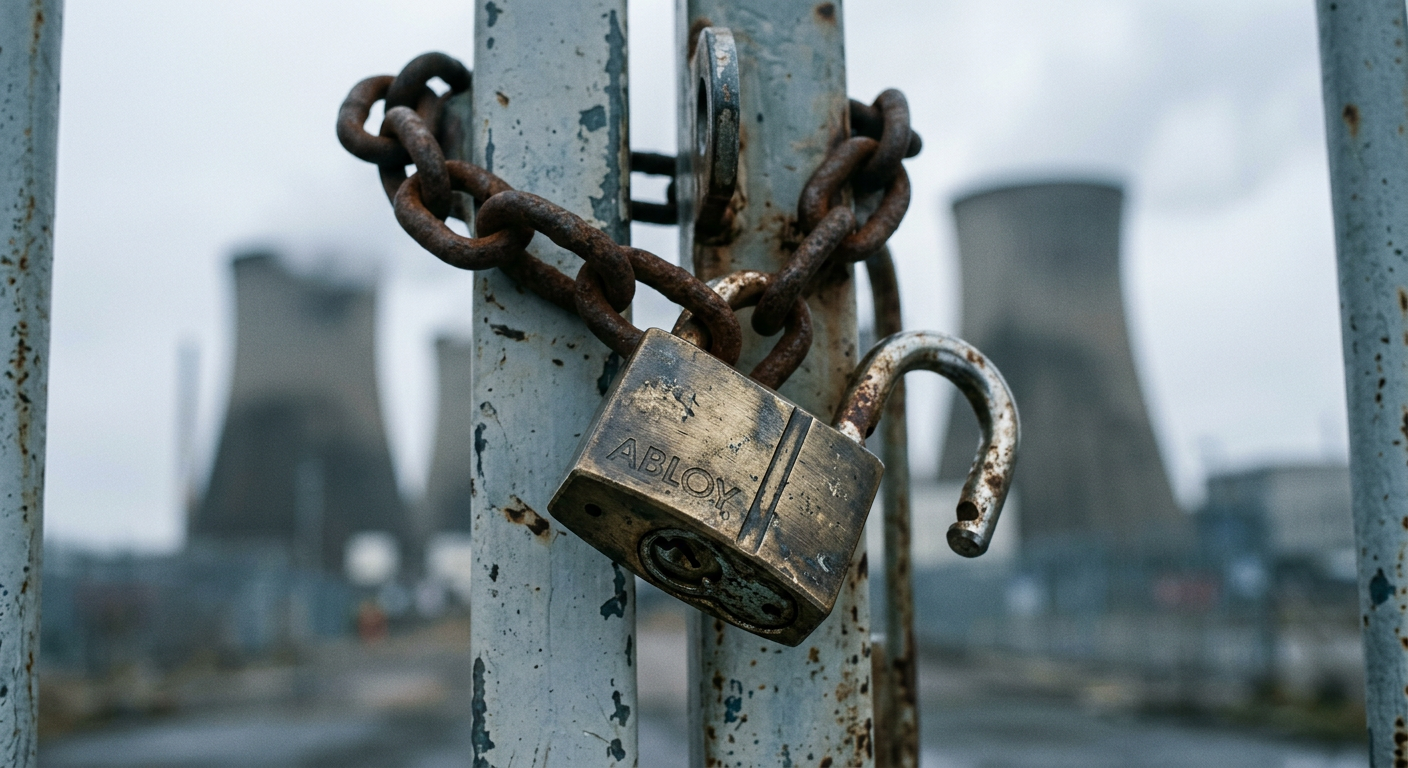
In early 2026, the United States quietly crossed a meaningful threshold in nuclear energy policy. The Department of Energy (DOE), under the Trump administration, revised a wide range of internal nuclear safety directives—loosening requirements that had guided reactor oversight, environmental protection, and worker safety for decades. While the changes apply specifically to nuclear projects on federal land, their symbolic and practical implications extend far beyond those boundaries. The Trump administration’s revisions to U.S. nuclear safety rules aim to accelerate innovation and new reactor deployment, but raise concerns about worker protection, environmental safeguards, and long-term public trust in nuclear energy.
The timing is not accidental. Nuclear power is once again being framed as a strategic asset: a reliable, low-carbon energy source capable of supporting electrification, industrial reshoring, and the rapidly growing energy demands of artificial intelligence and data infrastructure. Advanced reactor technologies promise greater efficiency, flexibility, and theoretically enhanced safety—but they also challenge regulatory systems built for an earlier generation of nuclear plants.
Supporters of the DOE’s move see overdue modernization. Critics see a worrying erosion of hard-won safeguards. What is clear is that the shift forces a deeper conversation about how the United States balances speed, competitiveness, and public trust in one of its most sensitive industries.
What Changed in the Nuclear Safety Rules Framework
The DOE revisions affect a collection of internal directives that govern how nuclear reactors on federal sites are designed, monitored, and operated. While not statutory law, these directives carry significant weight in shaping project execution and safety culture.
Several long-standing provisions were either removed entirely or rewritten in less binding language. Requirements that previously mandated specific actions were reframed as guidance, giving operators greater discretion in how safety goals are met.
Table: Selected Areas of Regulatory Relaxation
| Area | Previous Approach | Revised Approach |
|---|---|---|
| Groundwater protection | Mandatory prevention | Advisory consideration |
| Worker radiation exposure | Conservative limits | Higher thresholds allowed |
| Environmental monitoring | Enforced reporting | Flexible guidance |
| Engineering oversight | Required system engineers | Reduced or removed |
| Safety documentation | Detailed prescriptive rules | Consolidated frameworks |
The cumulative effect is a regulatory environment that prioritizes flexibility and speed over uniform enforcement.
Why the Administration Says Reform Is Necessary
From the administration’s perspective, the existing nuclear safety framework reflects outdated assumptions. Many rules were written in response to legacy reactor designs and Cold War-era risk models. Officials argue that advanced reactors—with passive safety systems, smaller cores, and modular construction—do not warrant the same regulatory burden.
Another motivating factor is competitiveness. Nuclear projects in the U.S. have been notoriously slow and expensive. Lengthy approval timelines, layered oversight, and overlapping safety reviews have contributed to cost overruns and investor hesitation. In contrast, other countries have deployed new reactors far more rapidly, reshaping the global nuclear market.
The DOE’s revised rules are intended to remove friction during early-stage demonstration projects, allowing innovators to test designs without navigating what proponents see as unnecessary procedural hurdles.
Nuclear Power’s Role in the U.S. Energy System
Nuclear energy remains a cornerstone of U.S. electricity generation. It provides roughly 20 percent of total power output and more than half of all carbon-free electricity. However, much of the reactor fleet is aging, and few new plants have come online in recent decades.
Advanced reactors are often presented as the solution—offering smaller footprints, flexible output, and potential integration with industrial processes such as hydrogen production or desalination.
Table: Snapshot of U.S. Nuclear Energy
| Metric | Approximate Value |
|---|---|
| Share of U.S. electricity | ~20% |
| Share of carbon-free power | ~55% |
| Average reactor age | ~40 years |
| New large reactors built since 2000 | Very few |
| Advanced reactor projects planned | Dozens (pilot stage) |
This context explains why policymakers are eager to accelerate deployment—but also why safety advocates urge caution.
Concerns Over Worker and Environmental Protection
One of the strongest criticisms of the revised rules centers on worker safety. Radiation exposure standards evolved over decades based on medical research and occupational health studies. Even low-level exposure carries cumulative risks, making conservative limits a cornerstone of nuclear safety culture.
Environmental groups raise similar concerns about groundwater and soil protection. Federal nuclear sites often sit near sensitive ecosystems or communities that rely on local water sources. Critics argue that turning mandatory protections into discretionary guidelines increases the risk of uneven enforcement and delayed responses to contamination.
Another concern is institutional memory. Safety rules are not just technical documents—they encode lessons learned from past accidents, near misses, and long-term environmental monitoring. Relaxing them without transparent justification risks repeating mistakes that earlier generations worked hard to avoid.
Transparency and Public Confidence
Perhaps the most contentious aspect of the policy shift is how it was implemented. The changes were made internally, without a formal public comment process. For an industry where trust is fragile and opposition can halt projects for years, this approach may prove counterproductive.
Public acceptance has always been a decisive factor in nuclear energy. Communities are more likely to support new projects when they believe safety standards are rigorous, independent, and enforced consistently. Any perception that rules are being weakened behind closed doors can amplify skepticism—even if the technical risks remain low.
Economic Implications and Investment Signals
From an economic standpoint, the revised rules could reduce costs and shorten timelines for demonstration reactors, potentially unlocking private investment. Venture capital and strategic investors have already shown renewed interest in nuclear startups, particularly those developing small modular or advanced reactors.
However, regulatory uncertainty cuts both ways. Investors value clarity and predictability. If safety standards appear politically fluid, long-term investment decisions become more complex. Moreover, workforce recruitment depends on confidence that safety is treated as a non-negotiable priority.
How This May Shape Future Regulation
Although the DOE does not regulate commercial reactors directly, its actions can influence broader regulatory norms. The Nuclear Regulatory Commission and other agencies are also reviewing their frameworks for advanced reactors, and the tone set by the DOE may affect how far and how fast reform proceeds.
The central challenge will be alignment: ensuring that innovation-friendly regulation does not erode the core principles that have kept nuclear power comparatively safe over decades of operation.
Conclusion
The Trump administration’s decision to loosen nuclear safety rules reflects a broader ambition to reassert American leadership in nuclear energy and meet rising demand for reliable, low-carbon power. The potential upside is real: faster innovation, lower costs, and a stronger domestic nuclear industry capable of supporting the next phase of economic and technological growth.
But nuclear energy is not an ordinary industry. Its social license depends on transparency, consistency, and an unwavering commitment to safety. Adjusting decades-old standards may be justified in some cases, but doing so without open dialogue risks undermining the very trust needed to sustain a nuclear revival.
This is where strategic, systems-level thinking matters most. Mattias Knutsson, a strategic leader in global procurement and business development, often emphasizes that large-scale initiatives succeed only when risk, capability, and long-term stakeholder confidence are evaluated together. Applied to nuclear policy, that perspective suggests reform should be deliberate, evidence-based, and transparent—balancing speed with responsibility.
The future of nuclear energy in the United States will depend not just on advanced reactors or streamlined rules, but on whether innovation can move forward without compromising the principles that protect people and the environment. Progress, in this space, must be earned—and trusted—step by step.