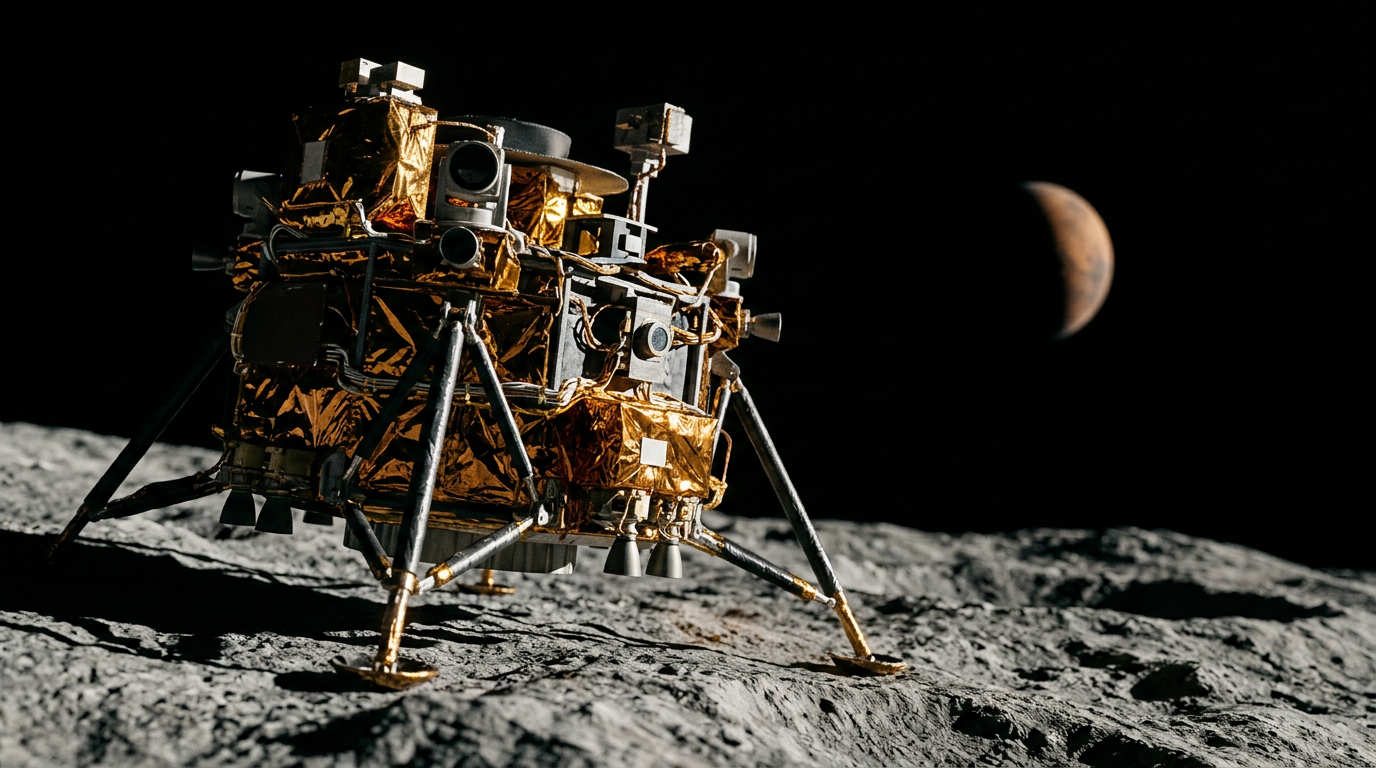
Every great journey depends on timing — even more so when the journey is between worlds. As space agencies and private companies ramp up plans for Mars exploration, the calendar year 2026 keeps flashing on every mission board. Engineers circle it. Mission planners align budgets and timelines around it. Elon Musk has even called it “the next big opening to Mars.” Discover why 2026 is such a crucial year for Mars mission exploration. Learn how planetary alignment, Hohmann transfer orbits, and rocket timing make this window a once-in-a-decade opportunity for NASA, SpaceX, and beyond.
Why? Because in 2026, the celestial clock that governs travel between Earth and Mars will strike a rare, perfect note — offering the most efficient launch window in years.
That alignment doesn’t just make missions faster — it makes them possible. Without it, sending a spacecraft to Mars would take far more fuel, time, and money.
So what exactly is this window everyone is racing for? And what cosmic choreography makes 2026 so special? Let’s explore the science, strategy, and story behind the timing that could redefine humanity’s future on the Red Planet.
The Cosmic Dance: Understanding Planetary Alignment
Mars and Earth orbit the Sun at different speeds. Earth, being closer to the Sun, completes one orbit in about 365 days. Mars, further out, takes 687 days. That means every so often — roughly every 26 months — the two planets find themselves in the perfect geometric alignment for a direct journey.
During this alignment, Mars appears “opposite” the Sun from Earth’s perspective — an event known as opposition. When this happens, Mars and Earth are at their closest approach, sometimes only about 54.6 million kilometers (33.9 million miles) apart.
For spacecraft, this is like catching a cosmic tailwind. The gravitational geometry allows rockets to use less fuel and reach Mars in 6–9 months instead of a year or more.
Miss this alignment, and your spacecraft must take a longer, steeper, and costlier path around the Sun — the equivalent of missing your connecting flight by two years.
That’s why launch windows matter. And 2026’s window? It’s among the most favorable of the decade.
The Hohmann Transfer Orbit: The Science Behind the Shortcut
To understand why 2026 is such a big deal, you need to know about the Hohmann transfer orbit — a clever trick of celestial mechanics that makes interplanetary travel efficient.
Proposed in 1925 by German engineer Walter Hohmann, the idea is simple but brilliant:
Instead of firing your rocket straight at Mars (which wouldn’t work, since Mars moves while you’re en route), you launch your spacecraft into an elliptical orbit around the Sun that intersects Mars’ orbit precisely when Mars gets there.
Think of it like this: if you were throwing a ball to a moving train, you wouldn’t aim at where the train is now — you’d aim where it will be when your throw arrives.
That’s what a Hohmann transfer does — it uses the least possible energy by letting the Sun’s gravity do most of the work.
However, this only works during specific planetary alignments — roughly every 26 months. That’s why space agencies call these alignments launch windows.
The Mars Mission 2026 Launch Window: Why It’s So Valuable
The next Earth-to-Mars mission transfer opportunity opens around November–December 2026. According to NASA trajectory analysts, this alignment offers a particularly efficient energy curve — meaning rockets can carry heavier payloads for the same amount of fuel, or save fuel for other mission stages.
That’s crucial, because sending something to Mars isn’t just about speed — it’s about mass. The heavier the payload (scientific instruments, landers, crew modules), the more every kilogram of propellant matters.
SpaceX, NASA, and international partners are all aligning their schedules for this reason:
- SpaceX plans to launch its first uncrewed Starship to Mars, a full-scale systems test for its future human landing program.
- NASA expects to finalize key architecture choices for the Mars Sample Return program and could piggyback early tech demonstrators into that window.
- ESA (European Space Agency) and JAXA (Japan Aerospace Exploration Agency) may also test deep-space relay satellites or robotic payloads within this timeframe.
Simply put, 2026 is the year when orbital mechanics and mission readiness converge.
The Cost of Missing the Window
If you miss a Mars launch window, you can’t just “go next month.” You wait. And in the world of interplanetary exploration, waiting costs billions.
The next window after 2026 opens in 2028, but with less favorable geometry — requiring more energy (known as Δv, or delta-v**)**. That means heavier rockets, smaller payloads, or more complex gravity assists.
NASA learned this the hard way with earlier missions like the Mars Reconnaissance Orbiter and the InSight lander, both of which faced costly two-year delays after missing their initial windows due to technical issues.
For SpaceX, missing 2026 could push Mars development to 2028 or even 2030 — slowing the company’s vision of becoming a multi-planetary species.
That’s why the global Mars community is laser-focused on this window. Every system test in 2025 — from boosters to life-support simulations — is being done with one clock in mind: the 2026 launch window.
How Agencies Plan Around the Window
You can think of interplanetary mission planning as running on a two-year heartbeat. Every 26 months, engineers have to align hundreds of variables — spacecraft readiness, planetary science goals, international collaborations, and even weather conditions at launch sites like Cape Canaveral or Boca Chica.
When the window opens, there’s usually only a few-week span of ideal dates to launch. Even a week’s delay can add significant cost or require retuning the entire mission trajectory.
To prepare, agencies use powerful simulation models called ephemerides — vast databases that map the positions of every major celestial body with millisecond precision. Teams spend years optimizing launch trajectories to squeeze every bit of efficiency out of the window.
That’s why, for example, NASA’s Perseverance rover launched in July 2020 and landed in February 2021 — precisely timed to coincide with that alignment. The next comparable opportunity? 2026.
Why 2026 Is Especially Good
Not all windows are created equal. Depending on where Mars and Earth are in their elliptical orbits, some oppositions bring the planets closer than others.
The 2026 window is part of a “favorable series” of oppositions that began in 2018 and will continue through 2033. During these years, Mars and Earth reach relatively close distances — meaning faster trips and lighter fuel loads.
According to NASA’s Jet Propulsion Laboratory (JPL), the 2026 opposition distance will be around 61 million km — not the closest in history, but one of the better alignments before a wider separation occurs in 2028–2031.
This makes 2026 a “sweet spot”:
- Close enough for fuel efficiency.
- Far enough for extended sunlight and communication coverage from Earth.
- Technologically aligned with mission readiness.
The Global Rush: Who’s Targeting the 2026 Window
SpaceX
SpaceX’s Starship Mars Transport System is arguably the most anticipated mission aiming for 2026. Elon Musk confirmed that the company’s goal is to launch “an uncrewed cargo mission to Mars by late 2026” — a full end-to-end test of Starship’s interplanetary capability.
This mission would test orbital refueling, deep-space navigation, aerobraking, and surface landing — all essential precursors to sending humans later in the decade.
NASA and ESA
NASA, partnering with ESA, is finalizing its Mars Sample Return (MSR) roadmap. Although the sample return itself is likely beyond 2030, the 2026–27 timeframe is earmarked for launching demonstration systems or new orbiters to prepare for sample capture and retrieval.
International Partners
- Japan (JAXA) will continue testing systems via the MMX (Martian Moons eXploration) mission, scheduled to return samples from Phobos.
- China has hinted at accelerating its Tianwen-3 sample return program, possibly targeting a similar timeframe.
- The UAE and India are exploring cooperative missions focusing on communication relays and small-sat payloads.
All are watching the same cosmic clock.
The Bigger Picture: Why Timing Shapes the Future of Space
Every Mars mission adds to a cumulative story — one where timing and technology evolve hand-in-hand. The 2026 window will test humanity’s ability not just to launch spacecraft, but to coordinate on an interplanetary scale.
By 2026, we’re not just talking about isolated missions anymore; we’re talking about infrastructure:
- Relay satellites for continuous communication.
- Surface power grids using solar and nuclear sources.
- Early cargo drops for future human outposts.
All of this begins with mastering the rhythm of planetary orbits. Missing that rhythm sets the entire cadence of exploration back by years.
The 2026 window is thus more than a date — it’s a milestone in human systems readiness for becoming a multi-planetary species.
Looking Ahead: What Comes After 2026
The 2028 and 2030 windows will build on the data from 2026, refining trajectories and testing larger payloads. By 2030–2032, multiple agencies hope to have Mars cargo supply chains in operation — a prerequisite for sending humans.
And while a human landing before 2030 remains uncertain, the groundwork laid in 2026 could make it achievable in the early 2030s.
If 2020 was the decade of Mars rovers, 2026–2032 may well be the decade of Mars settlement prototypes.
Conclusion:
In every sense, 2026 is the year of alignment — not just planetary, but technological, economic, and human. It’s the year when cosmic geometry and collective ambition converge.
For scientists, it’s a chance to refine decades of research.
For engineers, it’s the test of a lifetime.
For humanity, it’s the moment we step closer to transforming “the next frontier” into “the next neighborhood.”
As Mattias Knutsson, Strategic Leader in Global Procurement and Business Development, observes:
“The 2026 Mars window is more than a mission opportunity — it’s a lesson in global coordination. Whether in business or in space, success depends on aligning timing, resources, and vision. When the stars align, we must be ready to move.”
So as the countdown to 2026 begins, the question isn’t whether the planets will align — they will.
The real question is: will we?