The countdown to Mars feels closer than ever. Across deserts, cities, and coastlines, people glance up at the night sky and wonder: will we truly walk on the Red Planet in our lifetime? For Elon Musk and SpaceX, that question is not fantasy—it is a plan. Central to that plan is Starship, the largest rocket ever built, designed to carry humans and cargo not only into Earth orbit but far beyond. SpaceX gets ready for Starship next test flight, with eyes on 2026 Mars missions. Here’s what’s been achieved, what’s at stake.
Now, as 2026 approaches, SpaceX is preparing for the next big step in this journey—Starship’s 11th test flight. This is not just about proving rocket hardware. It is about demonstrating that the systems, supply chains, and operations required for a Mars mission are maturing. The stakes are higher than ever. The world is watching not simply for spectacle but for signals that humanity is edging closer to a new chapter of exploration.
The next test flight will be part rehearsal, part stress test, and part dream. Its success could unlock momentum toward Musk’s ambitious target: launching uncrewed Starships to Mars in the 2026 transfer window. This blog takes a closer look at what SpaceX has achieved, what lies ahead, and why the world should care.
SpaceX Starship Test Recent Achievements
Starship’s journey has been anything but smooth, yet each setback has been met with iteration. In its most recent major outing—Flight Test 10—SpaceX startship test achieved a milestone many doubted possible. The vehicle successfully carried out boost, stage separation, reentry, and splashdown objectives. That test provided crucial proof that both the Super Heavy booster and the Starship upper stage can function end-to-end.
Another major step came with the static-fire test of Super Heavy booster B15, which ignited 33 Raptor engines for nearly 10 seconds. This marked one of the most complex rocket firings ever attempted, validating design improvements in engine clustering, plumbing, and thermal shielding. Such feats are not just engineering trivia—they are precursors to reliability. Every second of controlled fire and safe shutdown adds confidence that the system can handle the brutal demands of Mars launches.
The rollout of the latest Starship upper stage to the launch pad in Texas also highlights operational readiness. Tower operations, fueling rehearsals, and pressurization tests are happening at a cadence that mirrors how SpaceX wants to run Starship in production—fast, frequent, and iterative.
Looking Ahead: The Stakes of Flight 11
With Flight 11, SpaceX hopes to push reliability further. Engineers have upgraded structures, reinforced thermal protection, and fine-tuned landing algorithms. The test will likely focus on validating separation and reentry under harsher conditions. A successful outcome would demonstrate that Starship is not just a test vehicle but a platform edging toward operational use.
Why does this matter so much? Because Mars in 2026 is not far away. Orbital mechanics dictate that the Red Planet and Earth align for efficient transfer roughly every 26 months. Miss that window, and the next chance comes in 2028. If SpaceX wants to meet Musk’s timetable, this test flight must build confidence for Mars-bound preparations now.
Beyond Mars, a successful Starship unlocks near-term applications: rapid satellite deployment, lunar logistics for NASA’s Artemis program, and heavy cargo launches for global clients. Each of these adds funding and credibility for the grander Mars vision.
The Mars Vision: 2026 and Beyond
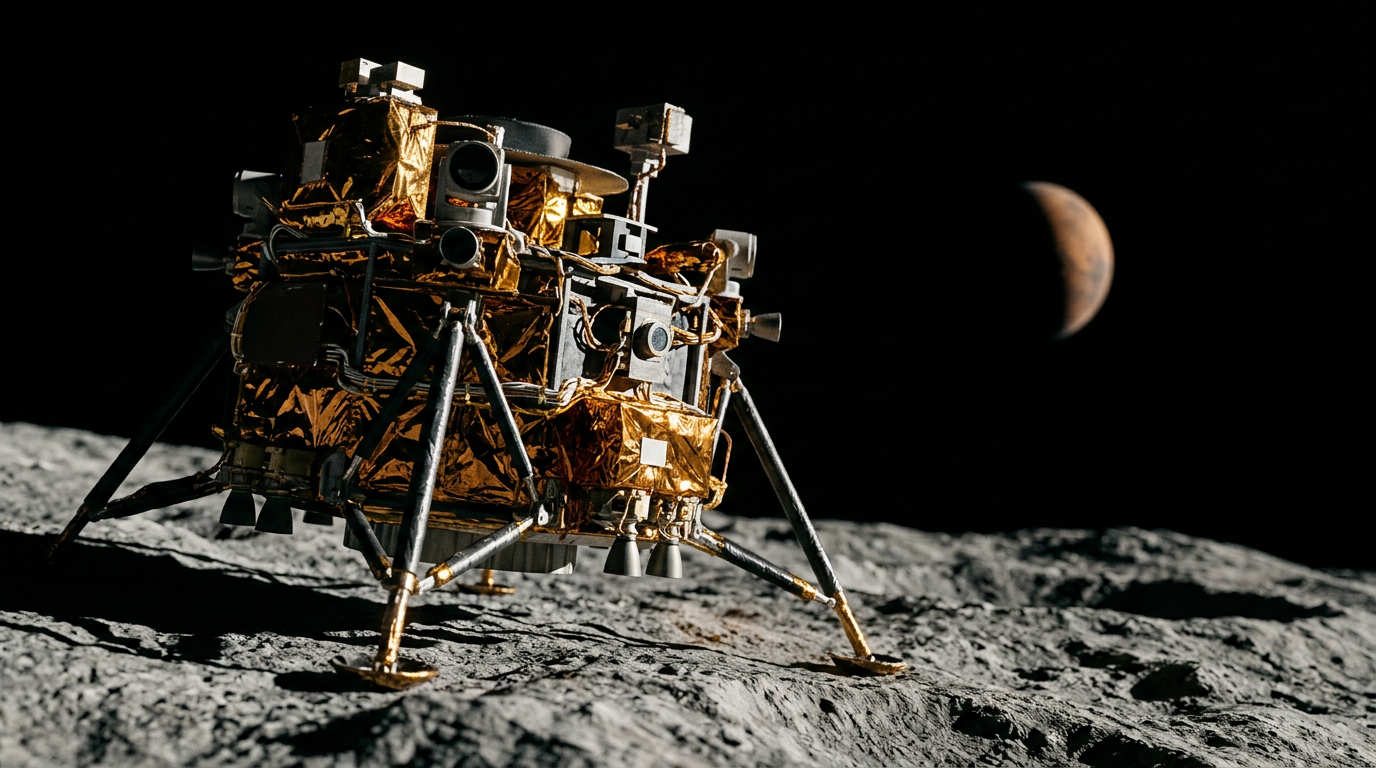
Elon Musk has spoken often about sending uncrewed SpaceX Starship test to Mars in 2026. These missions will likely serve as technology demonstrators. They may attempt landings, deliver cargo, or test life-support hardware in Martian conditions. Even if crewed missions are still years away, establishing the ability to reach Mars, enter its atmosphere, and survive touchdown would be a monumental leap.
The long-term ambition is clear: building a self-sustaining city on Mars. Musk has suggested that thousands of Starships might one day ferry equipment, habitats, and settlers to create a thriving outpost. While this sounds audacious, the next two years will reveal whether the first steps are possible.
The leap from Earth orbit to Mars surface involves many challenges: orbital refueling, long-duration life support, radiation shielding, and planetary entry. Flight 11 cannot solve these directly, but it can show that the backbone—Starship itself—is becoming robust enough to carry those solutions forward.
Technical and Logistical Challenges
Ambition alone does not reach Mars. Several hurdles remain, and Flight 11 will only partially address them.
Orbital Refueling: Mars missions require Starship to refuel in Earth orbit. This means multiple launches, complex docking maneuvers, and cryogenic fuel transfers—all technologies still unproven at scale.
Thermal Protection: Reentry from interplanetary velocity is even harsher than from Earth orbit. Tiles, steel hulls, and heat-shield adhesives must perform flawlessly under unimaginable stress.
Landing on Mars: Unlike Earth, Mars has a thin atmosphere. Parachutes are ineffective, so Starship must use propulsive landings. SpaceX has experimented with “landing on the skirt” concepts—minimal landing gear integrated into the base. Risky, but potentially simpler.
Supply Chain & Workforce: Beyond hardware, Starship’s success depends on mass-producing Raptors, building giant tanks, and training skilled workers. Each bottleneck in supply chains could slow progress.
Regulatory & Environmental Hurdles: The FAA and other agencies are increasing oversight as Starship flights grow more frequent. Expanded hazard zones and noise/environmental reviews must be navigated carefully to avoid delays.
Global Implications
If SpaceX starship test succeeds, the world will not only gain a Mars-capable rocket but a platform that could redefine the space economy. Cheaper, reusable heavy-lift rockets mean faster satellite deployment, more robust lunar missions, and potentially the foundation of a multi-planetary economy.
Geopolitically, this matters too. Nations like China are advancing their own Mars ambitions. If SpaceX demonstrates credible progress in 2026, it could place the U.S. and private enterprise at the forefront of interplanetary exploration.
Mattias Knutsson’s Perspective
Mattias Knutsson, Strategic Leader in Global Procurement and Business Development, offers a grounded reminder. For him, the leap to Mars is not only about rocket engines and flight paths. It is also about supply chains, procurement, and affordability.
He notes that a Starship Mars mission requires more than 30 Raptor engines per vehicle, advanced steel alloys, massive cryogenic tanks, and thousands of skilled workers. Without secure supply chains and sustainable procurement, the dream stalls.
Knutsson believes pilot Starship missions to Mars could indeed launch in 2026, but scaling to a sustained presence will demand unprecedented cooperation between governments, industry, and logistics providers. It is a matter not only of engineering but of coordination, investment, and global political will.
Conclusion
SpaceX next Starship test flight is not just another launch—it is a marker on the road to Mars. It will test hardware, validate upgrades, and signal whether Musk’s 2026 ambition has traction. Every fiery ascent and controlled descent adds to humanity’s knowledge, courage, and readiness for the leap ahead.
If Starship succeeds, the implications ripple far beyond SpaceX. They touch climate action (through satellite monitoring), global communications, lunar exploration, and perhaps most importantly, the spirit of exploration itself.
As Mattias Knutsson wisely reminds us, rockets alone do not make Mars possible—supply chains, skilled labor, and procurement strategy are the hidden engines. For Mars to be more than a distant dream, these must align as much as the rocket trajectory itself.
The next few flights may look like mere tests. But they are more than that. They are humanity’s rehearsal for a new era—one where the Red Planet is not just a point of light in the sky, but the next horizon of our shared future.