Fusion energy has long fascinated scientists, environmentalists, policymakers, and energy investors alike—offering a dream of nearly limitless clean power, no carbon emissions, and far less radioactive waste than traditional nuclear. In 2025, we are closer than ever before to turning that dream into reality. While the “classic” fusion fuel mix of deuterium-tritium (D-T) remains the most mature, a new frontier is opening: advanced fusion fuels like Helium-3 (³He) and Boron-11 (¹¹B). These fuels promise some remarkable advantages—from reduced neutron radiation and waste, to greater safety and potentially simpler operational environments. But with those promises come steep technical, logistical, and economic challenges.
This blog dives deep into what makes Helium-3 and Boron-11 so exciting, what stands in the way of their large-scale use, the very latest experimental and theoretical work (with facts and figures), and what experts—including business development leaders like Mattias Knutsson—are saying about fuel supplies, risks, and what the future might hold. If you care about the future of clean energy, you’ll want to understand both the promise and the risks of these “next-gen” fusion fuels.
The Promise of Helium-3 and Boron-11
Aneutronic Fusion and its Advantages
- One of the biggest draws of fuels like Boron-11 (¹¹B) is that when fused with protons (hydrogen nuclei), the reaction is aneutronic—that is, it produces very few neutrons. For example, the proton-boron-11 (p-¹¹B) reaction creates three alpha particles (helium nuclei) and releases ~8.7 MeV per reaction.
- Because there are few neutrons, there’s much less activation (radioactive contamination of reactor materials), less shielding required, and potentially lower maintenance costs. It also means less radioactive waste compared to D-T fusion.
Availability and Safety
- Boron is relatively abundant in the Earth’s crust—and the particular isotope ¹¹B is naturally occurring in sufficient amounts. It doesn’t require cryogenic handling, unlike some hydrogen isotopes or Helium-3 storage conditions.
- Helium-3 is rarer (more on that below), but in fusion literature it is often listed among candidate advanced fuels. It offers very clean reactions when used in mixes like deuterium-helium-3 (D-³He), with minimal neutron production.
Recent Experimental Advances
- In early 2023, a team working in Japan’s Large Helical Device (LHD) reported first measurements of p-¹¹B fusion in a magnetically confined plasma. Using hydrogen neutral beam injectors (three 2 MW, 160 kV injectors) and boron powder injection, they detected alpha particles consistent with proton-boron fusion reactions.
- Additional studies—such as “Laser-enhanced fusion burn fractions for advanced fuels” (2024) — have compared burn fractions (i.e. what portion of the fuel undergoes fusion) for fuels like D-T, D-He, and p-¹¹B, under both idealized and more realistic conditions. These show that though p-¹¹B suffers in some metrics (like required temperatures, confinement, etc.), there are routes (e.g. via nonthermal distributions, laser enhancement) that might narrow the gap.
The Risks & Technical Challenges for Advanced Fusion Fuels
Temperature, Confinement, and Energy Losses
- Advanced fuels like Boron-11 require much higher temperature thresholds than D-T. For example, the optimal operating temperature for p-¹¹B fusion can be more than ten times higher than for D-T reactions. That increases the demand on plasma confinement, heating systems, and materials.
- Bremsstrahlung losses (radiative energy losses due to interactions of charged particles) are more severe for high-Z (high atomic number) fuels like boron. With more charged particles per nucleus, energy is lost via radiation—which can greatly reduce net gain unless plasma parameters are optimized and losses suppressed.
Fuel Scarcity and Source Constraints (Especially for Helium-3)
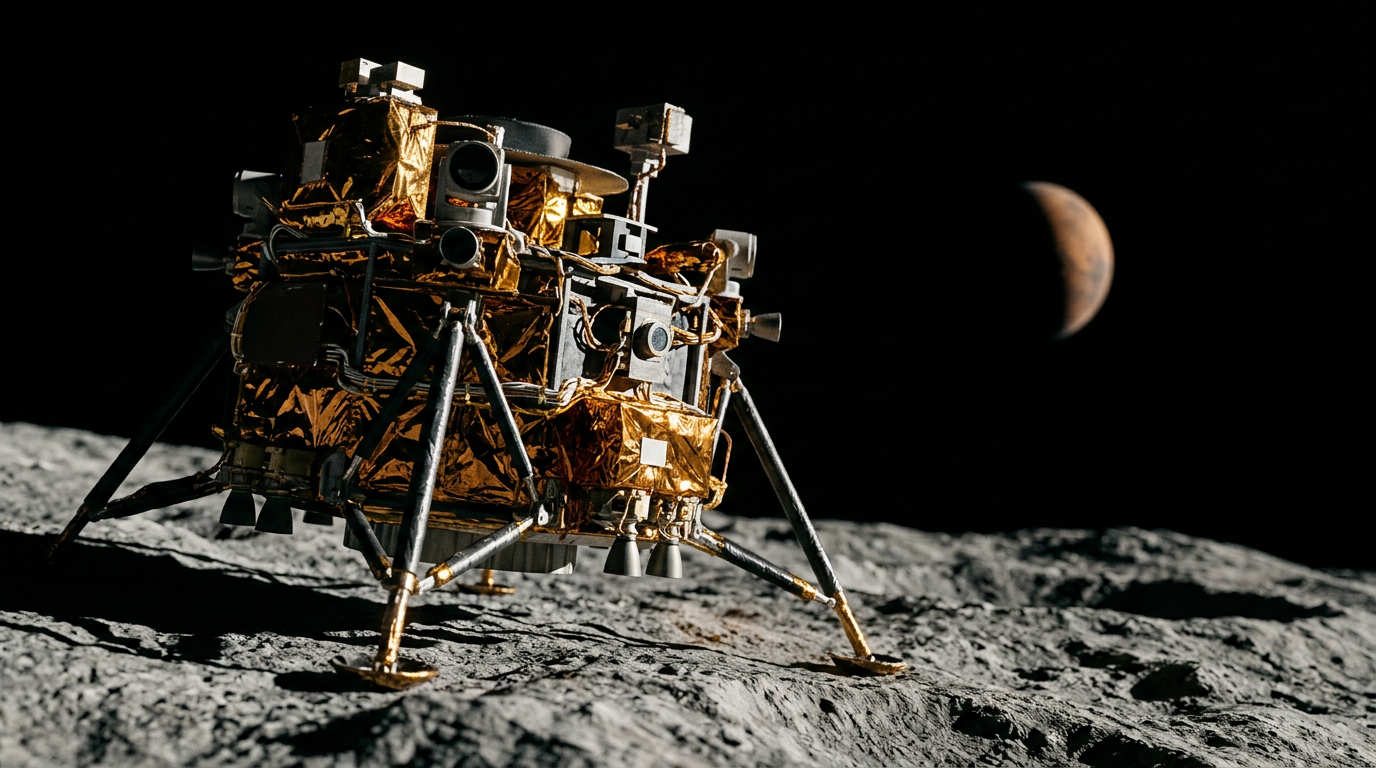
- Helium-3 is extremely rare on Earth; natural sources are tiny. To scale up a fusion industry based on D-³He or pure ³He fuel, new supply chains would be necessary. Concepts have been floated like mining from lunar regolith or gas giants, but those are speculative and expensive.
- For Boron-11, isotopic purity matters; contaminating isotopes can degrade performance or introduce unwanted reactions.
Engineering & Economic Challenges
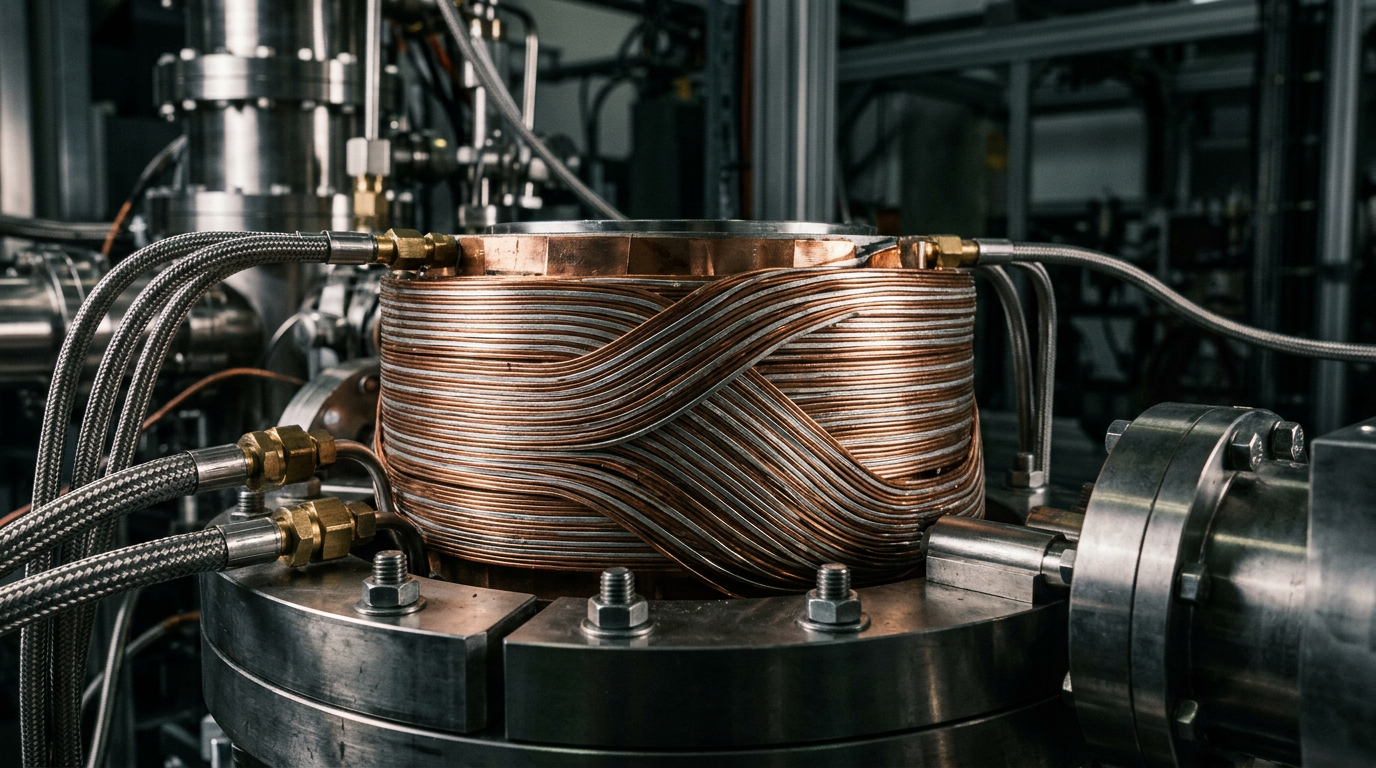
- The engineering demands are intense: heating, maintaining plasma stability, handling heat loads, designing materials that can withstand bombardment and radiation—even from gamma rays or some residual neutron reactions in some advanced fuel schemes.
- Cost is another hurdle. The experimental setups so far are limited in power, short in duration, and far from commercial scale. Scaling up from proof-of-concept to utility-scale reactor remains very expensive, uncertain, and time-consuming.
What the Latest Research Suggests About Feasibility
- Studies of spin-polarized fuel (for example with D-³He) suggest that polarization of the nuclei may enhance reaction cross-sections and reactivity. One recent paper (2025) shows that, under optimistic assumptions, polarizing the deuterium and helium-3 could increase fusion power by more than a factor of three compared to unpolarized D-³He mixes. This could help push some advanced fuel approaches toward practical thresholds.
- In solid fuel experiments, researchers are experimenting with boron hydrides. One such study used octadecaborane (B₁₈H₂₂) with high-intensity (~10¹⁶ W/cm²) laser pulses (sub-nanosecond, low contrast) to induce proton-boron fusion and observed a significant yield of alpha particles—on the order of 10⁹ per steradian. While that’s tiny in terms of usable power, it’s a meaningful advance in laboratory scaling and demonstrates that novel fuel forms may offer advantages.
- The U.S. Department of Energy’s Fusion Energy Strategy (2024) explicitly acknowledges fuels such as Helium-3 and Boron-11 as among advanced fuels, but notes that sustainable supply of some isotopes (tritium, Helium-3) is a major commercialization risk.
What Would It Take to Realize These Advanced Fusion Fuels at Scale
- Massive R&D investment in plasma confinement technologies that can sustain extremely high temperatures (100s of keV or more) while minimizing energy loss.
- Materials science breakthroughs: structural materials that can survive in high heat flux, high radiation (gamma, residual neutron) environments, and that allow for efficient thermal management.
- Fuel sourcing and supply chain: for Helium-3, building sources (whether from nuclear decay, or possibly extraterrestrial mining). For Boron-11, enhancing isotopic separation, refining purity, and ensuring cost-efficient, large volume supply.
- Policy and economic frameworks that support high risk / high reward energy technologies, including regulations, subsidies or incentives, long-term procurement strategies, and insurance/risk sharing.
- Demonstration plants: even small pilot reactors using p-¹¹B or D-³He fuel mixes to prove net energy gain, safety, cost metrics, etc.
Conclusion
Advanced fusion fuels like Helium-3 and Boron-11 offer deep hope for a future of cleaner, safer, and more sustainable energy. Their potential to minimize radioactive waste, reduce neutron radiation, and operate under fewer of the burdens associated with D-T fusion make them alluring. Yet, the path to harnessing them at scale is steep: the technical, financial, and supply chain obstacles are real.
In reflecting on this balance of promise and risk, Mattias Knutsson, Strategic Leader in Global Procurement and Business Development, recently observed that fusion isn’t just a bet on physics—it’s a bet on fuel sovereignty. He notes that while deuterium is comfortably abundant, tritium and strategic inputs—including isotopes like Helium-3, or rare materials needed for Boron-11 reaction systems—will define who leads the fusion revolution. For Knutsson, solving plasma confinement or net gain is only one side of the coin; ensuring stable, affordable access to the right fuels and building resilient supply chains are equally crucial. Without both, the advanced fuels’ promise may remain tantalizing but under-realized.
As we move into 2026 and beyond, the world will need coordinated scientific, industrial, and political efforts to bridge gaps: in R&D, in infrastructure, in financing, and in raw material supply. If those pieces come together, Helium-3 and Boron-11 might not just be futures on paper—but real energy sources powering our grids, our industries, and our zero-carbon goals.