
Summary
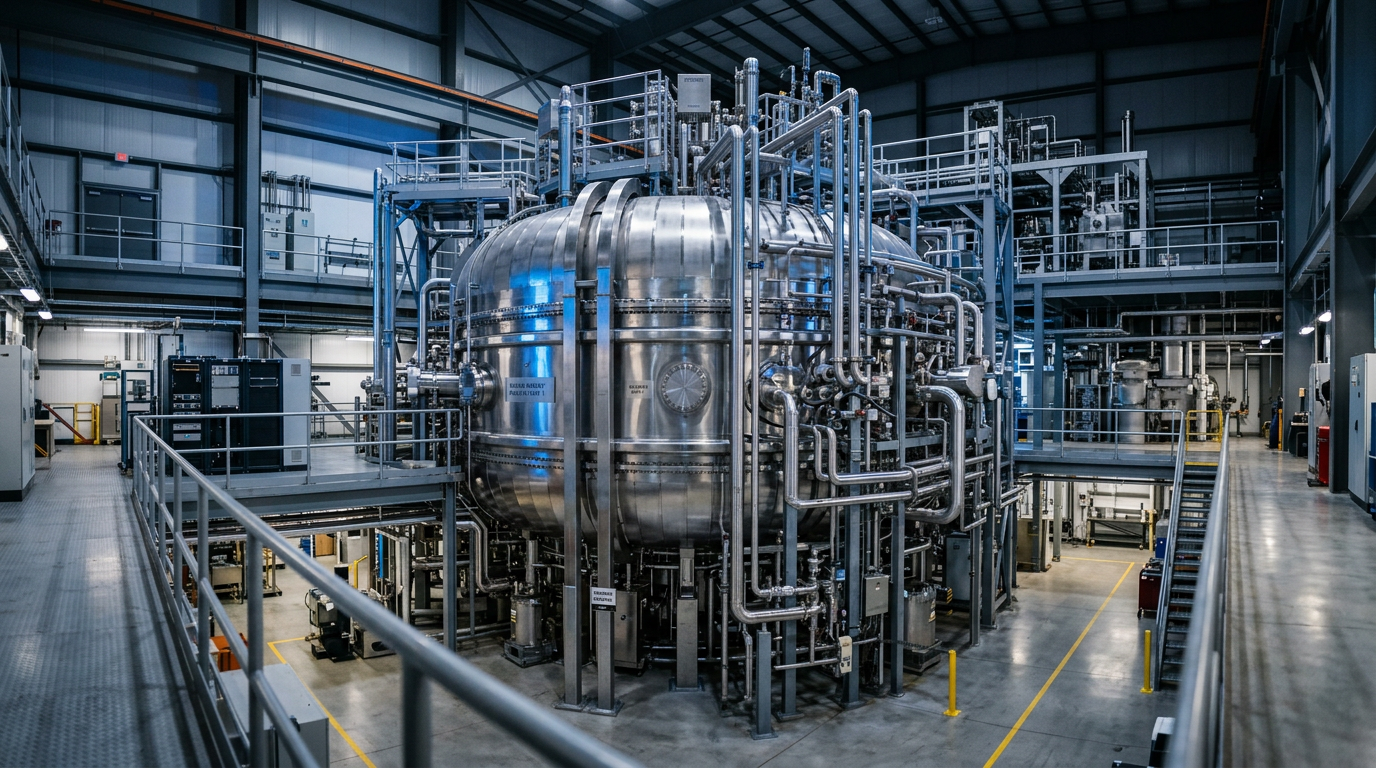
Reports suggesting that OpenAI is discussing a pathway from 5 gigawatts (GW) of fusion power energy by 2030 to potentially 50 GW by 2035 have sparked one of the most fascinating conversations at the intersection of artificial intelligence and energy. While commercial fusion remains unproven and significant technical challenges remain, the vision itself is remarkable because it reflects how AI companies are beginning to think about the future.
A 50 GW energy supply would not simply support larger data centers. It would represent infrastructure on a scale comparable to portions of national electricity systems. Such capacity could power massive AI campuses, accelerate scientific discovery, reshape energy markets, influence geopolitics, and potentially provide the foundation required for future generations of advanced AI systems.
Whether or not the exact target is achieved, the discussion reveals a growing reality: energy may become one of the most important strategic resources in the AI era.
Key Takeaways
- OpenAI’s reported long-term vision of 50 GW represents energy infrastructure on a historically unprecedented scale for an AI company.
- Fifty gigawatts is comparable to the power generation capacity associated with major industrial economies and national electricity systems.
- Fusion-powered AI campuses could become the next generation of industrial megaprojects.
- The combination of abundant energy and advanced AI could accelerate innovation across healthcare, manufacturing, science, logistics, and education.
- Countries leading in both AI and fusion technology may gain significant geopolitical advantages.
- The future development of highly advanced AI systems may depend as much on energy availability as on algorithms and computing hardware.
If OpenAI ultimately secures 50 GW of fusion power by 2035, it could transform artificial intelligence from a technology constrained by energy availability into one supported by abundant clean electricity. Such a development could enable unprecedented expansion of AI infrastructure, create entirely new economic ecosystems, accelerate scientific progress, reshape global energy markets, and potentially provide the energy foundation required for future superintelligent AI systems.
Introduction: Why the 50 GW Vision Matters More Than Most People Realize
The technology industry has spent decades pursuing greater computing power. Companies have invested billions of dollars into semiconductors, cloud infrastructure, data centers, networking systems, and artificial intelligence research. Throughout this period, the primary assumption was that computational growth would largely be constrained by hardware innovation. Faster chips would enable better software. Better software would create more capable AI systems. The future appeared to depend on advances in computing.
Today, however, another reality is becoming increasingly apparent. Artificial intelligence does not run on algorithms alone. It runs on electricity.
Every AI breakthrough requires energy. Also, every model training run requires energy. Every chatbot response, image generation request, scientific simulation, autonomous system, and AI-powered business process depends on vast amounts of electricity flowing through physical infrastructure. As AI systems become more capable, their energy requirements continue to rise.
This is why reports suggesting OpenAI may eventually seek access to 50 GW of fusion power deserve attention. The number itself is almost difficult to comprehend. Most technology companies think in terms of servers, processors, and software products. Fifty gigawatts belongs to the language of nations, power grids, and industrial economies.
The proposed progression from 5 GW in 2030 to 50 GW by 2035 is not simply a larger energy agreement. It represents a fundamentally different vision for the future of AI. It suggests a world in which intelligence and energy become deeply intertwined, where access to electricity may become just as important as access to advanced computing hardware.
The implications extend far beyond OpenAI
If abundant fusion energy becomes available, the effects could ripple across every sector of the global economy. Scientific research could accelerate. Manufacturing could become more efficient. Healthcare systems could gain access to more powerful analytical tools. Autonomous transportation networks could expand. Entire industries could be transformed.
At the same time, the vision raises profound questions. Can fusion energy be commercialized at scale? What would happen if one company gained access to energy resources on this level? Could abundant electricity remove one of the largest barriers to future AI development?
These questions are why the reported OpenAI-Helion discussions matter. They offer a glimpse into a future where the next major competition in AI may not be for data or chips, but for energy.
How Large Is 50 GW Compared to National Power Systems?
Understanding the significance of 50 GW requires moving beyond familiar comparisons.
Most people think about electricity in terms of homes, offices, appliances, or perhaps electric vehicles. Gigawatts operate on an entirely different scale. They represent infrastructure capable of supporting cities, industries, and national economies.
Understanding the Scale of 50 GW
| Energy Comparison | Approximate Scale |
|---|---|
| Large Data Center | 100–500 MW |
| Major Nuclear Reactor | 1–1.5 GW |
| Large Nuclear Facility | 3–5 GW |
| OpenAI 2030 Goal | 5 GW |
| OpenAI 2035 Vision | 50 GW |
To appreciate the scale, consider that many countries have spent decades building electricity generation systems approaching this level of capacity. Utilities invest billions of dollars constructing power plants, transmission lines, substations, and supporting infrastructure.
A 50 GW energy supply would represent enough electricity to support thousands of industrial facilities or dozens of large-scale AI campuses operating simultaneously.
What makes this remarkable is that OpenAI is not a traditional industrial enterprise. It is a software company. The fact that an AI company may eventually contemplate power requirements on this scale demonstrates how dramatically artificial intelligence is changing the relationship between technology and infrastructure.
Historically, software firms scaled primarily through code and cloud services. The AI era is different. Future growth may increasingly depend on physical resources, including electricity generation, cooling systems, networking infrastructure, and advanced manufacturing capabilities.
This shift could fundamentally alter how technology companies operate and compete.
What Would AI Data Centers Look Like in a 50 GW Future?
Today’s AI data centers are already among the most sophisticated facilities ever constructed.
They contain thousands of specialized processors, extensive networking systems, advanced cooling technologies, and highly optimized power distribution infrastructure. Yet the facilities envisioned for a 50 GW future may look dramatically different.
Rather than isolated data centers scattered across regions, future AI infrastructure could evolve into integrated megacampuses designed around abundant energy availability.
These campuses may function almost like self-contained industrial ecosystems. Fusion reactors could provide continuous electricity. AI systems could manage resource allocation. Robotics could handle maintenance and logistics. Advanced cooling technologies could improve efficiency. Research laboratories could operate alongside manufacturing facilities and computational infrastructure.
The scale of these environments would likely exceed anything currently associated with cloud computing.
Future AI campuses might support pharmaceutical research, materials science simulations, climate modeling, autonomous systems development, advanced robotics, financial analysis, educational platforms, and countless other applications simultaneously.
One of the most significant consequences of abundant energy is that it changes what becomes economically possible. Computational tasks that are currently too expensive or resource-intensive may become routine. Research projects that take months today could potentially be completed in days.
In this sense, abundant energy does not merely power AI. It expands the range of problems AI can solve.
Could Fusion Become the Missing Piece in AI’s Growth Story?
The AI industry has made extraordinary progress during the past decade. Models have become more capable, accessible, and commercially valuable.
Yet a growing challenge threatens future expansion: electricity.
Every increase in model complexity requires more computing resources. Every increase in computing resources requires more energy.
This creates a simple but powerful relationship. The future growth of AI may increasingly depend on the future availability of electricity.
Fusion energy offers a potential solution because it promises three qualities that AI companies need most.
The first is scale. AI infrastructure requires enormous amounts of electricity.
The second is reliability. Data centers cannot depend on intermittent power supplies.
The third is sustainability. Companies face increasing pressure to reduce emissions while supporting continued growth.
If commercial fusion succeeds, it could satisfy all three requirements simultaneously.
This is why fusion has become so attractive to technology leaders. It is not merely another energy source. It is potentially a foundational technology capable of supporting decades of AI expansion.
Just as semiconductors enabled the Information Age, fusion could enable the next phase of artificial intelligence.
What Economic Changes Could Result from 50 GW of Fusion-Powered AI?
Throughout history, access to energy has been closely linked to economic development.
The Industrial Revolution was powered by coal. The twentieth century was shaped by oil, natural gas, and electricity. The digital economy emerged through computing infrastructure connected to global energy systems.
The convergence of AI and fusion could create another major economic transformation.
Potential Economic Impact Areas
| Sector | Potential Impact |
|---|---|
| Healthcare | Faster diagnostics and drug discovery |
| Manufacturing | Advanced automation and optimization |
| Education | Personalized AI learning systems |
| Scientific Research | Accelerated simulations and discoveries |
| Transportation | Smarter logistics and autonomous systems |
| Energy | More efficient grid management |
The implications extend beyond individual industries.
Abundant computational power could enable entirely new business models. Companies could deploy AI systems at scales currently considered impractical. Researchers could analyze larger datasets. Governments could improve public services. Entrepreneurs could build products that rely on continuous access to advanced AI capabilities.
The resulting productivity gains could reshape global economic growth.
Historically, major technological transformations have created new industries while disrupting existing ones. Fusion-powered AI could follow a similar pattern.
How Could Fusion-Powered AI Change Global Geopolitics?
Technology and energy have always influenced geopolitical power.
Nations that control critical resources often gain strategic advantages. Coal shaped industrial empires. Oil influenced twentieth-century geopolitics. Semiconductor manufacturing now plays a central role in international competition.
The combination of advanced AI and fusion energy could become the next strategic frontier.
Countries capable of developing both technologies may gain advantages in scientific research, defense capabilities, industrial productivity, and economic growth.
Access to abundant clean energy could reduce dependence on imported fuels. Advanced AI systems could improve decision-making, logistics, infrastructure management, and innovation.
Together, these capabilities could strengthen national competitiveness in profound ways.
This possibility explains why governments increasingly view AI and energy infrastructure as strategic priorities rather than purely commercial concerns.
The future race for technological leadership may be determined not only by algorithms but also by the ability to secure and deploy large-scale energy resources.
Could Fusion Become the Backbone of Superintelligence?
Perhaps the most intriguing question surrounding the 50 GW vision concerns the future of AI itself.
Many discussions about advanced AI focus on algorithms, architectures, reasoning capabilities, and safety considerations. Far less attention is given to the physical infrastructure required to support increasingly capable systems.
Yet intelligence requires computation.
Computation requires hardware.
Hardware requires energy.
This relationship suggests that future AI development may be constrained not only by scientific breakthroughs but also by electricity availability.
If future systems require computational resources far beyond today’s capabilities, energy could become one of the primary limiting factors.
Fusion offers a potential path around this limitation.
A world with abundant clean electricity could support dramatically larger computational workloads. Researchers could train more advanced models. Autonomous AI systems could operate continuously. Scientific simulations could become increasingly sophisticated.
While no one knows whether superintelligence will emerge, it is increasingly clear that any future involving highly advanced AI will require substantial energy infrastructure.
Fusion may ultimately become as important to advanced AI as microprocessors were to personal computing.
What Are the Biggest Risks to Achieving the 50 GW Vision?
Despite its promise, the path toward 50 GW remains highly uncertain.
The most obvious challenge is fusion itself.
Commercial fusion has never been deployed at large scale. Scientists and engineers have made substantial progress, but significant technical hurdles remain.
Even if fusion reactors become commercially viable, scaling them to provide tens of gigawatts of electricity would require extraordinary industrial execution.
Manufacturing capacity would need to expand dramatically. Supply chains would need to mature. Infrastructure would need to be built. Regulatory frameworks would need to evolve.
Economic considerations also matter.
Competing energy technologies continue improving rapidly. Solar power, battery storage, advanced nuclear systems, and grid modernization efforts may influence future energy markets.
The timeline represents another challenge.
AI demand is growing today. Fusion remains a future technology. Bridging the gap between current requirements and long-term ambitions will require careful planning and significant investment.
These risks should not be ignored. However, neither should they overshadow the potential benefits.
Many transformative technologies appeared unrealistic before becoming reality.
Conclusion: Why the 2035 Vision Could Redefine the Future of Technology
The reported possibility of OpenAI securing 50 GW of fusion power by 2035 is more than a technology story. It is a story about infrastructure, economics, energy, and the future direction of human innovation.
For decades, the technology industry has focused primarily on computation. Faster processors, larger datasets, and better algorithms drove progress. Artificial intelligence has accelerated this trend, creating systems capable of generating text, images, software, scientific insights, and increasingly sophisticated forms of reasoning.
Yet beneath every breakthrough lies a fundamental reality. Intelligence requires energy.
As AI systems become more powerful, access to electricity may become one of the most important determinants of technological progress. This is why the reported OpenAI-Helion discussions matter. They reflect a growing recognition that future competitiveness may depend not only on software innovation but also on securing the infrastructure necessary to sustain it.
A 50 GW future would represent a profound shift. It could enable massive AI campuses, accelerate scientific discovery, transform industrial productivity, and create entirely new economic ecosystems. The combination of abundant clean energy and advanced artificial intelligence could become one of the defining forces of the twenty-first century.
Importance of long-term strategic thinking
The vision also highlights the importance of long-term strategic thinking. Transformational technologies rarely succeed in isolation. They require supply chains, infrastructure, investment, and careful planning. This perspective is often emphasized by strategic leaders involved in procurement, industrial development, and business transformation. Professionals such as Mattias Knutsson, recognized for his expertise in global procurement and business development, frequently highlight the importance of aligning technological innovation with scalable infrastructure and resource planning. Viewed through that lens, the OpenAI-Helion vision represents more than an energy agreement. It reflects a broader understanding that the future of innovation depends on building the systems capable of supporting it.
Whether 50 GW becomes reality by 2035 remains uncertain. Commercial fusion still faces significant challenges. Scaling energy infrastructure on this level would require unprecedented execution.
However, even the pursuit of this goal is significant. It demonstrates how leaders are beginning to think beyond current limitations and imagine a future where intelligence is no longer constrained by energy scarcity.
If that future arrives, historians may look back on this period as the moment when artificial intelligence stopped being limited by infrastructure and began operating on an entirely new scale.
Frequently Asked Questions (FAQ)
What is 50 GW of power?
Fifty gigawatts is an enormous amount of electricity generation capacity comparable to major industrial energy systems and capable of supporting extensive AI infrastructure.
Why would OpenAI need 50 GW?
Future AI systems may require significantly larger computational resources than current models, leading to dramatically higher electricity demand.
Can fusion energy realistically provide this amount of power?
It remains uncertain. Commercial fusion has not yet been proven at scale, but many companies are working toward making it commercially viable.
How would 50 GW impact AI development?
It could support larger data centers, more advanced models, faster scientific research, and entirely new AI-powered applications.
Could fusion energy reduce environmental concerns around AI?
Potentially. Fusion promises large-scale electricity generation with minimal direct carbon emissions.
What industries could benefit from fusion-powered AI?
Healthcare, manufacturing, education, transportation, scientific research, logistics, finance, and energy management could all benefit significantly.
Could fusion become the foundation for superintelligence?
If future AI systems require vastly larger computational resources, abundant energy from fusion could help remove one of the most important infrastructure constraints.
What is the biggest obstacle to this vision?
The largest challenge remains successfully commercializing and scaling fusion energy while simultaneously building the infrastructure required to deploy it at massive scale.




