
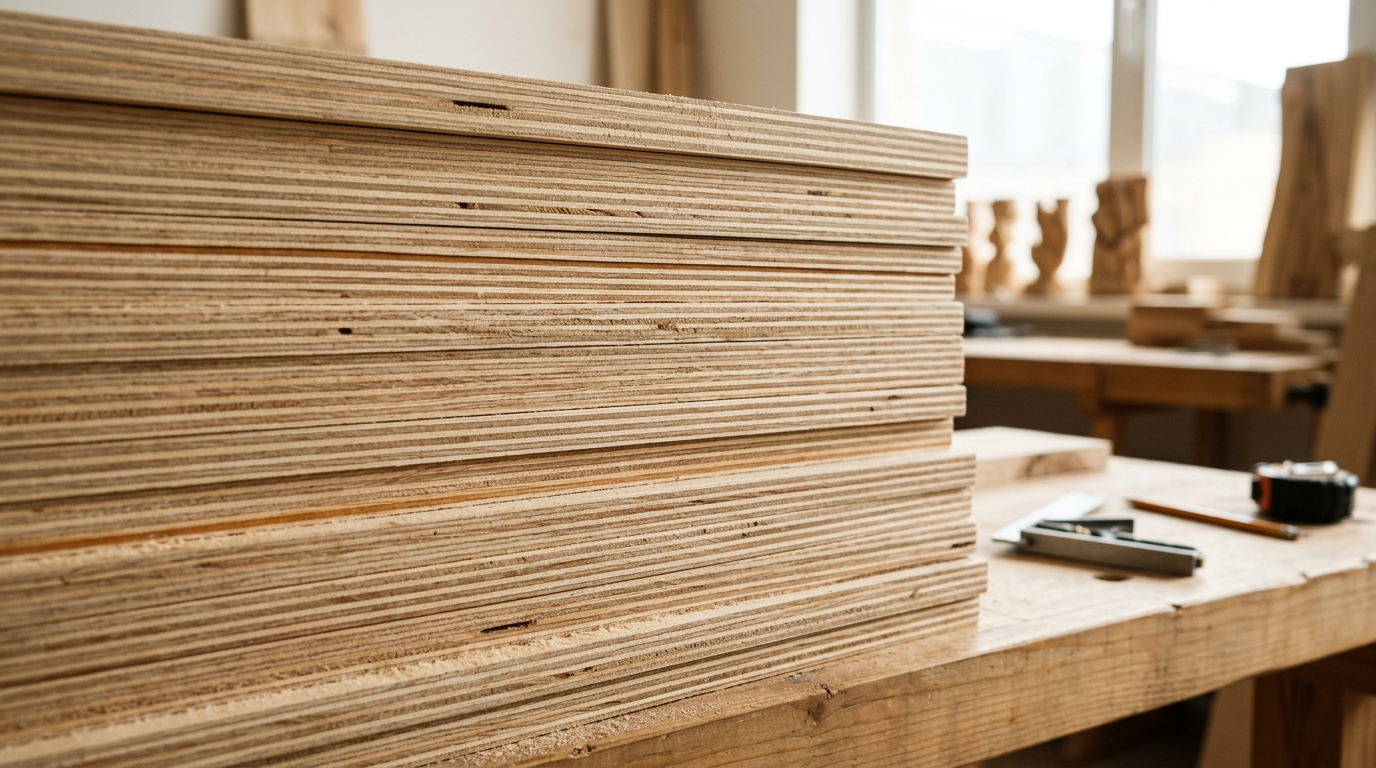
Plywood has been a silent backbone of modern life. From the houses we live in to the furniture we sit on, from schools and hospitals to the boats and vehicles that move us, this versatile material has shaped our everyday environments. For decades, plywood has been valued for its affordability, durability, and adaptability. Yet beneath this reliability lies a shadow: its production has often carried significant environmental costs. Eco-plywood innovation is reshaping construction and furniture in 2025–2026 with bio-resins, recycled materials, and sustainable forestry. Discover how this green alternative is transforming industries worldwide.
Traditional plywood has relied heavily on unsustainable logging, formaldehyde-based adhesives, and energy-intensive manufacturing processes. While industries benefited from its convenience, the planet paid the price—deforestation, toxic emissions, and carbon-heavy supply chains. As environmental awareness has grown, plywood’s story has increasingly come under scrutiny.
But 2025 is different. The plywood industry is no longer clinging to outdated practices—it is reinventing itself. Around the world, scientists, manufacturers, and entrepreneurs are pushing the boundaries of innovation to create eco-plywood, a smarter and greener alternative designed for a sustainable age. This isn’t simply about “going green”; it’s about transforming one of the world’s most used building materials into a cornerstone of the fight against climate change.
The question is no longer can we build sustainably, but rather how fast can we scale sustainable materials like eco-plywood to meet global demand. Let’s take a closer look at how this material is being reimagined, the technologies making it possible, and why eco-plywood could play a defining role in the future of construction, design, and global procurement.
The Environmental Problem with Traditional Plywood Innovation
For years, plywood has been produced using thin sheets of veneer bonded with synthetic adhesives, many of which contain formaldehyde—a chemical recognized as both an indoor air pollutant and a potential human carcinogen. The Environmental Protection Agency (EPA) has consistently flagged formaldehyde exposure as a health risk, particularly in poorly ventilated homes and workplaces.
On top of that, plywood production has been directly linked to deforestation, especially in Southeast Asia where large swaths of tropical hardwood forests were cleared for export plywood. According to the Food and Agriculture Organization (FAO), global plywood production exceeded 120 million cubic meters in 2024, much of it still tied to unsustainable harvesting practices.
This extraction is not only an environmental issue but also a social one. Communities living near logging sites often face loss of biodiversity, soil degradation, and compromised water supplies. What’s more, the carbon footprint of plywood, once considered negligible, is now under the microscope as the building sector faces pressure to decarbonize.
Breakthroughs Driving Eco-Plywood Forward
The good news? The plywood industry has not ignored these challenges. Innovations are rapidly emerging to address every stage of plywood’s lifecycle—from raw material sourcing to adhesive technology and end-of-life recycling.
Bio-Based Adhesives Transforming Safety
One of the most exciting advances has been the development of formaldehyde-free adhesives. Universities and R&D labs have pioneered bio-resins derived from soy proteins, tannins, and lignin, which not only reduce toxic emissions but often improve bonding strength. A recent study in Wood Science and Technology Journal highlighted that soy-based adhesives can withstand moisture exposure better than traditional urea-formaldehyde formulations.
Bamboo and Fast-Growing Alternatives
Instead of slow-growing hardwoods, eco-plywood increasingly relies on bamboo and plantation-grown species like poplar and eucalyptus. Bamboo, in particular, has become a star player. Growing up to 91 cm in a single day, bamboo offers unparalleled renewability. Bamboo plywood panels now rival hardwood plywood in strength, while offering a sleek, modern aesthetic favored in urban design.
Recycling Waste into Value
Eco-plywood manufacturers are also turning to circular economy practices. Companies in Europe are integrating recycled wood fibers from construction waste, old furniture, and even post-consumer packaging into plywood production. This not only diverts waste from landfills but also reduces reliance on virgin timber. The European Panel Federation estimates that recycling in wood panel production has already saved 3 million tons of CO₂ emissions annually.
Nano-Enhanced Plywood
Beyond sustainability, eco-plywood is becoming technologically advanced. Researchers in Japan have developed nanoparticle-enhanced plywood that resists fire, absorbs less water, and remains structurally sound for decades longer than traditional plywood. These performance improvements make eco-plywood not just an ethical choice but also a superior one.
Expanding Real-World Applications
Eco-plywood is already finding its way into major construction projects around the globe.
In Europe, housing projects in Germany and Scandinavia are using FSC-certified plywood to comply with strict EU directives on green building. In Asia, bamboo plywood has been adopted in schools and office projects due to its resilience and renewable sourcing. Even in North America, where plywood has traditionally been dominated by conventional products, major retailers like Home Depot have begun stocking eco-plywood varieties due to rising consumer demand.
Furniture makers are no less enthusiastic. Leading Scandinavian brands have launched entire collections of eco-certified furniture, promoting plywood panels that boast low emissions and sustainable origins. Interior designers are specifying bamboo plywood for cabinetry and flooring in luxury projects, citing its unique aesthetic and durability.
Meanwhile, governments are setting examples through public procurement policies. Hospitals and schools are moving away from formaldehyde-based plywood, prioritizing indoor air quality for vulnerable populations. Such choices accelerate mainstream adoption by making eco-plywood the “default” for high-profile, public-facing projects.
Market Momentum and Economic Implications
The eco-plywood industry is not just an environmental initiative—it’s fast becoming a lucrative market segment.
According to MarketsandMarkets, the green plywood sector is projected to surpass $25 billion by 2026, driven by a compound annual growth rate (CAGR) of over 7%. Demand is particularly strong in Europe and North America, where green building certifications such as LEED (Leadership in Energy and Environmental Design) reward the use of sustainable materials.
Consumer preferences also fuel this momentum. A Deloitte 2025 survey revealed that 72% of millennials and 64% of Gen Z homeowners said they would pay more for eco-friendly construction materials, even if they came at a premium. This shift in consumer demand is reshaping procurement priorities, pushing builders and suppliers toward greener supply chains.
Challenges on the Road Ahead
Despite impressive progress, eco-plywood still faces hurdles.
Cost remains a sticking point. Bio-resins and bamboo-based panels can be 15–30% more expensive than conventional options. Until economies of scale kick in, this premium will limit adoption in cost-sensitive markets.
Certification challenges also persist. While organizations like the Forest Stewardship Council (FSC) and Programme for the Endorsement of Forest Certification (PEFC) provide standards, inconsistent enforcement across regions risks greenwashing. Consumers and regulators alike are demanding stronger transparency and traceability.
Finally, logistics must be addressed. Transporting bamboo plywood from Asia to Western markets creates carbon costs that offset its sustainability benefits. Future solutions may involve developing regional bamboo plantations and localized recycling facilities to reduce emissions from transport.
Eco-Plywood Innovation in the Bigger Climate Picture
Why does eco-plywood matter beyond the construction sector? Because buildings account for 40% of global carbon emissions, and materials play a major role in that figure. Shifting to eco-friendly materials like plywood made from renewable sources, bio-resins, and recycled fibers could significantly reduce the sector’s carbon footprint.
Moreover, healthier indoor environments—thanks to non-toxic adhesives—mean that eco-plywood contributes to public health as much as climate goals. The link between material innovation and quality of life has never been clearer.
The adoption of eco-plywood is not a marginal adjustment; it’s a systemic shift toward more responsible cities and economies. Every panel of eco-plywood installed today represents fewer trees lost tomorrow and fewer toxins released into our shared air.
Conclusion
The story of plywood innovation is being rewritten. Once a symbol of cheap and practical construction, plywood is evolving into a showcase of innovation, responsibility, and resilience. From bio-resins that eliminate toxins to bamboo forests regenerating faster than trees can be cut down, eco-plywood demonstrates that sustainable materials can perform as well—or even better—than their conventional counterparts.
By 2026, the role of eco-plywood could expand beyond construction sites and furniture showrooms, becoming a symbol of the industry’s commitment to climate action. But this shift depends on more than innovation—it requires aligned efforts in procurement, certification, and supply chain transformation.
Mattias Knutsson, Strategic Leader in Global Procurement and Business Development, highlights this critical point: eco-plywood’s potential lies in scalability. Innovation is powerful, but unless procurement strategies prioritize sustainability and industries coordinate globally, eco-plywood risks remaining a niche product. Knutsson believes that with collective effort, eco-plywood could transform from a promising alternative into the mainstream building block of a sustainable future.
The path ahead is challenging, but the opportunity is undeniable. The humble plywood sheet, reinvented with care for the planet, may prove to be one of the most powerful tools in constructing not just our homes, but a greener, healthier world for generations to come.




