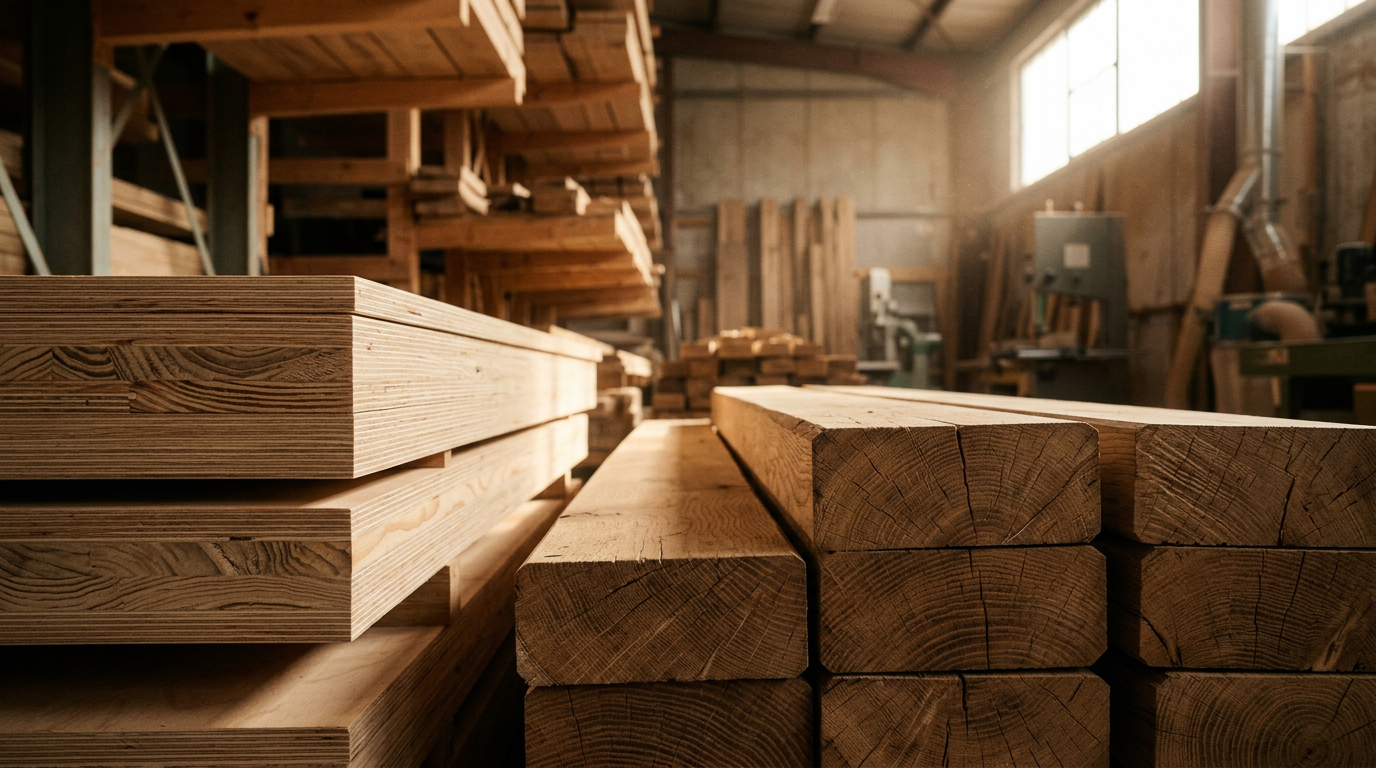
The global wood and plywood industry stands at a critical inflection point. As 2025 unfolds, the sector is navigating a dynamic mix of macroeconomic uncertainty, sustainability mandates, technological advancements, and changing consumer preferences. Lumber prices have stabilized after the historic volatility of 2021–2023, but global supply chains remain vulnerable to geopolitical tensions and climate disruptions. Meanwhile, construction, furniture, and packaging sectors—the primary demand drivers for wood products—are recalibrating to align with stricter carbon regulations and circular economy goals. Explore how wood and plywood market trends in 2025—pricing, sustainability, technology, and global trade—will influence strategic planning for 2026.
Why does this matter for businesses today? Because the decisions you make in 2025 will define your competitive position in 2026 and beyond. Whether you’re a mill operator, distributor, furniture manufacturer, or procurement leader, understanding the evolving market dynamics is no longer optional; it’s a prerequisite for resilience.
In this blog, we’ll explore the state of the wood and plywood market trends in 2025, backed by real-world figures, emerging trends, and practical strategies to help you prepare for 2026. We’ll discuss everything from pricing patterns and sustainability regulations to technology-driven production efficiencies, and conclude with actionable insights, including a forward-looking perspective from Mattias Knutsson, an authority on global procurement and business development.
The Global Wood and Plywood Market Trends: Current Landscape in 2025
Market Size and Growth Trends
The global wood products market—covering lumber, plywood, and engineered wood—is projected to hit $650 billion in 2025, with plywood accounting for nearly $85 billion, according to a recent Allied Market Research report. The market’s CAGR for 2023–2028 stands at 4.2%, driven largely by urbanization, real estate growth in Asia-Pacific, and rising demand for sustainable packaging.
Regional breakdown:
- Asia-Pacific dominates, contributing over 55% of global plywood production, thanks to strong demand in India, China, and Southeast Asia.
- North America remains resilient, buoyed by U.S. housing starts projected to reach 1.42 million units in 2025, albeit slightly down from 2024 due to higher mortgage rates.
- Europe is pivoting toward low-carbon wood products, with the EU’s Green Deal and Fit for 55 package accelerating investments in sustainable forestry practices.
Key Drivers of Demand in 2025
Construction and Real Estate
Construction remains the cornerstone of plywood demand. While global housing markets slowed in 2023 due to inflation and rate hikes, 2025 shows signs of cautious recovery. The U.S. housing market, for example, grew 4.1% year-over-year in Q2 2025, supported by falling interest rates and new home construction subsidies. In Asia, India’s real estate market continues to surge, with urban housing projects pushing plywood consumption upward by 8% compared to 2024.
Furniture and Interior Design
The global furniture market—estimated at $770 billion in 2025—relies heavily on plywood for cabinets, wardrobes, and modular furniture. Demand for engineered wood products is growing faster than solid wood due to cost-effectiveness and environmental compliance.
Packaging and Logistics
E-commerce and export packaging drive plywood demand for crates and pallets. The rise of online retail in Africa and Latin America has increased demand for lightweight yet durable plywood packaging solutions.
Price Dynamics and Supply Chain Realities
Price Trends in 2025
After the unprecedented spikes of 2021, when U.S. lumber futures touched $1,515 per thousand board feet, prices have stabilized. As of mid-2025:
- Softwood lumber averages $480/MBF, a 12% decline from 2024 due to easing supply constraints.
- Hardwood plywood prices hover around $640 per cubic meter, reflecting strong export demand from Asia.
Supply Chain Constraints
Geopolitical events remain a risk factor. Trade tensions between the U.S. and China continue to influence tariff structures on wood imports, while log export bans in Russia and parts of Africa are reshaping global trade routes. Shipping costs have moderated, but the Panama Canal drought of early 2025 disrupted logistics, underscoring the vulnerability of maritime routes.
Sustainability: From Compliance to Competitive Advantage
Sustainability is no longer a side note—it’s a central procurement criterion. With regulations tightening worldwide, companies that fail to integrate sustainable sourcing risk losing access to premium markets.
Regulatory Landscape
- The EU Deforestation Regulation (EUDR), effective in 2024, mandates traceability for wood products entering EU markets. Non-compliance can mean penalties and trade restrictions.
- The U.S. Lacey Act amendments strengthen documentation requirements for imported wood, raising compliance costs for non-certified suppliers.
Certification and Traceability
Certifications like FSC (Forest Stewardship Council) and PEFC (Programme for the Endorsement of Forest Certification) are now baseline expectations. Digital traceability tools using blockchain are gaining adoption, ensuring transparency from forest to finished product.
Technological Shifts in Wood and Plywood Manufacturing
Automation and digitalization are redefining production efficiency:
- CNC machining enables precision cutting, reducing material waste by up to 15%.
- IoT sensors in sawmills monitor moisture and optimize drying cycles, cutting energy costs by 10–12%.
- AI-based demand forecasting helps mills plan production aligned with regional consumption patterns, minimizing overstocking risks.
Investments in engineered wood composites, such as cross-laminated timber (CLT) and laminated veneer lumber (LVL), are gaining traction due to their structural strength and eco-credentials. CLT alone is projected to see a CAGR of 14% through 2030, driven by the surge in green building certifications globally.
Global Trade Dynamics and Competitive Pressures
- China remains the largest plywood exporter, accounting for 38% of global shipments. However, rising labor costs and stricter environmental controls may erode its price advantage over the next decade.
- Vietnam and Indonesia are strengthening their positions, thanks to trade agreements and lower manufacturing costs.
- African nations like Gabon are emerging as key suppliers of raw logs, but governance and infrastructure challenges limit scalability.
Risks to Watch in 2025–2026
- Climate Events: Wildfires in Canada and floods in Southeast Asia have disrupted log supplies.
- Currency Volatility: Fluctuations in the U.S. dollar impact export competitiveness, particularly for producers in emerging markets.
- Geopolitical Tensions: The resurgence of protectionist policies in several economies could affect tariff structures and market access.
Planning for 2026: Strategic Imperatives
Diversify Supply Sources
Over-reliance on a single geography is a recipe for disruption. Businesses should develop multi-region sourcing strategies, leveraging nearshoring where feasible to reduce lead times.
Invest in Sustainability
Companies that integrate ESG metrics into procurement decisions gain access to green financing and preferred vendor lists for multinational clients.
Adopt Predictive Analytics
Harnessing Q3 and Q4 data in 2025 can sharpen forecasts for 2026, enabling businesses to lock in favorable contracts before price volatility spikes.
Forge Strategic Partnerships
Collaborating with suppliers on long-term contracts ensures stability and can unlock volume discounts, particularly critical during cyclical downturns.
Mattias Knutsson’s Perspective: Procurement as a Value Driver
Mattias Knutsson, a thought leader in procurement and business development, offers a crucial insight:
“In an industry as cyclical and climate-sensitive as wood and plywood, procurement isn’t just a cost center—it’s a strategic lever. Companies that embrace transparent supply chains, invest in certification, and use data-driven sourcing models will outperform their peers in both cost efficiency and brand reputation.”
He stresses that traceability and ESG alignment will soon become “the price of admission” for entering premium markets:
“As 2026 approaches, think beyond price. Ask: Is my supply chain resilient? Is it ethical? Does it align with the sustainability commitments my customers care about? Those questions will define winners and losers.”
Conclusion:
The wood and plywood market trends in 2025 are marked by stability on the surface, yet complexity beneath. Demand is growing steadily, sustainability is reshaping value chains, and technology is opening new frontiers in manufacturing. However, volatility in trade routes, climate events, and regulatory tightening means that reactive strategies will no longer suffice.
For businesses, the path to success in 2026 lies in early planning, diversified sourcing, sustainability-driven procurement, and digital adoption. Those who treat procurement as a strategic partner—rather than a transactional function—will capture not just cost savings but long-term resilience and brand trust.
As Mattias Knutsson reminds us, “Resilience isn’t accidental—it’s engineered through foresight, collaboration, and accountability.” The companies that internalize this ethos in 2025 will not just survive the next cycle—they’ll lead it.