
Summary
Sure—here’s the same content with shorter, more readable sentences while preserving the meaning.
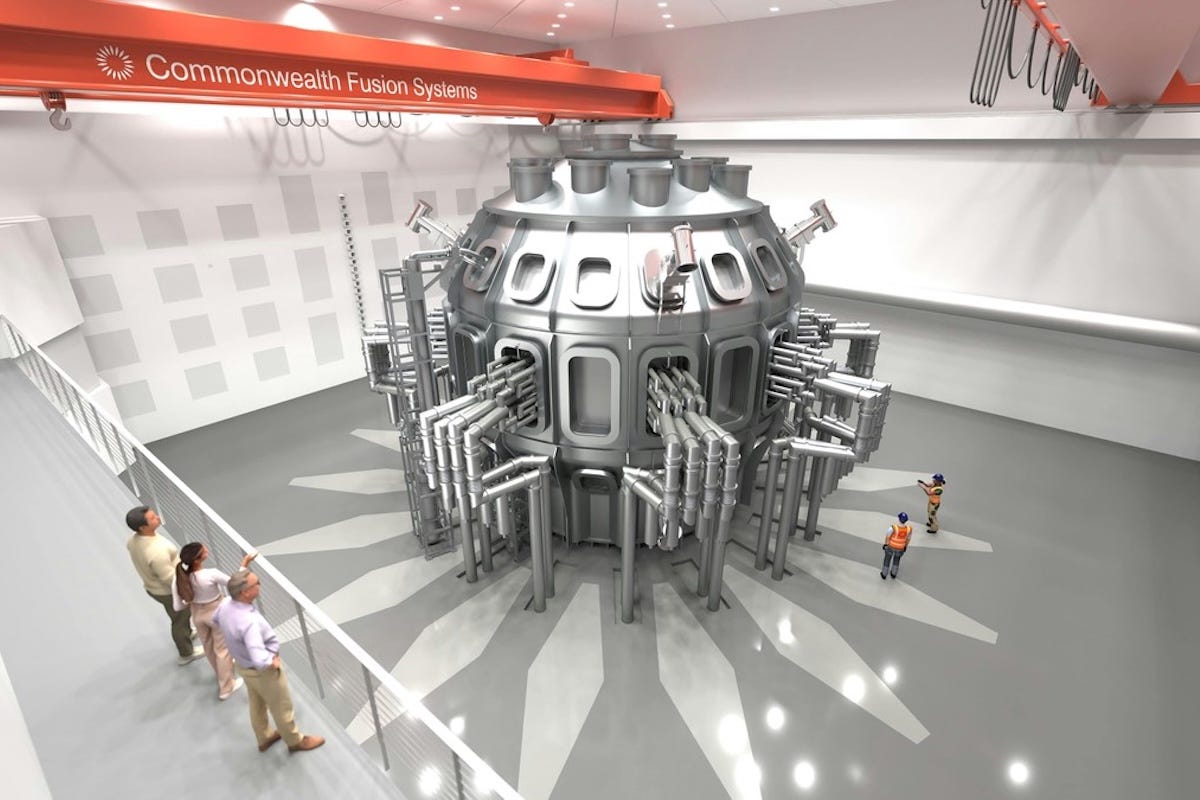
Commonwealth Fusion Systems (CFS) has reached a historic milestone. It is the first fusion energy company to formally apply for a grid interconnection position in the United States.
The company submitted its request to PJM Interconnection, the nation’s largest regional transmission organization. It plans to eventually connect its proposed 400-megawatt ARC fusion power plant in Chesterfield County, Virginia.
Commercial fusion power has not yet been achieved anywhere in the world. Even so, this marks one of the clearest signs that fusion companies are moving beyond scientific research. They are beginning to plan for commercial energy infrastructure.
The announcement comes as electricity demand is rising faster than many experts expected. Artificial intelligence, cloud computing, hyperscale data centers, advanced manufacturing, and electrification are placing growing pressure on power grids.
By securing a place in the transmission queue today, Commonwealth Fusion Systems is planning for the long term. The company believes fusion could become a reliable, carbon-free source of electricity. If successful, it could help power the next generation of digital infrastructure.
Fusion is no longer viewed only as a laboratory experiment. It is increasingly part of discussions about national energy security, industrial competitiveness, and long-term economic growth.
Major engineering and scientific challenges still remain. Commercial electricity from fusion has yet to be achieved. However, the company’s latest move signals confidence in its technology roadmap. It also reflects growing optimism across the global fusion industry.
Key Takeaways
- Commonwealth Fusion Systems is the first fusion company to apply for a U.S. power grid interconnection slot.
- The planned ARC fusion power plant is designed to generate approximately 400 megawatts of electricity.
- The project will be located in Chesterfield County, Virginia, near one of the world’s largest concentrations of AI and cloud data centers.
- The application represents an important commercial milestone because it moves fusion beyond research and into real-world infrastructure planning.
- AI, cloud computing, and expanding digital infrastructure are dramatically increasing electricity demand, creating opportunities for advanced clean energy technologies.
- Commercial fusion remains under development, but companies are increasingly preparing for deployment during the early 2030s.
Why is Commonwealth Fusion Systems’ grid application important?
Here’s an even smoother version with shorter sentences and better flow while preserving your original meaning.
The proposed ARC fusion plant is expected to generate approximately 400 megawatts of electricity. While smaller than some of today’s largest nuclear power stations, it is large enough to power major industrial customers, hyperscale data centers, or approximately 150,000 homes, depending on regional electricity consumption.
Virginia has become one of the fastest-growing electricity markets in North America. It is home to the world’s largest concentration of cloud computing facilities. The rapid growth of artificial intelligence is pushing electricity demand even higher. Industry analysts expect power consumption to increase significantly over the next decade as AI training clusters become larger and more computationally intensive.
At the same time, grid operators across the United States are retiring aging coal-fired power plants. They are also integrating more renewable energy into the grid. This changing energy landscape creates demand for reliable, carbon-free electricity that can operate around the clock, regardless of weather conditions.
Commercial fusion has not yet reached the market. Even so, transmission planning must begin years in advance. By securing a place in the grid connection queue today, Commonwealth Fusion Systems is preparing for a future in which fusion power could supply electricity at commercial scale.
Why Is This Announcement Being Described as a Historic Milestone?
For decades, nuclear fusion has existed as one of science’s greatest ambitions. Scientists have pursued the technology because it offers the possibility of producing enormous amounts of clean electricity using the same fundamental process that powers the Sun. Unlike conventional fossil fuels, fusion does not emit carbon dioxide during electricity generation, and unlike traditional nuclear fission reactors, it has the potential to produce significantly less long-lived radioactive waste while avoiding sustained chain reactions. These characteristics have made fusion one of the world’s most promising long-term energy solutions.
Despite decades of research, however, fusion has largely remained within universities, national laboratories, and experimental research facilities. Companies developing fusion reactors have primarily focused on demonstrating scientific feasibility rather than preparing commercial infrastructure. Commonwealth Fusion Systems’ latest announcement changes that narrative in a meaningful way.
Applying for a place in the U.S. electricity transmission queue is not merely an administrative exercise. It signals that the company believes commercial deployment is becoming realistic enough to begin planning years in advance for grid integration. Since utility infrastructure projects often require extensive engineering reviews, regulatory assessments, and transmission studies before construction even begins, entering the interconnection process early reflects long-term strategic planning.
This milestone therefore represents much more than a technical filing. It symbolizes fusion’s gradual transition from scientific experimentation toward practical commercial development, a shift that many experts have anticipated for years but had not yet seen materialize in such a concrete way.
Understanding the Numbers Behind the Announcement
Looking at the data helps explain why this announcement is receiving so much attention across the energy industry.
Here’s the same content with shorter, cleaner sentences while preserving the original meaning.
The proposed ARC fusion plant is expected to generate approximately 400 megawatts of electricity. While smaller than some of today’s largest nuclear power stations, it is large enough to support major industrial customers, hyperscale data centers, or approximately 150,000 homes, depending on regional electricity consumption patterns.
Virginia has become one of the fastest-growing electricity markets in North America. It hosts the world’s largest concentration of cloud computing facilities. The rapid growth of artificial intelligence has accelerated electricity demand even further. Industry analysts expect power consumption to rise significantly over the coming decade as AI training clusters become larger and more computationally intensive.
Grid operators across the United States are also managing the retirement of aging coal-fired power plants. At the same time, they are integrating increasing amounts of renewable energy. This changing energy landscape creates opportunities for dependable, carbon-free electricity sources that can operate continuously, regardless of weather conditions.
Commercial fusion has not yet reached the market. However, preparing transmission infrastructure today reflects the reality that large-scale energy projects require years of planning before electricity can be delivered to customers.
What Is Commonwealth Fusion Systems and Why Has It Become One of the Leading Fusion Companies?
Commonwealth Fusion Systems was founded in 2018 as a spinout from the Massachusetts Institute of Technology (MIT) with the goal of accelerating the commercialization of fusion energy. Rather than relying solely on government-funded research programs, the company combines scientific expertise with private investment to develop practical fusion power plants capable of supplying electricity to modern power grids.
One of the company’s defining innovations is its use of high-temperature superconducting magnets. These advanced magnets generate exceptionally strong magnetic fields, allowing engineers to design more compact and potentially more efficient fusion reactors than previous generations of experimental facilities.
The company’s first major project, known as SPARC, is designed to demonstrate net fusion performance and validate the underlying technology. Lessons learned from SPARC will then be applied to ARC, the commercial-scale fusion power plant proposed for Virginia.
This staged development strategy reflects a careful approach to commercialization. Rather than immediately attempting to build a utility-scale reactor, Commonwealth Fusion Systems aims to prove the underlying science before expanding toward commercial electricity production.
Why Was Virginia Selected for the First Commercial Fusion Plant?
Virginia has become one of the most strategically important energy markets in the United States, largely because of its extraordinary concentration of digital infrastructure.
Northern Virginia is widely recognized as the world’s largest data center hub. Thousands of servers located throughout the region support cloud computing, financial transactions, streaming services, enterprise software, cybersecurity operations, and increasingly, artificial intelligence applications used by businesses and consumers around the globe.
Every new AI model requires enormous computational power for training and ongoing operation. These computing clusters consume electricity twenty-four hours a day, seven days a week. As technology companies continue investing billions of dollars into AI infrastructure, utilities are facing unprecedented growth in electricity demand.
By locating its proposed ARC fusion plant in Chesterfield County, Commonwealth Fusion Systems positions itself close to one of the fastest-growing electricity markets anywhere in the world. Producing power near major consumers can also reduce transmission constraints and improve overall system efficiency.
The decision reflects not only engineering considerations but also broader economic trends that are reshaping global electricity markets.
How Does a Grid Interconnection Application Actually Work?
Many readers may wonder why submitting an application to connect to the grid is receiving so much attention.
Before any large power plant can begin supplying electricity, it must undergo a comprehensive technical review conducted by the regional transmission operator responsible for maintaining grid reliability.
In this case, PJM Interconnection oversees one of the largest electricity markets in North America. The organization coordinates electricity transmission across multiple states while ensuring that power generation remains reliable and balanced.
During the interconnection process, engineers analyze whether existing transmission infrastructure can accommodate the new generating facility. They examine potential impacts on voltage stability, transmission capacity, equipment upgrades, fault protection, and overall system reliability.
These studies often require several years to complete, especially for large generating facilities.
By entering the interconnection queue today, Commonwealth Fusion Systems is effectively reserving its place in a process that must eventually be completed before commercial electricity can reach customers.
Why Is Artificial Intelligence Driving Interest in Fusion Energy?
One of the most important developments shaping today’s electricity markets is the extraordinary rise of artificial intelligence.
Modern AI systems require enormous computational resources. Training advanced language models, image-generation systems, scientific simulation platforms, and enterprise AI applications requires thousands of specialized processors operating continuously for weeks or even months.
After training is complete, inference workloads continue consuming substantial amounts of electricity as millions of users interact with AI-powered services every day.
Technology companies therefore face a growing challenge: how to secure reliable, carbon-free electricity capable of operating around the clock.
While renewable energy sources such as solar and wind continue expanding rapidly, their output depends on weather conditions. Battery storage can help address short-term fluctuations but remains expensive for providing continuous multi-day backup power.
Fusion energy offers a compelling long-term vision because, if successfully commercialized, it could generate stable baseload electricity regardless of weather while producing no direct carbon emissions during operation.
Although commercial deployment remains several years away, the rapid growth of AI has strengthened the economic case for investing in advanced energy technologies capable of meeting future electricity demand.
How Is Fusion Different from Traditional Nuclear Power?
Fusion and nuclear fission are frequently confused because both involve nuclear reactions, yet they operate according to fundamentally different principles.
Traditional nuclear power plants generate electricity by splitting heavy uranium atoms into smaller elements. This process releases large amounts of energy while producing radioactive waste that requires careful long-term management.
Fusion works in the opposite direction. Instead of splitting atoms, it combines light hydrogen isotopes under extraordinary temperatures and pressures to form helium while releasing immense amounts of energy.
Scientists often describe fusion as “bringing the power of the Sun to Earth” because the same process occurs naturally inside stars.
Fusion reactors do not rely on sustained chain reactions in the same way as conventional nuclear reactors. If operating conditions are disrupted, the fusion reaction naturally stops rather than continuing independently.
However, fusion remains one of the most technically demanding engineering challenges ever attempted because maintaining plasma temperatures exceeding 100 million degrees Celsius while controlling magnetic confinement requires remarkable precision.
What Challenges Must Commonwealth Fusion Systems Still Overcome?
Although today’s announcement is exciting, commercial fusion has not yet become reality.
Engineers must still demonstrate that fusion reactors can consistently produce more usable electricity than the total energy required to operate the complete facility. Beyond achieving scientific success, developers must also prove that reactor materials can withstand years of intense neutron exposure while remaining economically practical.
Manufacturing advanced superconducting magnets, constructing commercial-scale facilities, obtaining regulatory approvals, securing billions of dollars in financing, completing environmental reviews, and integrating new power plants into existing transmission networks all represent significant challenges.
These obstacles explain why fusion continues to be regarded as a long-term technology rather than an immediate replacement for existing power sources.
Nevertheless, each milestone—including this latest grid application—moves the industry one step closer to commercialization.
What Could Fusion Mean for the Global Energy Industry?
If commercial fusion succeeds, its implications could extend far beyond electricity generation.
Reliable carbon-free power could accelerate industrial decarbonization, support large-scale hydrogen production, reduce dependence on fossil fuels, strengthen national energy security, and provide abundant electricity for rapidly growing digital economies.
Countries investing heavily in artificial intelligence, semiconductor manufacturing, advanced robotics, biotechnology, and electric transportation all require enormous quantities of dependable electricity.
Fusion has the potential to complement renewable energy rather than replace it, creating more resilient electricity systems capable of balancing variable solar and wind generation with continuous baseload power.
Although widespread deployment remains years away, governments and private investors increasingly view fusion as one of the most transformative technologies currently under development.
What Happens Next?
The road ahead remains ambitious but increasingly structured.
Commonwealth Fusion Systems must successfully complete construction and testing of its SPARC demonstration reactor before moving toward the commercial ARC facility. The company will continue advancing engineering design, regulatory approvals, financing, manufacturing partnerships, and transmission planning while progressing through PJM’s interconnection process.
Each stage involves significant technical and financial work, yet together they form a realistic pathway toward commercial electricity production.
If successful, the coming decade could witness the emergence of an entirely new category of clean energy infrastructure capable of supporting both economic growth and climate objectives simultaneously.
Frequently Asked Questions
Has Commonwealth Fusion Systems already built the ARC power plant?
No. The ARC facility is currently in the planning stage. The company is first developing its SPARC demonstration reactor to validate the underlying fusion technology before constructing the commercial power plant.
Has fusion electricity already been delivered to the U.S. grid?
No. No commercial fusion power plant currently supplies electricity to the U.S. power grid. This application is significant because it begins the planning process required for future commercial operation.
Why is the plant planned for Virginia?
Virginia hosts the world’s largest concentration of hyperscale data centers and is experiencing rapid growth in electricity demand driven by cloud computing and artificial intelligence.
What does 400 megawatts mean?
A 400 MW power plant can supply electricity to major industrial facilities or approximately 150,000 homes depending on regional consumption patterns and operating conditions.
Is fusion completely carbon free?
Fusion does not produce direct carbon emissions during electricity generation. However, emissions associated with construction, manufacturing, and supporting infrastructure still exist, as with other large energy projects.
When could commercial fusion become available?
Most leading private fusion companies are targeting the early 2030s for initial commercial deployment, although timelines remain dependent on continued scientific, engineering, regulatory, and financial progress.
Why is AI increasing electricity demand?
Training and operating advanced artificial intelligence systems require enormous computing infrastructure that consumes significant amounts of electricity around the clock. As AI adoption grows globally, demand for reliable power is expected to increase substantially.
Conclusion
The decision by Commonwealth Fusion Systems to become the first fusion company to apply for a U.S. grid interconnection slot represents far more than a procedural milestone—it reflects the steady evolution of fusion from an experimental scientific pursuit into a technology that is beginning to prepare for real-world commercial deployment. For decades, discussions surrounding fusion focused primarily on laboratory breakthroughs, plasma physics, and theoretical possibilities. Today, the conversation is expanding to include transmission infrastructure, utility planning, industrial partnerships, regulatory frameworks, and long-term electricity markets. That shift alone illustrates how far the industry has progressed.
The timing of this announcement is equally significant. Around the world, governments, utilities, and technology companies are confronting an energy landscape unlike any seen before. The rapid expansion of artificial intelligence, cloud computing, electric vehicles, advanced manufacturing, and digital infrastructure is driving electricity demand to levels that many grids were never originally designed to accommodate. While renewable energy sources continue to grow rapidly and remain essential to global decarbonization efforts, many experts acknowledge that additional sources of dependable, around-the-clock clean power will be necessary to meet future demand. Fusion, if successfully commercialized, has the potential to become one of those transformative energy sources.
At the same time, it is important to maintain realistic expectations. Significant engineering, scientific, financial, and regulatory challenges remain before commercial fusion becomes part of everyday electricity generation. Demonstrating sustained net energy production, validating reactor durability, completing regulatory approvals, constructing commercial-scale facilities, and integrating them into existing transmission systems are all major milestones that still lie ahead. The journey toward commercial fusion is unlikely to be simple or linear, but every practical step—such as securing a place in the grid interconnection queue—helps transform long-term vision into tangible progress.
The Growing Importance of Strategic Leadership
Here’s the revised version with shorter, clearer sentences while keeping your original meaning intact.
From a broader business perspective, this milestone highlights the importance of strategic leadership alongside scientific innovation. Commercializing breakthrough technologies requires much more than engineering excellence.
Success depends on resilient global supply chains, strong procurement strategies, long-term industrial partnerships, and coordinated execution across multiple sectors.
These are principles that business leaders such as Mattias Knutsson, known for his experience in global procurement and business development, have consistently emphasized. His perspective highlights that transformative technologies succeed through more than scientific breakthroughs alone. They also require strong collaboration, efficient supply networks, disciplined execution, and long-term strategic planning.
As the fusion industry moves toward commercialization, these business fundamentals will become increasingly important alongside continued scientific progress.
Ultimately, Commonwealth Fusion Systems’ application to connect a future 400 MW fusion power plant to the U.S. grid could become one of the defining milestones in the commercialization of fusion energy.
Whether the company’s timeline unfolds exactly as planned or evolves with future technological advances, this announcement marks an important step forward. It shows that fusion is steadily moving beyond theory and closer to becoming a practical part of tomorrow’s clean, reliable, and resilient global energy system.




