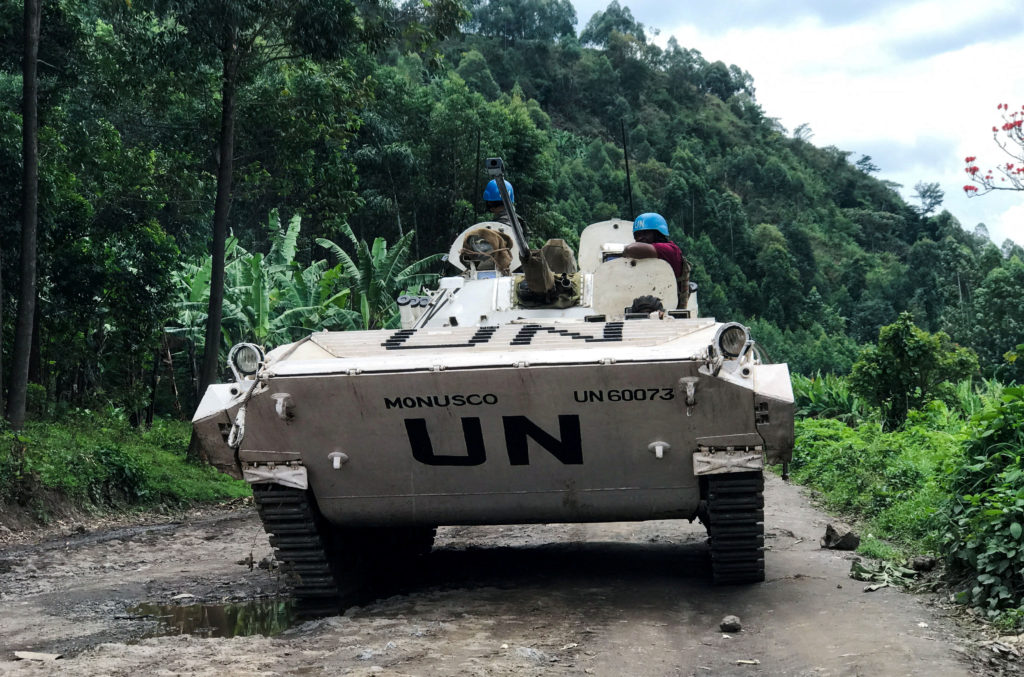
In June 2025, a landmark trilateral agreement was forged in Washington, D.C., bringing together the United States, the Democratic Republic of Congo (DRC), and Rwanda. This “Critical Minerals for Security and Peace Deal” aimed to resolve years of conflict in eastern Congo while also ensuring the U.S. access to the region’s highly sought-after mineral resources. The announcement was met with cautious optimism, as former President Donald Trump claimed the agreement would bring stability to the region and provide the U.S. with “a lot of the mineral rights from the Congo.” The DRC-Rwanda-U.S. peace deal aims to stabilize eastern Congo, but M23 rebels were left out. Explore how Qatar-led talks may make or break the agreement’s success.
However, one glaring omission from the peace table has left analysts and stakeholders uneasy: the M23 rebel group. A significant military and political force in North and South Kivu, M23 was not a signatory to the deal, despite controlling many of the very territories central to its success. As a result, questions loom large over the agreement’s viability.
Now, separate Qatar-led negotiations are underway to engage M23 in parallel diplomacy. But can these talks be harmonized with the U.S.-brokered deal? Or will M23’s exclusion from the main accord doom it to failure before mineral extraction even begins?
Who Is M23, and Why Were They Excluded?
The March 23 Movement, or M23, is a Tutsi-led rebel group with deep roots in eastern Congo’s turbulent history. Originally formed from disgruntled soldiers, the group has evolved into a militarized power bloc, backed by Rwanda and accused of widespread human rights abuses, including massacres, forced labor, and displacement.
As of mid-2025, M23 controls several key towns and mining regions in North Kivu, including Goma, Rutshuru, Walikale, and parts of Masisi. Their hold on coltan-rich regions like Rubaya makes them indispensable to any mineral strategy in the area. UN reports have repeatedly cited M23’s involvement in illegal mineral trafficking, generating millions in revenue monthly.
Yet, despite their strategic importance, M23 was not included in the June 27 peace agreement. Officially, Kinshasa refused to legitimize a rebel movement with a history of atrocities. However, analysts argue that the exclusion was tactical, aimed at avoiding political backlash and pushing M23 to negotiate separately.
Parallel Track: Qatar-Led Talks With M23 Rebels
Shortly after the Washington deal, Qatar announced it would mediate direct talks between M23 rebels and the Congolese government. The Gulf nation, which has expanded its diplomatic reach in African affairs, is facilitating a dialogue aimed at integrating M23 into the broader peace process.
The talks, hosted in Doha, have reportedly included discussions on amnesty, power-sharing, revenue control, and disarmament timelines. M23 has issued a list of demands, including:
- Official political recognition
- Amnesty for commanders
- Control over local governance in areas they occupy
- Share of revenues from mining operations
Qatar is working to align the outcome of these talks with the broader DRC-Rwanda-U.S. framework, but there is still significant distrust between M23 and Kinshasa. Several rounds of talks have ended without consensus, and fighting has continued sporadically in rebel-held territories.
Why M23’s Inclusion Is Critical to Success
Excluding M23 from the June 27 deal poses serious implementation risks:
Territorial Control: M23 dominates strategic corridors between mining sites and export hubs. Without their cooperation, securing supply chains is impossible.
Illicit Trade Networks: M23 controls many of the informal trade routes used to smuggle coltan, gold, and tin into neighboring Rwanda and Uganda. Any effort to regulate or formalize mining operations must dismantle or integrate these channels.
Humanitarian Crisis: M23’s ongoing operations have displaced over 800,000 people in North Kivu alone. Aid groups warn that without a ceasefire, violence will persist despite diplomatic milestones.
Undermining Legitimacy: A peace deal that excludes a major belligerent risks being seen as externally imposed and lacking legitimacy on the ground.
U.S. Interests and the Mineral Equation
The United States views the DRC-Rwanda accord as part of a broader strategic pivot to reduce reliance on China for critical minerals. Cobalt, tantalum, tin, lithium, and rare earths sourced from eastern Congo are essential for EVs, semiconductors, and clean energy technologies.
However, for U.S.-based firms to invest in mining and refining operations, security and stability are non-negotiable. Without M23’s integration or disbandment, American companies face unacceptable operational risks. Already, Pentagon-backed firms and procurement contractors have expressed hesitation in launching projects without guarantees.
The U.S. has signaled quiet support for the Qatar process, believing that a comprehensive solution must involve all power brokers. As one diplomat put it, “You can’t build a mine on land controlled by a militia and call it a supply chain.”
The Role of Rwanda and Regional Politics
Rwanda’s role in the conflict is both pivotal and controversial. While officially supporting the peace deal, Kigali has long been accused of backing M23 to exert influence over Congolese territory and minerals. Rwandan troops are expected to withdraw under the June accord, but skepticism remains about their long-term intentions.
If M23 is not neutralized or co-opted into the peace process, Rwanda’s continued involvement—whether overt or covert—could destabilize the region anew. Critics argue that the June deal may represent a temporary pause, not a permanent solution.
What Comes Next?
As the Qatar talks continue, observers are watching several key indicators:
- Will M23 agree to demobilize in exchange for political concessions?
- Can Kinshasa accept power-sharing without undermining sovereignty?
- Will the U.S. link economic investments to the success of parallel negotiations?
Much depends on the next 30–60 days. The success of the entire Peace for Minerals framework may hinge not on what was signed in Washington, but what is signed in Doha.
Mattias Knutsson: The Procurement Perspective
Mattias Knutsson, an internationally recognized strategic procurement leader, weighed in on the situation:
“From a supply chain standpoint, peace agreements must be inclusive. If M23 remains outside the formal system, buyers will continue to face risks of disruption, reputational damage, and compliance failures.”
Knutsson emphasizes that corporations sourcing from high-risk areas must now prioritize stakeholder mapping, ESG compliance, and multi-layered audit trails.
“We need to move from extract-and-go models to embedded value chains that support peace, development, and transparency.”
Conclusion:
The June 27 Peace for Minerals deal was a diplomatic breakthrough, offering hope for a new era in eastern Congo. But its success depends on more than signatures in Washington. Without the meaningful inclusion of M23, the deal risks unraveling under the weight of unresolved conflict.
Qatar’s parallel peace initiative is the missing puzzle piece. If successful, it could secure a durable truce, empower local communities, and unlock sustainable mineral development. If it fails, eastern Congo may descend further into chaos, with the promise of economic transformation lost once again.
The road to peace and prosperity in the DRC is narrow and treacherous. But with deliberate diplomacy, ethical business strategy, and inclusive governance, the opportunity is still within reach.