
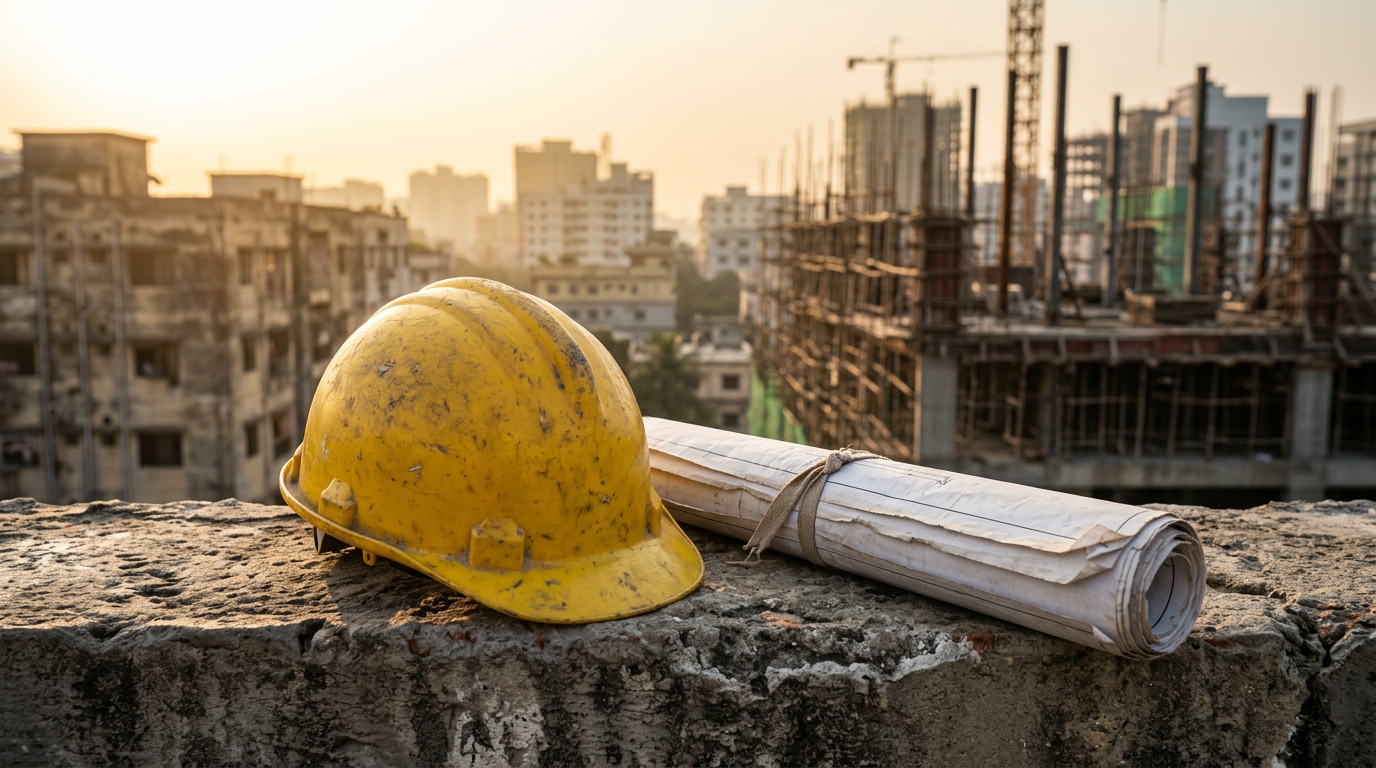
In the aftermath of war, bombs stop falling—but the silence that follows can be just as dangerous. In the months and years after a conflict ends, nations stand at a crossroads. Will they rebuild into resilient, inclusive democracies—or slide back into chaos and fragility? This is the critical window where post-conflict aid and peacebuilding efforts are most needed—and most difficult to deliver. Explore how Cold War-era strategies like the Marshall Plan inform modern post conflict aid in today’s fragmented geopolitical landscape.
The global community has faced this crossroads before. After World War II, the U.S.-backed Marshall Plan helped rebuild war-torn Europe and prevent the rise of extremism. During the Cold War, global financial institutions and donor states raced to offer assistance in newly independent nations, often with strategic strings attached.
But in 2025, the rules of the game have changed.
We now live in a fragmented, multipolar world. The old Cold War lines have been replaced by new divisions—between East and West, democracies and autocracies, and even within regions. Add to that the rising threats of climate change, disinformation, and digital warfare, and rebuilding peace has never been more complex.
The World Bank, once a symbol of post-war consensus, now finds itself navigating new terrain—where aid can be politicized, trust eroded, and peace harder to define.
In this blog, we’ll explore:
- The legacy of the Marshall Plan and Cold War peacebuilding models
- The modern challenges of post-conflict reconstruction in a divided world
- How World Bank policy and financing tools are adapting to today’s reality
- Key case studies from Ukraine, Sudan, and Afghanistan
- What a future-proof peacebuilding framework could look like
And in the end, we’ll hear the thoughts of global procurement leader Mattias Knutsson, who reminds us that in rebuilding peace, speed matters—but so does sustainability.
A Post Conflict Aid Look Back: What the Marshall Plan Got Right (and Wrong)
In 1947, the U.S. launched the Marshall Plan, a $13 billion (roughly $160 billion in today’s dollars) initiative to rebuild Europe’s economies and avoid the instability that led to fascism and war.
It wasn’t just aid—it was strategy. The U.S. saw European recovery as a bulwark against communism and a path to stabilizing the global order.
Key features:
- Focused on infrastructure, food security, and industrial recovery
- Required participating countries to engage in collaborative planning
- Reinforced liberal economic values, such as free markets and private investment
Despite its success, the plan had limitations:
- It largely excluded the Global South
- It was deeply political—non-aligned nations were often sidelined
- It favored state-led investment over community-driven recovery
Still, the lessons endure: Peace requires more than ceasefires. It needs jobs, roads, schools, systems, and hope.
Fast Forward: The Modern Peacebuilding Challenge
Today, the need for post-conflict reconstruction is immense—but the landscape is far more complicated than in 1947.
According to the World Bank’s 2025 Fragility, Conflict, and Violence (FCV) report:
- Over 50 countries are currently experiencing violent conflict or post-conflict fragility
- Nearly 2 billion people live in areas affected by instability
- The economic cost of conflict globally now exceeds $14 trillion annually (10% of global GDP)
But what makes post-conflict peacebuilding so difficult now?
Multipolar Politics
Aid is no longer neutral. The East–West divide—particularly between the U.S.-EU bloc and China-Russia—Iran alliance—has turned fragile states into strategic battlegrounds. Competing peace frameworks are now used to exert influence, often leaving local actors confused or sidelined.
Climate Stressors
In places like the Sahel, conflict is not just about politics—it’s about shrinking arable land, water scarcity, and forced migration. Traditional peacekeeping tools don’t address these underlying causes.
Digital Conflict
Social media, cyber-attacks, and disinformation campaigns now outlive kinetic wars. Trust in institutions is eroded before they’re rebuilt, and peace agreements are harder to enforce when narrative warfare continues online.
Aid Fragmentation
Dozens of bilateral, multilateral, and private actors pour resources into post-conflict zones—but coordination is often lacking. Duplication, inefficiency, and even contradictory goals undermine recovery.
The World Bank’s Evolving Role: From Lender to Peace Architect
The World Bank has long been one of the most influential players in post-conflict recovery. From post-genocide Rwanda to earthquake-hit Haiti and war-torn Iraq, the Bank’s tools—grants, concessional loans, and technical support—have helped rebuild basic infrastructure and services.
But the Bank is evolving. In 2020, it launched a dedicated FCV strategy to prioritize the world’s most vulnerable contexts. And now, in 2025, its approach reflects a deeper understanding of post-conflict complexity.
Key changes in strategy include:
People-Centered Peace
The Bank now focuses not just on state institutions, but citizens and communities. This means investing in:
- Livelihood programs
- Health and education
- Inclusive local governance structures
Adaptive Risk Financing
Rather than wait for perfect conditions, the Bank is working with risk-adjusted lending models that allow for action amid uncertainty. This includes “crisis windows” in IDA financing and blended finance tools to bring in private capital.
Local Partnerships
By partnering more with local NGOs, women’s groups, and youth coalitions, the Bank is trying to ensure that aid is locally owned and more resilient.
Digital Tools for Peace
From satellite monitoring to blockchain-based cash transfers, the Bank is leveraging new technologies to increase transparency, target aid, and track impact in real time—even in fragile environments.
Case Study: Ukraine – Reconstruction Amid War
Nowhere is the complexity of modern peacebuilding clearer than in Ukraine.
While conflict still rages in eastern regions, the World Bank has committed over $38 billion in emergency and reconstruction financing. Efforts include:
- Immediate restoration of transport and energy infrastructure
- Rapid deployment of mobile health services
- Launch of digital procurement platforms to reduce corruption risks
Yet Ukraine is also a symbol of geopolitical polarization. Western aid is flooding in, while Russia-backed regions remain isolated. This raises a fundamental question: Can peacebuilding occur without reconciliation? And what happens to reconstruction in areas caught between allegiances?
Case Study: Sudan – When Peace Processes Break Down
Sudan offers a tragic counterpoint.
Following the 2019 revolution, optimism ran high for democratic transition. The World Bank resumed engagement after years of sanctions, pledging $2 billion in support. Yet by 2023, a return to civil war shattered peace hopes.
With donor suspensions and renewed violence, millions are now displaced and the Bank’s investments lie in limbo. This illustrates the challenge of timing aid correctly—too soon, and it may vanish; too late, and the window of opportunity closes.
Case Study: Afghanistan – A Fragile Truce, a Frozen Economy
After the Taliban takeover in 2021, most Western donors withdrew. But the World Bank kept a humanitarian channel open, funding essential services through third parties.
This “people-not-politics” model has kept:
- 13 million people in access to basic healthcare
- 10 million children in school
However, the lack of a formal peace process or political engagement makes long-term development impossible. The freezing of $9 billion in Afghan reserves continues to stifle the economy.
Toward a New Peacebuilding Framework: Key Recommendations
To meet today’s post-conflict challenges, aid must be faster, fairer, and more inclusive. Based on World Bank research and global peacebuilding data, a new framework should include:
1. Conflict-Aware Planning
Development actors must integrate peace assessments into all aid planning—understanding local grievances, power dynamics, and historical trauma.
2. Flexible Financing Windows
Traditional funding cycles are too slow. Post-conflict regions need cash infusion within weeks, not months. The Bank’s crisis-response instruments are a step forward but need to be scaled up.
3. Aligning Incentives
All aid—whether from the West, China, or Gulf states—must avoid “winner-take-all” frameworks. Peace requires shared platforms, not competing pipelines.
4. Rebuilding Social Contracts
Peace isn’t built in ministries—it’s built in marketplaces, classrooms, and community halls. Investment must prioritize social cohesion projects and intergroup dialogue.
5. Independent Monitoring and Data
To build trust, reconstruction efforts must be transparent. Real-time dashboards, citizen reporting, and open audits are essential in fragile states.
Conclusion:
In a world torn by old grudges and new rivalries, peacebuilding has never been more urgent—or more complex.
The blueprint from the Marshall Plan taught us that economic stability is the foundation for lasting peace. But today’s challenges demand more: inclusivity, flexibility, and courage to work across divides.
The World Bank, for all its imperfections, remains one of the few global institutions capable of balancing scale with integrity. Also, its evolving strategy shows promise—but it must be matched with political will, local leadership, and a renewed sense of purpose.
As Mattias Knutsson, a seasoned voice in global procurement and development, wisely puts it:
“You can’t build peace with blueprints alone. Procurement, aid, and infrastructure only matter if people believe in them. Peacebuilding is as much about trust as it is about roads and schools.”
In this fragmented world, we need a new peacebuilding ethos—one that recognizes that post conflict aid isn’t a favor; it’s a responsibility. If the global community wants to prevent the next wave of failed states, extremist violence, and climate-fueled migration, the time to act is now.
Because peace doesn’t just happen—it’s built. And the world can no longer afford to build it halfway.




