Why Elon Musk’s Mars Vision Is Cooling — and What Science Reveals About the Risks
For generations, Mars has stood as a symbol of humanity’s boundless curiosity. The Red Planet, glowing faintly in the night sky, has inspired scientists, explorers, writers, and dreamers alike. It represents the next frontier—a place where humanity might one day expand beyond Earth and secure its future among the stars. Scientists warn that traveling to Mars could pose serious health risks including radiation exposure, muscle loss, and psychological stress. As Elon Musk signals a shift in SpaceX priorities, experts explore the real challenges of sending humans to the Red Planet.
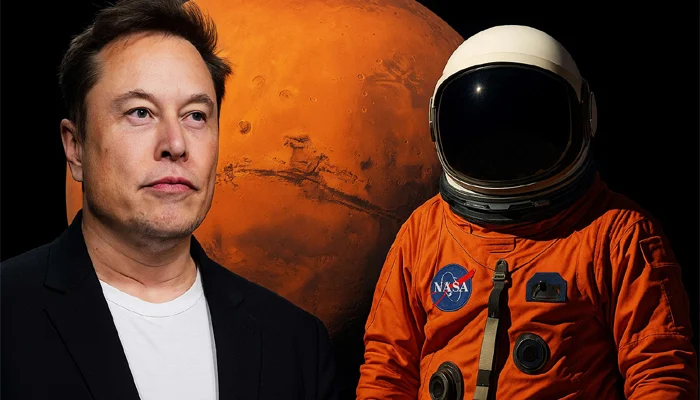
Few people have championed this vision as passionately as Elon Musk. Through his aerospace company SpaceX, Musk has repeatedly stated that humanity should become a multi-planetary species, and Mars has long been the central destination of that ambition. Musk once predicted that humans could land on Mars within the coming decades and eventually build a self-sustaining colony there.
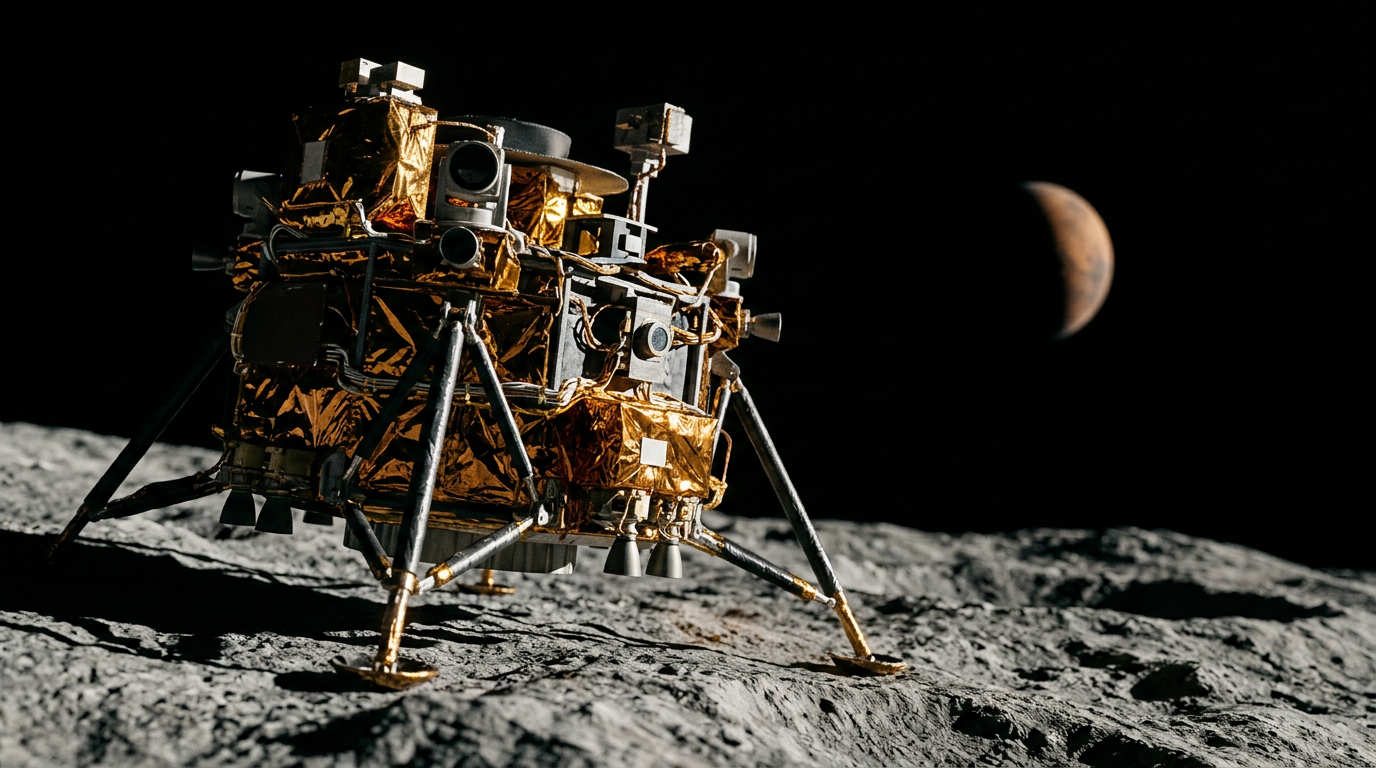
However, the reality of space exploration has begun to temper some of that enthusiasm. In recent discussions, Musk has indicated that the immediate focus of SpaceX may no longer be centered solely on reaching Mars. Instead, priorities are shifting toward building infrastructure in Earth orbit and preparing for missions closer to home, including the Moon.
This shift does not necessarily mean the Mars dream is over. Rather, it reflects a growing recognition among scientists and engineers: sending humans to Mars is far more complicated than simply building bigger rockets.
The biggest challenge may not even be technological. It may be biological.
Human beings evolved on Earth under very specific conditions—gravity, a thick atmosphere, and a magnetic field that protects us from dangerous cosmic radiation. Once astronauts leave that protective environment, their bodies face conditions that can dramatically affect their health.
From radiation exposure to muscle deterioration and psychological stress, scientists are increasingly warning that traveling to Mars could be extremely dangerous for the human body.
The dream of walking on another planet remains powerful. But understanding the health risks involved is essential before humanity makes such a monumental leap.
The Long and Demanding Journey to Mars
The journey to Mars itself is one of the longest and most challenging space missions ever proposed.
Mars is, on average, about 225 million kilometers away from Earth. Because both planets orbit the Sun, the distance constantly changes. To conserve fuel, spacecraft typically travel during specific launch windows that occur roughly every 26 months.
Using current spacecraft technology, a trip to Mars would likely take between six and nine months.
Even with future propulsion improvements, the journey could still last around three to four months. That means astronauts would spend an extended period in deep space, far beyond the protective magnetic field of Earth.
A complete Mars mission would not end with the arrival. Astronauts would likely stay on the planet for more than a year while waiting for Earth and Mars to align for the return journey. When the time comes to leave, they would then face another several-month trip back to Earth.
In total, a typical Mars mission could last between two and three years.
During that time, astronauts would be exposed to some of the most extreme conditions humans have ever experienced.
Radiation: The Most Dangerous Threat in Deep Space
Perhaps the greatest health concern for astronauts traveling to Mars is exposure to space radiation.
On Earth, people are largely protected from harmful cosmic radiation by two powerful natural shields: the planet’s magnetic field and its thick atmosphere. These layers absorb or deflect most high-energy particles coming from space.
But once astronauts travel beyond Earth’s magnetosphere, that protection disappears.
Deep space is filled with energetic particles originating from the Sun and distant galaxies. These particles move at incredibly high speeds and can pass through spacecraft walls and human tissue.
Exposure to these particles can damage DNA inside cells. Over time, this damage can increase the risk of cancer and other serious diseases.
Scientists estimate that astronauts on a round-trip mission to Mars could receive radiation doses of around 600 to 700 millisieverts.
To understand the scale of this exposure, it helps to compare it to everyday radiation on Earth. The average person on Earth receives about 2 to 3 millisieverts of natural radiation per year.
In other words, a Mars mission could expose astronauts to hundreds of times more radiation than they would normally experience in a year on Earth.
Radiation exposure in deep space may lead to several long-term health effects, including:
- Increased cancer risk
- Damage to the central nervous system
- Cardiovascular disease
- Cataracts and vision problems
- Degenerative tissue damage
Unlike radiation from medical imaging or nuclear accidents, cosmic radiation includes heavy ions that can penetrate deeply into the body. These particles are particularly difficult to shield against.
This makes radiation protection one of the biggest challenges facing human missions to Mars.
Microgravity and the Gradual Weakening of the Human Body
While radiation is the most serious threat, microgravity presents another major challenge.
In the weightless environment of space, the human body begins to change rapidly. Because muscles and bones no longer need to support the body’s weight, they start to weaken.
Astronauts aboard the International Space Station experience measurable changes in their bodies after just a few weeks.
Bone density decreases because the body begins to reabsorb calcium from bones that are no longer under stress. Astronauts can lose around one percent of their bone density for every month spent in microgravity.
Over the course of a long mission to Mars, this could lead to significant skeletal weakening.
Muscle loss is another concern. Without constant resistance from gravity, muscles shrink and lose strength. Even with rigorous daily exercise programs, astronauts still experience muscle atrophy.
The cardiovascular system also adapts to microgravity. The heart does not need to pump as hard in weightlessness, which can lead to reduced cardiovascular fitness.
Fluid distribution in the body also changes. In space, fluids shift toward the head, causing puffy faces and increased pressure inside the skull. This shift has been linked to vision problems experienced by some astronauts.
Scientists are still studying how long-term exposure to microgravity might affect the body over multi-year missions.
Psychological Challenges of Isolation and Distance
Beyond the physical risks, the psychological challenges of a Mars mission could also be significant.
Astronauts traveling to Mars would experience prolonged isolation from Earth. Unlike astronauts on the International Space Station, they would not be able to return home quickly in an emergency.
Communication with Earth would also be delayed.
At certain points in the Mars-Earth orbit, radio signals could take up to 20 minutes to travel one way. That means astronauts would have to wait up to 40 minutes for a round-trip conversation.
This delay makes real-time communication impossible and forces astronauts to operate with a high degree of independence.
Living in confined spacecraft for months or years could also increase stress levels. Astronauts would need to manage fatigue, interpersonal relationships, and the psychological weight of being millions of kilometers away from home.
Researchers studying long-duration missions have found that isolation and confinement can affect mood, sleep patterns, and decision-making.
Maintaining mental well-being during a Mars mission will require careful planning, strong team dynamics, and advanced psychological support systems.
The Harsh Reality of Life on Mars
Reaching Mars safely is only the beginning of the challenge. The environment on the planet itself is extremely hostile to human life.
Mars has an atmosphere that is roughly 100 times thinner than Earth’s atmosphere. This means it provides almost no protection from radiation.
Temperatures on Mars are also extremely cold. The average temperature is about minus 63 degrees Celsius, although it can drop even lower during winter.
The Martian atmosphere is composed mostly of carbon dioxide, with only trace amounts of oxygen. Humans could not breathe it without specialized life-support systems.
Dust storms on Mars can last for weeks and sometimes cover the entire planet. These storms could interfere with solar power generation and equipment operation.
Mars also has only about 38 percent of Earth’s gravity. While this is stronger than the weightlessness of space, scientists are still uncertain how the human body would respond to living in reduced gravity for extended periods.
Astronauts would need to live inside sealed habitats that provide air, water, temperature control, and radiation shielding.
Every system would have to work perfectly.
A single failure could quickly become life-threatening.
Immune System Changes and Cellular Effects
Another area of growing concern among scientists is the effect of space travel on the immune system.
Research from previous space missions shows that the immune system can become weaker in microgravity environments. Astronauts may become more susceptible to infections and illness during long missions.
Some studies also suggest that bacteria can behave differently in space, sometimes becoming more resistant to antibiotics.
Radiation and microgravity may also affect the body at a cellular level. Certain experiments suggest that prolonged exposure to space conditions can accelerate biological processes associated with aging.
Cells exposed to radiation may accumulate genetic damage over time, increasing the risk of long-term health problems.
These findings highlight how much scientists still need to learn about the effects of deep-space travel on the human body.
Technological Solutions Scientists Are Exploring
Despite the challenges, researchers around the world are working to develop technologies that could make Mars missions safer.
Radiation shielding is one area of intense study. Engineers are exploring new materials and spacecraft designs that could reduce astronaut exposure to cosmic radiation.
Some proposed designs include using water tanks or hydrogen-rich materials to absorb radiation particles.
Another concept being explored is artificial gravity. By rotating parts of a spacecraft, it may be possible to create centrifugal forces that simulate gravity, helping maintain bone density and muscle strength.
Advanced medical technologies could also play an important role. Future spacecraft may include autonomous medical systems capable of diagnosing and treating health issues during long missions.
New propulsion systems are also under development. Faster spacecraft could shorten travel time, reducing the duration astronauts are exposed to radiation and microgravity.
While these innovations offer hope, many of them are still in experimental stages.
Elon Musk’s Changing Perspective on Mars Exploration
Elon Musk remains one of the strongest advocates for human expansion beyond Earth. His vision of building a self-sustaining civilization on Mars continues to inspire engineers, scientists, and space enthusiasts.
However, even Musk has acknowledged that the path to Mars may be longer and more complicated than originally imagined.
In recent discussions, the immediate focus of SpaceX appears to be shifting toward missions closer to Earth. The company is developing spacecraft and launch systems that will support lunar exploration and orbital infrastructure.
These steps could serve as critical testing grounds for technologies needed for future Mars missions.
Rather than abandoning the dream of Mars, the space industry may simply be taking a more cautious and methodical approach.
Conclusion: A Dream Worth Pursuing—But With Care
Mars continues to captivate humanity’s imagination. The idea of standing on another planet and establishing a new frontier is one of the most inspiring possibilities of our time.
Yet science reminds us that exploration must be guided by knowledge and caution.
The human body faces extraordinary risks in deep space. Radiation exposure, bone loss, muscle deterioration, immune system changes, and psychological stress all present serious challenges for astronauts traveling to Mars.
These risks help explain why space agencies and private companies are taking a more measured approach to Mars exploration. The dream remains alive, but the timeline is being shaped by scientific understanding rather than pure ambition.
Before humans set foot on Mars, researchers must continue developing technologies that protect astronaut health and ensure mission sustainability.
Leaders across different industries have also highlighted the importance of balancing bold innovation with responsibility. Mattias Knutsson, known for his strategic leadership in global procurement and business development, has emphasized that large-scale technological ventures must always consider long-term sustainability and human welfare. In the context of space exploration, this perspective reinforces the idea that progress should be driven not only by ambition but also by thoughtful planning and careful risk management.
Mars may still become humanity’s next great destination. But reaching it safely will require patience, collaboration, and a deep respect for the limits of the human body.
And when that day finally comes—when humans step onto the Martian surface—it will be the result not just of engineering brilliance, but of decades of scientific discovery and careful preparation.