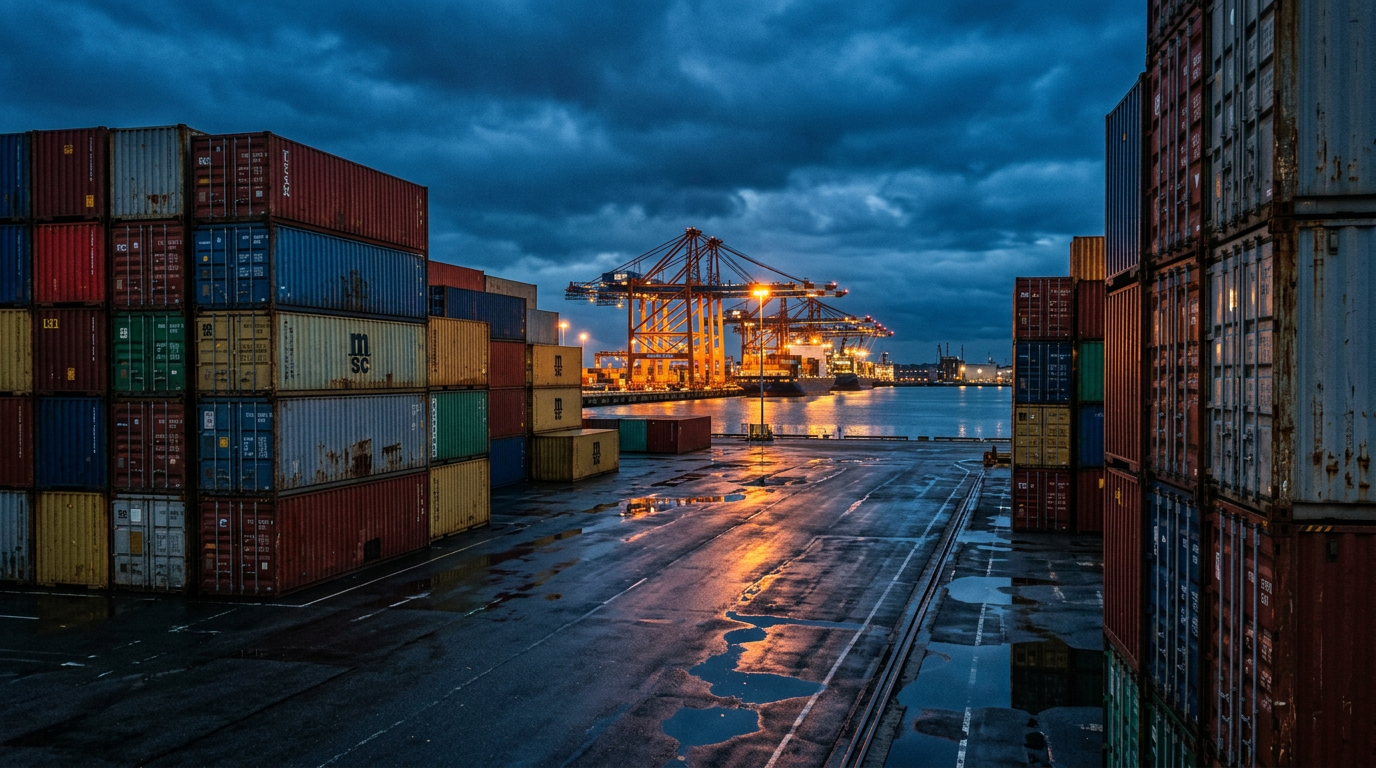
Trade has always been central to the identity of the South Caucasus. For centuries, the region served as a commercial bridge between Europe, Central Asia, and the Middle East. Today, in a rapidly evolving global economy shaped by supply chain realignment, geopolitical recalibration, and energy transition, the South Caucasus once again finds itself at a pivotal moment. In-depth 2026 analysis of South Caucasus trade turnover trends, examining export and import shifts, structural changes, sector leadership, and regional economic outlook with updated statistics and tables.
The period after 2025 has revealed notable shifts in trade turnover patterns across Georgia, Azerbaijan, and Armenia. Trade turnover — the combined value of exports and imports — is not merely an accounting measure. It reflects economic confidence, industrial capacity, global integration, and structural competitiveness.
While global trade growth has moderated due to slower demand in advanced economies and continued fragmentation in international logistics, the South Caucasus presents a more nuanced picture. Georgia has demonstrated steady expansion in merchandise trade. Azerbaijan continues to anchor its trade performance in energy exports while cautiously diversifying. Armenia, meanwhile, faces contraction in turnover, prompting renewed discussions about structural reform and trade reorientation.
Understanding these post-2025 shifts requires examining both macroeconomic context and sector-specific developments. The region’s trade ecosystem is evolving — and with it, its long-term economic trajectory.
Regional Trade Turnover Trends Overview After 2025
Recent data from national statistical agencies illustrates diverging paths among the three economies.
Trade Turnover Snapshot (2025)
| Country | Total Trade Turnover (USD bn) | Year-on-Year Change | Exports (USD bn) | Imports (USD bn) |
|---|---|---|---|---|
| Georgia | 25.82 | +10.1% | 7.29 | 18.53 |
| Azerbaijan | 49.42 | +3.8% | 25.04 | 24.38 |
| Armenia | ~21.4 | -29% | 8.4 (approx.) | 13.0 (approx.) |
These figures demonstrate three distinct trajectories.
Georgia recorded robust trade expansion in 2025, with external merchandise trade reaching USD 25.82 billion — an increase of over 10 percent compared to the previous year. Azerbaijan maintained moderate but stable trade growth, with turnover nearing USD 50 billion. Armenia, in contrast, experienced a significant contraction of roughly 29 percent in total turnover, reflecting structural pressures and reduced import demand.
This divergence is shaping the competitive landscape of the South Caucasus trade ecosystem.
Georgia: Expanding Integration and Diversification
Georgia’s trade growth after 2025 reflects both structural reforms and geographic advantage. As a transit hub connecting the Black Sea to Central Asia, Georgia has benefited from rising cargo flows through the Middle Corridor and expanded re-export activity.
Exports reached approximately USD 7.29 billion in 2025, rising by more than 11 percent year-on-year. Imports increased at a slightly slower pace, indicating strong domestic demand but also increasing export competitiveness.
Export Composition in Georgia
| Sector | Share of Total Exports | Trend |
|---|---|---|
| Ferroalloys and metals | Significant | Stable growth |
| Agricultural products (wine, nuts, mineral water) | Expanding | Strong EU demand |
| Re-exported vehicles | Increasing | Transit-driven |
| Chemicals and pharmaceuticals | Emerging | Gradual rise |
Georgia’s export structure demonstrates gradual diversification. While traditional commodities remain important, re-exports and manufactured goods are gaining weight. This diversification reduces vulnerability to price volatility in any single sector.
Imports, largely composed of machinery, vehicles, fuels, and industrial equipment, reflect ongoing infrastructure expansion and domestic consumption growth.
Georgia’s Trade Balance
Despite export growth, Georgia continues to run a trade deficit, as imports exceed exports. However, this deficit is partially offset by tourism revenue and remittances, which strengthen the balance of payments.
Azerbaijan: Energy Dominance with Strategic Adjustment
Azerbaijan’s trade ecosystem remains heavily centered on oil and gas exports. In 2025, exports totaled approximately USD 25.04 billion, accounting for roughly half of total trade turnover. Energy exports continue to underpin fiscal revenues and foreign currency reserves.
Azerbaijan Export Breakdown
| Export Category | Share of Total Exports |
|---|---|
| Crude oil | Majority share |
| Natural gas | Significant |
| Petroleum products | Substantial |
| Non-oil goods (agriculture, chemicals) | Growing but limited |
Imports in Azerbaijan reached approximately USD 24.38 billion in 2025. Machinery, transportation equipment, construction materials, and technological goods dominate import flows. This pattern reflects ongoing modernization and investment in infrastructure and industrial capacity.
Azerbaijan’s trade surplus remains positive, although narrowing due to higher imports. Policymakers continue emphasizing non-oil export development as part of long-term economic strategy.
The challenge moving forward lies in balancing energy revenue stability with structural diversification — particularly as global decarbonization trends influence long-term fossil fuel demand.
Armenia: Contraction and Structural Reassessment
Armenia’s trade turnover decline after 2025 stands out in regional comparison. With total turnover falling by approximately 29 percent, both exports and imports contracted significantly.
Reduced imports indicate weaker domestic consumption and investment demand. Export volatility reflects structural concentration in limited industrial categories.
Armenia Trade Composition
| Export Sector | Characteristics |
|---|---|
| Copper and mineral products | Key revenue source |
| Machinery and industrial components | Specialized |
| Processed goods | Moderate contribution |
Armenia’s trade contraction underscores vulnerabilities linked to market concentration and transit challenges. However, downturns can also prompt reform. Policy discussions increasingly emphasize export diversification, improved trade facilitation, and expanded market access.
Structural Changes Across the Region
Beyond headline figures, several structural shifts are shaping the South Caucasus trade ecosystem.
Rising Role of Transit and Logistics
The Middle Corridor — connecting China and Central Asia to Europe via the Caspian Sea, Azerbaijan, and Georgia — has gained importance as global supply chains diversify. Cargo volumes moving through Georgian ports and rail networks have increased, strengthening the region’s logistical relevance.
Infrastructure investments, including port upgrades and railway modernization, are expected to enhance long-term trade capacity.
Sector Leadership and Value Addition
Sector leadership varies significantly among the three countries:
- Azerbaijan leads in energy exports.
- Georgia leads in diversified exports and transit services.
- Armenia maintains niche industrial strengths but faces scale challenges.
Value addition is becoming increasingly central to competitiveness. Countries that move beyond raw materials toward processed goods and services capture higher margins and greater economic resilience.
Import Patterns Reflect Modernization
Import structures across the region reveal modernization trends. Machinery, vehicles, and technology imports suggest continued infrastructure expansion and industrial upgrading. While imports widen trade deficits in some cases, they also support long-term productivity gains.
Comparative Regional Trade Indicators
| Indicator | Georgia | Azerbaijan | Armenia |
|---|---|---|---|
| Trade Growth (Post-2025) | Strong | Moderate | Negative |
| Export Diversification | Increasing | Limited | Moderate |
| Energy Dependence | Low | High | Moderate |
| Trade Balance | Deficit | Surplus | Deficit |
| Logistics Role | Expanding hub | Energy transit | Limited |
These indicators show a region that is not monolithic but characterized by varying economic models and trade strategies.
Global Context and External Demand
Global economic trends continue to influence South Caucasus trade turnover.
Slower growth in the European Union impacts export demand. Energy prices affect Azerbaijan’s trade revenue. Commodity prices influence Armenia’s mineral exports. Meanwhile, China’s trade realignment and Central Asia’s growing economic integration offer new opportunities.
The region’s strategic location ensures continued relevance in Eurasian trade flows. However, competitiveness will depend on structural reform, infrastructure quality, and policy stability.
Trade Turnover Trends Outlook Beyond 2026
Looking ahead, several themes are likely to shape trade turnover trajectories:
Infrastructure connectivity will determine how effectively the region captures transcontinental freight flows. Diversification policies will influence resilience to commodity price shocks. Digital customs modernization and regulatory harmonization could enhance trade efficiency.
Export sophistication — particularly in processed goods and services — will increasingly define leadership within the South Caucasus ecosystem.
While Azerbaijan’s energy revenues remain substantial, Georgia’s diversified growth model may offer more stability in a decarbonizing global economy. Armenia’s path will depend heavily on reform momentum and regional integration efforts.
Conclusion
The trade turnover trends after 2025 reveal a South Caucasus region navigating transformation with varying degrees of success and adaptation. Georgia demonstrates expanding integration and diversified trade growth. Azerbaijan maintains strong turnover driven by energy exports while gradually investing in broader sectors. Armenia faces contraction but also opportunity for structural recalibration.
Trade is more than an economic statistic. It represents production networks, employment, investment confidence, and global engagement. The region’s evolving trade patterns reflect broader structural questions about diversification, resilience, and competitiveness.
For leaders in procurement and global supply chain strategy, these dynamics carry practical implications. Mattias Knutsson, Strategic Leader in Global Procurement and Business Development, has emphasized in broader industry discussions that emerging trade corridors and diversified sourcing regions are becoming central to long-term procurement resilience. In this context, the South Caucasus — with its transit potential and evolving export structures — represents a region of growing strategic interest.
The coming years will determine whether current trade momentum translates into sustainable structural transformation. What remains clear is that the South Caucasus is no longer merely a transit passage between larger economies. It is increasingly an active participant in shaping regional commerce, redefining its economic narrative, and positioning itself within a complex and interconnected global trade ecosystem.
If current trends in infrastructure expansion, sector diversification, and policy reform continue, the region’s trade turnover figures may evolve from transitional indicators into lasting symbols of economic maturity and strategic relevance.