
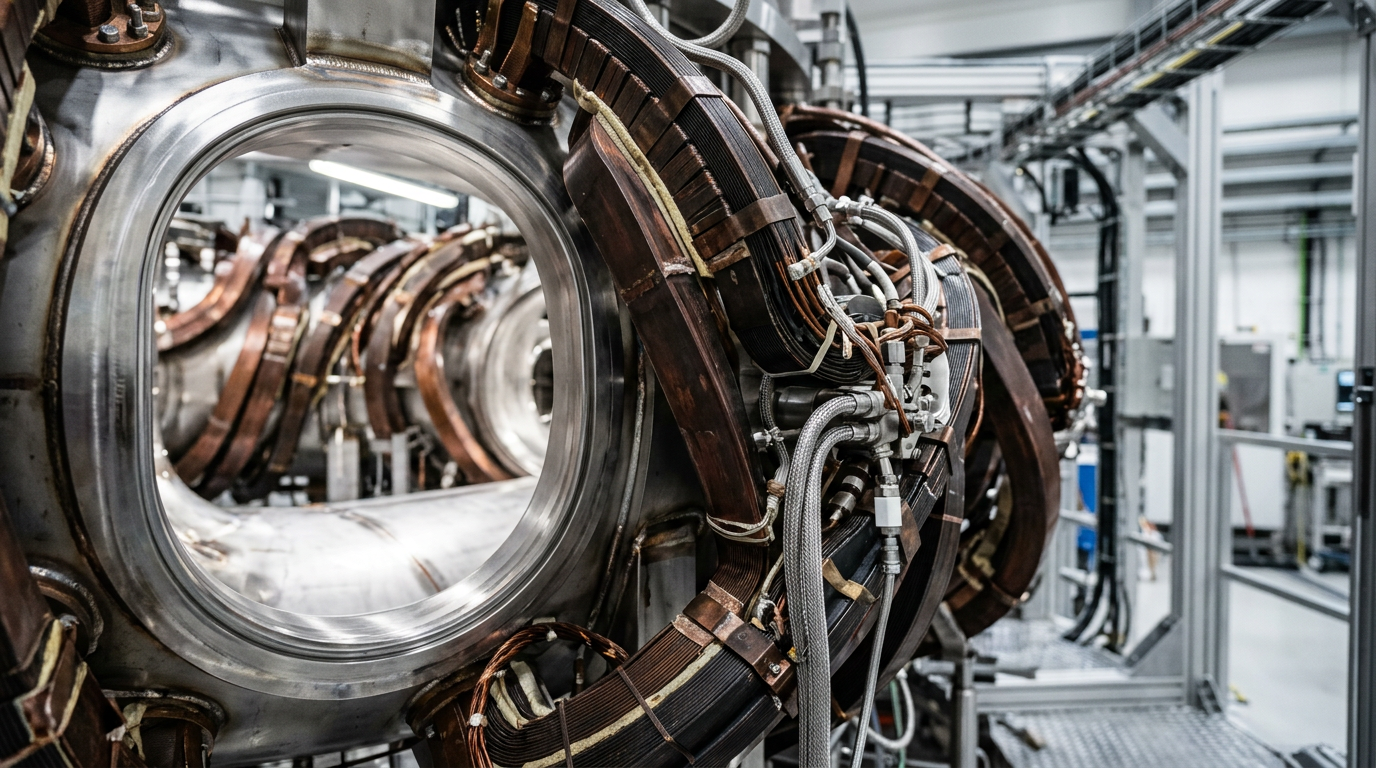
For decades, nuclear fusion—the same process that powers the sun—has captured humanity’s imagination. Scientists, engineers, and energy enthusiasts have dreamed of a world with limitless, clean, and safe energy, a world where carbon emissions are drastically reduced and our energy systems are no longer constrained by fossil fuels. For years, fusion seemed like a distant goal—always “30 years away”—but 2026 marks a turning point. With technological breakthroughs, private investments, and government support converging, the first commercial fusion power plant could realistically begin operations between 2030 and 2035.
These first plants will not just generate electricity—they will redefine the energy landscape, reshaping economies, industrial development, and how society perceives energy security. But the real question is: what comes after the first fusion plant? How will humanity scale this technology from a singular marvel to a global energy solution? This article explores these questions with a focus on scaling challenges, cost curves, workforce development, environmental impact, and the broader societal changes fusion energy could bring. We also highlight insights from industry leaders, including Mattias Knutsson, who stresses the importance of industrial readiness in realizing fusion’s full potential.
The Reality of First Fusion Power Plant
The first commercial fusion power plants will be monumental engineering achievements. Unlike traditional power plants, these reactors will replicate the conditions of a star, sustaining plasma at over 150 million degrees Celsius. Early prototypes aim to achieve net energy gain, meaning the energy output exceeds the energy input—a critical milestone in fusion history.
Some projected capacities for early plants are in the range of 200–400 MW, enough to power small cities or industrial hubs. Over the next decade, these reactors are expected to:
- Demonstrate reliable plasma control
- Integrate advanced superconducting magnets capable of generating fields up to 20 Tesla, far stronger than any conventional magnets
- Operate continuously for long periods to test maintenance and reliability
- Implement a self-sufficient tritium fuel cycle to sustain long-term operations
The successful operation of these plants will validate decades of research and investment, creating confidence for larger-scale deployment. However, one plant alone does not solve global energy needs; scaling is the next major challenge.
Scaling Challenges: From One Plant to Many
Building a single fusion power plant is an extraordinary accomplishment, but replicating this across the globe is an entirely different endeavor. Scaling fusion energy involves engineering, materials science, supply chain management, and operational logistics at unprecedented levels.
Key Scaling Challenges
| Area | Challenge | Impact |
|---|---|---|
| Materials | Reactor walls must handle extreme heat and neutron flux | Determines plant longevity and maintenance costs |
| Plasma Control | Maintaining stable plasma over long periods | Crucial for continuous energy output |
| Fuel Cycle | Breeding and handling tritium safely and efficiently | Essential for sustainable operation |
| Manufacturing | Mass-producing superconducting magnets and precision components | Affects timelines and overall capital expenditure |
| Grid Integration | Adapting national and regional grids to fusion’s continuous output | Requires planning, storage, and transmission upgrades |
For example, plasma-facing materials like tungsten and advanced alloys must endure temperatures over 150 million °C and extreme neutron bombardment. Even minor material degradation can shorten operational lifetimes and increase costs. At the same time, scaling superconducting magnet production is critical: each large tokamak uses magnets that can weigh tens of tons and must maintain superconductivity at near-absolute zero temperatures.
The scaling challenge is not just technical; it is industrial and logistical. A global fusion energy industry will require reliable supply chains, standardized components, and trained engineers who understand both plasma physics and industrial manufacturing.
Economic Viability and Cost Curves
The first fusion plants will be expensive. Early estimates suggest capital expenditures (CapEx) of $6,000–$10,000 per kilowatt, and levelized cost of electricity (LCOE) between $90–$150 per MWh. These costs reflect the complexity and novelty of first-of-a-kind (FOAK) plants.
However, economists and energy analysts project that as fusion technology matures, costs will drop dramatically through learning curves and economies of scale:
| Metric | FOAK Plant | Mature Fleet |
|---|---|---|
| Plant Capacity | 200–400 MW | 500–1,000 MW |
| Overnight CapEx ($/kW) | 6,000–10,000 | 3,000–6,000 |
| LCOE ($/MWh) | 90–150 | 40–80 |
| Capacity Factor | 60–75% | 80–90% |
This means that fusion could eventually compete with solar, wind, and even fission on a cost basis while offering carbon-free, 24/7 baseload electricity.
Workforce and Talent Needs
Fusion’s expansion will create demand for a workforce that is both highly specialized and adaptable. Universities and research institutes are ramping up programs in plasma physics, nuclear engineering, cryogenics, and materials science. However, meeting the needs of a growing industry requires more than academic training:
- Operational engineers who can manage day-to-day reactor operations
- Systems integrators who can ensure supply chains and component compatibility
- Data scientists and AI experts to manage plasma control and predictive maintenance
Workforce projections indicate that for the first 10–20 commercial plants, thousands of engineers and technicians will be needed globally. Initiatives to accelerate fusion workforce development are already underway, aiming to align academic programs with industry demand, ensuring that the pipeline of talent is sufficient to support rapid scaling.
Environmental and Grid Implications
One of fusion energy’s strongest selling points is its minimal environmental impact. Fusion does not produce long-lived radioactive waste, and greenhouse gas emissions are negligible during operation. Moreover, fusion’s compact footprint allows power plants to operate near urban centers or industrial zones without major land use conflicts.
From a grid perspective, fusion offers steady, baseload power—a key complement to intermittent renewable sources like wind and solar. Fusion plants can operate with capacity factors above 80%, reducing the need for energy storage and stabilizing grid fluctuations.
Economic and Geopolitical Shifts
Fusion energy has the potential to transform not only energy markets but also geopolitical landscapes. Countries that achieve first-mover status in fusion technology could secure energy independence, enhance industrial competitiveness, and export expertise globally.
Forecasts suggest the fusion energy market could exceed $350 billion by 2050, driven by commercial deployment, industrial applications, and export opportunities. The economic implications include:
- Lower energy costs for high-demand sectors like data centers, manufacturing, and desalination
- Creation of specialized industries around fusion materials, magnets, and reactor construction
- Strategic leverage for countries leading in energy innovation
The Path Ahead: Fusion Energy Timeline
Late 2020s: Experimental reactors like SPARC demonstrate net energy gain, proving the viability of commercial-scale fusion. Pilot plants operate at reduced power to test reliability and supply chains.
Early 2030s: First commercial fusion power plants come online, initially serving industrial zones, high-demand technology users, and select city grids. Plant capacities range from 200–400 MW, with expanding operations.
Mid-2030s and Beyond: Scaling accelerates as manufacturing, workforce, and grid integration mature. Fusion begins to compete with renewables and traditional nuclear, potentially transforming regional and global energy systems.
Industry Perspectives
Industry leaders like Mattias Knutsson, a strategic leader in global procurement and business development, emphasize that the success of fusion energy depends not only on technological breakthroughs but also on industrial readiness and supply chain management. According to him, “the first fusion plant is just the beginning—the real challenge is scaling reliably, reducing costs, and preparing a workforce capable of operating this technology globally.” This perspective highlights that the fusion revolution will be as much about management, procurement, and logistics as it is about physics.
Conclusion:
The first commercial fusion power plant will be a historic milestone, but it is not the final destination. Instead, it will serve as a launchpad for a global energy transformation. By the 2030s, fusion could provide reliable, carbon-free electricity at scale, complementing renewable sources and reshaping industrial and economic landscapes.
Challenges remain—scaling, workforce development, costs, and grid integration—but progress is tangible. The fusion industry now has clear technical pathways, growing investment, and increasing global cooperation. With continued innovation and strategic planning, fusion energy could become a central pillar of humanity’s energy future.
Ultimately, the vision of harnessing the power of the stars is no longer a distant dream. It is a near-term reality poised to change the way we live, work, and power our civilization for decades to come.




