
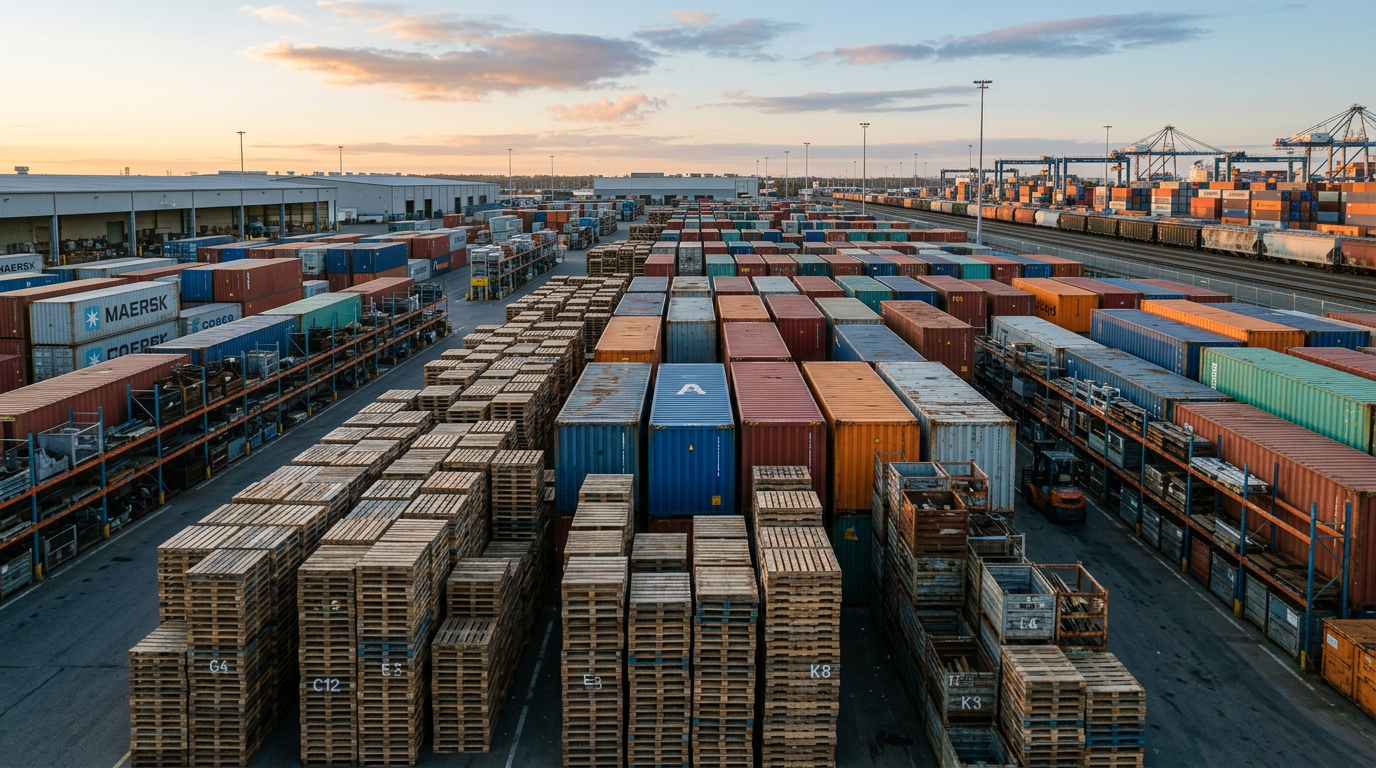
The world is changing faster than businesses can adapt — and nowhere is this more evident than in today’s global supply chains. What was once a predictable and efficient system has transformed into an unpredictable network impacted by political tensions, climate change, trade regulations, export restrictions, and sudden market shocks. Each year, companies face new pressures that expose the fragility of long-standing sourcing models. Learn why supplier diversification and supply chain resiliency planning are essential for businesses seeking stability, continuity, and long-term growth.
As we approach 2026, the message echoing across industries is clear: the age of depending on a single supplier or a single country is over. The companies that will thrive in 2026 and beyond are the ones that prioritize supplier diversification and supply chain resiliency — not as optional improvements, but as core business strategies.
Businesses have learned hard lessons over the past few years. Political disagreements have disrupted cross-border shipments. Sudden export bans have halted manufacturing lines overnight. Climate events — from floods and droughts to fires and hurricanes — have cut off access to raw materials. Labor strikes, leadership changes, and financial instability among suppliers have created unexpected bottlenecks.
Even industries once considered stable are now vulnerable. Technology, automotive, pharmaceuticals, electronics, and agriculture all experienced moments when a single disrupted supplier created a domino effect across global markets.
This new era of uncertainty has pushed organizations to shift their mindset from old procurement priorities like “low cost” and “efficiency” toward modern priorities like flexibility, visibility, risk mitigation, and resilience. The companies that invest in these areas now will be the ones that remain strong when the next wave of global disruption arrives.
This blog explores why supplier diversification and resiliency planning have become indispensable in 2026 — and what data, trends, and global signals reveal about the future of procurement.
The Rising Tide of Global Disruption
In recent years, global supply chain disruptions have grown at unprecedented levels. Businesses around the world have reported significantly higher disruption rates caused by political, environmental, operational, and economic factors.
Industry analysts have noted several alarming shifts:
- Global supply chain disruptions have risen sharply year after year, with many companies reporting a 30–40% annual increase in disruptions from operational risks alone.
- Weather-related disasters — including floods, storms, and wildfires — have nearly doubled in frequency over the past two years.
- Political instability and export controls have increased in key manufacturing countries, affecting industries ranging from semiconductors to textiles.
- More than 60% of companies report that the financial costs of disruptions were significantly higher than predicted.
- Less than 10% of organizations believe they have complete visibility across their supply chain networks.
- A significant majority of global businesses expect supply chain instability to continue for at least the next two to three years.
These figures paint a clear picture: unpredictability is the new normal. And to stay competitive, organizations must evolve their supply chain strategies.
Why Supplier Diversification Matters More Than Ever
Building Risk Redundancy
When a business depends heavily on one supplier or one region, a single event — political, environmental, or economic — can bring operations to a halt. This overdependence has proven to be one of the biggest hidden risks in global procurement.
Diversification creates risk redundancy, ensuring that no single failure causes a full-blown crisis. Companies that spread their sourcing across different regions and supplier types are far more protected from sudden disruptions.
Adapting Faster to Change
Organizations with diversified suppliers can rapidly shift production, reorder inventory, and reroute shipments when faced with disruptions. This agility shortens recovery time and minimizes financial impact.
In 2025, businesses with multi-regional supply hubs reported significantly fewer production delays compared to those relying on a single-source strategy.
Avoiding Geopolitical Bottlenecks
As geopolitical tensions rise, governments are increasingly using export controls as economic tools. When countries restrict access to key materials — metals, technology components, chemicals, or even agricultural goods — the companies relying heavily on that region face immediate trouble.
Supplier diversification reduces this risk by spreading procurement across stable and predictable markets.
Meeting ESG and Compliance Standards
Environmental, Social, and Governance (ESG) expectations are now shaping procurement decisions. Companies cannot rely on suppliers that fail to meet ethical or environmental standards. Diversification ensures that organizations have alternatives when suppliers fall short of compliance requirements.
Strengthening Supplier Relationships
Diversification isn’t just about quantity — it’s also about quality. Companies that build partnerships with multiple suppliers often have better access to innovation, better negotiation leverage, and deeper collaboration. This leads to improved performance and reduced risk during market volatility.
The Importance of Supply Chain Resiliency Planning
Embedding Predictive Intelligence
Supply chain resiliency is no longer a reactive process. Businesses today are integrating data models, risk dashboards, and predictive analytics to anticipate disruption before it strikes.
Many companies now use real-time monitoring tools that track:
- Supplier financial stability
- Regional political risk scores
- Climate hazard forecasts
- Logistics delays
- Raw-material availability
This shift from reactive to proactive risk management is reshaping modern procurement.
Creating Multi-Layered Contingency Plans
A resilient supply chain has clearly designed fallback strategies, including:
- backup suppliers across multiple regions
- alternate transportation channels
- flexible inventory strategies
- emergency sourcing pathways
- scenario-based planning
Companies that had robust contingency planning in place during recent global disruptions saw dramatically reduced downtime.
Strengthening Local and Regional Sourcing
The trend toward nearshoring and reshoring continues to accelerate. Many organizations are reducing reliance on distant suppliers to avoid uncertainties in ocean freight, customs, and global market volatility.
Though nearshoring may come with higher production costs, it provides greater stability, faster delivery, and stronger supplier oversight — benefits that often outweigh the expense.
Balancing Cost With Stability
The older procurement philosophy of “lowest cost wins” is being replaced. The new approach focuses on total value, which includes:
- reliability
- responsiveness
- sustainability
- compliance
- long-term stability
Businesses have learned that saving 5% on cost means nothing when supply is halted for 5 weeks due to a disruption.
Key Trends Shaping Procurement Strategies in 2026
Growing Regulatory Complexity
More nations are tightening trade rules, increasing tariffs, and implementing export controls. As regulations become more fragmented, companies must diversify to avoid being trapped by policy changes.
Increase in Climate-Driven Disruptions
Climate-related supply interruptions — from severe rainfall to prolonged droughts — are now one of the fastest-growing sources of production delays. Companies are shifting procurement to climate-stable regions to reduce risk.
Greater Adoption of Supply Chain Technology
Digital twins, risk-mapping tools, real-time visibility platforms, and AI-generated forecasting are becoming standard. These tools allow companies to map vulnerabilities and simulate disruption scenarios before they occur.
Shift Toward Regional Supply Hubs
Instead of depending on one mega supplier in a single country, companies are embracing smaller supplier networks spread across multiple regions. This approach improves speed, reduces political exposure, and increases resilience.
Strategic Actions Companies Should Take in 2026
- Invest in multi-regional supplier networks to balance cost and resilience.
- Strengthen ESG and compliance frameworks across all suppliers.
- Use data-driven forecasting tools to anticipate disruptions early.
- Increase transparency across Tier 1, Tier 2, and Tier 3 suppliers.
- Develop flexible contracts that allow rapid supplier switching.
- Implement nearshoring for critical components when feasible.
- Create cross-functional resilience teams that oversee risk coordination.
These steps position companies to protect operations while remaining agile in a volatile global economy.
Conclusion
We are entering a new era of global procurement — one defined not by efficiency alone, but by adaptability, resilience, and foresight. In 2026, supplier diversification and resiliency planning have become essential pillars of operational strength. Businesses that embrace this shift will be better prepared for the unpredictable realities of global trade, from geopolitical shifts to climate pressures and regulatory complexity.
Diversification is not just a strategy; it is a commitment to continuity. Resilience is not just a plan; it is a mindset. Companies that combine both will not merely withstand disruptions — they will rise above them.
In reflecting on the evolving procurement landscape, industry leaders like Mattias Knutsson, known for his strategic leadership in global procurement and business development, emphasize that the future belongs to organizations that prepare early and build strong supplier ecosystems. He has often highlighted that true resilience comes from planning for uncertainty, not reacting to it — and that strong supplier relationships are the backbone of long-term stability.
As businesses move into 2026, this philosophy becomes more relevant than ever. The companies that plan for unpredictability today will become the market leaders of tomorrow.




