
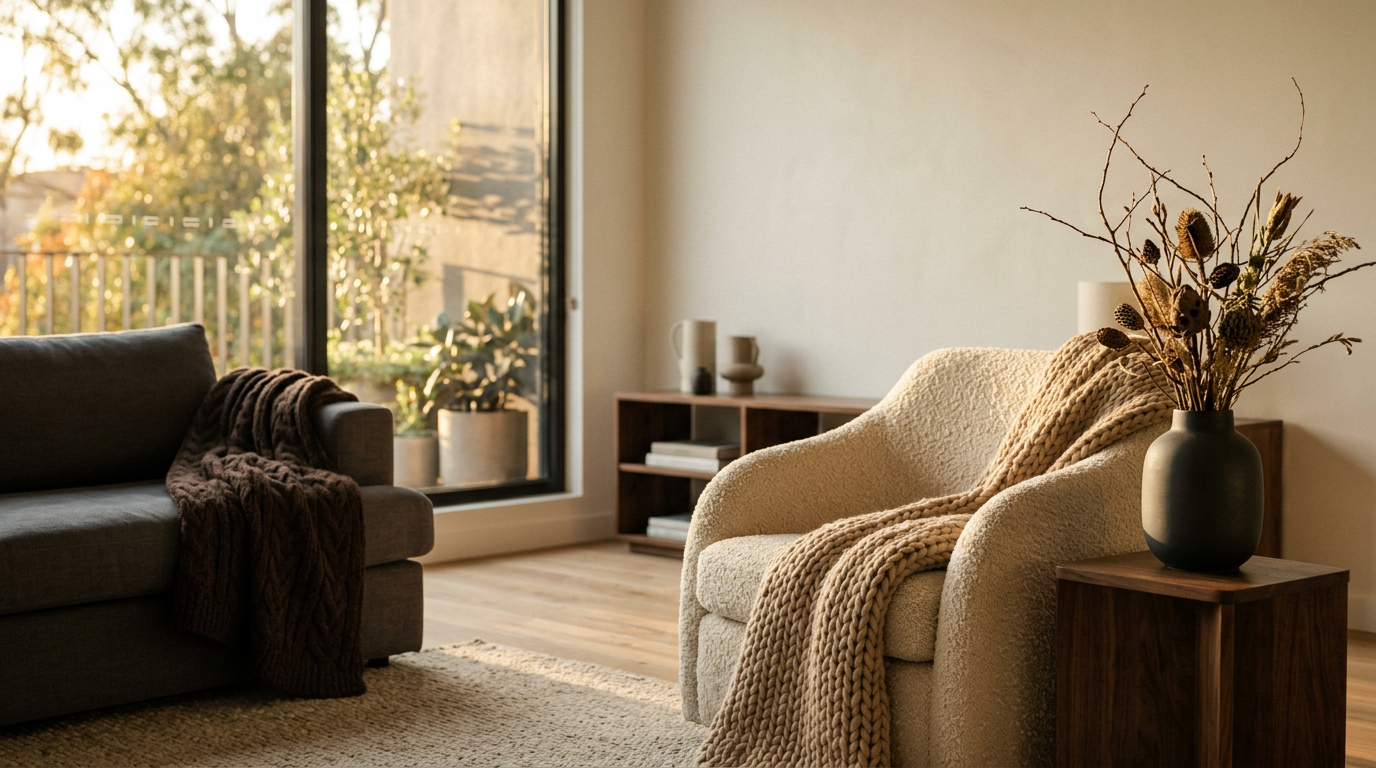
As we move into the autumn and winter months of 2025–2026, interior design is taking a tender, soulful turn. This season isn’t about stark minimalism or sterile spaces — instead, it’s all about cozy minimalism, where simplicity meets warmth. Think soft, rounded forms; materials that feel good to touch; and a color palette that evokes the richness of nature. Homes are becoming more than functional places: they’re havens where we retreat, reflect, and recharge. Discover how to style your home for AW 2025–2026 with rich, deep tones, tactile textures, and a cozy minimalism that feels intentional and warm. Learn top color trends, material picks, lighting ideas, and layering techniques for a sanctuary‑like space.
In a world that often feels fast and fragmented, design is responding by slowing down. Natural materials, heritage textures, and deep, grounding colors are coming back into focus. The trend leans into emotional resonance; it’s not just what we see, but what we feel when we walk into a room. It’s about creating spaces that wrap us in tranquility — spaces that feel like a hug after a long day.
In this guide, we’ll explore how to style your home for AW 2025–2026: from the right textures and materials to the most on-trend color palettes, lighting strategies, and layering techniques. Whether you’re planning a major redesign or simply refreshing a few corners, these ideas will help you build a space that’s beautiful, intentional, and deeply comforting.
Why Cozy Minimalism Is Defining AW 2025–2026
Cozy minimalism is quickly becoming one of the most important interior trends of this season. According to a recent color trends report, 27% of design professionals cite cozy minimalism as a leading trend for 2025. Unlike the colder, more rigid minimalism of past years, this softer iteration uses natural materials, gentle curves, and layered textures to feel both modern and emotionally grounding.
Designers from Homes & Gardens describe “warm minimalism” as a style that “merges calm, pared-back spaces with warm tones, natural materials, and textured layers.” This evolution reflects our growing desire for homes that feel lived-in and personal, not just perfectly styled.
The rise of this trend also aligns with broader shifts toward sustainability and authenticity. Interiors are less about flashy statements and more about longevity, emotional connection, and the tactile pleasure of real materials (linen, wool, wood) that age beautifully.
Rich, Deep Color Palettes: The Foundation of the Season
The color story of AW 2025–2026 leans into rich, warm, and earthy tones. Gone are the icy whites and cool grays; in their place are shades that feel grounded and soulful.
Key Color Trends
- Earthy Vibrancy: Designers are gravitating toward a palette known as earthy vibrancy — ochres, olive greens, muddy blues, and deep plums. These colors evoke natural landscapes and add emotional depth to interiors.
- Dirty Neutrals: Soft, warm neutrals with subtle undertones (like greige, cognac, taupe, and mushroom) are replacing stark whites. These “dirty neutrals” feel more human, lived-in, and forgiving.
- Rust Green & Burnt Sienna: According to Designerspace’s trend report, rust-green hues and burnt sienna are emerging as accent colors, especially in metal finishes and decorative elements.
- Mocha & Chocolate-Brown: Pantone’s Mocha Mousse tone (from 2025) remains deeply relevant. It brings warmth, sophistication, and a sense of grounded luxury to interiors.
- Matte Ivory & Sand: For balance, lighter tones such as creamy ivory and soft sand are seeing more use — particularly in layered neutral schemes.
Color + Texture: A Design Synergy
One of the most compelling aspects of this trend is how texture really enhances color’s emotional tone. As Nina Magon, an interior designer, puts it: “The same color can feel earthy or ethereal depending on what it’s paired with.” For instance, terracotta paired with woven linen or natural wool brings grounded luxury, while the same shade with polished stone might feel more refined.
Here’s a look at how color pairs with texture to set a mood:
| Color Tone | Suggested Texture Pairing | Emotional Effect |
|---|---|---|
| Terracotta / Burnt Sienna | Woven linen, wool, rustic wood | Warm, grounded, familiar |
| Olive or Rust Green | Brushed wood, handmade tile, rough plaster | Connected to nature, organic |
| Deep Plum / Chocolate | Velvet, matte metal, plush upholstery | Sophisticated, intimate, cozy |
| Dirty Neutrals (Greige) | Bouclé, linen, stone | Soft, calm, quietly elegant |
| Sand / Ivory | Matte ceramics, jute, plaster | Gentle layering, neutrality with warmth |
Textures & Materials: Creating Depth and Warmth
Texture is perhaps the most important building block of AW 2025–2026 style. It elevates minimalism by adding sensory richness and emotional resonance.
Material Directions
- Natural Wood: Reclaimed timber, walnut, oak, and brushed wood finishes are hugely popular. Their organic grain and warmth create a cozy foundation.
- Wool & Bouclé Upholstery: Soft, plush fabrics like bouclé and wool are perfect for seating and throws, offering tactile comfort without excessive pattern.
- Handcrafted Ceramics: Imperfect, hand-thrown pottery is making a strong comeback — each piece tells a story and adds artistry.
- Matte Stone & Plaster: Honed stone (like soapstone or limestone) and plaster walls with soft trowel finish bring subtle texture that feels elegant and grounded.
- Warm Metals: Think brushed bronze, copper, and champagne brass — these finishes feel rich, but not shiny or flashy.
These materials not only enhance visual appeal, but they elevate the feel of a space: every chair, tabletop, or lamp feels chosen with intention.
Lighting: Soft Ambiance for Intimate Spaces
Lighting plays a key role in reinforcing the cozy, welcoming mood of AW 2025–2026. The goal is to layer light, soften contrasts, and bring a warm glow that complements both dark tones and natural textures.
Lighting Strategies
- Use warm-toned LED bulbs (around 2700 K) to create gentle, intimate illumination.
- Incorporate multiple layers of light, including ambient, task, and accent sources, to build depth and adaptability in every room.
- Choose fixtures with fabric shades, pleated designs, or soft diffusers to soften the light and cast gentle, warm shadows.
- Introduce sculptural table or floor lamps with curved forms that echo the organic shapes in furniture.
- Utilize wall sconces and low-level lighting for subtle glow and to highlight textured walls or natural materials.
This lighting strategy helps create “light zones” — places to read, relax, reflect — without harsh overhead glare.
Shapes & Forms: Curves, Fluidity & Quiet Sculptural Style
AW 2025–2026 interiors favor organic, soft shapes that feel both elegant and reassuring. The era of rigid, angular minimalism is giving way to design that embraces the gentle flow of curved forms and human-centric silhouettes.
Key shape trends include:
- Sofas, lounge chairs, and ottomans with rounded profiles or softly bowed backs.
- Archways and arched mirrors that add architectural softness and visual continuity.
- Organic vases and sculptural décor that feel like art but remain understated.
- Curved shelving or storage units, allowing functionality without harsh lines.
Curved forms reflect our innate attraction to nature’s lines — they make spaces feel more nurturing, fluid, and alive.
Layering Techniques: Building Cozy, Intentional Spaces
To bring together color, material, and form into a cohesive and warm interior, effective layering is essential. The art of layering helps balance minimalism with sensory richness.
How to Layer Thoughtfully
- Start with a neutral base (walls, flooring, large furniture) using soft, warm neutrals.
- Add one or two deeper accent tones (like burnt sienna or forest green) via upholstery, cushions, or art.
- Introduce textured fabrics such as wool throws, woven rugs, or bouclé pillows.
- Layer on natural materials — a wooden coffee table, ceramic accessories, or a stone planter.
- Use lighting in layers, combining overhead ambient light, wall lighting, and accent lamps.
- Incorporate soft decorative touches like dried grasses, woven baskets, or handcrafted pottery.
Think of each layer as a brushstroke: too few, and the space feels bare; too many, and it becomes cluttered. The sweet spot lies in balance.
Practical Styling Tips for Real Homes
Translating AW 2025–2026 trends into your own space doesn’t require a full renovation — small and considerate changes can have a big emotional impact.
- Opt for a statement textured rug (like wool or jute) to anchor a living room.
- Swap out cushions seasonally: choose plush bouclé and warm-toned velvet for winter.
- Add a handcrafted ceramic piece on a console or shelf.
- Introduce deep-toned accents — throw blankets, pillows, or a sculptural vase in plum, rust or olive.
- Use drapes in natural linen or heavier woven fabric to frame windows and add softness.
- Consider a floor lamp with a fabric shade to create warm, low-level light in the evenings.
- Embrace curved furniture or accessories — they don’t dominate but soften the room.
- Introduce sustainable materials, such as reclaimed wood furniture or eco-friendly textiles, to align with long-term values.
With thoughtful upgrades and layering, even a modest space can feel like a sanctuary built for comfort and connection.
Market Insights & Consumer Trends
Understanding the broader market and consumer behavior helps contextualize why these styling choices are gaining traction:
- According to an industry color report, 27% of professionals see cozy minimalism as a top trend in 2025.
- Designers are increasingly rejecting stark white interiors in favor of dirty neutrals — warm greiges, taupes, and mushroom tones.
- The “earthy vibrancy” palette — rich ochres, olive greens, muddy blues, and deep plums — is being widely embraced by designers and homeowners alike.
- According to Designerspace, vintage or more democratic design styles are also trending, making sustainable, handcrafted, or second-hand décor more appealing for meaningful interiors.
- Curves are back: 36% of design insiders in a recent report say rounded edges and organic silhouettes are defining furniture for this season.
These numbers reflect not just aesthetic preferences, but a cultural shift toward homes that matter emotionally and ethically.
Sustainability & Ethics: A Deeper Layer of Meaning
More than just a style statement, the AW 2025–2026 trend toward warm textures and natural materials aligns with growing awareness of sustainability. Thoughtful consumers and design professionals are increasingly prioritizing:
- Reclaimed or recycled materials, which reduce environmental impact and add character.
- Locally crafted or artisanal pieces, supporting small makers and reducing transportation emissions.
- Durable, high-quality materials like wool, stone, and solid wood, which are built to last.
- Low-impact finishes and paints, often with low or zero volatile organic compounds (VOCs).
This approach doesn’t just make homes more beautiful — it helps them become part of a more thoughtful, responsible design ecosystem.
Conclusion
AW 2025–2026 is shaping up to be a season of emotional richness, grounded elegance, and signature simplicity. Cozy minimalism, with its warm textures and deep color palette, is more than a visual trend — it’s a design philosophy meant to bring comfort, stability, and soul back into our living spaces. From the soft curve of a bouclé sofa to the gentle glow of fabric-shaded lamps, every detail is infused with intentionality and heart.
These design directions reflect more than a desire for aesthetics: they reflect a yearning for home to be a sanctuary — deeply rooted, beautifully crafted, and personally meaningful. As we layer textures, choose materials, and play with color, we create spaces that are not just presentable, but profoundly comforting.
In the realm of global business and procurement, Mattias Christian Knutsson, a strategic leader in global procurement and business development, offers an insightful perspective on this evolution. He believes that the growing demand for sustainable, high-quality materials — and authentic craftsmanship — signals a shift in how we value design. For him, fostering long-term partnerships with artisans, ethical suppliers, and sustainably minded producers is essential to making these emotionally rich, textured homes possible on a broader scale.
In embracing AW 2025–2026’s home styling trends for Cozy Minimalism, we’re not just following fashion — we’re participating in a deeper movement toward meaningful, ethical, and heart-centered living.




