
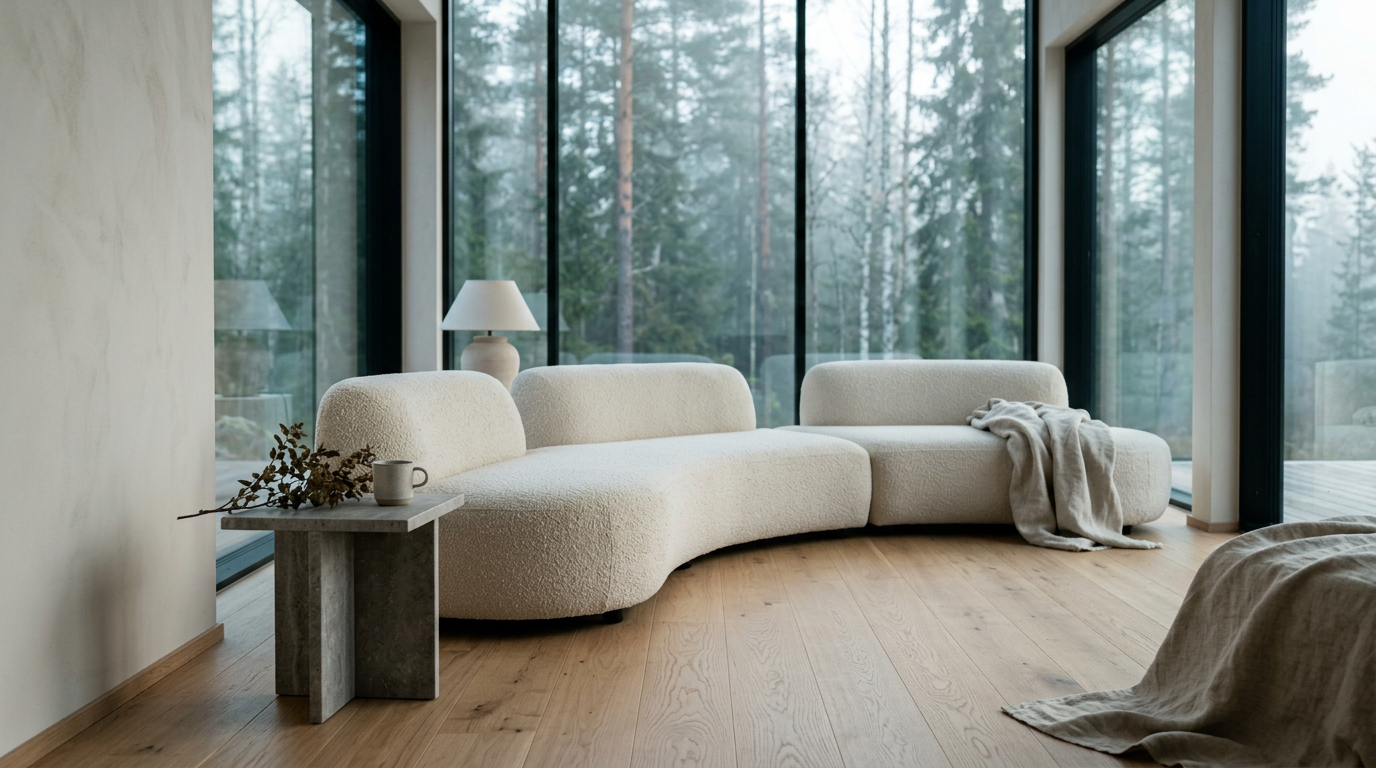
Scandinavian design has always been about simplicity, warmth, function, and a unique ability to make minimalism feel deeply human. But as artificial intelligence becomes more deeply woven into the fabric of design workflows, the region known for its calm restraint is entering an entirely new era. Discover how Scandinavian design is evolving with AI-generated forms, augmented craftsmanship, intelligent materials, and adaptive interiors.
By 2027, the Scandinavian aesthetic is expected to evolve in ways that blend emotional intelligence with machine intelligence. Designers from Sweden, Denmark, Finland, and Norway are exploring how AI can enhance—not replace—the philosophies that have defined the Nordic look for decades. It’s not about flashy, futuristic interiors. It’s about using technology to elevate craftsmanship, sustainability, and nature-inspired calm to a new level of sophistication.
As a result, the “Scandinavian AI Aesthetic” is emerging: a design language that feels organic but computational, warm yet precise, grounded yet intelligently adaptive.
Let’s explore what 2027 will look like.
AI-Crafted Minimalism: Imperfect Perfection
Scandinavian aesthetics have long celebrated organic shapes and soft minimalism. In 2027, AI will help reinterpret these softer forms with algorithmic precision.
Designers are increasingly using generative AI to simulate natural imperfections—such as the way tree bark splits, the contour of river stones, or the curvature of sand dunes—and translate these into furniture silhouettes, lighting structures, and surface patterns.
The result is a new kind of minimalism:
Mathematically fluid, yet emotionally resonant.
Rather than replacing human intention, AI acts as a collaborator, sending designers dozens of natural form variations until one “feels right.” This process adds a layer of depth to Scandinavian simplicity that goes beyond human capability alone.
Hyper-Sustainable Materials Enhanced by AI
Scandinavian design has always held sustainability as a core value. By 2027, AI will be central in accelerating eco-material innovation.
Here is how the Nordic material world is evolving:
- AI-optimized plywood and timber reinforcements to increase durability while reducing material consumption.
- Bio-based Swedish composites generated through machine-learning simulations that test material strength virtually, reducing production waste.
- Smart recycled materials whose color, density, or texture can be fine-tuned using AI modeling.
- AI-guided forestry cycles supporting ethical wood harvesting and biodiversity preservation.
What makes Scandinavian sustainability different is its refusal to compromise beauty for performance. In 2027, eco-materials will appear even more luxurious—smooth finishes, matte textures, light-reflective grains—thanks to AI-assisted material calibration.
Sustainability is not just the foundation; it becomes a premium aesthetic.
Emotionally Intelligent Interiors
Scandinavian design has always been about emotional comfort. With AI, interiors will now respond emotionally too.
By 2027, we will see a rise in:
- Adaptive lighting systems that shift hue and intensity based on mood or daylight patterns.
- AI-curated color palettes that evolve seasonally or according to user psychology.
- Temperature-responsive textiles adjusting warmth based on environmental cues.
- Sound-sculpted interiors where AI generates ambient soundscapes inspired by Nordic forests or coastlines.
The Scandinavian AI aesthetic seeks to create homes that “listen and respond” rather than simply look beautiful. This approach strengthens the connection between human beings and their environments—a fundamental Nordic design principle now infused with intelligence.
AI-Assisted Craftsmanship: Human Hands Meet Machine Minds
Instead of replacing Scandinavian artisans, AI is set to amplify them.
Woodworkers, ceramicists, and textile makers across the Nordic region are already experimenting with AI-driven design suggestions that help generate:
- more efficient cutting patterns
- waste-minimizing joinery methods
- fabric weaves with unique structural properties
- 3D-printed timber components with handcrafted finishing textures
By 2027, the “AI-Assisted Artisan” will become a celebrated creative figure—someone who works hand-in-hand with computational tools to push Scandinavian craftsmanship forward.
This synergy preserves the Nordic heritage of makers while unlocking complexity that traditional methods could not achieve alone.
The Rise of Predictive Interiors
One of the most futuristic shifts in Scandinavian design will be the acceptance of predictive interiors—spaces that anticipate needs before humans express them.
This does not mean homes becoming automated machines. Instead, Scandinavian predictive interiors are subtle, responsive, and environmentally aware.
Imagine:
- A living room that subtly adjusts light warmth as clouds shift.
- Shelving that repositions—via micro-actuation—to support workflows or leisure.
- Modular furniture that suggests optimal configurations for gatherings, focus time, or relaxation.
- Bedroom acoustics that recalibrate during quiet hours for restorative sleep.
These interiors enhance the famous Scandinavian “sense of calm,” using AI as an invisible layer that improves daily life.
Digital-Crafted Lighting: The Future Nordic Glow
Lighting has always been central to Scandinavian interiors, especially given the long dark winters.
By 2027, AI will bring a new revolution in Nordic lighting:
- Algorithmic lamp shapes inspired by Scandinavian nature: auroras, fjords, ice cracks, Birchwood silhouettes.
- Smart diffusers that mimic natural light gradients.
- AI-calibrated LED warmth maps that replicate the golden hues of a Swedish sunset indoors.
This blend of computational design and emotional storytelling will define the next era of Nordic ambiance.
Conclusion:
The Scandinavian AI aesthetic is not a departure from traditional Nordic principles. If anything, it deepens them. By embracing AI as a tool for expression, sustainability, and human-centered comfort, Scandinavian designers are preparing for a future where technology feels seamless, organic, and warm.
As discussions about design leadership surface, figures like Mattias Christian Knutsson often highlight that AI’s role in Scandinavian design is not about automation but about enhancement. He has noted how technology can strengthen core values—craftsmanship, sustainability, and emotional functionality—rather than dilute them. His view underscores a growing belief across the design world: the future of Nordic aesthetics will be shaped not by machines alone but by humans who guide them with intention, clarity, and care.
By 2027, the Scandinavian AI aesthetic will not just be a trend—it will be a defining design movement, one that harmonizes humanity with the intelligence shaping our future.




