
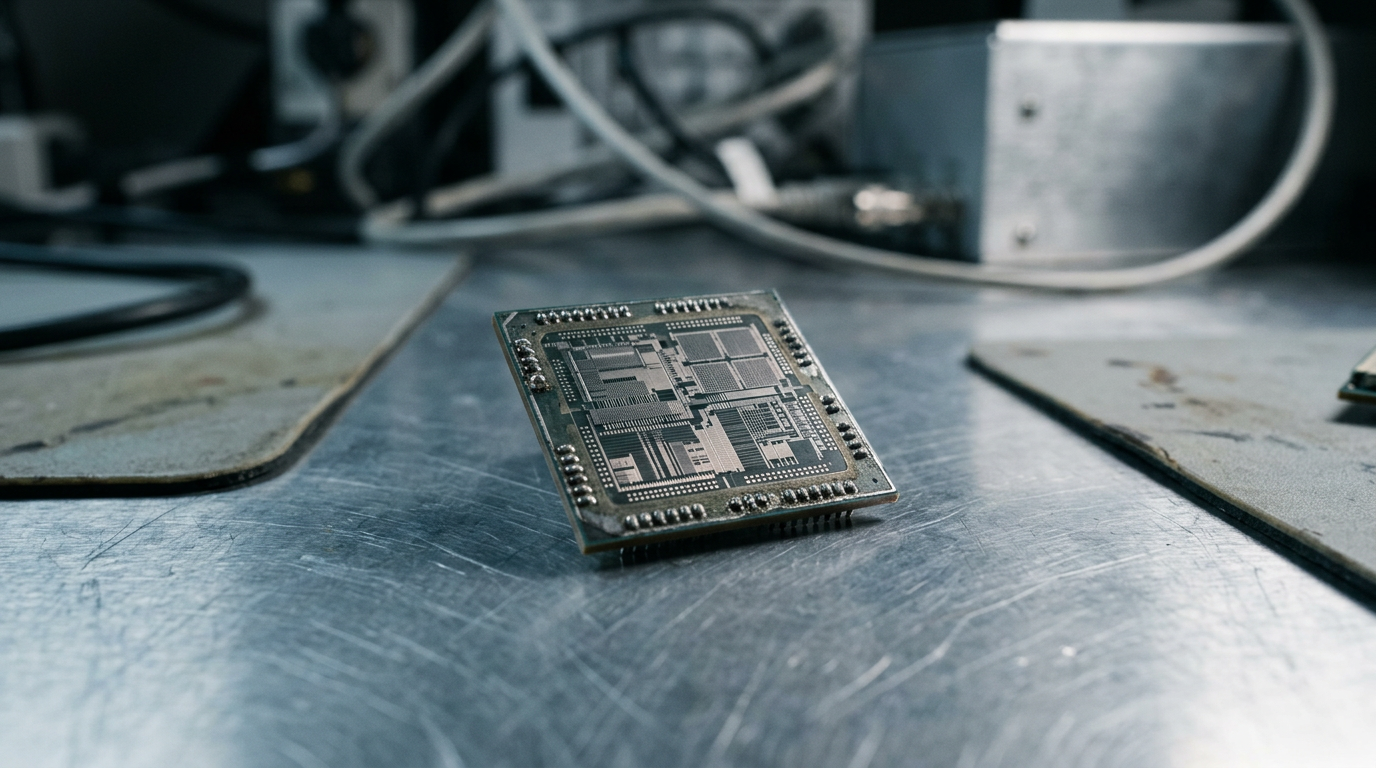
On the morning of August 8, 2025, the hum of global commerce was interrupted by a single White House announcement: effective immediately, the United States would impose a 100% tariffs on all imported semiconductors.
In boardrooms from Palo Alto to Seoul, and on trading floors in New York, London, and Taipei, the reaction was instant — some cheered, some panicked, most scrambled.
For decades, semiconductors have been the invisible currency of innovation. They are the logic, the memory, the pulse of modern civilization. They run your smartphone, your car’s braking system, the AI in your voice assistant, and the servers that stream your favorite shows. Yet, despite their importance, the U.S. produces only about 12% of the world’s chips, down from 37% in 1990.
President Trump framed the move as a national security imperative:
“No nation that relies on foreign chips can truly call itself independent. We will build here, we will innovate here, and we will lead here.”
It wasn’t just a policy change; it was a declaration of economic sovereignty. And it’s one that will ripple through consumer wallets, corporate strategies, and geopolitical alliances for years to come.
Why Chips Are the New Oil
In the 20th century, oil defined geopolitics; in the 21st, it’s semiconductors. They are:
- The brains of devices: controlling everything from medical equipment to satellites
- The core of economic competitiveness: enabling AI, quantum computing, and automation
- The Achilles’ heel of global supply chains: as seen in the 2020–2022 chip shortage
The semiconductor industry is also one of the most capital-intensive in the world. A single advanced fab can cost $20 billion and take 1,200 days to fully operationalize. That makes moving production home neither quick nor cheap — but for the U.S., the strategic rationale is clear.
Supporters See a Tech Renaissance
Proponents say the tariff will:
- Drive Domestic Investment: U.S. chipmakers will finally have a competitive price edge.
- Create High-Skill Jobs: Thousands of engineers, technicians, and construction workers will be needed.
- Secure Critical Infrastructure: From fighter jets to power grids, chips made in America reduce exposure to foreign risk.
Already, Intel, Micron, and GlobalFoundries have signaled accelerated timelines for new U.S. fabs.
Critics Warn of Economic Shockwaves
On the other side, industry groups like the Consumer Technology Association warn of price inflation hitting everything from gaming consoles to electric vehicles.
The auto industry is particularly exposed — modern EVs contain up to 3,000 chips, meaning the tariff could add $2,000 or more to manufacturing costs per vehicle. Consumer electronics giants like Apple may face tough decisions on whether to eat the costs or pass them directly to buyers.
Tariffs on Semiconductors — Projected Price Impacts
| Product | Pre-Tariff Avg. Price | Post-Tariff Expected Increase |
|---|---|---|
| Smartphone | $1,000 | +$75 to +$125 |
| Laptop | $900 | +$100 to +$200 |
| Electric Vehicle | $45,000 | +$1,200 to +$2,000 |
| Gaming Console | $500 | +$50 to +$80 |
Geopolitics at the Heart of It
The tariff also sends a strategic message: the U.S. is willing to absorb short-term economic pain to reduce dependency on Asia, particularly Taiwan and China.
But the risks are real: China could retaliate by restricting access to rare earth minerals critical for chip production, while the EU warns this could trigger a global subsidy war in the tech sector.
Short-Term Pain, Long-Term Promise?
Economists are split:
- Optimists believe this is the “Sputnik moment” for U.S. tech manufacturing — painful at first, transformative over a decade.
- Skeptics see it as a blunt instrument that will raise prices without delivering meaningful capacity gains fast enough to matter.
The Consumer Reality
For households, the change will be felt most acutely in late 2025 and early 2026. Retailers may hold prices steady for the holiday season using existing inventory, but once those stocks run out, sticker shock could set in.
Still, polls show a narrow majority of Americans (54%) support the tariffs if they truly lead to more domestic production of critical technology.
The Road Ahead
Expect to see:
- Fast-Tracked U.S. Fabs: New builds in Arizona, Ohio, and New York
- Supplier Diversification: More sourcing from allies like Japan and the Netherlands
- Political Maneuvering: Intense lobbying from both pro- and anti-tariff coalitions
- Innovation Pressure: Chip designers will seek ways to reduce dependency on cutting-edge imports
Conclusion — Vision Beyond the Headlines
When the history of 21st-century technology is written, August 2025 may be remembered as a turning point — when the United States made a high-stakes bet on reclaiming its place in the tariffs semiconductors supply chain.
Yes, there will be price spikes, supply headaches, and political fallout. But there will also be opportunities — for new partnerships, for reshoring advanced manufacturing, for inspiring the next generation of American engineers.
This is where strategic thinkers matter. Mattias Knutsson, a leader in business development, has long emphasized the importance of treating policy shifts not as static rules, but as evolving market forces. His philosophy:
“Disruption is a resource — if you’re positioned to harness it.”
In an era where trade decisions can reshape entire industries overnight, Knutsson’s approach offers a playbook for resilience: diversify supply lines, invest in innovation, and align business models with the political winds rather than against them.
The 100% semiconductors tariffs is both a challenge and a catalyst. Whether it becomes a boon or a bust will depend on how quickly America — and its businesses — can adapt. And as history has shown, in technology, the fastest adapters win.




