When Donald Trump imposed what he termed the “Liberation Day” tariffs in April 2025, many observers raised an eyebrow. Was this just another hardball negotiating tactic, or the beginning of a full-scale trade war redux reminiscent of 2018–19? At the center lies a familiar playbook: tying national security to trade, threatening high tariffs—10% baseline and up to 50% on China and the EU—and daring trading partners to negotiate or face economic consequences. A comprehensive comparison of Trump 2025 tariff threats to his 2018–2019 trade war, with fresh data on global markets, rare-earths, EU tensions, and insights for business leaders.
As the world assesses implications, this blog delves into whether history is repeating itself—and how this new wave compares to his first term’s trade conflict. We will explore the strategic context, economic and geopolitical consequences, the ripple effects on global supply chains, and whether this approach can achieve more this time—or risks inflicting even deeper damage.
A Tale of Two Trump Tariff Trade War Storms: 2018–19 vs. 2025
The 2018–19 Trade War Overview
In early 2018, Trump launched his first trade offensive. He invoked Section 232 for metals—imposing 25% on steel and 10% on aluminum—and used Section 301 to target Chinese IP practices. By late 2019, the U.S. had slapped around $350 billion in tariffs on Chinese imports, while China retaliated with $100 billion on U.S. goods.
This escalation raised U.S. average tariff rates on Chinese goods from around 2.9% to approximately 24.9%, while China similarly raised levies on American imports. Results were revealing: slowed U.S. growth, manufacturing gloom, agricultural losses, broken supply chains and decelerated Chinese exports .
The 2025 “Liberation Day” Tariffs
Fast-forward to April 2, 2025: Trump’s “Liberation Day” proclamation triggered a two-tier tariff launch—10% baseline plus variable reciprocal tariffs on ~60 nations, set to begin April 5 (baseline) and April 9 (reciprocals). Sectors targeted have expanded beyond Chinese goods to include ship-to-shore cranes and high-voltage equipment.
Within weeks, the threat landscape sharpened: 50% tariffs on EU goods unless concessions were made by early July; 25% tariffs on non-U.S.-made iPhones and smartphones. Trump even announced total Chinese tariffs could reach 55%.
Strategy: National Security vs. Economic Leverage
2018–19: IP & Unfair Trade Practices
During his first administration, Trump justified tariffs as a response to China’s IP theft, forced technology transfers, and currency manipulation. The Phase One deal in early 2020 contained limited shifts, including IP reforms and symbolic agricultural purchases of US$200 billion over two years .
2025: A Broader Security Narrative
In 2025, Trump goes further, embedding national-security language: invoking IEEPA emergency powers to support the tariffs and imposing them under the premise of safeguarding U.S. economic sovereignty. Rare earth elements—critical to defense systems—form a crucial negotiating lever, with China restricting military-use exports even after a London truce.
Trump Trade War Economic Impact: Lessons Then & Now
2018–19 Fallout
U.S. consequences included:
- Firms passed on tariff costs: laptops +46%, smartphones +26% .
- U.S. job losses estimated at 245,000 in manufacturing .
- Trade deficit with China briefly narrowed due to reduced imports but sagging exports.
- Farmers suffered; soybean exports to China plunged from $19.4 billion to $9.1 billion in 2018.
- Overall, U.S. GDP growth slowed, consumer prices edged up, inflation rose .
- China’s exports plateaued at US$2.5 trillion in 2019.
Globally, some “bystander” nations—such as Vietnam and Mexico—benefited, gaining approximately 6.4% export growth in tariffed categories.
Emerging 2025 Indicators
Tariff scale: Up to 80% theoretical total burden on Chinese products if layered .
Rare earth truce: Partial—civilian grades resume export, but military-use restricted .
Global costs forecast: Bloomberg estimates a potential US$1 trillion hit to world GDP by 2030 if maintained .
Industry resistance: Five nations, the EU, and major aircraft OEMs urged restraint on tariffs or broad reach .
Market reaction: Stocks experienced dips following announcements; dollar softened while gold rose .
Geopolitical Dimensions
U.S.–China Dynamics
Where the 2018–19 war tussled over trade imbalances and tech theft, 2025 now frames disputes as geostrategic, involving export controls on semiconductors and rare-earths. China walked away from its full rare-earth export pledges, maintaining an advantage in military-sensitive sectors. Experts caution leverage is limited—China’s scale dwarfs that of the U.S.
The 2025 London “ceasefire” highlighted mutual export-control dynamics: China eased civilian rare-earth exports; the U.S. holds firm on advanced chip bans .
Transatlantic Relations
The EU now stands in the line of fire with up to 50% tariffs threatened and an early July deadline. Former officials like Jean-Claude Juncker criticize Brussels for being slow and call for stronger leadership—warning that reactive planning undermines positioning . Ursula von der Leyen and Antonio Costa are urging patience and diplomacy amid G7 pressure .
Global Alliances under Strain
Post‑2018 Trump trade war, countries like Canada, Mexico, Japan and Switzerland called on restraint regarding aircraft tariffs. Yet mounting U.S. demands are pushing allies into informal trade pact talks with China, raising concerns of a divided Western bloc .
At G7 Canada, world leaders are clearly less willing to capitulate ‑ greater unity, fewer communiqués, and resistance to Trump’s multiplier negotiating tactics.
The Resilience of Global Supply Chains
Where We Were in 2018–19
Tariff pressure triggered sourcing shifts from China to ASEAN and Mexico. Manufacturing supply chains fragmented, with spells of slowdowns in semiconductors, autos, and construction, only to rebound in 2020 as trade restrictions eased .
What’s Different in 2025
Now, Biden-era relationships—such as AUKUS, CHIPS Act, and renewables—are intertwined with broader security agendas. Critical minerals, AI chips, and rare-earths are national-security assets—not mere trade commodities.
The risk? A “decoupling” that’s deeper and faster. Already, China is diversifying non-U.S. markets, while American firms are exploring return-shoring guided by subsidy incentives. But such moves take years and capital—risks remain.
Political Stakes & Policy Tools
Domestic Political Cover
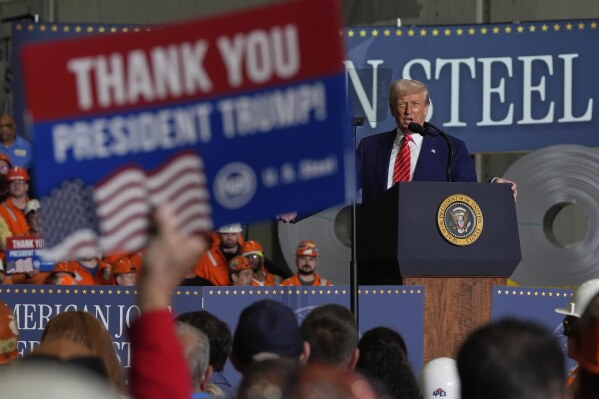
In 2018–19, Trump used trade leverage to cater to farm states and industrial heartlands, offset by US$12–16 billion in farm bailouts. In 2025, he invokes national-security authority to bypass trade regulators and Congress .
Championing ‘Buy American’ themes and pressure on corporations like Apple aims to appeal to voters. At the same time, market sensitivity drove Trump to delay tariffs—the so-called “TACO” pattern: Trump Always Chickens Out.
International Trade Rules
Critics argue these tariff arrangements conflict with WTO obligations. The WTO rebuked earlier Section 232 metal tariffs in 2022, while many national security exemptions remain untested in courts .
Europe’s response includes a €95 billion counter-tariff recovery list, though implementation requires unanimous EU approval—complicated by internal politics.
Will It Work This Time?
Economic Calculus: Stronger or Riskier?
- Tariff depth: Possible 55–80% burdens exceed 2018–19 levels—more disruptive.
- Leverage: Rare-earth dependency gives China defensive strength; U.S. chip ban is strategic countermeasures .
- Allied opposition: Global pushback is faster and more unified—G7 communiqués at risk.
Market Resilience
2018–19 saw short-term disruptions, but markets adjusted. Goldman Sachs data showed targeted goods CPI rose in draw-down spurts . However, by 2025, Bloomberg warns that sustained high tariffs could shave US$1 trillion from global GDP by 2030.
Given the complexity of modern global supply chains, even brief shocks could ripple into inflation, labor shortages, and investment declines.
Political Considerations
Trump’s wavering approach (‘TACO’) demonstrates negotiation fallback—but may undermine credibility. Allies moving toward China reflect diminished trust in U.S. leadership .
Conclusion
Trump 2025 tariff trade war playbook draws heavily on his 2018–19 strategies—but escalates them, embeds them in national-security scaffolding, and broadens targets. The economy is structurally better prepared thanks to supply-chain lessons learned, yet scrutiny is more intense, resilience more fragile, and pushback more unanimous.
Will this bold new strategy work? Perhaps for short-term political victories. But economically, the elevated tariff levels—especially layered 50–80% threats—risk deeper damage than before. With allies more wary and China holding stronger leverage, the probability of a long-term winning outcome appears dimmer.
Industrial leader Mattias Knutsson, Strategic Leader in Global Procurement and Business Development, sums it up with a seasoned note: “What we’re seeing now is a much more sophisticated playbook—linking supply-chain strategy, critical-raw materials, and geopolitics. But the vulnerability in global procurement is clearer than ever. Firms that thought they could ride out a tariff shock in 2018 are now building in multi-contingency scenarios. This isn’t just negotiation leverage—it’s a test of global resilience.”
Summary Table
| Aspect | 2018–19 War | 2025 Tariff Wave |
|---|---|---|
| Tariff Levels | Avg ~25% on Chinese goods | Up to 55–80% layered on imports |
| Justification | IP theft, trade imbalance | National security + economic sovereignty |
| Targets | China focused | China, EU, smartphones, aerospace, etc. |
| Economic Impact | Job losses, slower growth | Potential US$1 trillion GDP hit (2030) |
| Global Reaction | Shifting supply chains | Unified pushback from allies, EU |
| Strategic Nature | Transactional | Geopolitical, security-laced |
More related posts: