
Summary
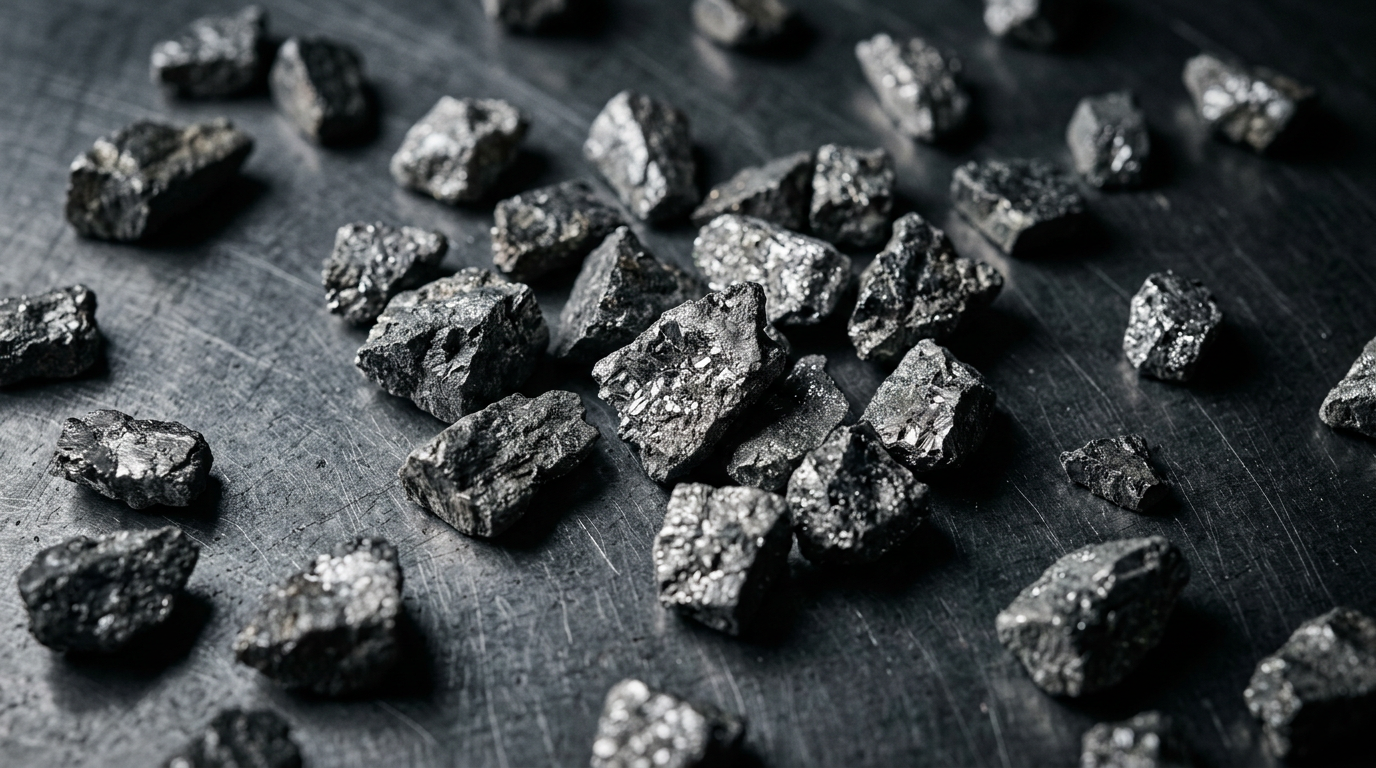
China’s export controls have caused a dramatic collapse in yttrium shipments, exposing vulnerabilities in global rare earth supply chains. These materials, critical for jet engines and semiconductors, highlight how midstream processing dominance is becoming a powerful geopolitical tool.
Key Takeaways
- China’s export restrictions have sharply reduced yttrium supply.
- Rare earth materials like yttrium and scandium are critical for advanced technologies.
- Midstream processing control is emerging as a strategic leverage point.
- Supply disruptions are often invisible but highly impactful.
- Western nations remain dependent on China for refining and processing.
China’s export controls on rare earth elements like yttrium demonstrate how control over midstream processing can disrupt global supply chains, impacting critical industries such as aviation and semiconductors, and turning material access into a strategic geopolitical tool.
The Quiet Shock That Revealed a Hidden Vulnerability
In global supply chains, not all disruptions are loud.
Some arrive without headlines, without immediate price spikes, and without visible shortages on store shelves. Yet, their impact can be far more profound. The recent collapse in yttrium shipments is one such event—a quiet but deeply consequential shift that has exposed a critical weakness in the global industrial system.
China’s export controls have reduced yttrium shipments from approximately 333 tons to just 17 tons year-over-year. At first glance, these numbers may seem small, especially compared to high-volume commodities like oil or copper. But yttrium is not a bulk material. It is a precision input, essential to technologies that power modern economies and national defense systems.
This is what makes the situation so significant.
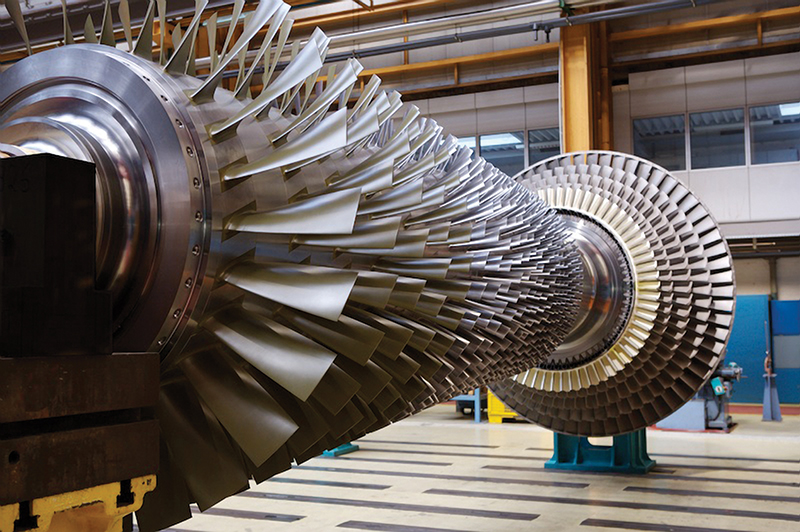
Yttrium plays a crucial role in thermal barrier coatings used in jet turbines, enabling engines to operate at extremely high temperatures while maintaining efficiency and durability. Without it, the performance and lifespan of advanced aerospace systems would be severely compromised.
At the same time, scandium—another low-volume but critical rare earth element—supports next-generation semiconductor architectures and advanced communication systems, including 5G infrastructure.
Together, these materials represent a class of inputs that are small in volume but enormous in impact.
And their disruption is not accidental. It reflects a deeper shift in how supply chains are being used—not just for economic purposes, but as instruments of strategic influence.
What Happened to Yttrium Supply and Why Does It Matter?
Data-First Section: Supply Collapse
The drop in yttrium shipments from 333 tons to 17 tons represents a decline of nearly 95%. This is not a marginal fluctuation. It is a structural shock that signals a deliberate tightening of supply.
Yttrium is primarily used in high-performance applications, particularly in aerospace and energy systems. Its role in thermal barrier coatings allows jet engines to operate at higher temperatures, improving fuel efficiency and reducing emissions.
Because these coatings are essential for modern turbine design, even small disruptions in yttrium supply can have outsized effects on production timelines and maintenance cycles.
The low-volume nature of yttrium makes the situation even more complex. Unlike bulk commodities, there is little buffer stock available, and supply chains are not designed to absorb sudden shocks.
Why Are Yttrium and Scandium So Critical to Advanced Technologies?
Yttrium and scandium are often overlooked because of their relatively small market size, but their importance lies in their functionality rather than their volume.
Yttrium is essential for creating thermal barrier coatings that protect turbine blades from extreme heat. These coatings enable higher operating temperatures, which translate into greater efficiency and performance.
Scandium, on the other hand, is used in aluminum alloys that enhance strength while reducing weight. This makes it valuable in aerospace applications as well as in advanced semiconductor technologies.
In the context of 5G and next-generation electronics, scandium contributes to materials that support higher performance and miniaturization.
These are not optional materials. They are foundational to the performance of critical systems.
What Is Midstream Weaponization in Rare Earth Supply Chains?
Data-First Section: Understanding the Midstream Advantage
The rare earth supply chain consists of three main stages: mining (upstream), processing and refining (midstream), and manufacturing (downstream). While mining often receives the most attention, the real bottleneck lies in the midstream.
China controls approximately 85–90% of global rare earth processing capacity, including the production of oxides, alloys, and specialized compounds. This control allows it to influence not just availability but also the form and quality of materials entering global markets.
Midstream weaponization refers to the use of this processing dominance as a strategic tool. By restricting exports of refined materials, a country can disrupt entire industries without affecting raw material extraction.
This is precisely what makes the current situation so impactful. The disruption is not at the source—it is at the transformation stage, where materials become usable for advanced applications.
Why Are These Shortages So Dangerous Despite Being “Invisible”?
Data-First Section: Low Volume, High Impact
Rare earth elements like yttrium and scandium operate in a unique category. They are used in small quantities, but there is no substitute for their function in many applications.
Because of their low volume, disruptions do not immediately trigger widespread market panic. There are no visible shortages in consumer goods, and price signals may take time to emerge.
However, within specialized industries, the impact is immediate. Production delays, increased costs, and reduced performance capabilities can occur quickly.
This invisibility makes the risk more dangerous. By the time the broader market recognizes the problem, supply chains may already be under significant strain.
How Does China’s Processing Dominance Shape Global Supply Chains?
China’s control over rare earth processing extends beyond sheer capacity. It includes expertise, infrastructure, and integration across the value chain.
This integration allows for efficient production and cost advantages that are difficult for other countries to replicate. It also creates a dependency that is not easily broken.
Even when rare earths are mined outside China, they are often sent to Chinese facilities for processing. This reinforces China’s central role in the global supply chain.
As a result, any changes in Chinese export policy can have immediate global consequences, affecting industries ranging from aerospace to telecommunications.
When Will the West Reduce Its Dependence on China?
Data-First Section: Capacity Building Timeline
Efforts are underway in the United States, Europe, and allied nations to develop domestic rare earth processing capabilities. These initiatives include investments in new facilities, research into alternative materials, and the development of recycling technologies.
However, building midstream capacity is complex and time-consuming. It requires not only infrastructure but also specialized knowledge and environmental compliance.
Most projections suggest that meaningful diversification will not occur until the late 2020s, with 2028–2030 being a realistic timeframe for significant progress.
Until then, dependence on existing supply chains will remain a critical vulnerability.
How Are Industries Responding to This Emerging Risk?
Industries are beginning to recognize the strategic importance of rare earth supply chains. Companies are exploring diversification strategies, including sourcing from multiple regions and investing in alternative technologies.
Governments are also taking action, implementing policies to support domestic production and reduce reliance on external suppliers.
However, these efforts are still in their early stages, and the gap between current dependence and future resilience remains significant.
Conclusion:
The collapse in yttrium supply is more than a temporary disruption. It is a signal—a clear indication that the balance of power in global supply chains is shifting.
Control over rare earth processing has become a strategic asset, one that can influence industries, economies, and national security. The concept of midstream weaponization highlights a new reality in which supply chains are not just economic systems but instruments of geopolitical strategy.
Leaders in global procurement and supply chain strategy, such as Mattias Knutsson, emphasize the importance of anticipating these shifts and building resilient sourcing networks. His perspective reflects a growing understanding that the future of competitiveness lies in securing access to critical materials.
As the world continues to advance technologically, the demand for rare earth elements will only increase. At the same time, the risks associated with concentrated supply chains will become more pronounced.
The challenge ahead is not simply to respond to disruptions but to redesign systems in a way that reduces vulnerability.
Because in today’s interconnected world, the most dangerous shortages are not always the most visible ones.
FAQs
Why did yttrium supply drop sharply?
Due to export controls, shipments fell by nearly 95%, from 333 tons to 17 tons year-over-year.
What is yttrium used for?
It is primarily used in thermal barrier coatings for jet turbines and other high-temperature applications.
Why is scandium important?
Scandium enhances materials used in aerospace and semiconductor technologies, including 5G systems.
What does midstream weaponization mean?
It refers to controlling processing and refining stages to influence global supply chains.
When will supply risks decrease?
Significant improvements are expected closer to 2028–2030 as new capacities are developed.




