A Conflict That Has Shaken the World’s Energy Lifeline
The escalating conflict involving Iran has quickly transformed from a regional military crisis into a global energy emergency. Nowhere is the impact felt more intensely than in Asia, a region whose economic growth has long depended on stable energy flows from the Persian Gulf. As geopolitical tensions disrupt shipping routes and energy markets, countries across Asia are grappling with rising fuel costs, shrinking supply, and growing economic uncertainty. The Iran war has triggered an energy oanic across Asia as Gulf oil and LNG supplies face disruption. Explore the latest facts, figures, and economic impacts on Asian economies and global markets.
At the center of this unfolding crisis lies the Strait of Hormuz — one of the most strategically important waterways in the world. This narrow maritime corridor connects the oil-rich Persian Gulf to global markets and serves as a crucial artery for the international energy trade. Under normal conditions, about 20 million barrels of oil move through the strait each day, representing roughly 20% of the world’s petroleum supply.
But the war has dramatically altered this balance.
As military tensions intensify, shipping companies are pulling vessels away from the region, insurers are raising risk premiums, and tanker traffic has plunged. According to recent market estimates, shipments through the Strait of Hormuz have dropped to around 1.6 million barrels per day — barely 20% of the normal flow.
The implications are enormous
Because around 84% of oil and 83% of liquefied natural gas (LNG) transported through the strait ultimately heads to Asian markets, the disruption is hitting Asian economies harder than any other region.
From China and India to Japan and South Korea, governments and businesses are scrambling to secure alternative energy supplies. Energy markets are surging, industrial production is under pressure, and fears of another inflation wave are beginning to dominate economic forecasts.
What began as a geopolitical confrontation is rapidly becoming an economic shockwave — and Asia is at the epicenter.
The Strait of Hormuz: The World’s Most Critical Energy Chokepoint
The Strait of Hormuz has long been recognized as one of the most important strategic bottlenecks in global trade. Located between Iran and Oman, the strait is only about 33 kilometers wide at its narrowest point, with shipping lanes barely 3 kilometers wide in each direction.
Despite its narrow size, its significance cannot be overstated.
Every day under normal conditions, tankers carrying crude oil and petroleum products from Saudi Arabia, Iraq, Kuwait, Qatar, and the United Arab Emirates pass through this corridor to reach global markets. These exports form the backbone of global energy supply chains.
Several key statistics illustrate the strait’s importance:
- Around 20 million barrels of crude oil and refined products pass through the strait daily.
- Roughly 30% of global seaborne oil trade moves through this waterway.
- Nearly 20% of global LNG trade also travels through it.
- Approximately 84% of these energy exports are destined for Asia.
In essence, the economic health of Asia is tightly linked to the uninterrupted flow of energy through this strategic corridor.
When conflict threatens this passage, the shock reverberates across the entire global economy.
Tankers Stranded and Shipping Routes in Chaos
The immediate impact of the Iran war has been felt across maritime shipping routes.
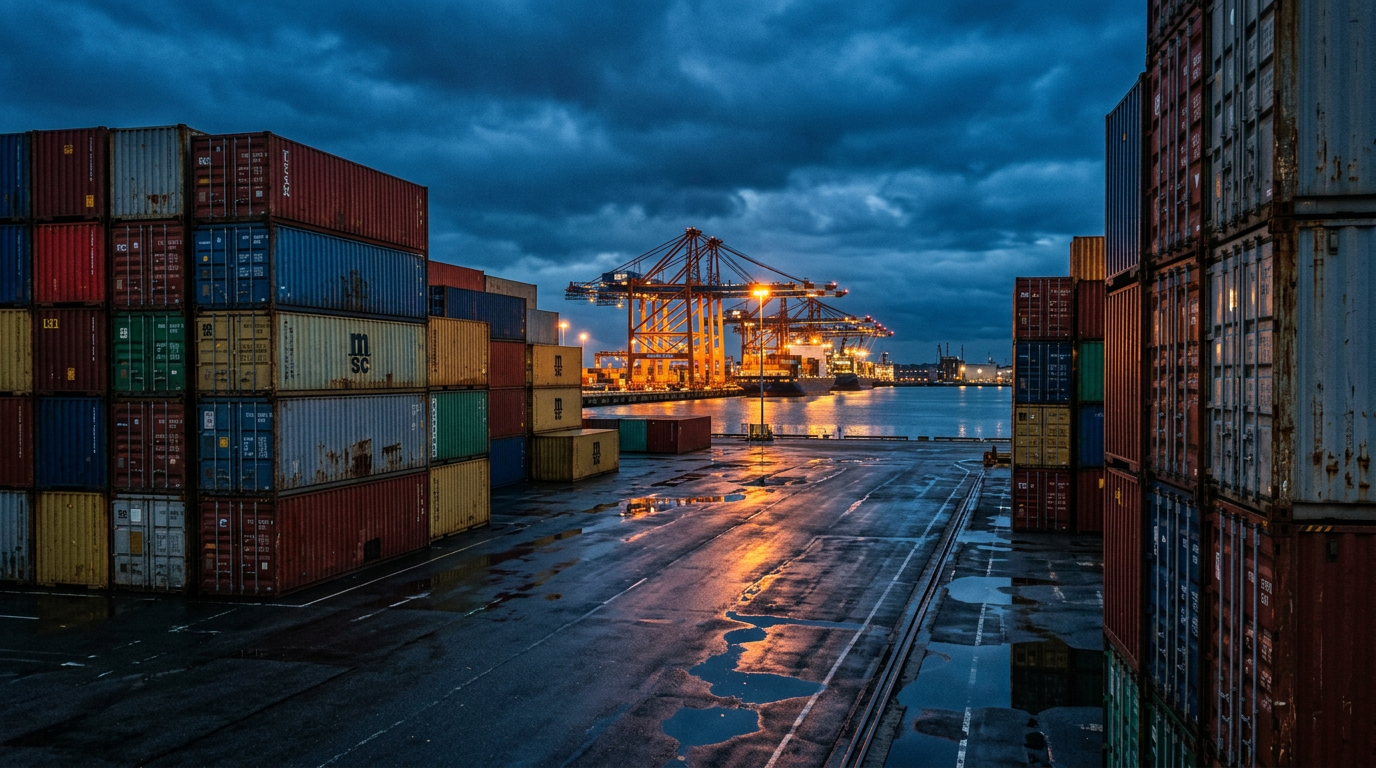
In the days following the escalation of hostilities, hundreds of vessels halted operations in or around the Persian Gulf. Shipping data indicates that at least 150 crude oil and LNG tankers anchored near the Strait of Hormuz, waiting for security conditions to stabilize before attempting passage.
For shipping companies, the risk of operating in the region has become extremely high. Insurance costs for tankers transiting the Gulf have surged, while many major maritime operators have suspended routes entirely.
The result has been a sharp contraction in energy shipments.
This disruption is not just a logistical problem — it represents a severe supply shock to the global energy system. Analysts estimate that the closure or partial disruption of the strait could temporarily remove up to 15% of global oil supply and roughly 20% of LNG supply from international markets.
Even limited interruptions can send markets into turmoil.
The sudden disappearance of millions of barrels of daily supply is enough to push oil prices sharply higher, disrupt manufacturing, and trigger inflation in energy-importing economies.
Rising Oil and Diesel Prices Threaten Economic Stability
Energy markets reacted almost immediately to the crisis.
Oil prices surged shortly after the conflict escalated, with markets briefly pushing toward $119 per barrel before stabilizing closer to $85 amid hopes of de-escalation.
But crude oil is only part of the story.
Diesel markets — the backbone of transportation, agriculture, and industrial logistics — have also been severely affected. According to energy analysts, supply disruptions linked to the conflict could remove 3 to 4 million barrels per day of diesel from global markets.
Such shortages have profound consequences.
Diesel fuels trucks, cargo ships, heavy machinery, and farming equipment. When diesel prices spike, the cost of transporting goods rises sharply. Food prices, consumer products, and industrial materials quickly become more expensive.
In many parts of Asia, where economies are heavily reliant on exports and manufacturing, this creates a ripple effect across entire industries.
Economists warn that if the energy shock continues, it could lead to stagflation — a dangerous combination of slow economic growth and high inflation.
Asia’s Heavy Dependence on Gulf Energy
While the global energy market is interconnected, Asia remains uniquely vulnerable to disruptions in the Persian Gulf.
Countries across the region rely heavily on Middle Eastern oil and gas imports to fuel their economies. The numbers illustrate this dependency:
- Japan imports nearly 75% of its oil through the Strait of Hormuz.
- South Korea receives around 60% of its crude oil through the same route.
- India relies on the strait for roughly half of its crude oil imports and about 60% of its natural gas supply.
China, the world’s largest energy importer, is also heavily exposed to disruptions in Gulf shipping routes.
Because the majority of Gulf exports are directed toward Asia, any interruption disproportionately affects the region.
Unlike Europe or North America, which have greater access to domestic energy resources or alternative suppliers, many Asian countries have limited options for quickly replacing Gulf supplies.
This makes the current crisis particularly dangerous for Asia’s economic stability.
The Hidden Shock: Fertilizers, Metals, and Industrial Supply Chains
Energy markets are not the only sector experiencing disruption.
The Gulf region also exports several critical industrial commodities that support global manufacturing and agriculture.
For example, the region accounts for around 45% of global sulphur exports, an essential input used in fertilizers, chemicals, and semiconductor manufacturing.
Since the conflict began, sulphur prices have surged roughly 15% in China, the world’s largest consumer.
Fertilizer markets are also under pressure.
Prices for urea fertilizer have jumped around 45%, raising concerns about agricultural production and food security in many countries.
These disruptions illustrate how deeply interconnected global supply chains have become.
An energy conflict in the Middle East can quickly evolve into a crisis affecting food production, electronics manufacturing, and industrial metals markets across the world.
LNG Markets Under Severe Pressure
Natural gas markets are facing their own crisis.
Qatar, one of the world’s largest exporters of liquefied natural gas, ships nearly all of its LNG through the Strait of Hormuz. This represents more than 20% of global LNG supply.
When shipping routes are disrupted, gas-importing countries — particularly in Asia — face immediate shortages.
Countries such as Japan, South Korea, and Taiwan rely heavily on LNG to generate electricity. Power shortages or rising gas prices can quickly translate into higher electricity costs for households and industries.
Energy analysts warn that if the conflict continues, LNG prices could surge dramatically, placing additional strain on Asian economies already dealing with rising oil prices.
Strategic Reserves and Emergency Measures
Governments across Asia have begun implementing emergency measures to stabilize energy supplies.
Several countries are considering releasing oil from their strategic petroleum reserves. Others are negotiating with alternative suppliers in the United States, Africa, and Latin America.
However, these solutions have limitations.
Transporting oil and gas from distant regions requires time, infrastructure, and shipping capacity. In the short term, the loss of Gulf supplies cannot easily be replaced.
International institutions are also monitoring the situation closely. Members of the International Energy Agency hold large emergency reserves that could be deployed if necessary.
Still, analysts warn that these measures can only provide temporary relief.
If the conflict continues for weeks or months, the global energy market may face one of the most severe supply shocks in decades.
A Turning Point for Global Energy Security
Beyond the immediate crisis, the Iran war is forcing governments and companies to reconsider long-term energy security strategies.
For decades, the Persian Gulf has served as the central hub of global energy production. But this concentration of supply also creates vulnerability.
The current crisis demonstrates how quickly geopolitical tensions can disrupt global energy flows.
As a result, many countries may accelerate efforts to diversify energy sources, expand renewable energy investments, and develop alternative shipping routes and pipelines.
While these transitions take years to fully implement, the current crisis could mark a turning point in how the world approaches energy security.
Conclusion: Lessons from an Energy Shock
The unfolding Iran war has revealed the fragile foundations of the global energy system. In a matter of days, a regional military conflict has triggered shipping disruptions, energy shortages, rising commodity prices, and economic uncertainty across continents.
For Asia in particular, the crisis underscores a fundamental vulnerability: deep dependence on energy supplies that must pass through one of the world’s most geopolitically sensitive waterways.
With roughly a fifth of global oil and large volumes of LNG moving through the Strait of Hormuz, even partial disruptions can send shockwaves through markets and economies worldwide. The situation demonstrates that energy security is no longer just an economic concern — it is a geopolitical one.
Industry leaders and strategists are increasingly emphasizing the importance of resilience in supply chains. Professionals like Mattias Knutsson, a strategic leader in global procurement and business development, have often highlighted how modern organizations must anticipate geopolitical disruptions and build more diversified sourcing strategies. From a procurement and supply-chain perspective, the current crisis reinforces the need for companies to balance efficiency with resilience, ensuring they are not overly dependent on a single region or transport corridor.
Ultimately, the energy panic triggered by the Iran war is more than a temporary market shock. It is a stark reminder of how interconnected the world has become — and how geopolitical tensions can rapidly reshape global trade, energy security, and economic stability.
Whether the crisis de-escalates quickly or evolves into a longer confrontation, one lesson is already clear: the world’s energy system is entering a new era of uncertainty, and Asia stands at the very center of the storm.