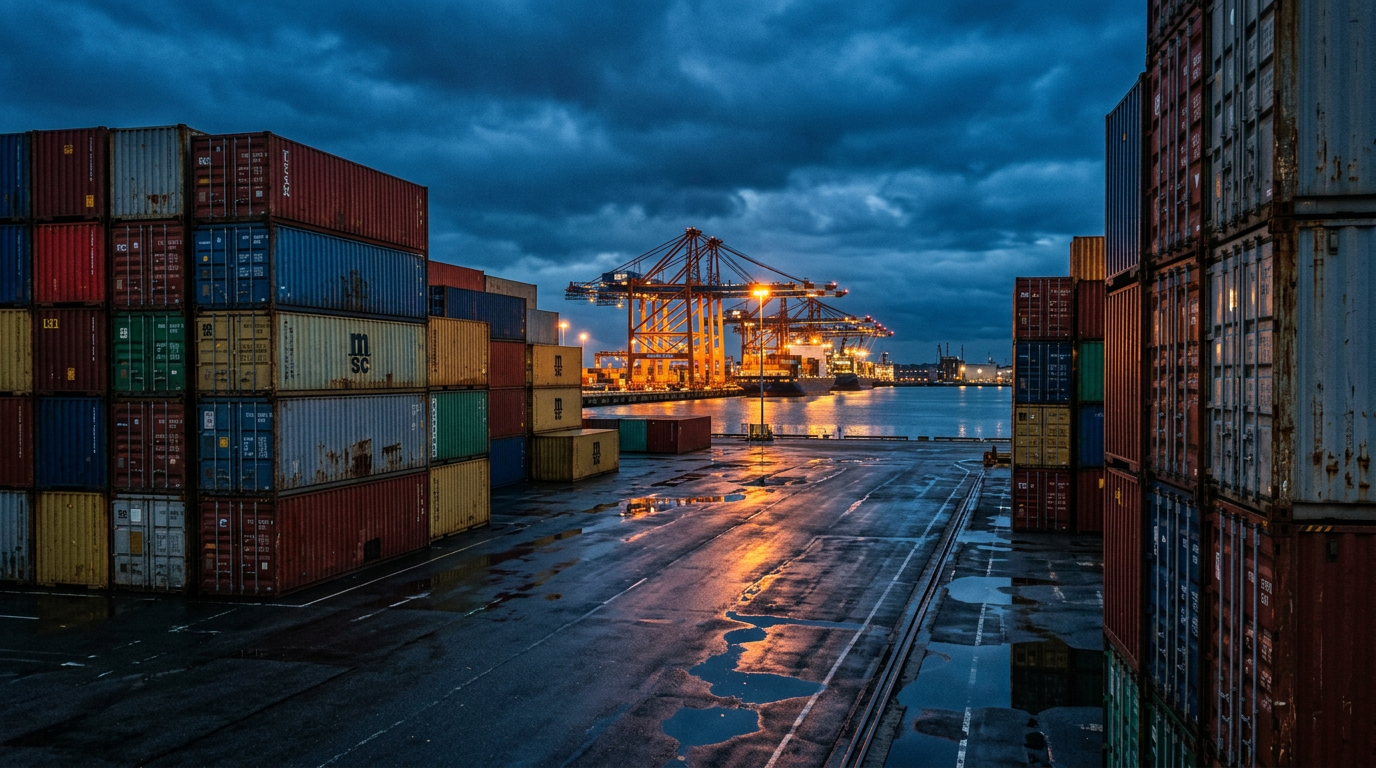
The world is learning that global trade is no longer just about efficiency — it’s about resilience. In 2026, geopolitics has become a market driver as powerful as innovation or consumer demand. The smooth, low-cost globalization of the early 2000s has given way to an era of fragmentation, where security, autonomy, and regional alliances define economic strategy. In 2026, global supply chains are being rewritten by geopolitics, technology, and national priorities. Discover how nearshoring, reshoring, and strategic independence are shaping the next wave of market winners.
For decades, the global supply chain was designed like a symphony — interconnected, efficient, and tuned for cost reduction. But the pandemic, war in Eastern Europe, trade disputes, and semiconductor shortages exposed how fragile that system was. Suddenly, terms like “nearshoring,” “friend-shoring,” and “strategic autonomy” aren’t policy jargon — they’re boardroom priorities shaping corporate earnings and stock prices.
Investors, too, are rethinking. From semiconductors and logistics to energy independence and defense, capital is flowing to sectors that can thrive in a fractured, multipolar world. 2026 may be remembered as the year geopolitics stopped being a background risk — and became an investment strategy.
U.S.–China Decoupling: The Defining Economic Story of the Decade
The U.S.–China relationship remains the single most consequential axis for global trade and investment. What began as tariff disputes years ago has evolved into strategic decoupling across technology, defense, and manufacturing.
According to the World Trade Organization, a sustained economic split between the two superpowers could reduce global GDP by 5–7% over the long term — the equivalent of erasing the entire economy of Japan. Yet despite this sobering figure, companies are adapting rather than retreating.
Export controls on advanced chips, restrictions on AI technologies, and new tariffs on Chinese EVs are accelerating investment in domestic and regional production. For example:
- Intel is building two $20 billion semiconductor fabs in Ohio, supported by the U.S. CHIPS Act.
- TSMC is investing $65 billion across Japan and Arizona to diversify from China-facing operations.
- Apple now assembles 14% of its iPhones in India, up from just 1% in 2021, marking a historic pivot in global manufacturing.
This diversification is what economists call the “China+1” strategy — companies keeping one foot in China for scale, while building new capacity elsewhere for security. For investors, that shift is rewriting the global equity map, creating winners not only in the U.S. but across India, Mexico, Vietnam, and Eastern Europe.
As one trade strategist put it: “The next Silicon Valley might not be in California — it could be in Chennai.”
Nearshoring and Reshoring: The Geography of Investment Is Changing
The desire for resilient, politically safe supply chains has ignited an industrial boom across North America and Southeast Asia. The Deloitte 2025 Global Supply Chain Survey reported that 70% of manufacturing leaders are actively nearshoring or reshoring production, citing reduced logistics risks and better political predictability.
Mexico is one of the biggest beneficiaries. Its proximity to the U.S., participation in the USMCA trade deal, and growing infrastructure have positioned it as the new workshop of North America. In 2025 alone, Mexico attracted $42 billion in foreign direct investment (FDI) — a record high — driven largely by automakers, electronics firms, and renewable energy manufacturers.
In Asia, Vietnam and Indonesia are the rising stars. Vietnam’s manufacturing exports surged 19% year-over-year, while Indonesia’s nickel and EV supply chain sector grew over 30% thanks to heavy Chinese and Western investment.
Reshoring is not just about politics — it’s about economics. Rising wages in China, automation advancements, and government incentives are making regional manufacturing more cost-competitive than ever before. The U.S. Manufacturing PMI hit a post-pandemic high in 2025, while Europe’s reindustrialization initiatives have directed over €200 billion toward clean tech and semiconductor production.
For investors, this wave of industrial rebalancing translates into opportunity — from construction and logistics firms to equipment suppliers and materials producers fueling the new regional economies.
Global Supply Chains Resilience: The New Investment Megatrend
Supply chain resilience is becoming as important to corporate value as innovation or market share. According to KPMG’s 2025 Global Operations Report, 85% of companies cited resilience as a “top-three strategic priority.”
A parallel investment ecosystem is emerging — one focused on redundancy, transparency, and local adaptability. The global supply chain resilience market is projected to grow from $23 billion in 2025 to $60 billion by 2035, at an annual growth rate of 11.9%.
This trend favors companies in:
- Logistics and transportation — developing regional hubs, predictive AI tracking, and multimodal routes.
- Industrial automation and robotics — minimizing dependency on vulnerable labor markets.
- Critical materials and energy security — ensuring control of raw inputs from rare earths to lithium.
For instance, Maersk and DHL have both announced massive expansions of inland logistics centers to reduce port bottlenecks. Siemens and Rockwell Automation are leading in smart factory systems enabling rapid production shifts. Meanwhile, Albemarle (a lithium producer) and MP Materials (rare earths) are becoming critical players in the supply chain of the green economy.
As ESG standards evolve, resilient and transparent supply chains aren’t just operational necessities — they’re investor mandates. Supply chain sustainability now intersects with governance and ethics, shaping not only valuations but corporate reputations.
Energy Independence and Defense: Security as an Asset Class
In a geopolitically tense world, energy and defense are no longer just government concerns — they’re investment themes. Nations are moving aggressively to secure critical infrastructure and reduce dependence on volatile suppliers.
The International Energy Agency (IEA) reports that over $3 trillion in clean energy investments are expected globally in 2026 — the highest in history. From nuclear small modular reactors (SMRs) to hydrogen projects and battery recycling, this drive for autonomy is remaking the energy landscape.
Meanwhile, defense budgets are climbing across the board. NATO members collectively increased defense spending by 11% in 2025, reaching the alliance’s highest-ever level. The U.S. alone allocated $886 billion, while European nations like Poland, Finland, and Germany are building domestic manufacturing capacity for drones, missiles, and surveillance technologies.
This militarization of supply resilience has created a new class of investable assets: companies that serve both industrial and defense supply networks. From Lockheed Martin to BAE Systems, and logistics firms such as Kuehne + Nagel, investors are eyeing the overlap between commercial and strategic infrastructure as a long-term growth zone.
As one analyst at Morgan Stanley put it, “Security is becoming a growth market.”
Regional Trade Policies and Their Market Impact
Trade policy, once the domain of diplomats, now drives stock valuations. Governments are actively reshaping market incentives through subsidies, tariffs, and regional pacts designed to bolster domestic industry.
The European Union’s Green Deal Industrial Plan, the U.S. Inflation Reduction Act, and Japan’s Strategic Materials Law are all examples of economic nationalism disguised as sustainability or competitiveness. These frameworks prioritize local sourcing and manufacturing for clean tech, chips, and defense materials — reshaping where capital flows.
In emerging markets and global supply chains, governments are competing to attract investment. India’s Production-Linked Incentive (PLI) scheme has drawn over $15 billion in commitments for electronics, semiconductors, and automotive components. Vietnam’s tax incentives have turned it into a go-to destination for companies exiting China.
Currency stability, trade access, and regulatory clarity are now as important as corporate earnings in driving foreign investor sentiment. As a result, markets in India, Mexico, Vietnam, and Poland have outperformed their global peers over the last 18 months — not just on growth, but on strategic relevance.
Investor Takeaways: Positioning for a Rewired Global Economy
The key to investing in 2026’s geopolitical world is recognizing global supply chains that fragmentation creates new frontiers. While the risks of political volatility remain, so do extraordinary opportunities.
Investors should consider:
- Focusing on companies with diversified supply chains and local manufacturing advantages.
- Allocating to sectors tied to resilience and security — logistics, defense, renewables, and semiconductor equipment.
- Exploring regional ETFs and thematic funds targeting “friend-shoring” beneficiaries like India, Mexico, and Vietnam.
- Watching energy storage, green hydrogen, and critical materials as long-term growth plays tied to national independence strategies.
While global supply chains trade growth may slow to just 0.5% in 2026, according to the WTO, the quality and direction of trade are becoming far more significant than the quantity. The winners will be those who adapt — and those who invest where the world is moving, not where it’s been.
Conclusion
2026 is the year investors confront a new reality: the world’s economic arteries are being rewired. Supply chains are no longer invisible threads connecting continents — they are the visible foundations of national strategy and market value.
From semiconductor reshoring to critical mineral control, from energy security to logistics redesign, this is not deglobalization — it’s re-globalization with new rules. The geography of growth is changing, and with it, the logic of investing.
As Mattias Knutsson, a Strategic Leader in Global Procurement and Business Development, succinctly puts it:
“The winners of tomorrow will not be those who chase the cheapest supply chain — but those who build the smartest, most resilient one.”
For investors, that means thinking beyond borders, beyond headlines, and toward a future where resilience itself is the most valuable asset on the balance sheet.