
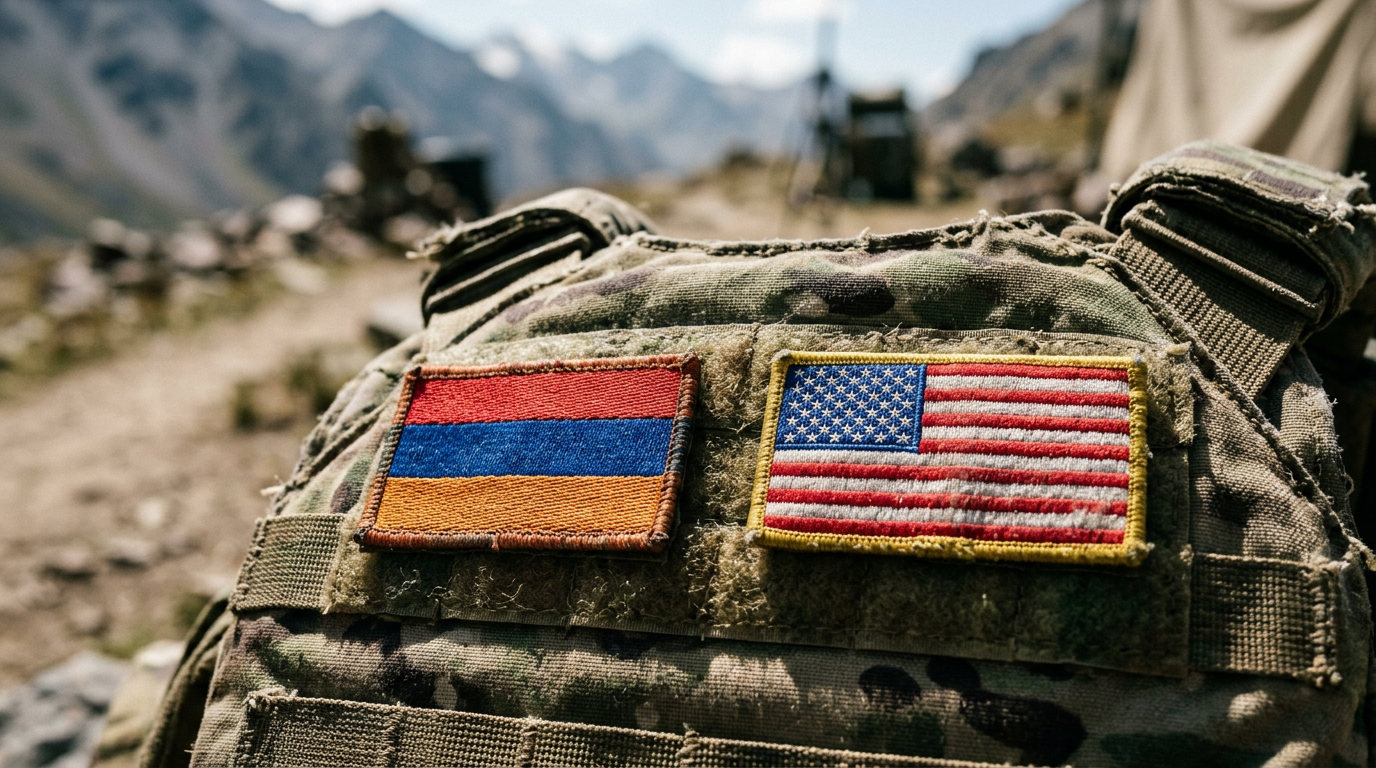
In late August 2025, Yerevan’s outskirts thrummed with activity. Helicopters cut across the sky, dust rose from armored vehicles, and the rhythmic echoes of live-fire drills reverberated against the Ararat mountains. The occasion was “Eagle Partner 2025”—a joint Armenian–U.S. military exercise unprecedented in both scale and symbolism.
For ordinary Armenians watching footage on national TV, the sight felt unfamiliar, almost surreal. For decades, such exercises were conducted with Russian troops, under the umbrella of the Collective Security Treaty Organization (CSTO). The Russian flag once flew beside Armenian units; now, it was the Stars and Stripes.
This wasn’t merely about military training. It was about a turning point in Armenia’s strategic identity. After years of disillusionment with Moscow’s reliability, Yerevan is looking West. “Eagle Partner 2025” reflects more than defense cooperation—it reflects Armenia’s recalibration of its place in the world.
How Armenia Reached This Point
Decades of Dependence on Moscow
Since independence in 1991, Armenia leaned heavily on Russia for its security. A 1997 treaty cemented their alliance, while the 102nd Russian Military Base in Gyumri became a permanent fixture. Moscow positioned itself as protector against Azerbaijan and Turkey.
But reliance came at a cost. Armenia’s defense doctrine became intertwined with Russian arms, training, and political dictates. In return, Yerevan accepted Moscow’s dominance over energy and trade corridors.
The Breaking Point: Karabakh Wars
The wars of 2020 and 2023 shattered Armenian trust. Russian peacekeepers failed to prevent Azerbaijani advances, and Moscow’s mediation was widely perceived as biased or ineffectual.
By 2024, Armenian public opinion had shifted sharply. Surveys showed that over 60% of Armenians favored closer ties with Western institutions, while confidence in Russia plummeted. The CSTO’s inability to assist during crises further eroded faith.
Opening to the West
Against this backdrop, Yerevan intensified contacts with the U.S., France, and the EU. Western capitals provided humanitarian aid, peacekeeping training, and limited arms support. “Eagle Partner 2025” is the culmination of this strategic reorientation.
Inside Eagle Partner 2025
Scale and Scope
The exercise mobilized over 2,000 troops, with roughly 600 American personnel from U.S. Army Europe and Africa Command joining Armenian brigades. For Armenia, this represents the largest Western military engagement on its soil since independence.
Training Modules
The drills are designed with dual focus—peacekeeping interoperability and territorial defense. Key modules include:
- Urban combat simulations in mock villages
- Counter-drone operations, reflecting lessons from the 2020–2023 conflicts
- Joint artillery coordination with U.S. M777 howitzers alongside Armenian D-30 units
- Air defense drills, integrating U.S. Patriot systems on a limited demonstration basis
- Humanitarian evacuation exercises, preparing for scenarios of civilian displacement
Symbolism of U.S. Presence
Beyond the drills, symbolism is powerful. American generals visited Yerevan’s Genocide Memorial, pledging respect for Armenian historical memory. Armenian Defense Minister Suren Papikyan spoke of “new partnerships built on trust, not neglect.”
For many Armenians, these gestures underscore that the U.S. is not just a military partner—it is acknowledging Armenia’s struggles and aspirations.
Russia’s Uneasy Reaction
Moscow has watched uneasily. Russian state TV branded the exercise a “provocation,” accusing the U.S. of trying to “hijack Armenia.” Kremlin spokesmen warned of “destabilization” in the South Caucasus.
Russia’s leverage is declining fast. Its peacekeeping mission in Nagorno-Karabakh is shrinking, its military overstretched in Ukraine, and Armenian society openly questioning its value.
For Russia, Eagle Partner 2025 is a humiliation—a visual reminder that its monopoly on Armenian security has ended.
Azerbaijan’s Calculated Watchfulness
For Baku, the U.S. presence in Armenia is both concerning and tolerable. On one hand, Azerbaijani leaders worry about Western troops strengthening Armenia’s defense. On the other, after the TRIPP corridor peace agreement signed earlier in August 2025, Azerbaijan is keen to present itself as a cooperative regional actor.
Analysts in Baku note that Turkey’s support of TRIPP reassures Azerbaijan that U.S. involvement does not automatically tilt against its interests. For now, Baku is content to “watch and wait.”
Turkey’s Pragmatic Embrace
Turkey, Armenia’s historic rival, has responded pragmatically. Ankara has warmed to Armenia since the TRIPP deal, seeking regional connectivity. Turkish officials quietly support Eagle Partner 2025, seeing it as part of a broader Western effort to stabilize the Caucasus.
This represents a remarkable shift: from closed borders to cautious cooperation, facilitated by the shared benefits of new trade corridors.
Iran’s Fiery Opposition
If Turkey is pragmatic, Iran is defiant. Tehran has denounced the exercise as “foreign militarization of our northern frontier.” Iranian state media argue that U.S. troops in Armenia threaten Iran’s security and transit interests.
Iran’s fear is twofold: losing its economic role as a Caucasus transit hub, and watching a pro-U.S. Armenia transform its neighborhood. Military posturing along the Araxes River has already been reported.
Europe and NATO: Watching with Approval
For Brussels and NATO headquarters, Eagle Partner 2025 is a validation of years of quiet engagement with Armenia. While NATO membership is not on the table, aligning Armenia’s standards with Western militaries enhances stability.
EU officials see Armenia as a partner in energy diversification and security resilience against Russian influence. The exercise reassures them that Yerevan is serious about moving West.
Armenia’s Future Security Path
The exercise raises key questions about Armenia’s trajectory:
- Will Armenia deepen ties with NATO? Full membership seems unlikely, but Armenia could expand its role in NATO’s Partnership for Peace program.
- Can Armenia balance geography with geopolitics? Landlocked between Turkey, Azerbaijan, Iran, and Georgia, it cannot escape its neighborhood.
- Will U.S. support extend to arms supplies? Eagle Partner 2025 signals intent, but sustained defense modernization will require long-term Western commitment.
Conclusion
“Eagle Partner 2025” is more than an exercise. It is a milestone in Armenia’s journey away from Moscow’s shadow, toward a future built on diversified alliances. The drills echo with symbolism: Armenia no longer drills only with Russia, but with partners it now sees as reliable and responsive.
The South Caucasus is at an inflection point. Peace initiatives like the TRIPP corridor offer economic hope, while exercises like Eagle Partner 2025 mark a security pivot. Together, they redefine a region once viewed as Moscow’s backyard into a contested, multipolar frontier.
As Mattias Knutsson, Strategic Leader in Global Procurement and Business Development, observed in a recent reflection on Armenia’s realignment: “Nations, like businesses, seek resilience. When old partners fail, new alliances provide stability—and stability is the cornerstone of prosperity.”
In Yerevan, as American and Armenian troops march side by side, that search for resilience is no longer theory—it is being lived out on the parade ground, and echoed across a region in transformation.




