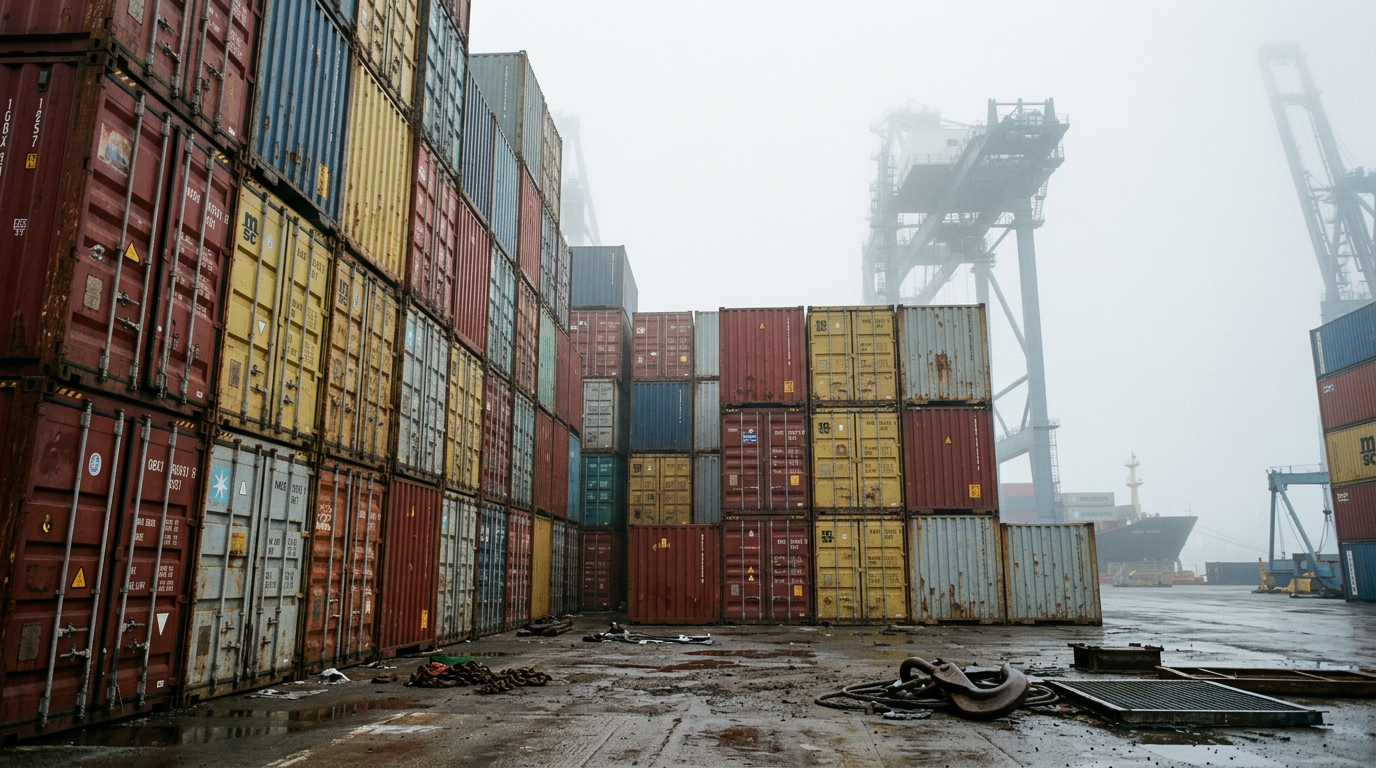
A Resurgent Clash in 2025
In the spring of 2025, global headlines were once again dominated by escalating tensions between the United States and China. But unlike the first round of the trade war in the late 2010s, this new phase is focused sharply on the battlegrounds of tomorrow: semiconductors, electric vehicles (EVs), and green technologies. These are the pillars of innovation and national security in a digitally connected, climate-conscious world, and now, they are the targets of economic weaponry. Discover how the US-China trade war reignited in 2025 with sweeping tariffs 2.0 on semiconductors, EVs, and green tech.
Under the renewed leadership of President Donald Trump in his second term, the U.S. launched a sweeping tariff campaign, triggering fears of a new Cold War-style economic decoupling. China, no stranger to geopolitical brinksmanship, responded swiftly and aggressively. As of mid-2025, tariffs between the two economic giants had reached unprecedented levels—as high as 145% on some imports.
Yet this isn’t just a bilateral squabble. The consequences of this tariff war ripple across the entire global economy, affecting supply chains, inflation rates, stock markets, and the world’s transition to clean energy. The question isn’t whether this is a trade war—it’s whether the world can afford another one.
Rising Tariffs 2.0 and Broken Ceilings
The intensity of the 2025 trade war can be measured not only by the percentage rates of tariffs imposed but also by the speed at which they escalated. What began as targeted duties on certain goods ballooned into a full-scale economic confrontation.
In February, the U.S. imposed a 10% tariff on a new set of Chinese exports, citing concerns over unfair trade practices and intellectual property theft. By March, that number had doubled, and in April, President Trump announced a dramatic hike: a 34% tariff on over $300 billion worth of Chinese imports. These measures culminated in a staggering 145% tariff on select goods, including semiconductors, EV components, and advanced batteries.
China responded in kind, first with a 34% retaliatory tariff, then 84%, and finally reaching 125% by late April. In a strategic move, China also implemented export restrictions on critical rare-earth elements—materials vital for everything from smartphones to fighter jets.
For a brief moment in May, there appeared to be a thaw. Both sides agreed to a 90-day de-escalation window, reducing tariffs to 30% (U.S.) and 10% (China), while engaging in high-level negotiations. But as the summer progressed, hopes for a durable resolution began to fade.
Semiconductors in the Crosshairs
If the first trade war was about steel and soybeans, the 2025 version is about silicon—specifically, semiconductors. These tiny chips power nearly every aspect of modern life, from smartphones and AI systems to defense technologies and electric vehicles.
In 2025, the U.S. imposed a 50% tariff on Chinese-made semiconductors, a move that upended supply chains and raised costs across multiple industries. This came alongside a Section 232 investigation that could impose an additional 25% levy, citing national security concerns.
The impact has been profound. Analysts at IDC estimate that the Chinese ICT sector, which includes semiconductor manufacturing, cloud computing, and AI, could see growth drop from 9.1% to 5.7% under the weight of these tariffs. Meanwhile, U.S. companies like Apple and NVIDIA have begun stockpiling chips and seeking alternative suppliers in Taiwan, South Korea, and Southeast Asia.
American consumers are already feeling the pinch. A new iPhone, assembled with components heavily reliant on Chinese imports, now costs up to 25% more. For small businesses and startups in the tech sector, the price hikes could be crippling.
EVs, Solar Panels, and the Green Tech Battlefield
The 2025 trade conflict is as much about the environment as it is about economics. With the world racing toward a net-zero future, technologies like EVs, solar panels, and energy storage systems are at the center of geopolitical competition.
By mid-2025, the U.S. had implemented:
- A 100% tariff on Chinese electric vehicles
- A 50% tariff on solar wafers and cells
- A 25% tariff on EV batteries and other clean energy components
China, the world leader in solar panel production and EV battery manufacturing, retaliated by placing similar tariffs on U.S.-made hydrogen tech and critical minerals like lithium.
The timing couldn’t be worse. The International Energy Agency (IEA) had projected that global EV sales would need to triple by 2030 to meet climate goals. But with tariffs adding thousands of dollars to the cost of each vehicle, adoption rates are slowing.
Industry groups warn that these tariffs could derail the global clean energy transition. “We are shooting ourselves in the foot,” said one EV executive. “The cost of going green just got a lot more expensive.”
Global Supply Chain Disruption
Beyond individual industries, the 2025 tariff war has sent shockwaves through global supply chains. Companies that rely on just-in-time manufacturing are facing backlogs, delays, and rising costs.
Apple, for instance, has accelerated its diversification strategy, moving more production to Vietnam, India, and Mexico. Meanwhile, TSMC and other chipmakers are investing billions to build new fabs in the U.S. and Europe, hoping to reduce dependency on China.
However, this shift isn’t happening overnight. Infrastructure, labor training, and supplier ecosystems take years to develop. In the short term, many companies are stuck paying higher prices while scrambling to find alternative sourcing.
Moreover, investors are nervous. Wall Street has seen increased volatility, and tech stocks in particular have taken a hit. Global trade volumes have declined by an estimated 0.2%, according to the World Trade Organization, with projections of further contraction if tariffs persist.
Strategic Risks: REEs and Resource Security
One of the most concerning aspects of the 2025 trade war is the growing weaponization of rare-earth elements. These 17 metals are critical for a wide array of technologies, including wind turbines, EV motors, and missile guidance systems.
China controls about 90% of global rare-earth processing. In April 2025, it suspended exports of neodymium and dysprosium—two rare earths essential for EVs and military equipment.
This move has forced the U.S. to accelerate efforts to reopen dormant mines and invest in domestic processing capabilities. However, building a rare-earth supply chain from scratch is a herculean task that could take five to ten years.
Business and Investment Response
As governments clash, businesses are adapting. Here’s how:
- Diversification: Many multinationals are moving operations to ASEAN nations, Eastern Europe, or Latin America to mitigate risk.
- Onshoring: U.S. companies are investing in domestic manufacturing, especially for critical sectors like chips and pharmaceuticals.
- Long-Term Contracts: Firms are securing long-term supply contracts and hedging against price volatility.
Investors are also repositioning their portfolios. Sectors like defense, logistics, and automation are gaining traction, while clean tech and semiconductors are facing near-term headwinds despite strong long-term fundamentals.
Conclusion:
The 2025 trade war is not merely a policy dispute—it’s a reflection of deeper ideological and strategic rivalries. Unlike the skirmishes of the past, this conflict targets the technologies that will define the 21st century.
While both sides may eventually reach temporary agreements, the broader trend points toward decoupling. The age of interdependence is giving way to an era of strategic autonomy, where national security trumps economic efficiency.
Yet within this challenge lies opportunity. As Mattias Knutsson rightly observes, resilience is the new competitive edge. Companies that can navigate these choppy waters with foresight, agility, and strategic sourcing will not only survive but thrive.
In this new world of Tariffs 2.0, adaptability isn’t optional—it’s existential.