
The air in Washington, D.C., on 8 August 2025 carried a quiet anticipation. In the marbled halls of the Eisenhower Executive Office Building, flanked by U.S. and South Caucasus flags, delegations from Armenia and Azerbaijan sat across from one another. Cameras clicked, pens moved, and in a moment that few thought possible, centuries of grievance gave way to signatures on parchment. The peace agreement between Armenia and Azerbaijan was not just another ceasefire declaration. It was framed as a structural breakthrough, the kind of deal designed not only to silence guns but to rebuild trust through economic interdependence. At the heart of the accord was something that would reshape maps, trade routes, and alliances for decades to come: the Trump Route for International Peace and Prosperity (TRIPP) corridor.
The deal granted the United States a 99-year development lease over this strategic transit corridor, cutting across Armenia and connecting into Azerbaijan. For the first time in living memory, Armenia and Azerbaijan were bound together not by war but by a shared infrastructure vision. Washington, once seen as a distant power in this part of the world, suddenly became the guarantor of peace and prosperity in a region long caught between Russia, Turkey, and Iran.
For skeptics, TRIPP was an experiment too bold to succeed. For optimists, it was the Eurasian Silk Road of the 21st century. And for those who lived along its route, it was something more intimate: the hope of steady trade, jobs, open borders, and peace after decades of fear.
Why This Moment Matters: From Conflict to TRIPP Corridor
The Armenia–Azerbaijan rivalry is one of the post-Soviet world’s most bitter disputes. Since the late 1980s, the two nations have fought over Nagorno-Karabakh, a mountainous enclave internationally recognized as part of Azerbaijan but populated largely by ethnic Armenians.
Wars in the 1990s, 2020, and 2023 left deep scars: tens of thousands dead, hundreds of thousands displaced, and regional instability that spilled across borders. Mediation efforts—from the OSCE Minsk Group to bilateral talks hosted in Moscow, Brussels, and Tbilisi—failed to produce lasting peace.
What made the August 2025 deal different was not only the direct U.S. mediation but the economic anchor built into the agreement. By centering peace around the TRIPP corridor, negotiators gave Armenia and Azerbaijan mutual incentives that made conflict less attractive. The corridor would only flourish if borders stayed open, trade flowed freely, and trust was maintained.
The Architecture of TRIPP: What the Corridor Includes
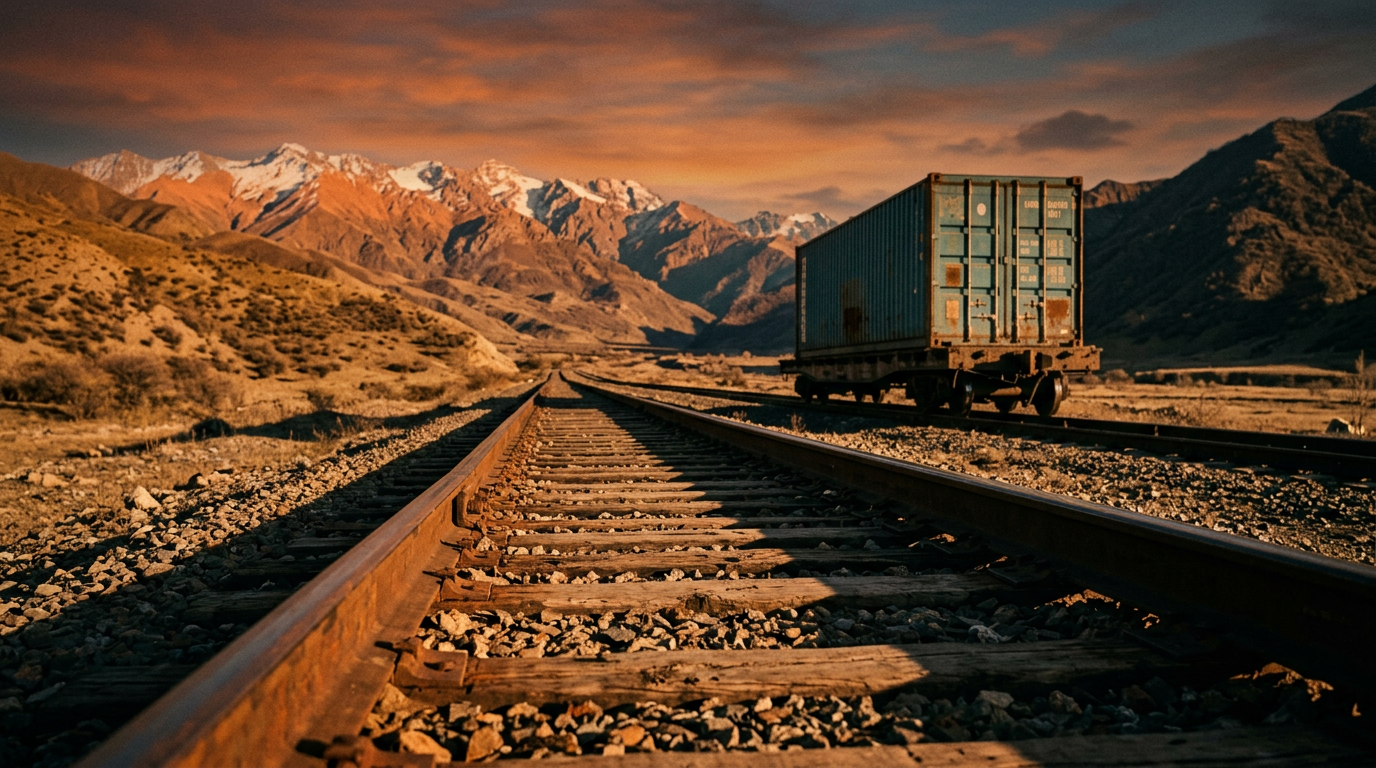
The TRIPP corridor is more than a road—it’s an integrated network designed to become the backbone of regional connectivity. Its core features include:
- Highways and Rail Lines: Connecting Yerevan to Baku, with spurs linking Georgian ports and Turkish highways.
- Digital Infrastructure: Fiber-optic backbones designed to position the South Caucasus as a data transit hub between Europe and Asia.
- Energy Transit: Pipelines for natural gas and oil, with renewable energy corridors (solar and hydro integration) under consideration.
- Free Trade Zones: Border-adjacent hubs for logistics, warehousing, and light manufacturing.
Analysts estimate that once operational, TRIPP could handle $45–60 billion in annual trade flows by the mid-2030s, rivaling the China–Pakistan Economic Corridor (CPEC) in scope.
Geopolitical Ripples: Shifting the Balance of Power
The TRIPP agreement immediately sent ripples across Eurasia’s geopolitical chessboard.
Russia’s Shrinking Shadow
For decades, Russia positioned itself as the primary security guarantor in the South Caucasus. With U.S.-backed TRIPP taking center stage, Moscow’s influence appears diminished. Russian officials called the deal a “direct intrusion” into their backyard, but Armenia’s pivot away from dependence on Russian troops was already underway.
Iran’s Deep Concern
The corridor bypasses Iran, reducing Tehran’s leverage over north–south trade. Iranian officials issued strong condemnations, warning of “U.S. military-economic encirclement.” Yet sanctions and internal unrest have left Tehran with limited tools to block TRIPP.
Turkey’s Calculated Welcome
Turkey quickly welcomed the deal, seeing opportunities for greater east–west connectivity. By linking TRIPP into its transport grid, Ankara envisions new export markets and strategic influence extending from the Black Sea to the Caspian.
China’s Ambivalence
Beijing, architect of the Belt and Road Initiative (BRI), views TRIPP with mixed feelings. On one hand, it opens an alternate pathway to Europe. On the other, it cements U.S. presence in a region China hoped to dominate commercially.
Europe’s Quiet Relief
European leaders cautiously endorsed TRIPP. For Brussels, reduced reliance on Russian or Iranian transit corridors aligns with energy diversification goals. Yet Europe remains wary of Donald Trump’s unpredictable legacy politics, even tied to something as concrete as infrastructure.
Economics of Hope: What TRIPP Could Deliver
The economic promise of TRIPP is staggering. According to initial feasibility studies:
- Transit Efficiency: Shipping goods from Mumbai to Berlin via TRIPP could cut transit time by 5–7 days compared to traditional maritime routes through the Suez Canal.
- Job Creation: Armenia projects 80,000 new jobs linked to corridor construction and logistics by 2030. Azerbaijan anticipates 120,000 direct and indirect jobs.
- Trade Multipliers: Economists predict that Armenia’s GDP could grow by 2–3% annually from corridor revenues alone. Azerbaijan could see a 2% uplift, consolidating its role as a Caspian trade hub.
- Energy Security: Diversified pipelines reduce dependence on Russian-controlled grids, lowering risks of supply manipulation.
Local businesses—from Armenian vineyards to Azerbaijani textile factories—see in TRIPP not just a highway, but a highway to global markets.
The Human Dimension: From Borderlands to Bridges
For families living in Armenia’s Syunik province or Azerbaijan’s Fizuli district, peace has always been fragile. Farmers worried about stray shells destroying harvests. Young people migrated abroad for jobs. Traders faced hostile borders.
TRIPP offers a different vision. Roads that once carried tanks may soon carry trucks. Villages that were military outposts may become service hubs. Children may grow up seeing foreign truckers, students, and tourists instead of soldiers in camouflage.
Sociologists warn that deep scars remain, and reconciliation will require more than steel and asphalt. But infrastructure is a start—it creates contact zones where economic pragmatism can slowly rebuild trust.
Challenges Ahead: Risks That Could Derail TRIPP
Optimism must be tempered with realism. The corridor faces formidable challenges:
- Security Risks: Sabotage or terrorism targeting TRIPP could reignite hostility.
- Political Volatility: Shifts in leadership in Yerevan, Baku, or Washington could alter commitments.
- Local Resistance: Not all border communities welcome foreign military or economic presence.
- Great Power Contestation: Russia and Iran may attempt to undermine TRIPP through cyber, diplomatic, or proxy channels.
The success of TRIPP will depend not only on treaties but on consistent trust-building measures and international buy-in.
A Corridor of Futures: Global Implications
TRIPP is more than a South Caucasus project—it’s a geopolitical experiment with global resonance.
For Washington, it is proof that U.S. diplomacy can still deliver “hard” infrastructure, not just words. Also, for Eurasia, it introduces competition to Chinese and Russian projects, diversifying choices. For global commerce, it offers yet another artery in a world where supply chain resilience is the new mantra.
Some analysts already dub TRIPP the “Panama Canal of Eurasia”—a singular project that rewires not just trade but trust.
Conclusion
When the ink dried on the August 2025 peace accord, it was not just history being written but futures being imagined. Armenia and Azerbaijan, long divided by blood and borders, now share a stake in something larger than themselves.
The Trump Route for International Peace and Prosperity is ambitious, risky, and imperfect. But it is also hopeful. By anchoring peace in prosperity, it offers a model of conflict transformation that others may study, if not replicate.
As Mattias Knutsson, Strategic Leader in Global Procurement and Business Development, recently reflected: “Infrastructure corridors are not just about steel and trade. They are about trust. Procurement, logistics, and supply chains only thrive where peace endures. The TRIPP corridor is not simply a route across Eurasia—it is a route toward resilience.”
In a world hungry for certainty, TRIPP is a reminder that sometimes boldness, however improbable, can chart new maps for nations—and new paths for people.




