
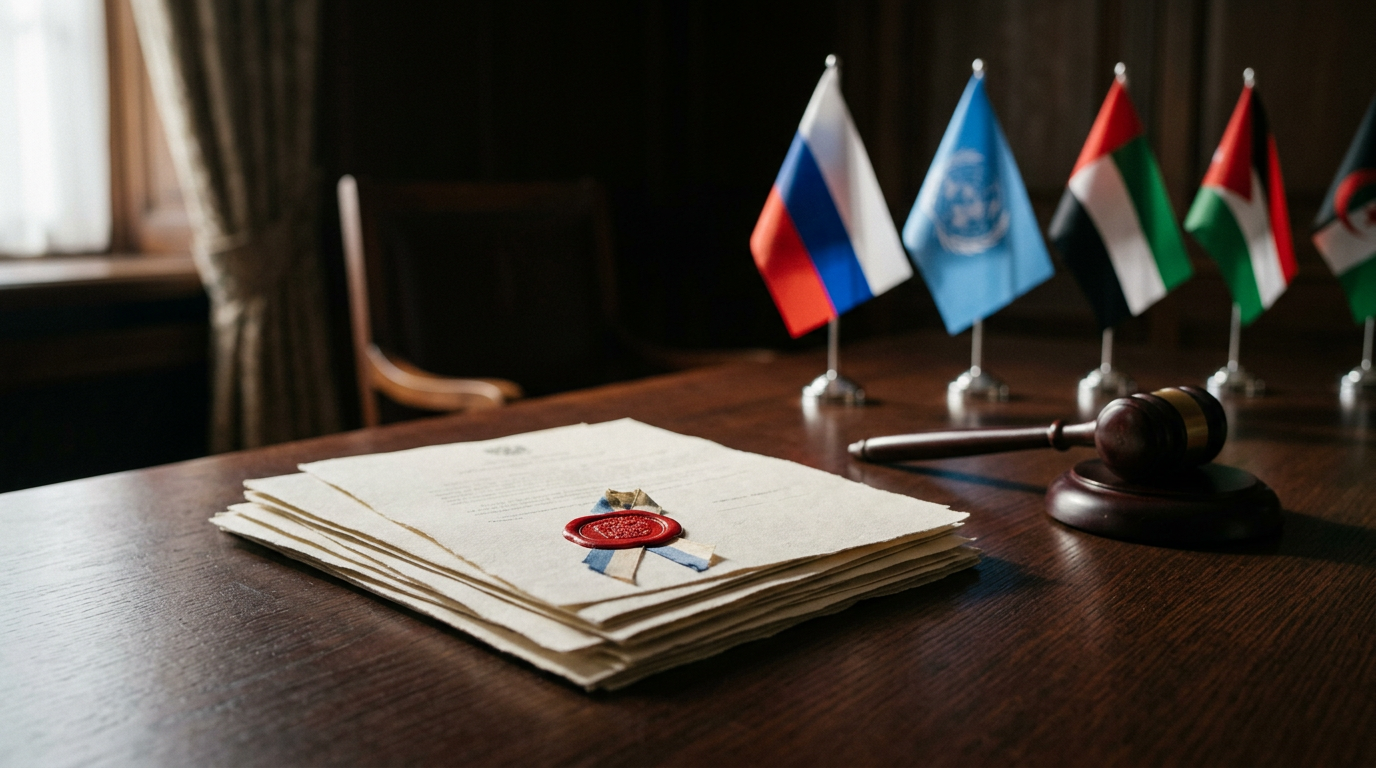
The military strikes may have begun in the skies over Iran, but their shockwaves traveled instantly across the globe.
Within hours of the coordinated U.S.–Israel operation that targeted Iranian military and nuclear sites — and the reported death of Supreme Leader Ali Khamenei — the world shifted into diplomatic overdrive. Foreign ministries activated crisis teams. Ambassadors were summoned. Emergency meetings were scheduled in New York, Brussels, Moscow, and Beijing.
What began as a military flashpoint quickly became a global diplomatic emergency.
Now, as Iran retaliates and regional tensions rise, world powers face a pressing question: can diplomacy contain this escalation before it spirals into a broader war?
Russia Condemns the Strikes as “Aggression”
Russia responded swiftly and forcefully.
The Kremlin described the U.S.–Israel strikes as an act of aggression that risks destabilizing not only the Middle East but also the global order. Russian officials argued that targeting a sovereign state’s leadership crosses a dangerous threshold and undermines international law.
Moscow called for an immediate cessation of hostilities and requested urgent consultations at the United Nations Security Council. Russian diplomats framed the operation as unilateral military action that threatens regional security.
Russia maintains strategic ties with Iran, including economic cooperation and regional coordination in Syria. But beyond alliances, Moscow has broader concerns. The Middle East plays a central role in global energy markets. Escalation threatens oil supplies, financial stability, and geopolitical balance.
By condemning the strikes strongly, Russia positions itself as a defender of state sovereignty while also reinforcing its influence among nations skeptical of Western military interventions.
The United Nations Convenes an Emergency Session
The United Nations moved quickly to address the crisis.
The Secretary-General issued a statement urging “maximum restraint.” He warned that further escalation could have catastrophic consequences for regional peace and global stability.
An emergency session of the Security Council was convened within hours. Representatives from the United States, Russia, China, France, and the United Kingdom gathered amid heightened tensions.
Inside the chamber, divisions were immediate.
The United States defended the operation as a necessary step to counter nuclear and missile threats. American representatives emphasized deterrence and regional security. They argued that inaction would have allowed greater instability.
Russia and China challenged that view. They questioned the legality of the strikes. Also, they expressed concern over the targeting of senior leadership. They warned that escalation could lead to a wider war.
European members of the Council attempted to bridge the divide. They called for restraint while acknowledging security concerns on all sides. However, deep geopolitical divisions make a unified Security Council resolution difficult.
The UN now faces one of its most delicate diplomatic tests in recent years.
Europe Urges De-escalation and Dialogue
European leaders reacted with urgency but caution.
Foreign ministers across the European Union issued coordinated calls for restraint. They emphasized the need to avoid further military exchanges. They urged both Washington and Tehran to reopen communication channels.
Europe has significant economic and security interests at stake. Energy supply routes through the Strait of Hormuz are critical for global markets. Even limited disruption can drive oil prices higher and strain already fragile economies.
European diplomats are reportedly engaging in intense behind-the-scenes consultations. Paris, Berlin, and Brussels are in close contact with Washington. At the same time, efforts are underway to maintain dialogue with Tehran.
The European message is clear: escalation benefits no one. Diplomacy must resume.
China Signals Concern and Strategic Patience
China adopted a more measured tone but expressed serious concern.
Beijing called for calm and dialogue. It urged all parties to avoid actions that could inflame tensions further. Chinese officials stressed the importance of regional stability and adherence to international norms.
China depends heavily on energy imports from the Middle East. Any instability in oil transit routes threatens its economic interests. At the same time, Beijing maintains diplomatic ties with both Iran and Gulf states.
Analysts suggest China may attempt quiet mediation if the opportunity arises. In recent years, Beijing has expanded its diplomatic footprint in the region. This crisis presents both risk and potential influence.
For now, China watches carefully while advocating restraint.
Gulf States Navigate a Dangerous Middle Ground
For Gulf countries, the crisis feels immediate and personal.
Several nations in the Gulf Cooperation Council host U.S. military bases. At the same time, they maintain economic and geographic proximity to Iran. They do not want open war on their borders.
Governments across the region increased military readiness following Iranian missile and drone launches. Air defense systems were reinforced. Civil aviation authorities issued warnings and rerouted flights.
Public statements from Gulf leaders emphasized de-escalation. Officials called for dialogue and restraint. Privately, governments are working to ensure their territory does not become an expanded battlefield.
The balancing act is delicate. Aligning too strongly with one side risks provoking the other. Remaining neutral carries its own risks.
Washington Defends the Operation
In Washington, the administration defended the strikes firmly.
President Donald Trump described the operation as a necessary measure to prevent greater threats. He stated that the action aimed to degrade Iran’s nuclear and missile capabilities and restore deterrence.
American officials argued that intelligence assessments justified swift action. They warned that further attacks on U.S. forces or allies would trigger a strong response.
At the same time, U.S. diplomats emphasized that Washington does not seek a broader war. Officials signaled that diplomatic channels remain open if Iran refrains from additional escalation.
This dual message — deterrence combined with openness to dialogue — defines Washington’s current posture.
Markets React to Geopolitical Risk
Financial markets quickly reflected global anxiety.
Oil prices surged in early trading. Energy traders monitored developments near the Strait of Hormuz closely. Even the perception of instability can drive price volatility.
Stock markets experienced fluctuations as investors assessed geopolitical risk. Defense sector shares rose. Airline stocks declined amid widespread airspace disruptions.
Economic pressure often influences diplomatic urgency. Rising energy costs affect economies worldwide. Leaders understand that prolonged instability could deepen global financial strain.
Humanitarian and International Organizations Mobilize
International aid agencies began preparing for potential humanitarian consequences.
Organizations urged all parties to protect civilians and critical infrastructure. They monitored reports of damage in affected areas. They prepared contingency plans for displacement if fighting expands.
War rarely remains confined to military targets. Civilian populations often feel consequences quickly.
Humanitarian voices now join diplomatic calls for restraint.
Leadership Uncertainty in Tehran Complicates Diplomacy
The reported death of Ali Khamenei adds a layer of complexity to diplomatic efforts.
Leadership transitions during wartime create uncertainty. Internal power dynamics may shift rapidly. Hardline factions could gain influence. Decision-making processes may become more opaque.
Diplomats must now navigate not only military escalation but also political transformation inside Iran.
Without clarity in Tehran’s leadership structure, negotiation channels may be harder to establish.
A Fragile Diplomatic Moment
The crisis now rests at a delicate intersection of deterrence and diplomacy.
Each global actor calculates risks differently. Russia sees strategic positioning. Europe sees energy vulnerability. China sees economic stakes. The United States sees security imperatives.
Yet all recognize the danger of uncontrolled escalation.
The coming days will test whether diplomatic momentum can outpace military retaliation. Security Council debates may shape narratives. Back-channel communications may determine whether escalation pauses or accelerates.
For now, the world remains on alert.
Conclusion
The military phase of this crisis unfolded in hours. The diplomatic phase must unfold just as quickly.
Russia has condemned the strikes. The United Nations has convened emergency talks. Europe urges restraint. China calls for dialogue. Gulf states balance survival and alliance. Washington defends its actions while signaling openness to negotiation.
The stakes are global. Energy markets, security alliances, and geopolitical balances hang in the balance.
Whether this confrontation expands or stabilizes will depend less on missiles in the sky and more on decisions made in diplomatic chambers.
At this moment, the world watches closely — and diplomacy faces one of its most urgent tests in years.




