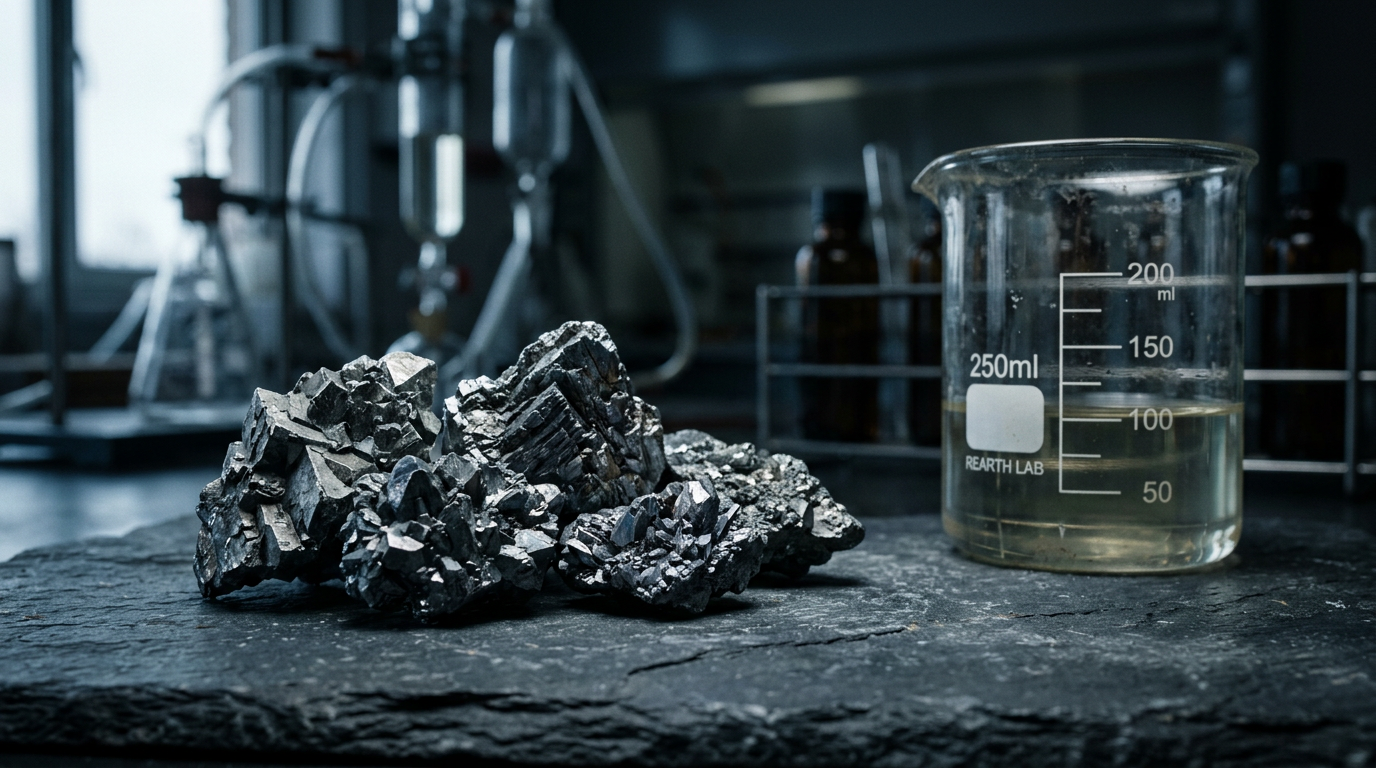
Rare earth elements (REEs) have quietly become one of the most strategically important resource groups in the modern global economy. Essential for everything from electric vehicles and wind turbines to advanced weapons systems and consumer electronics, these 17 minerals underpin the clean energy transition and the digital age alike. Yet the supply chain remains highly concentrated — and heavily influenced by the People’s Republic of China (PRC). Russia is ramping up PRC rare earth dominance to reduce dependence on China. Explore the latest data, global market trends, and strategic implications.
Against this backdrop, Russia is accelerating efforts to develop its domestic rare earth sector, aiming to reduce dependence on imports and secure a stronger foothold in the global critical minerals race. Moscow’s push reflects a broader geopolitical trend: countries are increasingly treating rare earths not merely as commodities but as strategic assets tied to national security, industrial policy, and technological sovereignty.
Despite possessing one of the world’s largest geological endowments of rare earth resources, Russia has historically lagged in production, processing, and commercialization. Now, amid intensifying global competition and supply chain vulnerabilities exposed over the past decade, the Kremlin is attempting to close that gap.
However, the challenge is formidable. China’s dominance across mining, separation, and refining remains overwhelming, and structural hurdles continue to slow Russia’s ambitions. The coming years will determine whether Moscow can meaningfully diversify global supply — or whether Beijing’s grip on the rare earth market will persist well into the next decade.
Understanding China’s Rare Earth Dominance
China’s position in the rare earth ecosystem is the result of decades of deliberate industrial policy, infrastructure investment, and environmental trade-offs. While rare earth deposits exist worldwide, China built an integrated supply chain that competitors still struggle to replicate.
Global Rare Earth Market Share (Approximate, 2024–2025)
| Segment | China Share | Rest of World |
|---|---|---|
| Mining production | ~60–65% | ~35–40% |
| Processing & separation | ~85–90% | ~10–15% |
| Magnet manufacturing | ~90%+ | <10% |
This dominance is especially pronounced in the midstream processing stage, where raw ore is separated into usable oxides — the most technically complex and environmentally sensitive step.
China’s scale advantages include:
- Established chemical processing infrastructure
- Deep technical expertise
- Integrated magnet manufacturing
- Strong domestic demand
- State-backed industrial coordination
These structural strengths make rapid displacement extremely difficult for new entrants, including Russia.
Russia’s Rare Earth Potential: Large Resources, Limited Output
Geologically, Russia is well positioned. The country holds an estimated 10–20% of global rare earth reserves, placing it among the top resource holders worldwide. Key deposits are located in:
- Murmansk region (Lovozero)
- Yakutia
- Krasnoyarsk Krai (Tomtor deposit)
- Irkutsk region
Yet production tells a very different story.
Russia Rare Earth Snapshot
| Metric | Estimated Value |
|---|---|
| Share of global reserves | ~10–20% |
| Share of global production | <2% |
| Domestic processing capacity | Limited |
| Import dependence | High for separated oxides |
The gap between resource potential and actual output highlights the core challenge facing Moscow.
Why Russia Is Accelerating Development Now
Several strategic pressures are driving Russia’s renewed focus on rare earths.
Supply Chain Security
Global disruptions and geopolitical tensions have underscored the risks of overreliance on single suppliers. Russia, like many countries, is seeking greater resource self-sufficiency.
Sanctions and Economic Realignment
Western sanctions have increased Moscow’s urgency to develop domestic critical mineral capacity and deepen resource ties with non-Western partners.
Energy Transition Demand
Demand for REEs used in permanent magnets — particularly neodymium and praseodymium — is expected to surge with the growth of:
- Electric vehicles
- Offshore wind
- Robotics and automation
- Defense systems
Strategic Industrial Policy
Russia’s broader industrial strategy increasingly mirrors global trends emphasizing critical mineral sovereignty.
Key Russian Projects and Initiatives
Russia’s rare earth push is centered on a handful of major projects, though many remain in early stages.
Major Russian REE Development Efforts
| Project | Region | Status |
|---|---|---|
| Tomtor deposit | Yakutia | Development planning |
| Lovozero expansion | Murmansk | Operating but limited scale |
| Solikamsk processing | Perm region | Processing development |
| State support programs | Nationwide | Expanding |
The Tomtor deposit is widely viewed as Russia’s most promising long-term asset, containing high-grade rare earth and niobium resources. However, infrastructure challenges and investment needs remain substantial.
Structural Barriers Slowing Progress
Despite political momentum, Russia faces significant headwinds in building a competitive rare earth industry.
Processing Bottleneck
Mining rare earth ore is only the first step. The real value lies in chemical separation and refining — an area where Russia still lacks scale.
Capital Intensity
REE projects require:
- Complex chemical plants
- Environmental safeguards
- Long development timelines
- Specialized technical workforce
Many projects require multi-billion-dollar investment before reaching commercial scale.
Technology Gap
China’s decades-long head start in solvent extraction and magnet production creates a steep learning curve.
Market Economics
Rare earth prices are notoriously volatile, making financing more difficult for new entrants.
Global Context: A Broader Diversification Push
Russia is not alone in trying to reduce reliance on China. Multiple countries are pursuing parallel strategies.
Countries Expanding REE Capacity
| Country/Region | Strategic Focus |
|---|---|
| United States | Domestic mining + allied processing |
| European Union | Critical Raw Materials Act |
| Australia | Upstream mining expansion |
| Japan | Supply diversification partnerships |
| India | Early-stage development |
This global push could gradually erode — but not quickly eliminate — China’s dominance.
Analysts generally expect partial diversification, not full displacement, through the 2030s.
Demand Outlook: Why Rare Earths Matter More Than Ever
The urgency behind these efforts is driven by powerful demand growth.
Projected Demand Growth by 2035
| Application | Expected Growth |
|---|---|
| Electric vehicles | 3–5× increase |
| Wind turbines | 2–4× increase |
| Defense systems | Steady growth |
| Consumer electronics | Moderate growth |
Permanent magnets remain the fastest-growing segment, particularly those using neodymium-iron-boron (NdFeB).
The International Energy Agency has previously warned that critical mineral supply chains must expand rapidly to meet net-zero targets — adding further pressure on countries like Russia to accelerate development.
Can Russia Realistically Challenge China?
Most analysts remain cautious.
Short term (through 2030):
- China’s dominance in processing is likely to remain intact
- Russia may increase mining output modestly
- Domestic supply chains will still be incomplete
Medium term (2030s):
- Russia could become a more meaningful upstream supplier
- Processing capacity may improve gradually
- Global supply diversification may widen
Long term (2040s and beyond):
- Market share could shift more noticeably if sustained investment continues
The key variable is whether Russia can successfully build integrated midstream capacity, not just expand mining.
Conclusion
Russia’s renewed push into rare earth development reflects a broader global awakening to the strategic importance of critical minerals. As clean energy systems, advanced electronics, and modern defense platforms become increasingly materials-intensive, control over rare earth supply chains is emerging as a defining geopolitical and economic issue.
Moscow’s ambitions are understandable. With significant geological resources and growing political will, Russia has the raw ingredients needed to become a more influential player in the rare earth ecosystem. Yet the gap between resource potential and industrial reality remains wide. China’s deeply entrenched dominance — particularly in processing and magnet manufacturing — continues to present a formidable barrier.
Progress for Russia is likely to be incremental rather than transformative in the near term. Meaningful diversification of global supply chains will require sustained capital investment, technological development, environmental management, and workforce expansion over many years. The experience of other countries attempting similar strategies suggests that building a fully integrated rare earth industry is a marathon, not a sprint.
What is clear, however, is that the rare earth landscape is entering a period of gradual but persistent change. As more countries pursue resource security and supply chain resilience, the global market will likely become more diversified over time — even if China remains the central player for the foreseeable future.
For policymakers, investors, and industry leaders, the message is increasingly urgent: rare earths are no longer niche commodities but strategic pillars of the modern economy. Russia’s struggle to close the gap with China is just one chapter in what is shaping up to be a decades-long global competition for critical mineral independence.