Summary
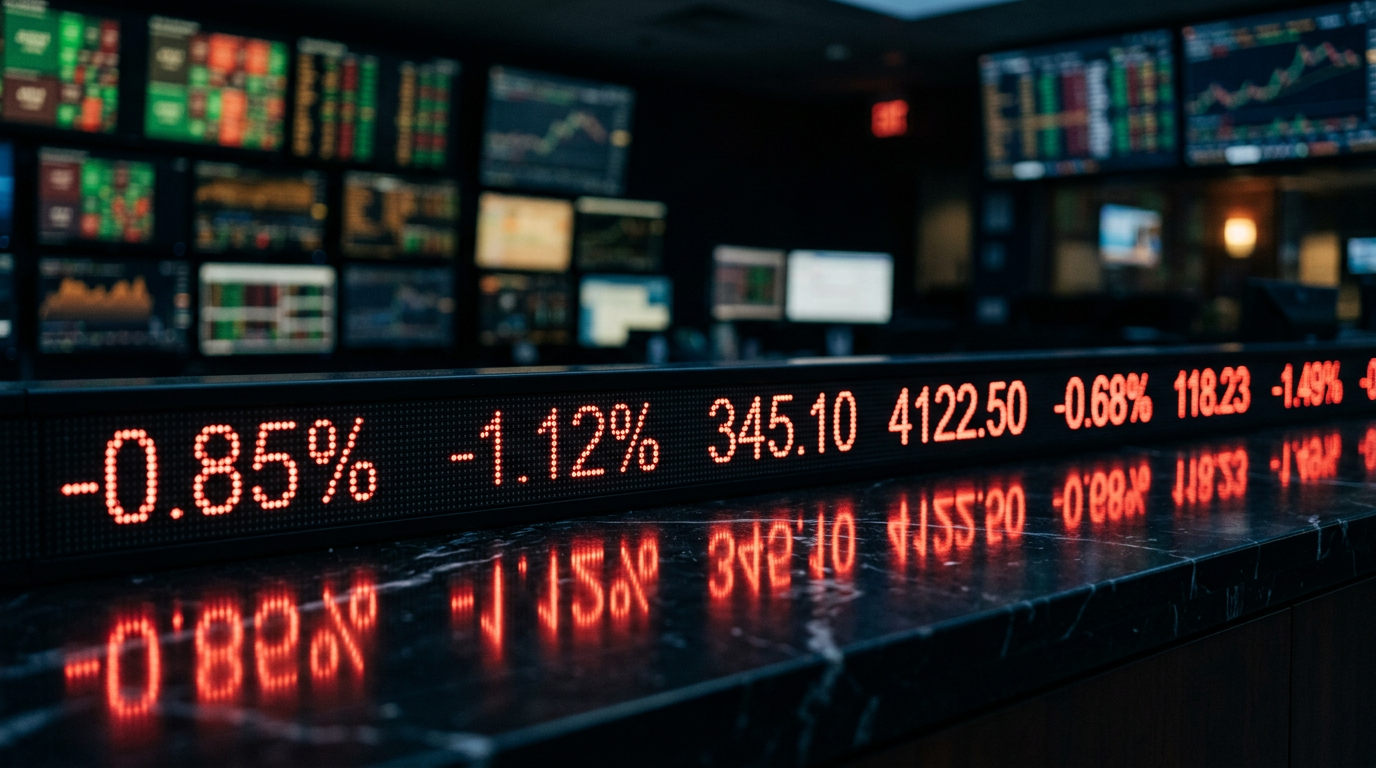
Global equity markets closed lower as investors reacted to rising geopolitical uncertainty tied to the Iran ceasefire deadline. Concerns about stalled or canceled peace talks, combined with surging oil prices and cautious central bank signals, created a risk-off environment across financial markets. Global stock markets fall as Iran ceasefire deadline uncertainty intensifies, oil prices surge, and investors react to geopolitical risks and economic signals.
Key Takeaways
- Major indices declined as geopolitical tensions increased
- Uncertainty around Iran ceasefire talks triggered investor caution
- Oil prices surged, intensifying inflation concerns
- Global markets reflected synchronized risk-off sentiment
- Investors shifted toward safer assets amid volatility
Stocks closed lower because investors grew increasingly concerned about the looming Iran ceasefire deadline, the possibility of canceled peace negotiations, and rising oil prices, all of which heightened uncertainty and triggered broad market selling.
Why Did Global Markets React So Strongly to the Iran Ceasefire Deadline?
The reaction in global markets was not merely about a single geopolitical event but rather the uncertainty surrounding its outcome. Financial markets are inherently forward-looking, and the Iran ceasefire deadline introduced a high degree of unpredictability at a time when investors were already navigating fragile economic conditions.
The ceasefire, initially viewed as a temporary stabilizing measure, became a focal point for market sentiment. As the deadline approached, conflicting signals emerged regarding the willingness of Iran to engage in continued negotiations. The possibility that talks could be canceled or delayed created a vacuum of clarity, which markets tend to interpret negatively.
This uncertainty was compounded by the broader implications of the conflict. Investors understood that any escalation could disrupt global energy supply chains, increase inflationary pressures, and slow economic growth. As a result, even the risk of failed diplomacy was enough to trigger widespread caution.
How Did Major Stock Indices Perform Under This Pressure?
The performance of major indices reflected a gradual erosion of confidence throughout the trading session. Early optimism faded as headlines around the ceasefire and negotiations grew increasingly uncertain.
In the United States, the Dow Jones Industrial Average dropped significantly, shedding close to 300 points by the close. The S&P 500 and Nasdaq Composite followed similar trajectories, each recording moderate declines that signaled a broader retreat from risk.
What is particularly noteworthy is not just the decline itself, but the pattern of intraday reversal. Markets initially showed resilience, suggesting that investors were hopeful for diplomatic progress. However, as uncertainty intensified, sentiment shifted decisively, leading to a late-session sell-off.
Globally, similar patterns emerged. European markets closed lower, while Asian indices reacted cautiously, reflecting the interconnected nature of modern financial systems. The synchronized movement across regions underscores how geopolitical risks transcend national boundaries.
Why Are Iran Peace Talks So Critical for Financial Stability Right Now?
The importance of Iran peace talks extends far beyond regional politics—they are deeply intertwined with global economic stability. At the center of this issue lies the strategic importance of the Strait of Hormuz, a narrow passage through which a significant portion of the world’s oil supply flows.
Any disruption in this region has immediate and far-reaching consequences. Investors are acutely aware that even temporary instability could lead to supply shortages, price spikes, and cascading economic effects.
Moreover, the talks represent a broader test of diplomatic effectiveness in managing geopolitical conflicts. A successful negotiation could restore confidence and stabilize markets, while a failure could signal prolonged instability.
This duality places enormous weight on the outcome of the ceasefire discussions, making them one of the most closely watched developments in global finance.
How Did Oil Prices Amplify the Market Decline?
Oil prices played a central role in amplifying market volatility. As tensions around the ceasefire escalated, crude oil prices surged, reflecting fears of supply disruptions.
The relationship between oil prices and stock markets is complex but deeply interconnected. Rising oil prices increase costs for businesses, reduce consumer purchasing power, and contribute to inflation. These factors, in turn, put pressure on corporate earnings and economic growth.
In this case, the surge in oil prices acted as a multiplier of uncertainty. Investors were not only concerned about geopolitical risks but also about the economic consequences of sustained high energy costs.
The psychological impact of nearing the $100 per barrel threshold cannot be understated. It serves as a symbolic level that often triggers heightened market sensitivity and reinforces bearish sentiment.
What Role Did Central Bank Signals Play in Shaping Investor Sentiment?
While geopolitical tensions dominated headlines, monetary policy remained an important underlying factor influencing market behavior. Comments from policymakers suggested a cautious approach to interest rate adjustments, emphasizing the need to balance inflation control with economic stability.
For investors, this created a challenging environment. On one hand, rising oil prices pointed toward potential inflationary pressures. On the other hand, the lack of clear guidance from central banks introduced uncertainty about future policy actions.
This combination of factors contributed to a sense of policy ambiguity, which markets tend to dislike. Without a clear direction on interest rates, investors found it difficult to assess risk accurately, leading to more conservative positioning.
How Are Global Markets Outside the U.S. Responding to the Crisis?
The impact of the Iran ceasefire uncertainty has been truly global, affecting markets across multiple regions. In Asia, indices showed signs of weakness as investors reacted to rising oil prices and potential disruptions in trade flows.
In the Middle East, markets were particularly sensitive due to their proximity to the conflict. Energy-exporting nations faced a complex scenario where higher oil prices could boost revenues but also increase geopolitical risks.
Emerging markets, including those in South Asia, experienced volatility as well. Countries heavily reliant on oil imports faced the prospect of increased costs, which could strain economic stability.
This widespread reaction highlights the globalized nature of financial markets, where events in one region can quickly influence investor behavior worldwide.
Are There Signs of Stability Beneath the Market Volatility?
Despite the overall decline, there are underlying indicators that suggest a degree of resilience within the market. Corporate earnings in certain sectors have remained strong, providing a buffer against broader losses.
Additionally, consumer spending data in key economies continues to show stability, indicating that the economic foundation is not entirely compromised. This suggests that while markets are reacting to short-term risks, the long-term outlook may remain intact.
Another factor contributing to resilience is the adaptability of investors. Market participants are increasingly experienced in navigating geopolitical uncertainty, which may help prevent more severe downturns.
What Key Risks Are Investors Monitoring Going Forward?
Investors are now closely watching several critical developments that could shape market direction in the coming weeks. The most immediate concern is the outcome of the ceasefire negotiations and whether talks will proceed or collapse.
The stability of oil supply routes, particularly through the Strait of Hormuz, remains another major focus. Any indication of disruption could lead to further price increases and market volatility.
In addition, investors are monitoring central bank policies, inflation trends, and corporate earnings to assess the broader economic impact of these developments.
What Could Happen If Talks Are Officially Canceled?
If peace talks are canceled or fail to produce meaningful progress, markets could face a period of heightened volatility. A breakdown in diplomacy would likely increase the probability of renewed conflict, triggering sharp reactions across asset classes.
Equities could experience deeper declines, while safe-haven assets such as gold and government bonds may see increased demand. Oil prices could rise further, exacerbating inflationary pressures and complicating monetary policy decisions.
However, it is also important to note that markets often react quickly to new information. Even a partial resolution or temporary extension of the ceasefire could provide relief and stabilize sentiment.
How This Market Reaction Reflects a Larger Shift in Global Investing Behavior
The current market environment reveals a deeper transformation in how investors interpret risk. Financial markets are no longer driven solely by economic indicators or corporate performance; they are increasingly shaped by geopolitical narratives and global interconnectedness.
The reaction to the Iran ceasefire deadline illustrates how uncertainty itself has become a primary market driver. Investors are responding not just to events, but to the range of possible outcomes those events represent.
This shift requires a more sophisticated approach to investing, one that integrates geopolitical awareness with traditional financial analysis. It also highlights the importance of adaptability, as markets continue to evolve in response to an increasingly complex global landscape.
Ultimately, the decline in stocks serves as a reminder that markets operate within a broader context of political, economic, and social forces. Understanding this interplay is essential for navigating the challenges and opportunities of modern investing.
FAQs
Why did stocks close lower today?
Stocks declined due to uncertainty surrounding the Iran ceasefire deadline, fears of canceled talks, and rising oil prices affecting investor confidence.
How does geopolitical tension affect stock markets?
Geopolitical tensions increase uncertainty, disrupt supply chains, and influence commodity prices, all of which impact market performance.
Why are oil prices rising?
Oil prices are increasing بسبب concerns over potential supply disruptions, particularly in key transit routes like the Strait of Hormuz.
Will the stock market recover soon?
Recovery depends on the outcome of geopolitical developments and clarity around economic policies.
What should investors watch next?
Investors should monitor ceasefire negotiations, oil price movements, and central bank decisions for further market direction.