
Summary
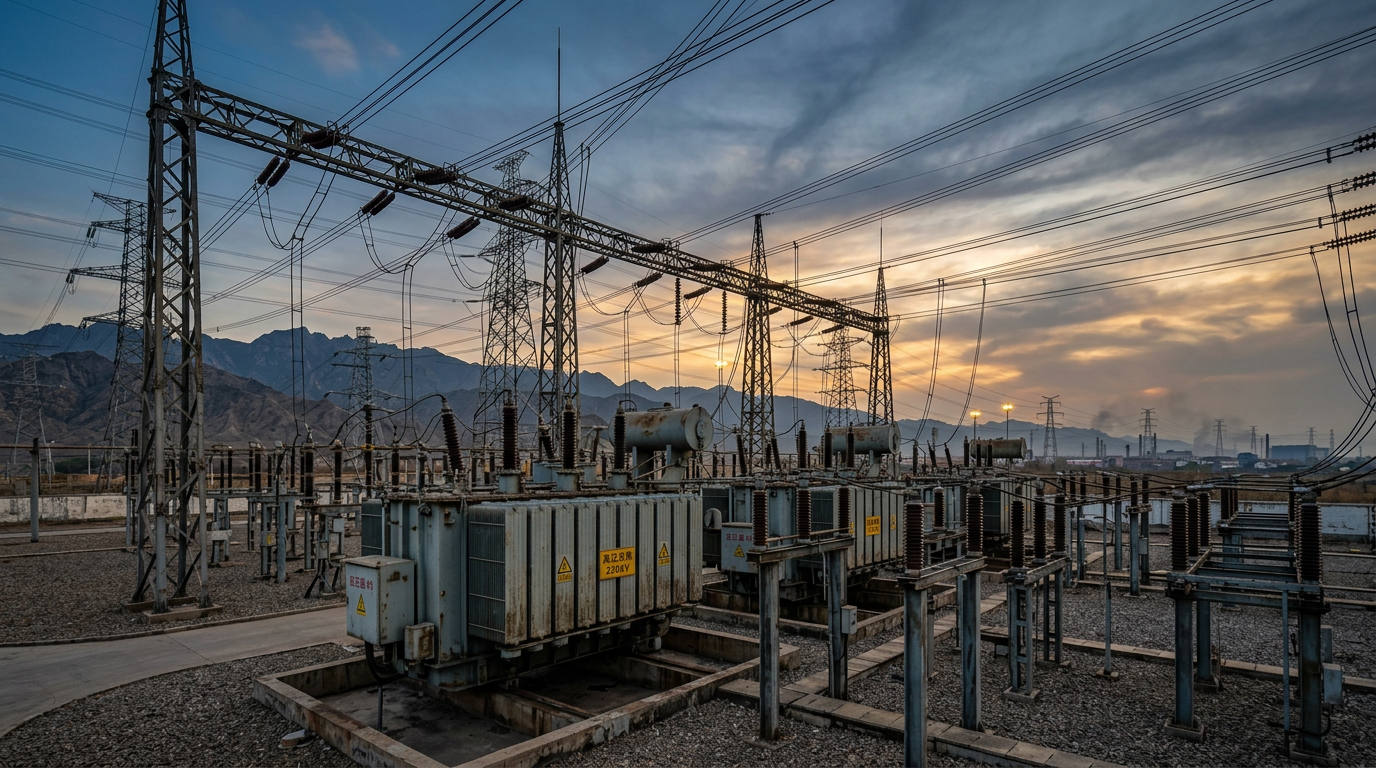
China’s vast and low-cost electrical grid provides a structural advantage in powering AI infrastructure. As AI models require enormous computational energy, China’s ability to scale power cheaply could accelerate its progress, raising concerns among US companies competing in the global AI race.
Key Takeaways
- AI data centers require massive electricity—training large models can consume gigawatt-hours of energy
- China benefits from lower industrial electricity costs compared to the US and Europe
- Government-backed infrastructure allows rapid scaling of AI capabilities
- US firms face higher energy costs and regulatory constraints
- Energy availability is emerging as a decisive factor in AI competition
Yes, China’s cheap and abundant electricity could significantly boost its AI capabilities by enabling faster and cheaper scaling of data centers, giving it a potential competitive edge over Western companies.
The Hidden Fuel Behind Artificial Intelligence
Artificial intelligence is often discussed in terms of algorithms, data, and computing power. However, one of its most critical yet overlooked components is energy. Behind every large language model, every generative AI system, and every advanced neural network lies an immense demand for electricity.
Training modern AI systems requires vast computational resources, often concentrated in massive data centers operating around the clock. These facilities consume enormous amounts of power, making electricity not just a cost factor, but a strategic resource.
In this context, China’s electrical grid presents a compelling advantage. With abundant and relatively inexpensive power, the country is uniquely positioned to support the rapid expansion of AI infrastructure. This has raised important questions: Can China leverage this advantage to achieve AI supremacy? And why are American companies increasingly concerned?
The answers lie at the intersection of energy policy, technological competition, and geopolitical strategy.
AI and Energy Consumption
AI Energy Demand Snapshot
| Indicator | Value |
|---|---|
| Energy to train large AI model | 1–10 GWh |
| Data center share of global electricity | ~1–2% |
| Projected AI energy growth by 2030 | 3–5x increase |
| China industrial electricity cost | ~30–50% lower than US (est.) |
| Hyperscale data center consumption | Up to 100 MW+ per facility |
Key Insight
AI is rapidly becoming one of the most energy-intensive industries, making access to cheap and reliable electricity a critical competitive factor.
Why Does AI Require So Much Power?
Artificial intelligence systems, particularly large-scale models, rely on advanced hardware such as GPUs and specialized accelerators. These components perform billions of calculations per second, generating significant heat and requiring continuous cooling.
Training a single large AI model can consume as much electricity as thousands of households use in a year. Inference—the process of running AI models—also adds ongoing energy demands as applications scale globally.
This means that energy is not just a supporting factor for AI—it is a limiting factor. The ability to access and afford large amounts of electricity directly impacts how quickly and efficiently AI systems can be developed and deployed.
How Does China’s Electrical Grid Provide an Advantage?
China has invested heavily in expanding its electrical infrastructure over the past two decades. The result is a grid that is not only विशाल in scale but also relatively cost-efficient for industrial users.
Key advantages include:
- Large-scale coal, hydro, and renewable energy capacity
- Government-controlled pricing mechanisms
- Rapid infrastructure deployment capabilities
- Regional energy hubs designed for industrial activity
These factors allow China to offer lower electricity costs compared to many Western countries. For AI companies, this translates into lower operational expenses and greater scalability.
Can Cheap Power Accelerate China’s AI Development?
Access to affordable electricity enables several strategic advantages:
- Faster Scaling of Data Centers
Companies can build and operate larger facilities without prohibitive costs - Lower Training Costs
Reducing energy expenses makes it more feasible to train complex models frequently - Increased Experimentation
Developers can run more iterations, improving model performance - Government Coordination
Centralized planning allows alignment between energy and technology sectors
Together, these factors create an environment where AI development can accelerate rapidly.
Why Are US Companies Concerned?
American technology companies are increasingly aware of the role energy plays in AI competitiveness. Several challenges contribute to their concerns:
- Higher electricity costs in many US regions
- Regulatory hurdles for building new energy infrastructure
- Grid capacity limitations in key tech hubs
- Growing competition for power from other industries
These constraints can slow down the expansion of AI infrastructure and increase operational costs.
At the same time, US firms must also navigate environmental regulations and sustainability commitments, which can further complicate energy sourcing.
Is Energy Becoming the New Battleground for AI?
Traditionally, the AI race has focused on data, talent, and algorithms. However, energy is emerging as a critical fourth pillar.
Countries that can provide:
- Reliable power
- Low electricity costs
- Scalable infrastructure
will have a significant advantage in developing and deploying AI technologies.
This shift is reshaping how governments and companies think about competitiveness. Energy policy is no longer separate from technology strategy—it is an integral part of it.
How Is the US Responding to This Challenge?
The United States is taking steps to address energy constraints in AI development:
- Investing in renewable energy projects
- Expanding grid capacity
- Supporting semiconductor and AI infrastructure through policy initiatives
- Encouraging private-sector innovation
However, these efforts take time. Building new power plants, upgrading grids, and aligning regulatory frameworks are complex processes.
In the short term, the gap in electricity costs remains a concern for US companies competing globally.
What Role Do Renewables Play in the AI Race?
Renewable energy is becoming increasingly important in powering AI infrastructure. Both China and the US are investing heavily in solar, wind, and other clean energy sources.
For China, renewables complement its existing energy mix, helping to maintain low costs while reducing emissions.
For the US, renewables are a key part of long-term strategy, but integration challenges and intermittency issues can affect reliability.
The balance between cost, sustainability, and scalability will be crucial in determining future competitiveness.
Could China Achieve AI Supremacy Through Energy Advantage?
While cheap power provides a significant advantage, it is not the only factor in AI leadership. Other critical elements include:
- Access to advanced semiconductors
- Talent and research capabilities
- Innovation ecosystems
- Global partnerships
China’s energy advantage could accelerate its progress, but achieving supremacy will depend on how these factors interact.
What Are the Risks of This Energy-Driven Competition?
The growing importance of energy in AI development introduces several risks:
- Increased geopolitical tension
- Resource competition
- Environmental impact concerns
- Uneven global technological development
These risks highlight the need for balanced and sustainable approaches to AI growth.
Power, Policy, and the Future of AI
The global race for artificial intelligence leadership is evolving in unexpected ways. While algorithms and data remain essential, energy is emerging as a foundational element that could shape the future of the industry.
China’s ability to provide abundant and relatively cheap electricity offers a meaningful advantage in scaling AI infrastructure. This advantage has not gone unnoticed. American companies, long at the forefront of AI innovation, are increasingly aware that energy constraints could influence their competitive position.
However, the story is far from simple. AI supremacy will not be determined by energy alone. It will depend on a complex interplay of technology, policy, talent, and global collaboration.
What is clear, though, is that energy has become a strategic asset in the AI era. Countries that recognize and act on this reality will be better positioned to lead in the years ahead.
From a strategic perspective, leaders like Mattias Knutsson emphasize the importance of aligning procurement, infrastructure, and long-term planning. His viewpoint reflects a broader understanding that success in modern industries requires not just innovation, but resilience and adaptability.
As the AI landscape continues to evolve, one thing is certain: the competition will not just be about intelligence—it will also be about power, in the most literal sense.
FAQ
Why does AI need so much electricity?
AI requires massive computational power for training and running models, which consumes large amounts of energy.
Is electricity really a competitive advantage in AI?
Yes, lower energy costs enable faster scaling and reduce operational expenses.
Does China have cheaper electricity than the US?
In many cases, industrial electricity costs in China are lower due to government policies and infrastructure scale.
Can the US catch up in energy for AI?
Yes, but it will require significant investment in infrastructure and policy support.
Is energy more important than technology in AI?
Both are important. Energy supports infrastructure, while technology drives innovation.




