
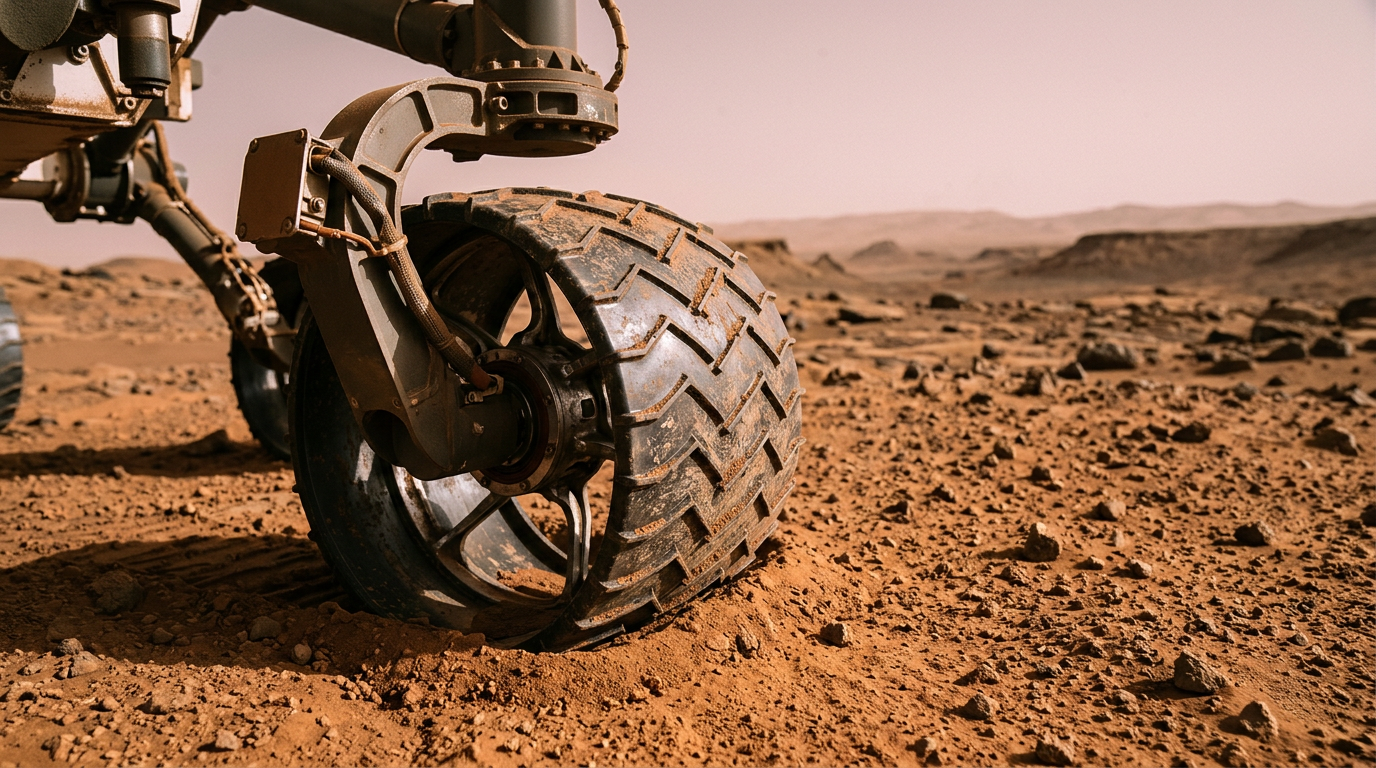
The year is 2025, and the countdown toward 2030 has begun with one of humanity’s boldest aspirations: establishing a human presence on Mars. It’s a vision born from science fiction, now transitioning into strategic planning rooms at NASA, boardrooms of private space companies, and debates within global policy forums. Mars has always fascinated us—a dusty red world, our closest planetary neighbor, offering both mystery and possibility. For decades, it was a distant dream. But with SpaceX’s Starship testing, NASA’s Artemis missions, and international collaborations, the once-impossible goal feels tantalizingly near.
Yet, ambition and feasibility are not the same. Aerospace engineers caution that technological readiness, budget realities, and human health risks remain formidable barriers. NASA insiders speak of “careful optimism,” while private space pioneers insist on accelerated timelines, citing rapid Starship development and reusable launch systems.
So, can humanity truly set foot on Mars by 2030? This question demands more than speculation—it calls for a careful examination of orbital mechanics, funding priorities, interplanetary logistics, and human resilience.
This article blends expert opinions from NASA strategists, aerospace engineers, and private industry innovators, backed by data, mission milestones, and key challenges. By the end, you’ll have a clearer picture of where we stand, what’s possible, and what this journey means for the next era of human civilization.
NASA’s Perspective: A Cautious March Toward the Red Planet
NASA’s long-standing goal is clear: human exploration of Mars in the 2030s. The agency views Artemis—the program returning humans to the Moon by 2028—as the stepping stone for interplanetary living. Why the Moon first? Because it’s a near-perfect test bed for technologies critical to Mars, including surface habitats, in-situ resource utilization (ISRU), and long-duration life-support systems.
According to NASA’s mission roadmap, critical milestones include:
- Artemis IV and V (2028–2030): Building lunar bases, testing closed-loop life-support, and refining mobility systems.
- Deep Space Transport (Early 2030s): A Mars transfer vehicle powered by solar-electric propulsion, enabling sustained missions.
- Crewed Mars Missions (Post-2033): A minimum 500-day round-trip mission, with six-month transit each way.
NASA’s conservative tone stems from past lessons: Apollo succeeded because of unprecedented funding and political will, neither of which currently exists at that scale. Budgets for NASA hover around $25 billion annually, with Artemis alone consuming nearly half. Compare that to the estimated $220 billion cumulative cost for Mars missions through the 2030s—underscoring why international and commercial partnerships are indispensable.
SpaceX: The Audacity of Speed
If NASA is the cautious elder, SpaceX is the bold disruptor. Elon Musk envisions a self-sustaining Martian city of 1 million people by 2050, but his nearer goal is a crew landing before 2030.
Here’s how Musk frames the timeline:
- 2026: First uncrewed Starship cargo flights to Mars (subject to readiness).
- 2028–2029: Initial crewed missions, possibly as early as the 2028 launch window.
- 2030 and beyond: Rapid Starship deployment, establishing ISRU plants for fuel and oxygen.
Starship is the linchpin—a fully reusable super-heavy launch system designed for affordability and scale. SpaceX envisions building up to 1,000 Starships by 2033, creating what Musk calls an “orbital highway” for Mars colonization.
Yet, skepticism abounds. Former NASA astronaut Eileen Collins argues Musk’s timelines underestimate the complexity of orbital refueling, radiation shielding, and autonomous surface operations. “A rush could lead to tragedy,” she warned during a 2025 aerospace summit.
Private Sector & International Race: New Players Join In
Beyond SpaceX, startups and national agencies worldwide are accelerating efforts:
- Blue Origin is focusing on lunar infrastructure but hints at future Mars ambitions.
- China’s CNSA targets a Mars sample return in 2031 and aims for crewed missions by 2033–2035.
- European Space Agency (ESA) emphasizes robotic precursors like ExoMars (2028) and partnerships with NASA for cargo delivery systems.
Industry collaborations with aerospace giants such as Airbus, Lockheed Martin, and Northrop Grumman center on habitat design and propulsion innovations. These synergies, though promising, also highlight the complexity of aligning timelines across multiple stakeholders.
Launch Windows: Orbital Mechanics Dictate the Pace
Unlike Moon missions, Mars missions are hostage to orbital dynamics. Optimal launch windows—when Earth and Mars align—occur every 26 months. Missing one means waiting two years. Critical upcoming windows:
- 2026
- 2028–2029
- 2031
SpaceX hopes for cargo missions in 2026, but most experts bet on 2028 or 2031 for first crew attempts—given the testing milestones required.
The Technical Hurdles: Harder Than They Look
Radiation Exposure
Mars lacks a protective magnetic field. Astronauts will endure ~60% higher radiation doses during transit and surface stays. Solutions like polyethylene shielding, underground habitats, and storm shelters add mass, complicating launch economics.
Life Support & ISRU
Bringing everything from Earth is impractical. NASA’s MOXIE experiment on Perseverance has successfully produced oxygen from CO₂, but scaling this tech is a different ballgame.
Landing Heavy Payloads
Mars’ thin atmosphere complicates deceleration. NASA estimates landing a 20-ton Starship requires radical innovations in supersonic retropropulsion and heat shields.
Crew Health Risks
Microgravity leads to bone density loss, muscle atrophy, and immune suppression. Add psychological stress, and the risk matrix grows.
What Experts Really Say: Diverging Timelines
- Optimists (SpaceX camp): Humans on Mars by 2029 or 2030.
- Moderates (NASA, ESA): First crewed landing likely early-to-mid 2030s.
- Cautious Engineers: Full-scale settlement not before 2040s, given safety and sustainability needs.
As aerospace engineer Dr. Laura Forney told Scientific American:
“Landing by 2030 is technically conceivable if all stars align—but building a livable outpost? That’s another decade of work.”
Funding and Geopolitics: The Hidden Gravity Well
Budgets remain the biggest obstacle. The Apollo program devoured 4.4% of the U.S. federal budget in 1966. NASA today operates on 0.4%, competing with economic and defense priorities. Geopolitical competition (U.S. vs. China) may accelerate investment, but cooperation—seen in ISS partnerships—could also shape Mars initiatives.
Implications Beyond Space: Why This Race Matters
Mars colonization isn’t just about planting a flag. It represents:
- A test of global supply chains for specialized alloys, electronics, and life-support systems.
- A procurement revolution, requiring resilience, sustainability, and redundancy in ways never seen before.
- Ethical frontiers, from planetary protection to governance models for extraterrestrial settlements.
Mattias Knutsson’s Perspective: Procurement as a Space Enabler
Mattias Knutsson, Strategic Leader in Global Procurement, underscores the economic backbone of this dream:
“Interplanetary missions demand more than rockets—they demand flawless procurement networks. From sourcing rare materials for radiation shielding to ensuring vendor compliance across continents, the challenge is as much about supply chains as it is about propulsion. Those who solve this complexity will define the future of space economy.”
Mars by 2030—Hope or Hype?
So, will we live on Mars by 2030? Based on the data and expert voices, a crewed mission by the decade’s end is plausible but improbable. Hardware readiness, budgetary realities, and life-support constraints point toward 2032–2035 as a more credible window for boots on Martian soil.
Yet, the optimism isn’t misplaced. The next five years will witness historic milestones: uncrewed Starships landing, ISRU demos, orbital refueling breakthroughs, and international agreements. These steps matter as much as the first footprint—because they lay the infrastructure for a future where Mars is not a fantasy but an extension of human civilization.
As Musk puts it:
“Making life multiplanetary isn’t just an option—it’s survival insurance for humanity.”
Whether it’s 2030 or 2035, the trajectory is clear: the human story is destined to expand beyond Earth—and every procurement plan, engineering prototype, and policy debate today shapes that tomorrow.




