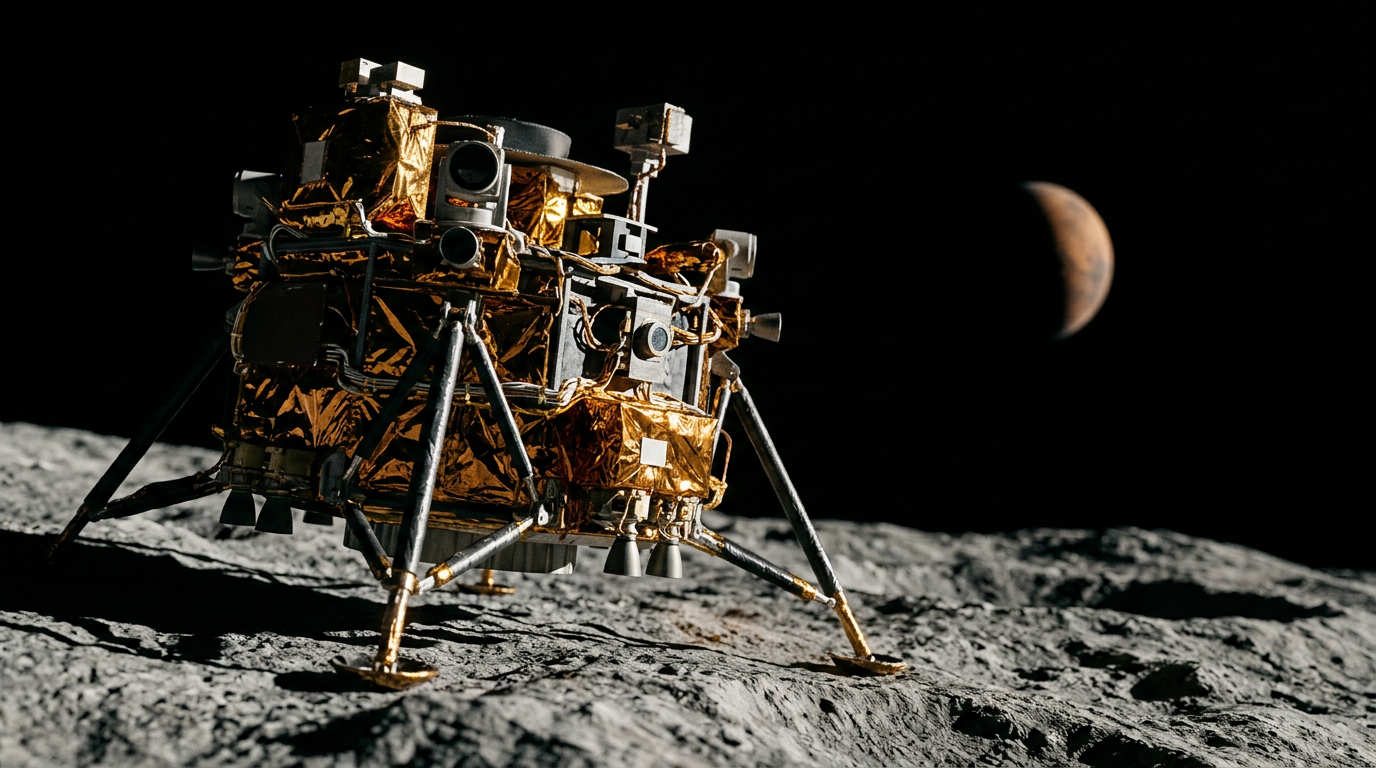
For generations, Mars has existed primarily in the realm of imagination — a distant red planet symbolizing exploration, survival, and humanity’s desire to push beyond known boundaries. Today, that vision is rapidly transforming into a tangible economic and technological frontier. By 2026, the Mars colonization market is projected to reach approximately $24.93 billion, reflecting growing global commitment to sustained Martian exploration and eventual human presence. he Mars colonization market is projected to reach $24.93 billion by 2026, driven by advancements in space technology, robotics, life-support systems, and public-private collaboration. Explore key trends, opportunities, competitive dynamics, and long-term forecasts shaping humanity’s path to Mars.
This market expansion is not driven by a single breakthrough, but by the convergence of robotics, propulsion systems, life-support technologies, communications infrastructure, artificial intelligence, and international collaboration. Governments, private enterprises, and research institutions are aligning around a shared belief: Mars represents not just a destination, but a long-term platform for scientific discovery, technological innovation, and economic activity.
What was once a purely exploratory endeavor has evolved into a structured ecosystem with defined value chains, competitive landscapes, and long-term strategic roadmaps extending to 2030 and even 2035. As public funding meets private capital, and engineering ambition meets commercial discipline, Mars colonization is increasingly viewed as a multi-decade growth market rather than a speculative aspiration.
This blog explores the opportunities, trends, competitive dynamics, and long-term forecasts shaping the Mars colonization market in 2026 and beyond — offering a grounded view of where investment, innovation, and policy are converging to shape humanity’s next great frontier.
Understanding the Mars Colonization Market Landscape in 2026
What Defines the Mars Colonization Market
The Mars colonization market encompasses a broad range of technologies, services, and infrastructure required to enable robotic operations, human missions, and sustained presence on Mars. It is not limited to rockets or spacecraft alone, but spans the full lifecycle of interplanetary activity.
Core segments include:
- Launch and propulsion systems
- Robotic explorers and autonomous systems
- Life-support and habitation technologies
- Surface infrastructure and construction systems
- Communications and navigation networks
- Power generation and energy storage
- In-situ resource utilization (ISRU) technologies
Each of these segments contributes to a growing ecosystem where advancements in one area accelerate progress across the entire value chain.
Market Growth Snapshot
| Market Indicator | Value |
|---|---|
| Estimated Market Size (2026) | $24.93 Billion |
| Primary Growth Drivers | Robotics, AI, propulsion, life-support |
| Major Stakeholders | Space agencies, private aerospace firms, research institutions |
| Forecast Horizon | 2030 and 2035 |
The market’s expansion reflects both near-term robotic missions and long-term preparations for human settlement, making it uniquely structured around phased development rather than immediate commercialization.
Key Growth Drivers Fueling Market Expansion
Advances in Robotics and Autonomous Systems
Robotic systems remain the backbone of Mars exploration. Autonomous rovers, landers, and aerial vehicles conduct geological surveys, test technologies, and prepare landing zones for future missions. Increasing autonomy — powered by artificial intelligence — reduces communication delays and enables more complex surface operations.
As autonomy improves, robotic systems are evolving from exploratory tools into infrastructure builders, capable of constructing habitats, deploying power systems, and managing surface logistics.
Life-Support and Habitat Innovation
Sustained human presence on Mars requires closed-loop life-support systems capable of recycling air, water, and waste with minimal resupply from Earth. This challenge has driven innovation in:
- Advanced environmental control systems
- Radiation shielding materials
- Modular habitat design
- Psychological and physiological health monitoring
These technologies not only support Mars missions but also generate valuable applications for extreme environments on Earth.
In-Situ Resource Utilization as a Market Catalyst
In-situ resource utilization — the ability to extract and use local Martian resources — is essential for long-term colonization. Producing oxygen, water, and fuel on Mars dramatically reduces mission costs and dependence on Earth-based supply chains.
ISRU technologies are emerging as one of the most strategically important segments of the Mars colonization market, enabling:
- Fuel production from atmospheric CO₂
- Water extraction from subsurface ice
- Construction materials derived from Martian regolith
Competitive Landscape: Collaboration Over Competition
Public and Private Sector Dynamics
Unlike traditional industries, the Mars colonization market is characterized by deep collaboration between governments and private enterprises. Space agencies provide long-term vision, funding stability, and scientific oversight, while private companies contribute agility, innovation, and cost optimization.
This hybrid model accelerates development while distributing risk — a necessity given the scale and complexity of interplanetary missions.
Key Competitive Roles
| Stakeholder Type | Strategic Contribution |
|---|---|
| Government Agencies | Policy, funding, scientific leadership |
| Private Aerospace Firms | Launch systems, spacecraft, innovation |
| Technology Companies | AI, communications, data systems |
| Research Institutions | Science, materials, life-support R&D |
Competition exists, but it is often secondary to shared technical milestones, such as safe landing, surface operations, and system reliability.
Regional Market Dynamics and Global Participation
Mars exploration is increasingly international. While traditional spacefaring nations remain central players, emerging space programs are investing in Mars-related technologies, expanding the global footprint of the market.
This internationalization enhances resilience, diversifies funding sources, and fosters knowledge sharing — all essential for sustained progress.
Market Opportunities Across the Value Chain
Short-Term Opportunities Through 2026
- Robotic mission support and instrumentation
- Launch services and payload integration
- Surface imaging and data analytics
- Communications relay systems
Mid-Term Opportunities Toward 2030
- Habitat prototypes and testing platforms
- Energy generation and storage solutions
- Autonomous construction technologies
- Advanced propulsion systems
Long-Term Opportunities Toward 2035
- Permanent surface infrastructure
- Human-rated life-support systems
- Interplanetary logistics networks
- Mars-based research and manufacturing
Forecast Outlook Through 2030 and 2035
The Mars colonization market follows a phased growth trajectory, with each decade building on foundational investments made earlier.
| Timeframe | Market Focus |
|---|---|
| 2025–2026 | Robotic missions and infrastructure testing |
| 2027–2030 | Scaled surface systems and human mission prep |
| 2031–2035 | Sustained human presence and industrialization |
Rather than rapid commercialization, the market prioritizes durability, safety, and reliability, reflecting the unique constraints of interplanetary operations.
Risk Factors and Market Constraints
Despite its promise, the Mars colonization market faces challenges:
- High capital requirements and long development cycles
- Technological uncertainty and mission risk
- Political and funding volatility
- Human health and safety concerns
These risks reinforce the need for strategic patience and long-term commitment from both public and private stakeholders.
The Broader Economic and Technological Impact
Investment in Mars colonization generates spillover benefits across multiple industries. Innovations in materials science, robotics, energy systems, and AI often find applications on Earth, supporting sustainability, automation, and resilience in extreme environments.
Mars, in this sense, becomes a testing ground for humanity’s most ambitious technologies — advancing progress far beyond space exploration alone.
Conclusion:
The projection of a $24.93 billion Mars colonization market by 2026 signals a fundamental shift in how humanity approaches space. Mars is no longer viewed solely as a destination for flags and footprints, but as a long-term economic, scientific, and technological ecosystem.
The market’s growth reflects a maturing vision — one that balances ambition with pragmatism, exploration with sustainability, and innovation with collaboration. As strategies extend toward 2030 and 2035, success will depend not on speed alone, but on resilience, adaptability, and shared purpose.
Mars colonization ultimately serves as a mirror for humanity’s capabilities. It challenges us to design systems that can survive in the harshest environments, collaborate across borders, and invest patiently in futures that may not yield immediate returns — but promise profound impact.
The coming decades will determine not just whether humans reach Mars, but how thoughtfully and responsibly we choose to build there. In that journey, the Mars colonization market stands as both an opportunity and a test — of technology, governance, and collective vision.