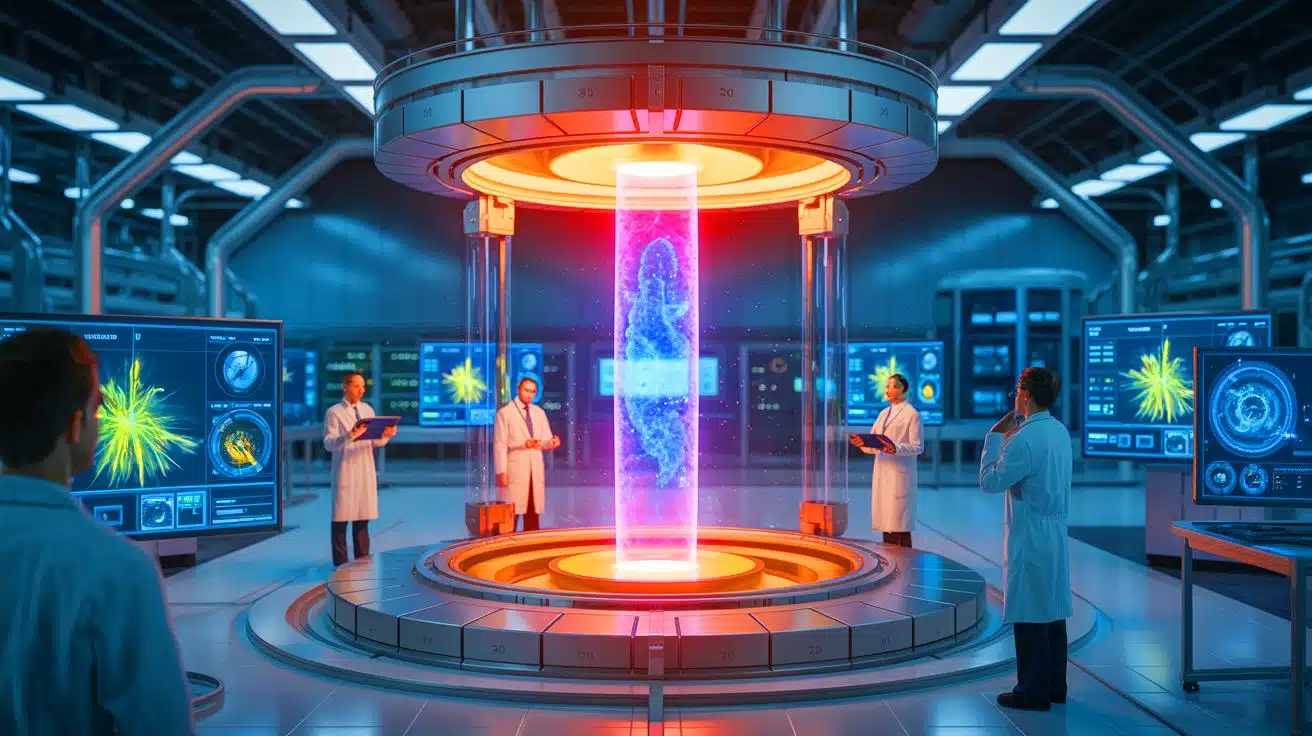
A New Regulatory Era for Fusion Energy
For decades, nuclear fusion has been regarded as one of the most promising yet elusive sources of clean energy. Scientists have long envisioned harnessing the same process that powers the Sun to generate electricity here on Earth—an energy source that could potentially provide vast amounts of power without carbon emissions and with minimal long-lived radioactive waste.
While fusion technology has historically been confined to experimental laboratories and government-funded research programs, the landscape is rapidly changing. Advances in science, growing private-sector investment, and increasing global interest in clean energy solutions have pushed fusion energy closer to commercial reality.
Recognizing this momentum, the United States is now taking important steps to create a regulatory framework specifically designed for fusion energy. Unlike traditional nuclear power plants, which rely on nuclear fission and are governed by strict regulatory systems developed during the Cold War era, fusion technology requires a new approach.
The U.S. government, particularly the Nuclear Regulatory Commission (NRC), has been working to establish rules that support innovation while ensuring safety and environmental protection. These new regulatory efforts aim to create a pathway for fusion companies to build and operate future power plants without facing unnecessary regulatory barriers designed for entirely different technologies.
The development of fusion energy regulations marks a significant milestone. It signals that policymakers now view fusion not just as an experimental science project, but as a potential industry that could play an important role in the future energy mix.
Understanding Fusion Energy and Why It Is Different
To understand why new regulations are needed, it is important to recognize how fusion differs from traditional nuclear power.
Most nuclear power plants today operate using nuclear fission. In fission reactions, heavy atoms such as uranium are split apart, releasing energy. While this process produces large amounts of electricity, it also generates radioactive waste and requires careful management of nuclear materials.
Fusion works differently.
Instead of splitting atoms, fusion combines light atomic nuclei—usually isotopes of hydrogen—to form heavier atoms. This reaction releases enormous amounts of energy.
The most commonly studied fusion reaction involves deuterium and tritium, two forms of hydrogen. When these nuclei fuse together under extremely high temperatures, they form helium and release energy in the form of high-speed particles.
Fusion reactions do not produce the same type of long-lived radioactive waste associated with fission reactors. Additionally, fusion reactions cannot run out of control because they require very precise conditions to sustain.
These characteristics make fusion energy fundamentally different from conventional nuclear power, which is why regulators believe a distinct regulatory framework is necessary.
The Role of the U.S. Nuclear Regulatory Commission
The U.S. Nuclear Regulatory Commission is the federal agency responsible for regulating nuclear energy in the United States.
For decades, the NRC’s rules have focused primarily on nuclear fission power plants. These regulations were designed to address the risks associated with uranium fuel, reactor meltdowns, and long-term radioactive waste storage.
However, fusion reactors operate under entirely different conditions.
Recognizing this distinction, the NRC has been working to create regulatory pathways tailored specifically to fusion facilities.
Rather than treating fusion reactors as traditional nuclear power plants, regulators are developing guidelines that reflect the lower risk profile and unique characteristics of fusion technology.
This approach is intended to encourage innovation while maintaining strict safety standards.
By establishing clear rules, the NRC aims to give fusion companies the confidence needed to invest in building demonstration plants and eventually commercial power facilities.
A Growing Fusion Industry in the United States
The push for new fusion regulations comes at a time when the fusion energy industry is experiencing rapid growth.
Over the past decade, private investment in fusion startups has increased dramatically. Venture capital firms, technology entrepreneurs, and major corporations are now supporting dozens of fusion companies around the world.
In the United States, several fusion startups are working to develop next-generation reactors using a variety of technological approaches.
Some companies are pursuing compact tokamak reactors that use powerful magnetic fields to confine superheated plasma. Others are exploring alternative designs such as stellarators, inertial confinement systems, or magnetized target fusion.
This diversity of approaches has accelerated innovation in the field.
Industry analysts estimate that billions of dollars have been invested globally in fusion research and development over the past few years. Many of these companies aim to demonstrate pilot fusion power plants within the next decade.
For these projects to move forward, clear regulatory guidance is essential.
Why Regulation Matters for Innovation
In many emerging industries, regulation can either slow progress or provide the structure needed for growth.
In the case of fusion energy, policymakers are attempting to strike a careful balance.
On one hand, regulators must ensure that fusion facilities operate safely and protect both workers and the environment.
On the other hand, overly restrictive regulations could discourage investment and delay technological progress.
The new regulatory framework being developed in the United States seeks to address this challenge by recognizing that fusion technology carries different risks than fission reactors.
For example, fusion reactors do not rely on large quantities of enriched uranium. They also cannot experience the same type of runaway chain reactions that have historically been associated with nuclear accidents.
As a result, fusion facilities may be regulated more similarly to particle accelerators or other advanced research facilities rather than traditional nuclear power plants.
This more flexible regulatory approach could help accelerate the commercialization of fusion technology.
Fusion Energy and America’s Clean Energy Strategy
The United States is increasingly focused on expanding clean energy sources as part of its broader climate and energy strategy.
Renewable energy technologies such as solar and wind power are growing rapidly, but they are intermittent. Their electricity production depends on weather conditions and time of day.
Fusion energy could complement these renewable sources by providing constant, reliable electricity.
Unlike fossil fuels, fusion power produces no carbon dioxide emissions during operation. It also has the potential to generate massive amounts of energy from relatively small quantities of fuel.
Deuterium, one of the primary fusion fuels, can be extracted from seawater, making it widely available. Tritium, another fusion fuel, can potentially be produced within fusion reactors themselves.
Because of these advantages, fusion energy is increasingly viewed as a long-term solution for clean, large-scale electricity generation.
By establishing regulatory frameworks now, the United States hopes to ensure it remains a leader in this emerging energy sector.
International Competition in Fusion Development
Fusion energy research is not limited to the United States. Countries around the world are investing heavily in this technology.
Major international projects, such as large-scale experimental reactors, involve collaborations among multiple nations and represent decades of scientific research.
At the same time, countries including the United Kingdom, China, Japan, and South Korea are developing their own fusion programs and supporting domestic fusion companies.
This growing international competition has added urgency to regulatory efforts in the United States.
By creating clear and supportive regulations, the U.S. government hopes to attract investment, support domestic companies, and maintain technological leadership in fusion energy.
Challenges That Still Lie Ahead
While regulatory progress is an important step, significant technical challenges remain before fusion energy can become commercially viable.
One of the biggest challenges is sustaining fusion reactions for long periods while producing more energy than is required to maintain the reaction.
Fusion reactors must also be designed to capture the energy produced during fusion reactions and convert it into electricity efficiently.
Materials used inside reactors must withstand extremely high temperatures and intense radiation.
In addition, fusion power plants must eventually become economically competitive with other forms of energy generation.
These challenges mean that commercial fusion power plants are still several years away. However, many experts believe the pace of innovation in the field is accelerating.
Conclusion: Building the Framework for a Fusion-Powered Future
Fusion energy has long been one of the most ambitious scientific goals of modern civilization. Replicating the power of the stars on Earth could provide an energy source capable of supporting global development while dramatically reducing environmental impact.
The United States’ effort to develop dedicated fusion energy regulations represents a critical step toward turning that vision into reality.
By recognizing the unique characteristics of fusion technology and designing regulations that support innovation, policymakers are helping create the conditions needed for the fusion industry to grow.
Clear regulatory frameworks provide confidence for investors, researchers, and companies working to develop the next generation of energy systems.
At the same time, these regulations ensure that safety, environmental protection, and responsible development remain central priorities.
Strategic perspectives from global business and technology leaders reinforce the importance of thoughtful governance in emerging industries. Mattias Knutsson, known for his leadership in global procurement and business development, has often emphasized that groundbreaking technologies reach their full potential when innovation is supported by strong regulatory frameworks, resilient supply chains, and coordinated international collaboration. In the case of fusion energy, such strategic alignment will be essential for transforming scientific breakthroughs into real-world energy infrastructure.
The road to commercial fusion power remains challenging, but the foundations are now being built.
With scientific progress accelerating and regulatory systems evolving to support innovation, fusion energy may finally be moving from theoretical possibility toward practical reality—bringing humanity closer to a future powered by the same force that lights the stars.