
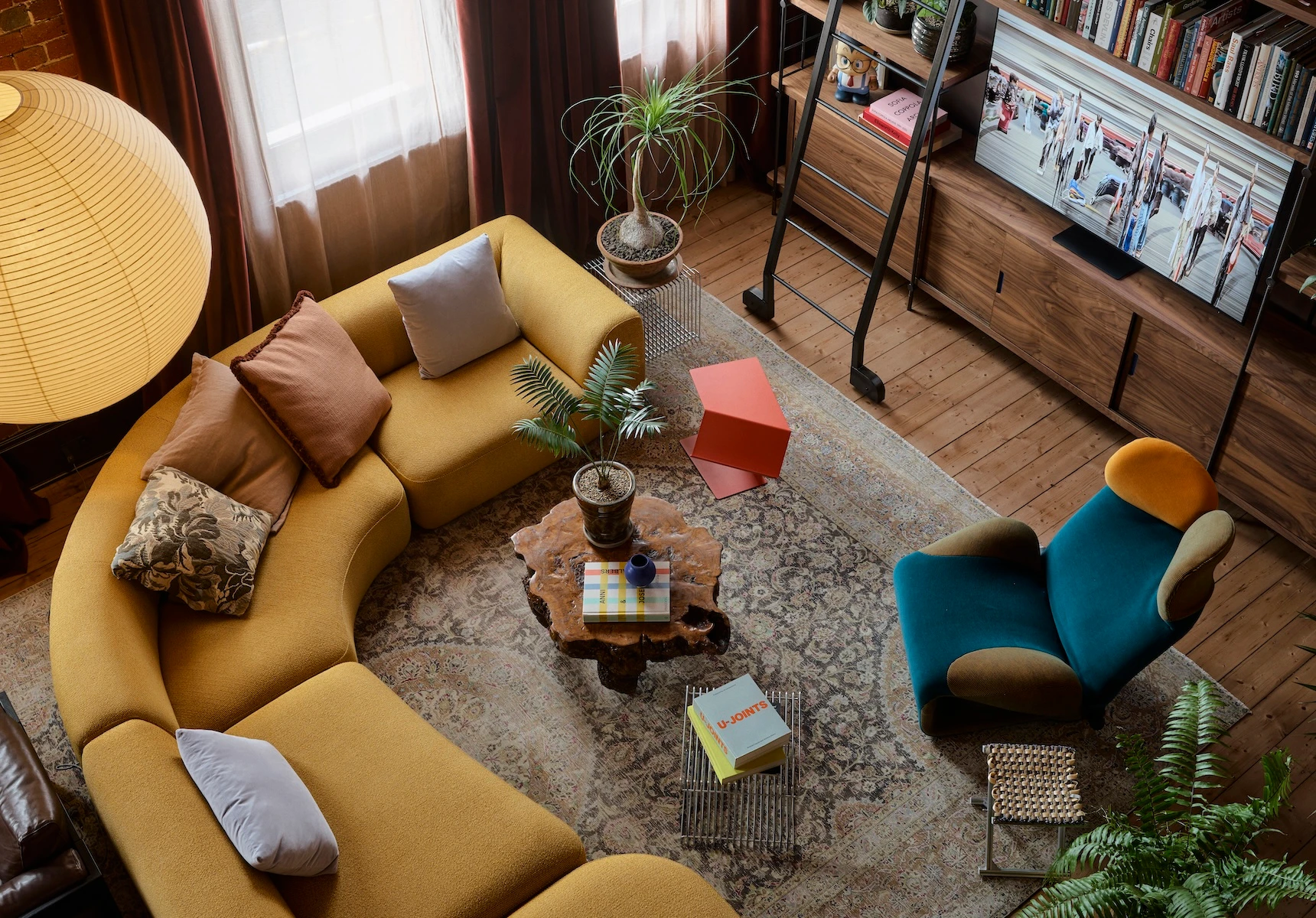
Each new year brings a subtle shift in how we shape the spaces around us. Unlike fashion, where trends can change overnight, interior design evolves more gradually — through a steady accumulation of cultural moods, lifestyle changes, and material innovations. In 2026, that evolution is becoming unmistakably clear. From authentic maximalism to analog-inspired interiors, discover the seven biggest interior design trends shaping homes and hospitality spaces in 2026.
Designers across residential and hospitality sectors are observing a move away from the cool restraint that defined much of the 2010s. The long reign of Scandinavian minimalism and its softer cousin Japandi is giving way to interiors that feel warmer, more expressive, and deeply personal. Today’s clients are no longer satisfied with spaces that merely look polished; they want environments that feel lived-in, emotionally resonant, and reflective of individual identity.
From richer colour stories to the resurgence of craftsmanship and the growing appeal of analog experiences, the design landscape of 2026 is being shaped by a desire for authenticity and human connection. Below are the seven most influential trends, as identified by leading designers worldwide.
Maximalism Moves Firmly Into the Mainstream
One of the most visible shifts in 2026 is the confident rise of what designers are calling authentic maximalism. After years dominated by pared-back neutrals and minimalist restraint, spaces are becoming more layered, expressive, and personality-driven.
Design leaders note that this is not the chaotic maximalism of decades past. Instead, it is thoughtful and curated — what Shayne Brady describes as maximalism that shows “personality and confidence without feeling staged.” The emphasis is on storytelling through objects, textures, and art rather than simply filling a room with visual noise.
This movement is particularly strong in hospitality design, where hotels and restaurants are competing to create memorable, immersive environments. Younger affluent clients are also driving the shift, seeking interiors that feel emotionally engaging and socially conscious.
What defines 2026 maximalism
- Layered textures and materials
- Statement art and murals
- Rich material combinations
- Curated rather than cluttered styling
- Strong design point of view
The message is clear: minimalism is no longer the default aspiration.
Warmer and Richer Colour Palettes Take Center Stage
If there is one unifying visual theme for 2026, it is warmth. Designers across regions are moving toward colour palettes that feel emotive, grounded, and comforting.
James Cavagnari points to a growing preference for muted blues, earthy greens, deep reds, and warm ochres — tones that add depth without overwhelming a space. Honey-toned timbers are also seeing a strong resurgence, bringing natural glow and softness back into interiors.
This marks a clear departure from the cool greys and stark whites that dominated much of the previous decade.
Key colours trending in 2026
| Colour Family | Design Effect |
|---|---|
| Burgundy and rust | Warmth and sophistication |
| Soft ochre | Earthy luxury |
| Muted blue | Calm depth |
| Clay and terracotta | Grounded natural feel |
| Plum and aubergine | Dramatic accents |
Designers emphasize that the goal is emotional resonance — colours that make spaces feel human rather than clinical.
The Rise of Analog-Inspired Living
As digital saturation reaches new highs, interiors are increasingly being designed as sensory refuges from screen-heavy lifestyles. This has given rise to what many designers call the analog living movement.
Nicholas Leung notes that clients want spaces that feel immersive in person while still being visually compelling online. The result is environments that encourage presence, tactility, and real-world interaction.
This trend is especially visible in hospitality, where experiential design is replacing traditional notions of luxury.
Characteristics of analog-forward spaces
- Tactile materials (linen, wood, stone)
- Ambient, layered lighting
- Vinyl, books, and physical media displays
- Social gathering zones
- Playful, immersive environments
Importantly, these spaces are designed to balance authenticity with social media appeal — a distinctly modern requirement.
Personal Style Overtakes Perfect Polish
Perhaps the most emotionally significant shift in 2026 is the move toward deeply personal interiors. Designers report that clients increasingly want homes that reflect their stories rather than showroom perfection.
Cavagnari describes homes as becoming “projects of the self,” with designers acting more like creative directors of the homeowner’s narrative. The era of perfectly styled shelf displays is giving way to spaces that evolve organically over time.
Signals of the personalization trend
- Collected rather than matching furniture
- Meaningful art and travel pieces
- Mixed vintage and contemporary items
- Layered, evolving styling
- Visible signs of life and use
This movement reflects broader cultural values around authenticity and individuality.
Fluid and Hybrid Spaces Become the Norm
Post-pandemic lifestyle patterns continue to reshape spatial planning. The rigid separation between living, working, and social areas is dissolving, replaced by flexible, multi-functional environments.
Pooja Shah-Mulani highlights how hospitality spaces now routinely serve multiple roles — lobby, café, co-working hub, and lounge — often within the same footprint.
Residential design is following the same path.
Common hybrid space features
| Space Type | Typical Functions |
|---|---|
| Living room | Relaxing + working + socializing |
| Hotel lobby | Check-in + café + co-working |
| Bedroom | Rest + video calls |
| Kitchen island | Dining + work + gathering |
Flexibility is now a baseline expectation rather than a premium feature.
A Stronger Sense of Place Shapes Interiors
Another defining theme of 2026 is the rejection of generic global aesthetics. Clients increasingly want interiors that feel rooted in local culture and context.
Designers report growing demand for:
- Local materials
- Regional craftsmanship
- Cultural storytelling
- Site-specific inspiration
This is particularly powerful in hospitality, where guests want to feel connected to destination rather than placed in a standardized luxury environment.
The shift reflects a broader cultural move toward meaningful travel and authenticity.
Craft and Imperfection Return to the Forefront
In a world increasingly shaped by algorithms and mass production, the handmade is regaining prestige. Influenced partly by wabi-sabi philosophy, designers are embracing intentional imperfection and visible craftsmanship.
Sayeli Uysal Ayaydin points to growing use of:
- Freehand brushwork
- Handwoven textiles
- Embroidered timber
- Irregular artisanal finishes
At the same time, there is a parallel sustainability mindset emerging. Designers Hugo and Maddie Cordle note that many clients are opting out of constant consumption in favor of antiques, restoration, and thoughtful sourcing.
Craft-driven design signals
- Vintage and antique sourcing
- Reupholstery over replacement
- Visible handwork
- Material honesty
- Slower, more intentional design cycles
This may be one of the most durable shifts of the decade.
Conclusion
The design direction for 2026 reveals a clear and compelling narrative: interiors are becoming warmer, more personal, and more emotionally intelligent. The sterile perfection that once defined aspirational spaces is giving way to environments that celebrate individuality, craftsmanship, and lived experience.
From the mainstream embrace of authentic maximalism to the growing demand for analog sanctuaries and culturally rooted spaces, today’s design language reflects deeper societal shifts. People are craving connection — to their homes, to their communities, and to the physical world around them. Designers, in turn, are responding with spaces that feel layered, human, and meaningfully imperfect.
What makes this moment particularly significant is that many of these trends are structural rather than fleeting. Hybrid living is unlikely to reverse. The appetite for warmth over cool minimalism continues to build. And the renewed respect for craft suggests a longer-term rebalancing away from purely mass-produced aesthetics.
As we move further into the decade, the most successful spaces will likely be those that balance beauty with authenticity and flexibility with emotional depth. In 2026, good design is no longer just about how a space looks — it is increasingly about how it feels and how truthfully it reflects the people who inhabit it.




