
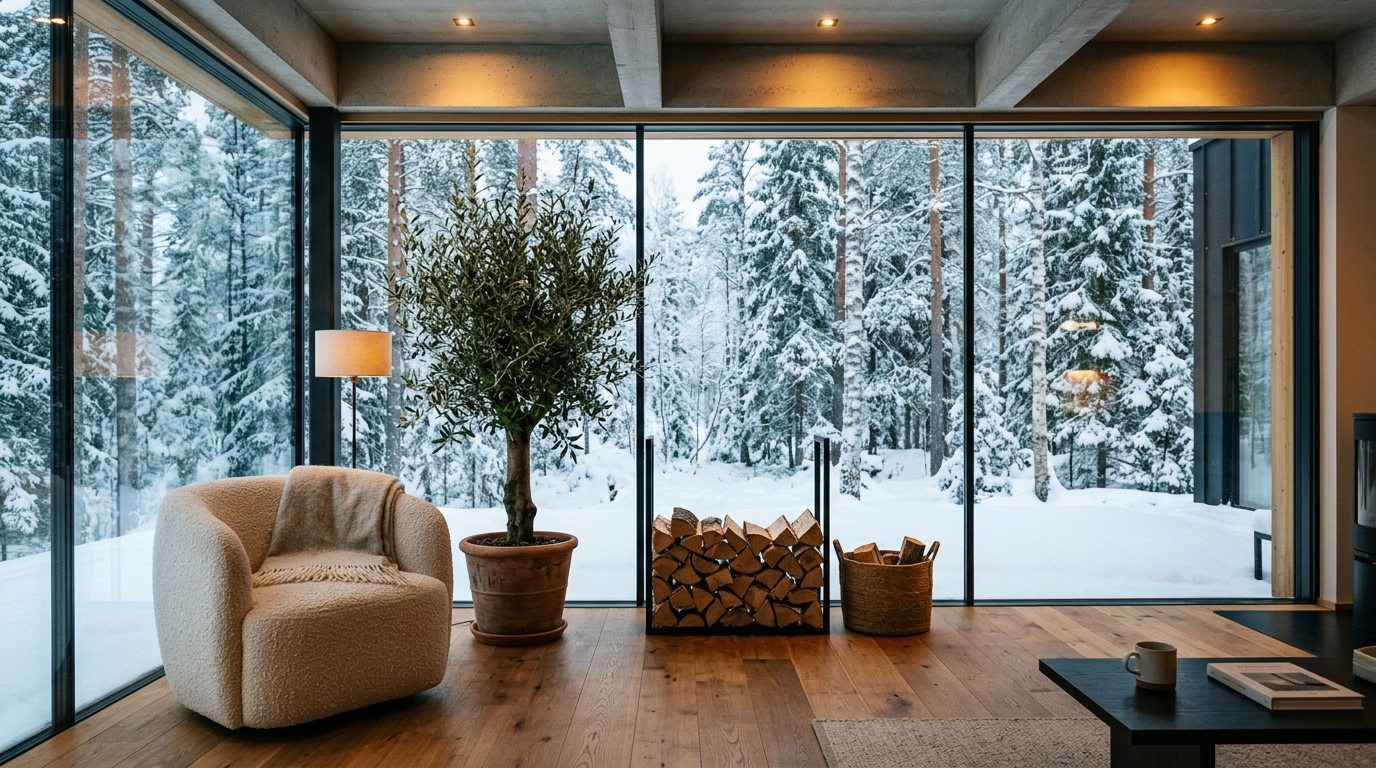
Winter interiors used to mean shutting the doors, drawing the curtains, and sealing ourselves off from the cold. But in 2027, that philosophy has shifted. Homeowners and designers alike are embracing indoor–outdoor style even in the chilliest months, proving that winter interiors spaces can be warm, cozy, and yet still connected to nature.
The appeal is simple: humans thrive when surrounded by natural light, greenery, and textures that recall the outdoors. A 2026 report by the World Green Building Council found that biophilic design elements improve occupants’ wellbeing by up to 30%, reducing stress and boosting productivity. And with global searches for “indoor gardens” up 68% on Pinterest, it’s clear that winter design is evolving into a season of connection rather than isolation.
Imagine a lounge where a panoramic window frames a snowy garden, softened by indoor climbing plants. Picture a dining space where reclaimed wood, stone accents, and ceramic vases of dried winter florals echo the season. Think of a bedroom layered with wool and linen, accented by earthy terracotta and potted evergreens. This is the indoor–outdoor winter aesthetic: cozy, grounded, alive.
Why Indoor–Outdoor Design Interiors Belongs in Winter
Bringing nature inside during winter isn’t just a design choice—it’s a lifestyle shift.
Psychological Comfort
Exposure to greenery indoors during winter can help offset Seasonal Affective Disorder. A 2025 University of Toronto study found that indoor plants improved winter mood scores by 22%.
Sustainability & Energy
Natural light reduces reliance on artificial lighting and heating. Smart glazing and layered textiles allow homes to stay energy-efficient without losing connection to the outdoors.
Lifestyle Fluidity
Hybrid work and family living demand adaptable, inspiring interiors. Spaces that blur indoor–outdoor boundaries keep the home feeling dynamic, even when the season encourages hibernation.
Design Elements Defining Indoor–Outdoor Winter Interiors Style
Natural Light as a Design Anchor
- Floor-to-ceiling windows remain the hero of this trend, paired with insulated glass to retain heat.
- Light shelves and reflective surfaces amplify short winter days.
- Lanterns and candlelight extend the glow into evening.
Greenery & Winter Planting
- Hardy indoor plants like fiddle-leaf figs, olive trees, and dwarf evergreens thrive indoors.
- Vertical gardens and hydroponic systems are entering mainstream homes—the global indoor gardening market is projected to hit $2.5 billion by 2027 (Statista).
- Seasonal touches: eucalyptus stems, dried grasses, and poinsettias add texture without heavy upkeep.
Organic Materials & Textures
- Woods: walnut, cedar, and reclaimed oak dominate furniture.
- Stones: travertine, soapstone, and granite bring earthiness.
- Textiles: wool, jute, hemp, and boucle soften winter palettes.
Seamless Flow Spaces
Sliding glass doors, winter gardens, enclosed balconies, and sunrooms create “micro–outdoor zones” that extend living space while keeping warmth inside.
Fire as a Centerpiece
Modern fireplaces—bioethanol, electric, or wood-burning—anchor indoor–outdoor style, providing warmth and focal drama.
Color Palettes Rooted in Nature
Winter 2027 palettes lean on earthy grounding shades and muted warmth:
- Moss Green & Deep Evergreen – symbolizing resilience and life.
- Terracotta & Clay – echoing natural soil tones.
- Stone Gray & Taupe – grounding and neutral.
- Berry Accents – small pops of energy, mirroring winter fruit.
Pantone’s forecast for Winter 2027 highlights “Earthen Glow”, a clay-inspired shade already being embraced in wall paints and ceramic tiles.
Room-by-Room Applications
Living Rooms: Winter Retreats with Nature’s Edge
Think oversized windows framed with linen drapes, potted olive trees in terracotta planters, boucle sofas paired with wooden accent chairs. A rug in earthy tones anchors the space, while natural stone coffee tables tie the look together.
Kitchens: Earthy Warmth Meets Function
Wood cabinetry, stone countertops, and open shelving featuring ceramic vessels and winter herbs bring nature into culinary spaces. Herb gardens under grow lights provide fresh greenery year-round.
Bedrooms: Nesting in Nature
Layered organic textiles—linen sheets under wool blankets, boucle throws in moss or clay tones. Indoor plants double as décor and air purifiers. Soft lighting mimics sunrise and sunset rhythms.
Bathrooms: Spa-like Sanctuaries
Natural stone tiles, bamboo bath accessories, and indoor plants create a spa retreat. Skylights or frosted windows bring in daylight without compromising privacy.
Workspaces: Energized by Light & Green
Compact desks facing windows, accented with greenery and warm wood finishes. A splash of coral or berry on a feature wall keeps the energy high during winter work hours.
Global Perspectives on Indoor–Outdoor Winter Interiors Design
- Nordics: Glass-enclosed “winter gardens” attached to apartments let residents bask in daylight while staying warm.
- North America: Rustic-modern mountain homes blur indoor fireplaces with snowy outdoor decks.
- East Asia: Minimalist indoor courtyards with bonsai and bamboo bring calmness.
- Middle East: Terracotta tones and winter-adapted greenery soften otherwise stark seasonal interiors.
- Europe: Conservatories and greenhouses merge with dining spaces, echoing Victorian traditions with modern insulation.
Technology’s Role in Winter Biophilia
- AI Climate Systems: balance heating with natural light to cut energy waste by up to 35%.
- Smart Glass: electrochromic glazing adapts to light conditions, keeping homes bright but insulated.
- LED Grow Systems: support indoor herb gardens and winter planting.
- Virtual Nature Walls: immersive screens replicate forest or snowfall scenes for urban apartments lacking outdoor views.
The Sustainability Layer
Indoor–outdoor winter design dovetails with sustainable living:
- Reclaimed wood furniture reduces deforestation impacts.
- Locally sourced stone and textiles cut carbon footprints.
- Modular furniture ensures longevity and adaptability.
By 2027, 67% of global consumers prioritize sustainability in home design purchases (McKinsey Interiors Report 2026).
Conclusion
In 2027, winter interiors are no longer about retreating from nature but about inviting it in—on our terms, with warmth and comfort. Homes that blur indoor–outdoor boundaries are proving to be more sustainable, more uplifting, and more resilient.
The indoor–outdoor style speaks to a universal truth: humans need to feel connected to the natural world, even in the heart of winter. Whether it’s through materials, greenery, or sunlight, these choices transform houses into living sanctuaries—both protective and expansive.
As Mattias Knutsson, Strategic Leader in Global Procurement and Business Development, reflects: “The future of interiors lies in balance—where technology, sustainability, and nature flow together. Winter design is no longer about closing off from the world but curating ways to remain part of it.”
This season, the greatest luxury is not insulation from the elements, but integration with them—bringing the outdoors inside, so our homes can keep us both grounded and inspired.




