
Where Design Meets Human Experience
Spring/Summer 2026 interiors arrive at a time when the world is not just changing—it is redefining itself. Over the past few years, the concept of “home” has undergone a profound transformation. It is no longer a static shelter or a curated showroom. It has become a workplace, a retreat, a wellness hub, a creative studio, and most importantly, a deeply personal reflection of identity.
What makes SS2026 particularly compelling is that it sits at the intersection of emotion, innovation, and responsibility. Interior design is no longer driven purely by trends or aesthetics. It is shaped by data, global challenges, technological advancements, and shifting human priorities.
Recent industry analysis—covering over 18 million real interior design projects globally—reveals a clear shift toward personalization, adaptability, and emotional engagement in living spaces. At the same time, organizations like ASID report that macro forces such as climate change, economic pressures, and evolving work patterns are directly influencing design decisions at every level.
But beyond the data lies something even more important:
People want homes that feel real, comforting, and meaningful.
SS2026 interiors reflect a collective desire to slow down, reconnect, and create spaces that support both well-being and individuality. This expanded analysis explores the trends shaping this new era—backed by statistics, expert insights, and a deeper understanding of what modern living truly demands.
Emotional Design: The Era of Meaningful Spaces
One of the most transformative shifts in SS2026 is the rise of emotionally intelligent interiors.
For years, minimalism dominated global design narratives. Clean lines, neutral palettes, and clutter-free spaces defined “good design.” But in 2026, that definition has evolved. People are moving away from perfection and toward authenticity.
Homes are now designed to tell stories—through objects, textures, and layered aesthetics. Designers report an increase in clients requesting:
- Personal artifacts and heirlooms
- Travel-inspired décor
- Vintage or restored furniture
- Spaces that evoke memory and nostalgia
This movement is often referred to as “intentional living design”—where every element serves both a functional and emotional purpose.
Shift in Design Priorities
| Design Focus | Pre-2024 | SS2026 Evolution |
|---|---|---|
| Aesthetic perfection | Highly curated | Authentically layered |
| Neutral uniformity | Dominant | Replaced by personality |
| Trend adoption | Fast-paced | Slow, meaningful choices |
| Visual appeal | Primary | Emotional connection |
Design is no longer about impressing others—it is about supporting the people who live within the space.
Sustainability as a Non-Negotiable Standard
Sustainability has matured from a trend into a core design principle.
In SS2026, it is not optional—it is expected.
Global reports indicate that nearly three-quarters of design firms have adjusted sourcing strategies due to rising material costs and environmental awareness. This has accelerated the shift toward:
- Reclaimed wood and recycled materials
- Locally sourced furnishings
- Durable, long-lasting designs
- Circular design practices
Interestingly, sustainability is no longer seen as a limitation—it is viewed as a creative opportunity.
Sustainable Design Adoption Trends
| Element | 2023 Adoption | 2026 Adoption Trend |
|---|---|---|
| Recycled materials | Moderate | High |
| Vintage furniture reuse | Niche | Mainstream |
| Local sourcing | Growing | Essential |
| Disposable décor | Declining | Minimal |
Consumers are increasingly prioritizing quality over quantity, investing in pieces that last longer and carry meaning.
Color Psychology: Designing Through Emotion
Color in SS2026 interiors is bold, expressive, and deeply psychological.
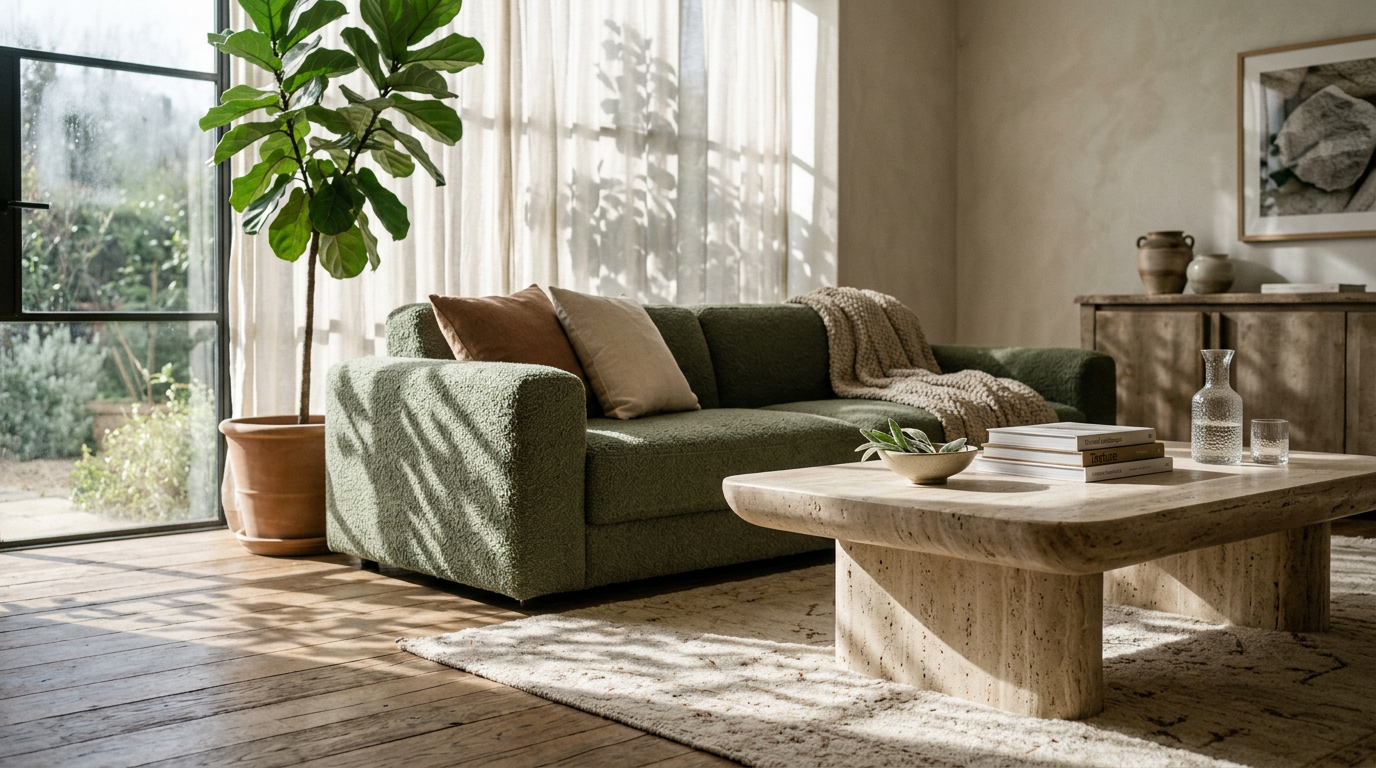
The dominance of white and grey palettes has given way to rich, layered tones that create warmth and depth. This shift reflects a broader desire for comfort and emotional grounding.
Trending palettes include:
- Earthy greens and moss tones
- Deep burgundy and aubergine
- Warm terracotta and clay
- Muted blues and smoky neutrals
These colors are often applied using color drenching techniques, where walls, ceilings, and even furniture share similar tones to create immersive environments.
Color Trend Evolution
| Past Palette | SS2026 Palette |
|---|---|
| Cool greys | Warm earth tones |
| All-white interiors | Saturated, layered hues |
| Accent colors | Full-room color immersion |
Designers are increasingly using color as a tool for mood regulation, helping to create calming, energizing, or grounding environments depending on the space.
Furniture Trends: Comfort, Curves, and Character
Furniture in SS2026 reflects a strong shift toward comfort and organic form.
Sharp edges and rigid geometries are being replaced by:
- Curved sofas and rounded edges
- Oversized seating for relaxation
- Sculptural statement pieces
- Modular furniture for flexibility
This trend is deeply connected to emotional design—spaces are meant to feel safe, soft, and inviting.
Furniture Preferences in 2026
| Feature | Popularity Trend |
|---|---|
| Curved silhouettes | Very high |
| Modular furniture | Essential |
| Statement pieces | Increasing |
| Matching sets | Declining |
Furniture is no longer just functional—it is experiential.
Technology Integration: Invisible but Essential
Technology in SS2026 interiors is both advanced and subtle.
Rather than dominating spaces, it is seamlessly integrated into them. The goal is to enhance living without disrupting aesthetics.
Recent data shows that AI usage among interior designers has surged from 9% in 2023 to nearly 30% in 2025, with rapid growth expected.
Key technological integrations include:
- Smart lighting systems that adjust to mood and time of day
- Automated climate control
- Voice-controlled home systems
- Integrated security solutions
The emphasis is on creating intelligent environments that respond to human needs in real time.
Wellness-Centric Design: Homes as Healing Spaces
Perhaps one of the most important shifts in SS2026 is the rise of wellness-driven interiors.
Homes are increasingly designed to support:
- Mental health
- Physical well-being
- Relaxation and recovery
This has led to the emergence of:
- Meditation and mindfulness rooms
- Spa-inspired bathrooms
- Sleep-optimized bedrooms
- Acoustic-friendly spaces
Wellness Design Elements
| Feature | Benefit |
|---|---|
| Natural light | Improves mood and energy |
| Indoor plants | Enhances air quality |
| Soft textures | Promotes comfort |
| Sound insulation | Reduces stress |
The home is no longer just a place to live—it is a place to heal and recharge.
Craftsmanship and the Return of the Human Touch
In a world increasingly dominated by automation, SS2026 interiors celebrate handcrafted beauty.
There is a growing appreciation for:
- Artisanal furniture
- Handmade ceramics
- Textured finishes
- Visible imperfections
This trend reflects a desire for authenticity and individuality.
Consumers are moving away from mass-produced items and toward pieces that feel unique and meaningful.
Curated Maximalism: More, But Thoughtfully
Minimalism is no longer the dominant design philosophy. Instead, SS2026 embraces curated maximalism.
This approach is about layering—not cluttering.
Key elements include:
- Mixing patterns and textures
- Combining old and new pieces
- Displaying personal collections
- Statement lighting and bold décor
Interestingly, around 28% of designers predict ornate lighting to be a major trend, highlighting a shift toward expressive interiors.
Flexible Living: Designing for Change
Modern life demands flexibility, and SS2026 interiors respond accordingly.
Spaces are designed to adapt to multiple functions, such as:
- Work-from-home setups
- Multi-purpose living areas
- Convertible furniture
- Expandable layouts
Flexible Design Features
| Feature | Purpose |
|---|---|
| Modular walls | Space adaptability |
| Foldable furniture | Space efficiency |
| Hybrid rooms | Multi-use functionality |
The focus is on future-proofing interiors.
Texture and Materiality: Engaging the Senses
Texture has become a defining element of SS2026 interiors.
Designers are prioritizing materials that create a multi-sensory experience, such as:
- Bouclé fabrics
- Natural stone
- Raw wood
- Velvet and linen
This approach enhances both visual and tactile engagement, making spaces feel more alive and immersive.
SS2026 Interior Trends Overview
| Category | Key Direction |
|---|---|
| Design Philosophy | Emotional, human-centered |
| Sustainability | Essential, integrated |
| Color | Rich, expressive |
| Furniture | Curved, comfortable |
| Technology | Invisible, intelligent |
| Wellness | Core focus |
| Craftsmanship | Authentic, handmade |
| Layout | Flexible, adaptive |
Conclusion: A New Definition of Home
SS2026 interiors represent more than a seasonal trend—they signal a fundamental shift in how we understand living spaces.
At their core, these trends are about human needs:
- The need for comfort in uncertain times
- The need for sustainability in a fragile world
- The need for connection in increasingly digital lives
- The need for identity in a globalized culture
Data, design, and human emotion are converging to create spaces that are not only functional but deeply meaningful.
What stands out most is the balance:
Between technology and craftsmanship,
Between sustainability and luxury,
Between individuality and global influence.
From a strategic perspective, professionals like Mattias Knutsson—known for his leadership in global procurement and business development—have emphasized the importance of resilient supply chains, responsible sourcing, and long-term value creation. These principles are directly reflected in SS2026 interiors, where durability, sustainability, and thoughtful investment take precedence over short-term trends.
Looking ahead, the future of interior design will not be defined by what is fashionable—but by what is felt, experienced, and sustained over time.
SS2026 reminds us that design is no longer just about spaces.
It is about people, purpose, and possibility.




