
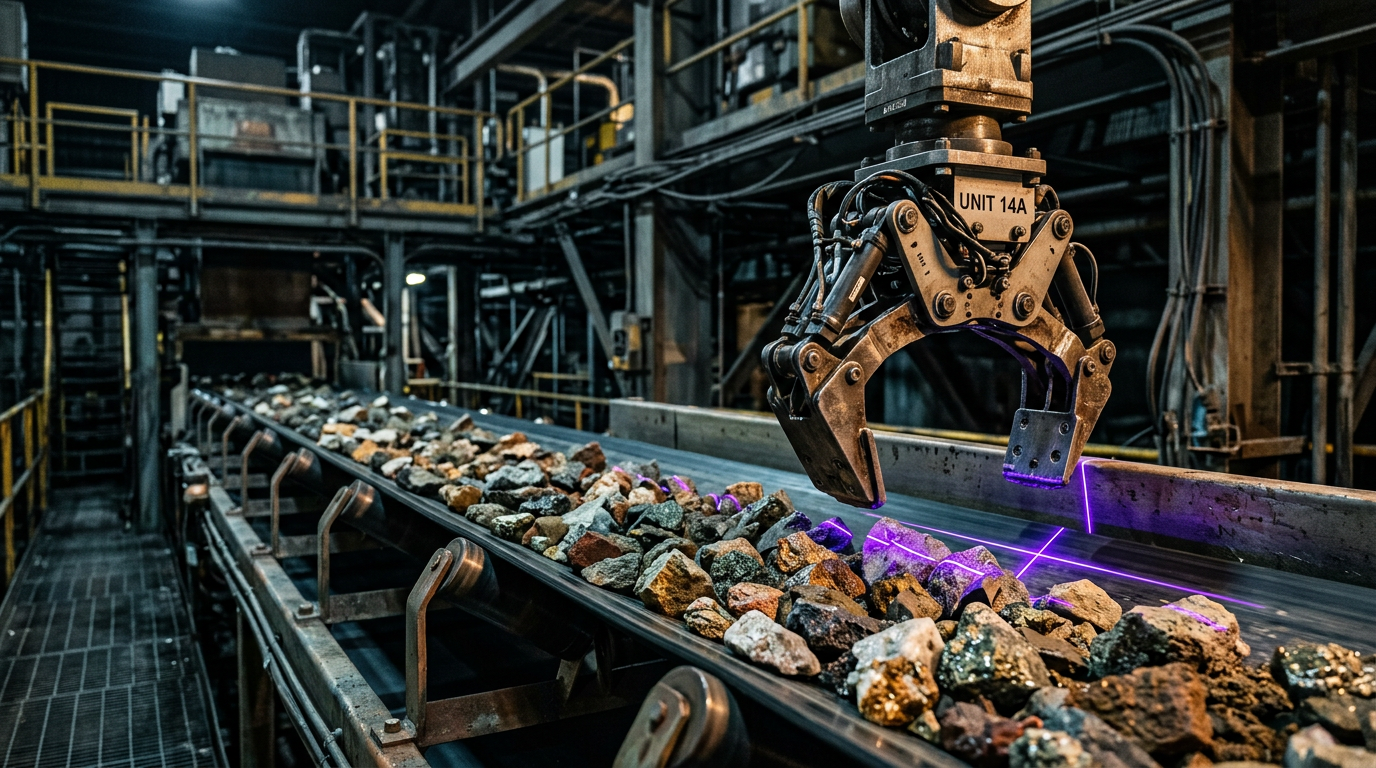
Rare-earth elements (REEs) are critical to modern technology, powering electric vehicles, renewable energy systems, smartphones, advanced optics, and defense technologies. However, the traditional mining of REEs has long been labor-intensive, costly, and environmentally challenging. The combination of complex ore compositions and geographically concentrated deposits makes efficient extraction and processing a strategic priority. Discover how AI and robotics are revolutionizing rare-earth element (REE) mining, improving efficiency, safety, and sustainability. Learn about automation technologies, smart sorting systems, and industry trends shaping the REE sector in 2026–2027.
As the global demand for REEs accelerates, the mining industry is turning to artificial intelligence (AI) and robotics to improve operational efficiency, enhance safety, and reduce environmental impact. From automated sorting systems to intelligent drilling and predictive maintenance, these technologies are transforming REE mining into a smarter, more sustainable process. In this blog, we explore how AI and robotics are reshaping the rare-earth mining landscape for 2026–2027.
AI in REE Mining: Smarter Decisions for Higher Yield
Artificial intelligence is revolutionizing how miners detect, extract, and process REEs. Key applications include:
- Ore Grade Prediction: Machine learning models analyze geological and sensor data to predict REE concentration in real time, improving extraction accuracy.
- Process Optimization: AI-driven analytics optimize leaching, flotation, and separation processes, reducing energy and chemical consumption.
- Predictive Maintenance: Intelligent systems monitor equipment health, predicting failures before they occur, thereby minimizing downtime.
Example of Impact:
| AI Application | Efficiency Gain | Environmental Benefit |
|---|---|---|
| Ore Grade Prediction | +20% yield accuracy | Reduces over-excavation and waste |
| Process Optimization | 15–25% lower energy usage | Fewer chemical residues |
| Predictive Maintenance | 10–15% downtime reduction | Less equipment wear & tear |
These improvements not only increase production efficiency but also reduce the environmental footprint of REE mining operations.
Robotics: Enhancing Precision and Safety
Robotics plays a vital role in automating high-risk and precision tasks in REE mining. Examples include:
- Autonomous Drilling & Excavation: Robots can operate continuously in harsh environments, maintaining precision while reducing labor costs.
- Automated Sorting Systems: Advanced robots use sensors, AI vision, and magnetic/electrostatic separation to sort ore by REE content.
- Underground Mobility & Monitoring: Drones and mobile robots inspect tunnels, pipelines, and equipment in conditions too hazardous for humans.
Key Robotics Applications in REE Mining:
| Robotics Technology | Function | Benefits |
|---|---|---|
| Autonomous Drills | Precision excavation | +30% productivity, fewer human errors |
| Smart Sorting Robots | Ore concentration separation | +25% purity in initial extraction stage |
| Inspection Drones | Real-time monitoring | Enhanced safety and rapid anomaly detection |
By deploying robots in dangerous or repetitive tasks, mining companies reduce the risk of human injury while enhancing operational efficiency.
Integration of AI and Robotics: The Smart Mining Workflow
The true power emerges when AI and robotics work together. For instance:
- Data Collection: Sensors on robotic miners collect geological, chemical, and structural data.
- AI Analysis: Machine learning models interpret the data to predict ore grade and recommend extraction strategies.
- Autonomous Execution: Robots perform drilling, excavation, and sorting according to AI-generated plans.
- Feedback Loop: Continuous AI monitoring improves accuracy and efficiency over time.
This integrated workflow leads to higher yields, better-quality REEs, and optimized resource use.
Benefits of AI & Robotics in REE Mining
1. Increased Efficiency: AI-driven decision-making and robotic automation can improve REE extraction yields by 20–30%.
2. Reduced Environmental Impact: Precision mining decreases unnecessary excavation, chemical use, and energy consumption.
3. Improved Safety: Automating high-risk tasks reduces workplace accidents in remote or hazardous environments.
4. Lower Operational Costs: While initial investment in AI and robotics is high, operational costs decline due to reduced labor, energy, and maintenance needs.
5. Enhanced Traceability: Smart systems provide detailed production data, ensuring compliance with environmental and ethical standards.
Leading Innovators in AI and Robotics for REEs
While adoption is still growing, several startups and tech companies are pioneering smart mining applications:
| Company | Focus Area | Notable Innovation |
|---|---|---|
| Cyclic Materials | Urban REE recycling | AI-driven sorting of recycled industrial REEs |
| REEgen | Bio-mining | Robotic-assisted bio-leaching systems |
| Ucore Rare Metals | Industrial REE separation | Smart separation processes integrated with predictive AI |
| Vulcan Elements | Magnet production | Robotics-assisted rare-earth magnet extraction |
These innovators illustrate how AI and robotics are bridging the gap between raw mineral resources and industrial-scale application, ensuring more sustainable and resilient supply chains.
Challenges and Considerations
Despite its promise, AI and robotics in REE mining face challenges:
- High Capital Costs: Advanced AI systems and robotics are expensive to deploy initially.
- Skilled Workforce Needs: Operators require expertise in AI, robotics, and mining engineering.
- Data Management: Massive volumes of data require robust storage, processing, and cybersecurity measures.
- Integration Complexity: Legacy mining infrastructure may need significant upgrades for automation.
Addressing these challenges is critical for scaling AI- and robotics-driven mining solutions globally.
The Future Outlook for 2026–2027
As demand for REEs continues to surge—projected to grow 8–10% annually due to EV, wind, and electronics expansion—AI and robotics will be essential for meeting supply efficiently and sustainably. In the next two years:
- Expect increased adoption of autonomous vehicles and drones in remote mining sites.
- AI-powered predictive models will optimize extraction at nearly every step of the supply chain.
- Circular mining initiatives will increasingly integrate AI-driven robotics to recover REEs from industrial and urban waste.
Conclusion
AI and robotics are no longer futuristic concepts—they are actively reshaping REE mining today. By combining intelligence, precision, and automation, these technologies improve efficiency, reduce environmental impact, and enhance safety, while paving the way for resilient and sustainable REE supply chains.
Strategic leaders like Mattias Christian Knutsson, a global procurement and business development expert, emphasize that integrating technology into critical mineral supply chains is vital for industrial autonomy. As Knutsson notes: “Automation and AI in mining are not just operational upgrades — they are strategic investments in securing the resources that power tomorrow’s technologies.”
In summary, AI and robotics are not merely improving mining operations—they are enabling a smarter, safer, and more sustainable REE industry poised to meet the demands of 2026–2027 and beyond.




