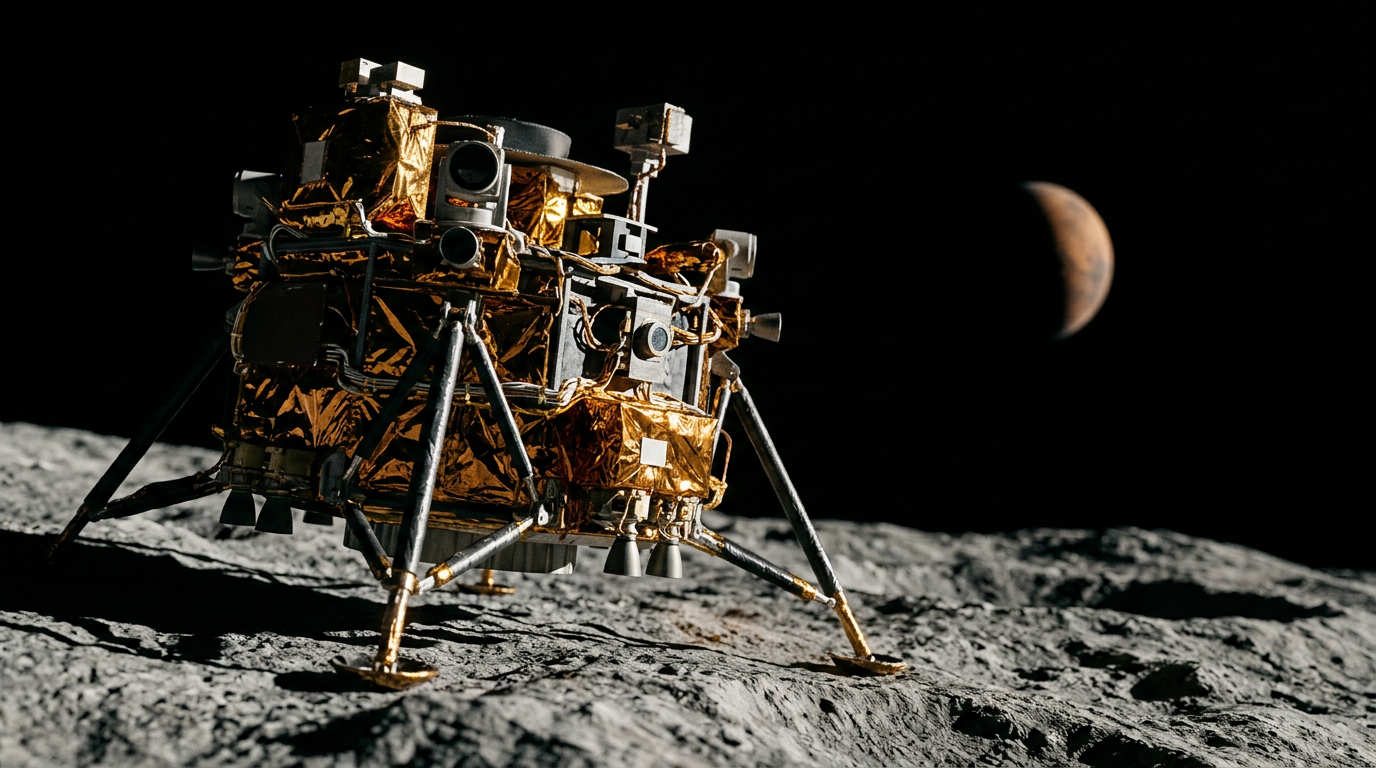
Behind every rocket launch, there’s an economic equation as complex as its flight path. When people talk about the Mars 2026 mission — the next major step toward becoming a multi-planetary species — they often think of rockets, astronauts, and red horizons. But just as crucial as engineering is economics: the budgets, investors, and partnerships quietly making humanity’s biggest ambitions possible. Mars 2026 isn’t just a technological milestone — it’s a financial one. Explore how SpaceX, NASA, and international partners are funding the next chapter of interplanetary exploration, and why the economics behind Mars missions matter more than ever.
Space exploration has always been a mirror of what we value — curiosity, prestige, progress. Yet it also reflects the world’s willingness to invest billions into uncertain frontiers.
In 2026, that willingness is being tested.
With SpaceX pushing toward uncrewed Starship cargo missions, NASA realigning its Mars Sample Return program, and global partners like Japan and Italy joining in, the financial fabric of Mars exploration is more dynamic — and more fragile — than ever.
This is the story of how nations, companies, and visionaries are pooling resources for a goal that might cost over $100 billion — and why they believe it’s worth every cent.
The True Cost of Getting to Mars Economics
To understand Mars 2026, we have to start with a staggering truth: going to Mars is one of the most expensive human endeavors in history.
NASA’s own projections from the mid-2020s estimated a crew-capable Mars mission could cost upwards of $160 billion over multiple decades. Even uncrewed sample return efforts — smaller in scale — run into the tens of billions.
SpaceX’s Starship program alone is believed to have exceeded $10 billion in development costs so far, driven largely by rapid prototyping, launch infrastructure in Texas and Florida, and the engineering of the world’s first fully reusable heavy-lift rocket.
Meanwhile, NASA’s Mars Sample Return (MSR) mission, a joint project with the European Space Agency (ESA), has faced budget overruns and schedule delays, pushing its projected cost to over $11 billion, according to NASA’s Office of Inspector General (2024).
All these numbers might seem dizzying. But they are the price of something priceless — the first sustainable bridge between two planets.
SpaceX and the Private Funding Revolution
If the 20th century’s space race was led by governments, the 21st century’s is funded by entrepreneurs.
Elon Musk’s SpaceX is rewriting the economics of spaceflight through vertical integration and reusability — two factors that drastically cut costs.
By building nearly every component of Starship in-house, SpaceX avoids the complex subcontracting systems that have long inflated aerospace costs. And by making the rocket fully reusable, it hopes to reduce the price of launching payloads from tens of thousands of dollars per kilogram to under $100 per kilogram.
That could make Mars missions not just possible, but economically repeatable.
Musk has said publicly that building the foundation for a self-sustaining Mars settlement could cost anywhere between $100 billion to $1 trillion, depending on scale and timeline. Yet he’s confident that the private sector’s innovation speed and risk appetite can accomplish in a decade what traditional programs took half a century to achieve.
As of 2025, SpaceX’s valuation surpassed $210 billion, driven by Starlink’s broadband network revenue — a financial engine that indirectly funds its Mars ambitions.
In other words: every Starlink satellite you see in the night sky is helping pay for the first human footprints on another planet.
NASA’s Balancing Act: Science, Strategy, and Scarcity
While SpaceX chases interplanetary transport, NASA’s role in 2026 focuses on scientific groundwork — understanding Mars before humans arrive.
However, NASA’s Mars ambitions have been challenged by budget constraints and program prioritization.
In early 2025, the agency announced delays in the Mars Sample Return (MSR) mission, citing the need to reallocate funds and redesign systems for affordability and risk reduction. Originally expected to launch in 2028, the timeline may now shift closer to the early 2030s.
The result? NASA is quietly refocusing its 2026 window toward partnerships and precursor missions, rather than large-scale launches.
Its 2026 budget request — approximately $25.4 billion — maintains strong support for Artemis (the lunar program) and planetary defense, but reflects the tough choices that come when multiple deep-space goals compete for the same pot of funding.
Still, NASA’s collaboration with SpaceX and ESA ensures that even with delays, the momentum toward Mars remains strong.
As NASA Administrator Bill Nelson put it, “Mars is not a sprint — it’s a marathon of partnerships.”
The Global Equation: Shared Ambition, Shared Cost
The Mars Economics 2026 window isn’t just a U.S. story. It’s a global endeavor.
Italy’s Agenzia Spaziale Italiana (ASI) is contributing radar systems and scientific payloads to both lunar and Mars-bound projects. Japan’s Martian Moons eXploration (MMX) mission, targeting Phobos, aims to return samples that could help decode Mars’ geological history — a vital step for future human exploration.
Meanwhile, the United Arab Emirates, after its successful Hope Probe mission to Mars orbit in 2021, is deepening partnerships with both NASA and JAXA, working on climate and terrain mapping technologies relevant to long-term habitation.
Even smaller nations, such as Luxembourg and Norway, are investing through commercial satellite partnerships and asteroid mining research, betting on the broader space resource economy that Mars exploration will eventually catalyze.
This diversification reflects a new geopolitical reality: space exploration is now multinational capitalism with a scientific conscience.
The Private Sector Joins the Supply Chain
Beyond the rockets and agencies, an entire commercial ecosystem is forming around Mars.
Companies like Astroscale, Redwire Space, and Vast are developing technologies for in-orbit manufacturing, debris cleanup, and modular habitat construction — all crucial to Mars logistics.
Others, like Made In Space and Relativity Space, are pioneering 3D printing of rockets and components, drastically reducing costs and turnaround times.
By 2026, analysts expect the global space economy to surpass $700 billion, with private investments making up over 60% of total space funding (according to Morgan Stanley’s 2025 Space Industry Outlook).
Mars is the anchor point for much of that capital — the aspirational “north star” driving hundreds of startups, partnerships, and venture funds toward new technologies that could one day be used both off-world and on Earth.
The Mars Economics Justification: Why Spend $100 Billion?
The question on many minds is simple: Is it worth it?
At first glance, Mars seems like a financial black hole — an enterprise where every gain is decades away. But economists and futurists see the investment differently.
Mars exploration drives technological spillover — innovations in AI, robotics, renewable energy, and materials science that quickly find profitable applications back on Earth.
NASA’s Technology Transfer Program estimates that every dollar invested in space research generates between $7 and $10 in economic returns, through downstream industries and public-private innovation.
For example:
- The push for lightweight composites in Starship development has influenced electric vehicle manufacturing.
- NASA’s autonomous navigation systems for Mars rovers now power Earth-based logistics AI.
- 3D-printed habitat technology inspired by ISRU research is now used in disaster relief housing.
So while Mars may look like an extravagant dream, it’s actually an economic catalyst — a forcing function for innovation, global cooperation, and industrial evolution.
Risk and Reward: The Business Case for the Red Planet
Like any major investment, the economics of Mars are tied to risk appetite and return horizons.
In the short term (2026–2030), most returns are technological and reputational, not financial. Governments gain leadership prestige; companies gain contracts, patents, and engineering breakthroughs.
In the long term (post-2035), the potential economic rewards grow more tangible:
- Resource extraction: Mining for water ice and rare elements to support off-Earth industries.
- Interplanetary logistics: Establishing transport routes for materials and energy.
- Tourism and science markets: The emergence of low-Earth and cislunar industries as stepping stones to Mars.
Analysts at Bank of America forecast that space infrastructure markets could exceed $1 trillion by 2040, with Mars-related technologies — such as autonomous construction and resource utilization — leading the charge.
In essence, Mars 2026 is not a one-off cost; it’s the seed funding of a multiplanetary economy.
The Cost of Delay
Delays in Mars missions come at a high price — not just financially, but technologically and politically.
Every missed launch window (which occurs roughly every 26 months) can push timelines back by years and inflate budgets by billions. The 2026 window, therefore, represents a make-or-break opportunity for both NASA and SpaceX to demonstrate momentum and credibility.
For SpaceX, success will prove Starship’s scalability and justify its private investments.
For NASA, it will reaffirm leadership in planetary science amid growing competition from China, which plans its own Mars sample return before 2030.
The clock is ticking, and the economics of delay are unforgiving.
The Broader Vision: Economics as the Engine of Exploration
At its core, the economics of Mars are not about numbers — they’re about priorities.
Every dollar spent on Mars is a dollar invested in human resilience — in building technologies that will help us adapt to energy crises, climate change, and resource scarcity.
As history shows, humanity’s boldest leaps — from the railroads to the internet — have always begun as expensive, high-risk projects that only later revealed their transformative returns.
Mars 2026 follows that same arc: today’s cost, tomorrow’s civilization.
Conclusion
The Mars economics 2026 missions are more than scientific ventures — they’re economic experiments in ambition, collaboration, and faith.
They show how public agencies, private enterprises, and international allies can collectively fund something larger than any one nation or company: a sustainable human presence beyond Earth.
As Mattias Knutsson, Strategic Leader in Global Procurement and Business Development, aptly reflects:
“The real value of Mars isn’t in the dust or the data — it’s in the model of cooperation and innovation we’re building along the way. Economics isn’t the barrier to space exploration; it’s the blueprint.”
In that sense, Mars 2026 is more than a mission. It’s a global investment in possibility — the ultimate proof that when humanity dares to dream together, even the most expensive goals can become inevitable.