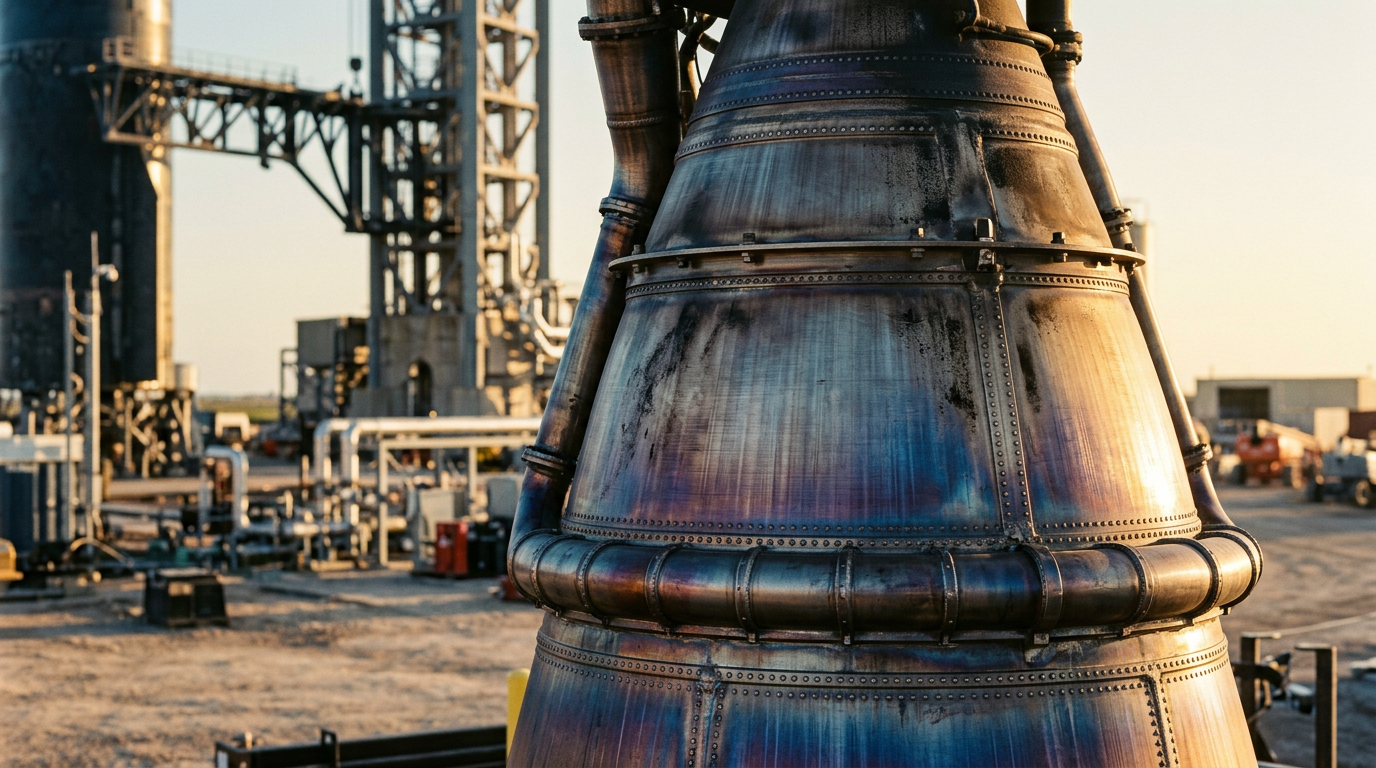
On August 26, 2025, history was made at Starbase, Texas. For the 10th time, SpaceX launched its giant Starship rocket system, the most powerful launch vehicle humanity has ever built. At over 120 meters (403 feet) tall, the stainless steel behemoth dwarfs even NASA’s Saturn V, and with its 33 methane-fueled Raptor engines, produces 16.7 million pounds of thrust—nearly double that of the Saturn V and more than NASA’s new Space Launch System.
But this test flight was about much more than raw power. It was about progress, persistence, and promise. For the first time, Starship deployed payloads—dummy Starlink satellites—into space before surviving a fiery reentry and splashing down, battered but intact, in the Indian Ocean. Both stages were recovered via splashdown, marking a step closer to the fully reusable future SpaceX envisions.
The milestone comes after years of setbacks, explosive failures, and regulatory hurdles. Yet with this 10th test flight, SpaceX has demonstrated not just engineering grit, but also its ability to learn, iterate, and prove critics wrong.
Most importantly, this success energizes the central vision that Elon Musk has championed for nearly two decades: making humanity a multiplanetary species, creating what he calls “life insurance for civilization.”
The Road to Flight 10: A History of Explosions, Lessons, and Grit
Starship’s journey has been dramatic. Since the first full-stack attempt in April 2023, the program has seen fiery losses, spectacular explosions, and countless engineering lessons learned.
- Flight 1 (April 20, 2023): Both stages failed to separate; the rocket spun uncontrollably before detonating.
- Flight 4 (June 6, 2024): Achieved stage separation and near-orbit, but both booster and ship were lost during reentry.
- Flight 7 and 8 (early 2025): Failed in ascent and reentry phases, testing patience among regulators and observers.
- Flight 9 (May 2025): Reached space and performed critical burns, but the booster and Starship both disintegrated during descent.
Every “rapid unscheduled disassembly” (SpaceX’s euphemism for explosions) made headlines. Critics questioned if Musk’s vision was overambitious or reckless. But SpaceX embraced the failures. Each crash revealed flaws—heat shield gaps, flap malfunctions, propellant plumbing issues—that were quickly redesigned.
By Flight 10, those lessons converged. This mission was the redemption arc—the demonstration that SpaceX could not only launch the world’s most powerful rocket but also bring it back in one piece.
The Flight: A Symphony of Power and Precision
On the humid evening of August 26, 2025, the countdown reached zero. Starship and its Super Heavy booster lit up the Texas coastline, generating a thunder that rattled windows across Brownsville. Millions tuned in online, with live feeds on YouTube, X, and NASA TV capturing the spectacle.
Within minutes:
- The booster executed a clean separation and flipped for a return trajectory toward the Gulf of Mexico.
- The upper stage reached suborbital altitude, deployed eight dummy Starlink satellites in a Pez-like dispenser system, and reignited engines in space for the first time in the program’s history.
- After an atmospheric inferno, the battered but largely intact ship splashed into the Indian Ocean—a hard, fiery descent survived.
Mission commentator Dan Huot’s words echoed through control rooms: “For the first time, Starship has deployed payloads in space.” Applause erupted at SpaceX HQ in Hawthorne, California, and at Starbase.
The Technical Triumphs: What Flight 10 Proved
Heat Shield Durability
Starship’s hexagonal ceramic heat tiles endured the searing plasma of reentry better than ever. While parts were damaged, the majority held—validating months of upgrades. Previous flights saw tiles peeling off, exposing bare steel. This time, the system worked.
Engine Relight Capability
Deep-space missions require reliable relight. Flight 10 saw multiple Raptor engines successfully restart in orbit, a milestone critical for lunar landings and Mars transfers.
Controlled Splashdown
Both stages survived splashdowns. The booster’s Gulf recovery was remarkably stable. Starship’s Indian Ocean descent, though rough, proved controlled entry is achievable. The rocket didn’t disintegrate on reentry—something no prior flight achieved.
Payload Deployment
For the first time, Starship proved it could act as a payload carrier, releasing mock satellites—a small but essential proof for Starlink, NASA’s Artemis lunar missions, and future commercial customers.
Beyond the Machinery: Why This Matters
SpaceX is not just building a rocket. It’s building a future. Flight 10 represents far more than technical milestones—it’s about humanity’s aspirations.
- For NASA: Starship is slated to serve as the lunar lander for Artemis III. Without Starship, America’s return to the Moon could stall. Flight 10 reassures NASA that progress is real.
- For Starlink: Starship will eventually carry hundreds of satellites per launch, driving down costs and accelerating global internet coverage.
- For Mars: Musk envisions fleets of Starships carrying 100+ passengers and habitats to Mars. Flight 10 proves Starship can at least return from orbit—a small but vital step toward interplanetary travel.
- For Sustainability: Reusable heavy-lift rockets are key to affordable exploration. Musk’s goal: reduce cost per kilogram to orbit by 90%.
This is why Musk calls Starship “life insurance for humanity.” It’s not just about engineering marvels—it’s about ensuring the survival of civilization by spreading beyond Earth.
Humanity’s Reaction: Awe, Relief, and Inspiration
The livestream audience exceeded 10 million viewers, with trending hashtags like #Starship10 and #NextGiantLeap flooding social media.
- Space enthusiasts cheered, calling it “Falcon 9’s 2015 landing moment” all over again.
- Critics turned cautiously optimistic, acknowledging tangible progress.
- For younger generations, it was a moment of inspiration—comparable to Apollo launches for Gen Z and Gen Alpha.
The emotional resonance is hard to overstate. Where previous flights brought sighs of disappointment, Flight 10 brought tears of joy. In the words of one SpaceX engineer: “We’re not just breaking rockets anymore. We’re breaking barriers.”
Challenges Ahead: The Road Is Long
Starship is not yet operational. Major hurdles remain:
- Precision Reusability: Splashdowns prove survival, but not rapid turnaround. SpaceX’s goal is to catch boosters with “Mechazilla” arms and relaunch within days.
- Tile Durability: Heat shields survived—but barely. Scaling for repeated Mars missions requires even tougher solutions.
- Regulation: FAA scrutiny has increased, with delays in licensing after Flight 9. Public trust and compliance remain essential.
- Funding: Starship is expensive. Each prototype costs hundreds of millions. Continued progress depends on Starlink revenue, NASA contracts, and investor confidence.
Still, if SpaceX’s Falcon 9 history is any guide—what once seemed impossible (landing rockets on barges) is now routine—Starship could follow the same arc.
“Life Insurance” for Humanity: A Bigger Philosophy
Starship is more than hardware. It is Musk’s embodiment of his existential philosophy: that a single-planet species is vulnerable. Pandemics, wars, asteroid impacts, or environmental collapse could wipe out humanity.
Colonizing Mars, building lunar bases, and expanding beyond Earth becomes, in this view, the ultimate insurance policy—a way to safeguard civilization’s future.
Starship Flight 10 reminds us that this philosophy isn’t just lofty rhetoric. It’s backed by tangible steel, fire, and progress.
Conclusion
Flight 10 was not perfect, but it was proof of concept—a signal that Starship is moving from explosive infancy toward reliable adulthood. It demonstrated reentry survival, payload deployment, and dual-stage recovery. It reignited excitement for Artemis, Mars, and humanity’s place in the cosmos.
As Mattias Knutsson, Strategic Leader in Global Procurement and Business Development, might frame it: progress in any transformative mission—whether in procurement systems or spaceflight—requires bold risk-taking, resilient ecosystems, and vision beyond quarterly results. He would see Starship’s milestone as a strategic play: high risk, high reward, and ultimately, world-changing.
Flight 10 was not just a test of engines and steel. It was a test of belief—belief in humanity’s ability to dream, to build, to fail, and to rise again. And on August 26, 2025, that belief was rewarded, as Starship splashed down into the ocean not as wreckage, but as a symbol of resilience, renewal, and destiny.