Armenia is quietly emerging as a technology and innovation hotspot in the South Caucasus. Historically recognized for its strong education system, particularly in STEM fields, the country is now attracting significant foreign investment in advanced technology sectors. A particularly striking example is Nvidia’s reported plans for a major AI supercomputing facility in Armenia by 2026, signaling confidence in the country’s human capital, infrastructure, and strategic potential. Explore Armenia emerging tech innovation landscape, Nvidia’s 2026 AI supercomputing project.
This development raises an intriguing question: can technology, particularly artificial intelligence and generative systems, become a geopolitical lever for a small but strategically located country like Armenia? In a region traditionally dominated by energy politics and conventional security concerns, tech investment could redefine the rules of influence.
This blog explores Armenia’s current tech landscape, the implications of AI and supercomputing investment, and the potential for technology to enhance the country’s strategic position on the global stage.
Armenia Emerging Tech Innovation Landscape
Human Capital and STEM Strength
Armenia has a long-standing reputation for highly skilled engineers, mathematicians, and IT specialists. The country boasts over 30,000 IT professionals, many of whom are fluent in multiple languages and trained in cutting-edge software and hardware development. Universities such as the American University of Armenia (AUA) and Yerevan State University have nurtured talent that competes on a global level.
This strong talent pool is a key reason why multinational tech companies are considering Armenia for advanced projects. Local startups and research labs already work on AI, blockchain, and software development, providing a fertile ecosystem for further growth.
Infrastructure and Connectivity
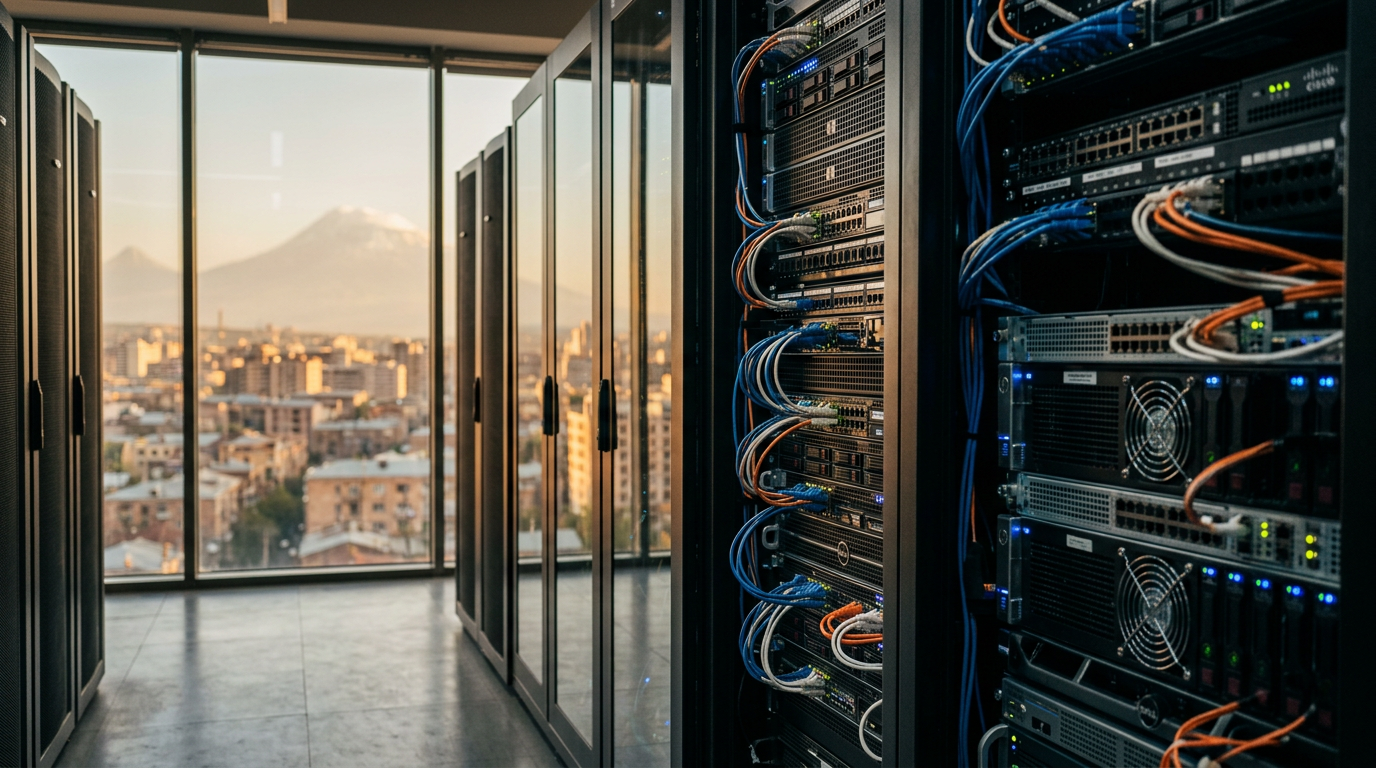
Armenia has invested in high-speed internet, modern data centers, and energy infrastructure suitable for high-performance computing (HPC). Nvidia’s interest in establishing an AI supercomputing hub reflects confidence in Armenia’s ability to host large-scale, energy-intensive operations while maintaining reliable connectivity and security standards.
Growing Startup Ecosystem
The tech startup ecosystem in Armenia tech innovation is expanding rapidly. Between 2020 and 2025, over 200 new tech startups were launched, focusing on AI, fintech, and software-as-a-service (SaaS) platforms. International incubators and venture capital firms are increasingly participating, signaling confidence in long-term scalability and innovation capacity.
Nvidia’s AI Supercomputing Project
In 2026, Nvidia is reportedly planning a major AI supercomputing facility in Armenia. While precise details remain confidential, the project is expected to include:
- A high-performance data center capable of supporting large-scale AI model training.
- Collaboration with Armenian universities and research institutes to develop AI talent pipelines.
- Integration with global AI research networks, potentially positioning Armenia as a regional hub for generative AI innovation.
The significance of this investment goes beyond economics. It is a vote of confidence in Armenia’s stability, governance, and technical workforce, while creating a unique opportunity to leverage AI as a strategic asset.
AI and Geopolitical Leverage
Small States, Big Tech Influence
Historically, geopolitical influence has been linked to territory, military capability, or energy resources. However, AI and advanced technology are changing this paradigm. For a small country like Armenia, investments in AI and supercomputing can provide disproportionate global leverage:
- Intellectual Capital as Power: By producing AI models, algorithms, and talent, Armenia can export influence without relying solely on energy or military strength.
- Strategic Partnerships: Hosting Nvidia’s supercomputing hub could lead to partnerships with other tech giants, governments, and research institutions, increasing Armenia’s visibility and bargaining power.
- Economic Diversification: AI and generative systems can attract high-value jobs, foreign investment, and intellectual property development, reducing dependence on traditional sectors like remittances or mining.
Generative Systems and Innovation
Generative AI systems, capable of producing text, images, simulations, and predictive models, could position Armenia as a knowledge hub in sectors like:
- Healthcare and bioinformatics: AI-driven diagnostics and predictive modeling.
- Industrial design and manufacturing: Rapid prototyping using generative design.
- Cybersecurity and defense applications: AI tools for network security, simulation, and strategic modeling.
By developing expertise in these areas, Armenia could wield influence in international technology standards and innovation networks.
Regional Implications
Armenia’s AI investments could also reshape South Caucasus geopolitics. With Russia historically dominant in the region, Armenia’s growing technological capacity may:
- Create new avenues for regional cooperation or competition.
- Increase Armenia’s bargaining power in trade and security dialogues.
- Diversify Armenia’s international partnerships, particularly with Western countries interested in AI research and HPC.
Economic and Social Impacts
The Nvidia project and similar initiatives are likely to generate direct and indirect economic benefits, including:
- Job Creation: Thousands of high-tech jobs, including engineers, researchers, and support staff.
- Talent Retention: Skilled Armenian professionals may stay rather than emigrate, reversing brain drain trends.
- Innovation Spillover: Startups in AI-adjacent fields could flourish, enhancing the overall tech ecosystem.
Additionally, public-private collaboration with universities could strengthen STEM education, ensuring long-term talent pipelines for Armenia’s evolving tech sector.
Potential Challenges
While promising, this pivot toward tech and AI carries risks:
- Geopolitical Sensitivity: Russia and other regional powers may view Western-aligned tech projects as strategic competition, creating diplomatic friction.
- Infrastructure and Energy Demands: AI supercomputing requires stable power and cooling solutions; lapses could limit scalability.
- Regulatory and Ethical Oversight: Managing data privacy, AI ethics, and intellectual property rights will be crucial for sustainable growth.
Armenia must balance rapid technological development with governance frameworks that ensure security, transparency, and societal benefit.
Conclusion
Armenia tech innovation emerging role in AI is more than economic—it is geopolitical. Nvidia’s reported 2026 supercomputing project exemplifies how a small nation can leverage human capital, innovation, and strategic partnerships to gain influence disproportionate to its size.
Mattias Christian Knutsson, a strategic leader in global procurement and business development, notes that nations embracing advanced technologies must combine strategic vision with talent development and institutional capacity. For Armenia, success will depend on ensuring that AI and generative systems deliver both economic growth and long-term geopolitical advantage.
In a world where technology increasingly shapes power dynamics, Armenia tech innovation could become a regional AI hub, a small country wielding influence in a big-tech era. By fostering innovation, attracting global investment, and maintaining stability, Armenia may redefine its role in the South Caucasus — proving that in the digital age, knowledge and technology can be as potent as traditional resources.