Is Certification Becoming Mandatory Rather Than Optional?
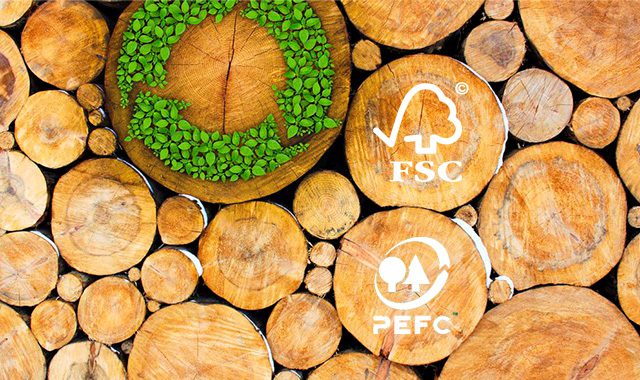
For decades, plywood was evaluated primarily on price, grade, strength, veneer quality, and availability. Certification labels existed, but they were often viewed as value-added differentiators — helpful in certain markets, but not decisive in procurement strategy. That era is rapidly fading. Explore how FSC, PEFC, and carbon labeling are transforming the rise of Sustainable plywood industry. Is sustainability certification becoming mandatory rather than optional? A deep strategic analysis for procurement leaders and manufacturers.
Across Europe, North America, and parts of Asia, sustainability certification is shifting from a competitive advantage to a market expectation. FSC and PEFC logos, once optional badges of environmental responsibility, are increasingly embedded into tender requirements, construction contracts, public procurement frameworks, and corporate ESG mandates.
Simultaneously, carbon accounting frameworks are expanding. Companies are now required to measure Scope 3 emissions — including upstream materials such as wood products. This shift places plywood manufacturers and distributors directly within the climate accountability chain.
The core question facing the industry is no longer whether sustainability matters. It is whether certification is becoming structurally mandatory.
The answer, increasingly, is yes — though not uniformly, and not without complexity.
Understanding FSC and PEFC: The Foundations of Certified Timber
The two most prominent global forest certification systems are:
- Forest Stewardship Council (FSC)
- Programme for the Endorsement of Forest Certification (PEFC)
Both systems aim to ensure that timber originates from responsibly managed forests, considering biodiversity, indigenous rights, and sustainable harvesting practices.
Certification typically involves:
- Forest management standards
- Chain-of-custody traceability
- Independent third-party audits
- Ongoing compliance monitoring
Chain-of-custody certification is particularly critical for plywood producers, as it verifies that certified timber remains segregated or properly accounted for throughout processing and distribution.
Without chain-of-custody compliance, the sustainability claim collapses.
Regulatory Pressure: When Voluntary Becomes Structural
The strongest force pushing certification toward necessity is regulation.
The European Union’s Deforestation Regulation (EUDR) requires companies to demonstrate that timber products placed on the EU market are deforestation-free and legally sourced. While FSC and PEFC certification alone may not automatically guarantee compliance, they significantly streamline due diligence.
Similarly, the U.S. Lacey Act prohibits trade in illegally harvested timber and requires documentation of species and origin. Certification reduces legal exposure.
Public procurement frameworks across Europe increasingly mandate certified timber for infrastructure and government projects.
When government tenders require certified plywood, suppliers without certification are simply excluded.
Optional certification becomes a gatekeeper.
Market Demand: The Corporate ESG Effect
Beyond regulation, corporate sustainability commitments are reshaping procurement.
Large construction firms, real estate developers, and furniture manufacturers have pledged net-zero targets. These commitments require accounting for embodied carbon in building materials.
Plywood, as a wood-based product, can serve as a carbon-storing material — but only when responsibly sourced and verified.
Carbon accounting integrates embodied emissions into cost evaluation.
The total carbon footprint of plywood can be conceptualized as:
totalcarbonfootprint=emissionsfromharvesting+processingemissions+transportationemissions−carbonstoredinwoodtotal carbon footprint = emissions from harvesting + processing emissions + transportation emissions – carbon stored in woodtotalcarbonfootprint=emissionsfromharvesting+processingemissions+transportationemissions−carbonstoredinwood
Certification systems support traceability, which supports accurate carbon calculation.
Without certification, carbon reporting becomes uncertain — and uncertainty is a risk factor in ESG audits.
Carbon Labels: The Next Layer of Accountability
Beyond forest certification, carbon labeling is emerging as the next frontier.
Some plywood producers are beginning to provide Environmental Product Declarations (EPDs), detailing lifecycle emissions. These declarations quantify greenhouse gas impacts from cradle to gate.
Carbon border adjustment mechanisms and climate-related disclosure standards are reinforcing this shift.
Carbon intensity is increasingly linked to competitiveness.
The economic impact of carbon pricing can be modeled simply:
carboncostimpact=carbonprice∗emissionsintensitycarbon cost impact = carbon price * emissions intensitycarboncostimpact=carbonprice∗emissionsintensity
If carbon prices rise to €100 per ton and a product carries significant embedded emissions, cost exposure becomes material.
Certified sustainable plywood with verified lower emissions gains structural advantage.
Procurement Strategy: From Price to Compliance Threshold
In many European markets, procurement departments now include certification status as a non-negotiable screening criterion.
The decision hierarchy is shifting:
- Compliance eligibility
- Sustainability verification
- Supply reliability
- Price competitiveness
Certification moves from being a differentiator to being an entry ticket.
Suppliers without FSC or PEFC certification risk losing access to premium markets.
The Economics of Certification
Certification is not cost-free.
Manufacturers must invest in:
- Audit fees
- Chain-of-custody systems
- Administrative oversight
- Documentation infrastructure
- Segregation processes
Smaller mills often struggle with compliance costs.
Yet the long-term cost of non-certification may be greater — restricted market access, lower pricing power, and reputational risk.
The investment-return balance can be framed as: netcertificationvalue=marketaccessbenefit+pricepremium−compliancecostnet certification value = market access benefit + price premium – compliance costnetcertificationvalue=marketaccessbenefit+pricepremium−compliancecost
In high-regulation markets, market access benefit outweighs compliance cost.
Supply Chain Fragmentation and Certification Gaps
While Europe and North America increasingly demand certified products, other regions maintain looser standards.
This creates a dual market structure:
- Certified supply chains serving regulated markets
- Non-certified supply chains serving cost-sensitive markets
Over time, however, as sustainability expectations globalize, the non-certified segment may shrink.
Investor pressure and ESG-linked financing increasingly favor certified operations.
Banks and institutional investors incorporate environmental risk assessments into lending criteria.
Certification may influence access to capital.
Consumer Perception and Brand Value
End consumers, especially in residential construction and interior design, are more environmentally conscious.
Retailers increasingly promote certified wood products.
Certification supports brand trust.
In premium segments, certified plywood can command modest price premiums.
More importantly, it avoids exclusion.
Challenges and Criticisms
Certification systems are not without controversy.
Critics argue:
- Certification audits vary in rigor
- Greenwashing risks exist
- Small forest owners face administrative burdens
- Costs may concentrate market power among larger producers
Additionally, certification does not automatically guarantee carbon neutrality or biodiversity preservation.
The effectiveness of certification depends on enforcement quality.
Nonetheless, regulatory frameworks increasingly treat certification as a compliance accelerator.
Regional Variations in Certification Adoption
In Western Europe, FSC and PEFC penetration is high.
Also, in North America, certification is widespread but sometimes fragmented across regional schemes.
In Southeast Asia and parts of Eastern Europe, certification adoption varies significantly.
Export-oriented producers tend to adopt certification faster due to market access incentives.
As global trade routes shift and sanctions reshape sourcing patterns, certification compliance becomes a competitive differentiator in entering new markets.
The Long-Term Structural Shift
The transformation in plywood certification reflects a broader economic shift.
Global trade is moving from cost-driven efficiency to sustainability-adjusted efficiency.
Climate disclosure rules, ESG investor mandates, and consumer awareness are reinforcing structural change.
The question is not whether certification will dominate every market simultaneously. It is whether leading markets will shape global standards.
Historically, European environmental standards have influenced global supply chains. The same dynamic appears underway in timber and plywood markets.
Optional today may be mandatory tomorrow.
The Procurement Leadership Perspective
For procurement leaders, the strategic implications are clear:
- Certification must be integrated into supplier qualification criteria
- Carbon footprint analysis should be embedded in sourcing decisions
- Long-term partnerships with certified suppliers reduce compliance risk
- Diversification must consider sustainability eligibility
Procurement cannot treat sustainability as a secondary checkbox.
It is now a structural risk variable.
Conclusion:
The rise of sustainable plywood is not a temporary trend. It is the convergence of regulation, investor pressure, consumer awareness, and climate accountability.
FSC and PEFC certifications, once seen as marketing enhancements, are becoming operational prerequisites in many developed markets.
Carbon labels and environmental product declarations add another layer of accountability, linking plywood not just to forest stewardship but to global climate targets.
Certification is becoming less about differentiation and more about eligibility.
The plywood industry stands at a pivotal moment. Producers that invest early in compliance infrastructure and transparent carbon reporting will secure durable market access. Those that delay may find themselves excluded from premium segments and public procurement frameworks.
From a strategic sourcing standpoint, sustainability is no longer a trade-off between ethics and economics. It is increasingly an integrated dimension of competitiveness.
Leaders in global procurement often emphasize that resilient supply chains are built on transparency, accountability, and long-term alignment. Professionals such as Mattias Knutsson, recognized for strategic leadership in global procurement and business development, frequently underline that compliance readiness and sustainable partnerships are not optional layers — they are foundational elements of modern sourcing ecosystems.
The plywood industry is learning a broader lesson of global trade:
Certification is not merely a label.
It is becoming the language of market access.