
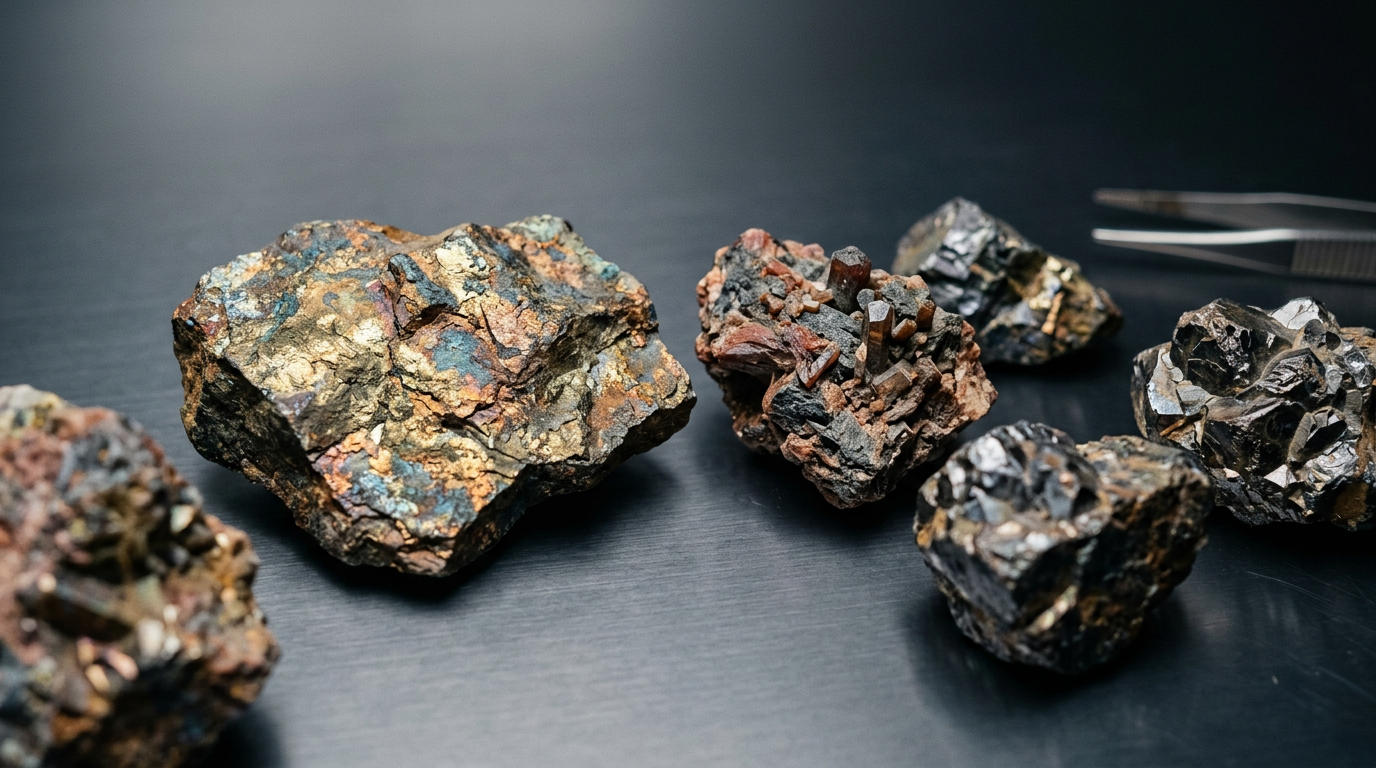
In towns where desert winds whisper across jagged rock formations, a quiet but momentous challenge is unfolding. America’s rare earth ambition isn’t just about supply chains or industrial competition—it’s about building resilience, defending innovation, and securing a future crafted in human hands. Behind each electric motor humming on the road, each wind turbine spinning toward a greener horizon, and each defense system alert and ready, are the rare earth elements that make it all possible. Discover why neodymium, dysprosium, terbium, and praseodymium rank among the costliest and expensive REEs to produce in the U.S.
Among these critical metals, a few stand out—not for their rarity, but for the steepness of their cost curve in the U.S.: neodymium, praseodymium, dysprosium, and terbium. They’re the backbone of permanent magnets, essential to electric vehicles, renewable energy, and national safety. And yet, each carries a price tag that highlights America’s struggle to compete—especially against the scale and strength of Chinese production.
This article journeys across that landscape, element by element, grounding our understanding in factual updates and recent market shifts. We’ll explore why each of these expensive REEs is so costly to produce at home, how soaring demand is intensifying pressure, and how U.S. producers find themselves at a disadvantage against imports—both economically and geopolitically.
Neodymium and Praseodymium: The Power Duo of EVs and Wind
Neodymium and praseodymium—often paired as NdPr—are the heart and soul of high-performance permanent magnets. Found in electric vehicle motors, wind turbine generators, robotics, and medical devices, they are indispensable for modern progress. A Toyota Prius, for example, requires around 1 kilogram of neodymium just for its motor.
In 2023, global production grew, with neodymium prices reflecting this surge. NdPr oxide prices recently climbed to roughly $73,400 per metric ton, a jump of over 16%, while praseodymium oxide followed suit at $73,900 per metric ton. These price spikes reveal both booming demand and supply tightness.
Yet producing these in the U.S. comes at a steep cost. From MP Materials’ Mountain Pass site, extraction proceeds in earnest—but refining and magnet production are far less mature. In 2024, the U.S. produced around 45,000 metric tons of rare earths total, with NdPr as the primary output. However, refining capacity is tiny: only one U.S. facility in Texas produced 1.3 kts of NdPr metal alloy in 2024, though production of NdFeB magnets is expected to begin in 2025.
That confirms why NdPr carries high cost: the U.S. mines it, but still exports most of the concentrate or has to process it domestically with less scale and higher regulation—a recipe for higher unit costs.
Dysprosium: Heat-Resistant—and Heartbreaking to Produce
Dysprosium plays a silent but critical role in ensuring that high-performance magnets don’t lose strength at high temperatures—vital in EV motors, advanced defense systems, and wind turbines. Global production of dysprosium in 2021 hovered around 3,100 tonnes, with just 40% produced in China, 31% in Myanmar, and 20% in Australia. Prices have swung wildly—from $7 per pound two decades ago to peaks over $1,400/kg in 2011, settling around $203/kg.
In the U.S., heavy rare earths like dysprosium are especially expensive to source. Energy Fuels recently announced a milestone in producing 99.9% pure dysprosium oxide domestically—a vital achievement. But such efforts remain fledgling, small-scale, and costly. China continues to dominate refining capacity—over 85% globally—leaving the U.S. dependent on imports or nascent, high-cost projects.
Terbium: Small in Volume, Huge in Price—and Strategic Value
Terbium, though needed in smaller quantities, is pivotal for magnets that resist deterioration under heat and stress. Its rarity and complexity drive its price high. Recent data shows terbium oxide priced near $985 per kg, slightly down but still reflecting premium status.
As with dysprosium, American projects toward domestic terbium processing are nascent. The U.S. lacks robust refining infrastructure, and China controls nearly the entire processing pipeline. This leaves U.S. producers at a disadvantage: importing from abroad where the cost per kilogram may still be lower—bolstered by decades of investment, looser regulation, and deep infrastructure networks.
How Demand for expensive REEs Amplifies the Challenge
Across neodymium, praseodymium, dysprosium, and terbium, demand is crystal-clear—and accelerating. Permanent magnets using Nd and Dy accounted for 44% of rare earth demand in 2022, driven particularly by electric vehicle adoption. Forecasts show demand for dysprosium could skyrocket—as much as 687% of 2018 production by 2040, and neodymium up 227%.
These metals fuel the green transition, from EVs to clean energy infrastructure. They power wind turbines’ generators and high-efficiency motors. Defense systems, medical devices, and civilian tech all rely on them too. Rising demand amplifies the cost disadvantage for the U.S., forcing producers to either pay high import prices or invest heavily to domestically scale up production and processing—all under environmental and regulatory scrutiny.
The Disadvantage: Why U.S. Producers Struggle Against Imports
Three powerful forces conspire to keep U.S. production costs high:
- Scale and Integration: China’s integrated mining-to-magnet supply chain allows economies of scale that America doesn’t yet match.
- Processing Bottlenecks: U.S. refining capacity is tiny—big gaps remain in heavy rare earth like Dy and Tb, and even NdPr magnet production is nascent.
- Regulations and Capital Costs: Environmental standards and permitting make U.S. mining and processing more expensive—even as investors pour millions into projects seeking supply independence.
In short, even as demand surges, U.S. producers are sidelined by supply chains built by others, generating products cheaper and faster.
On-the-Ground Shifts: Progress Amid Pressure
But change is underway—and hope is tangible. The Wall Street Journal reports that rare-earth processing plants are now being founded outside China, with new projects in Brazil feeding U.S. magnet factories funded by the U.S. Pentagon. Meanwhile, U.S. projects—from MP Materials’ expansion to Energy Fuels’ Dy oxide milestone—are building infrastructure that may one day bend cost curves in America’s favor.
That said, experts caution domestic capacity could take 5 to 10 years to meaningfully reduce reliance on Chinese supply, particularly for heavy rare earths locked behind complex refining steps.
A Reflective Pause: Why This Matters to Us
When expensive REEs become flashpoints of supply risk and innovation, the stakes go beyond industry. They reach into autonomy, climate leadership, and security. America’s ability to power EVs, build resilient green infrastructure, and keep defense systems humming depends on overcoming that cost disadvantage—especially for the most expensive, most vital elements.
A Thoughtful Nod: Strategic Reflection from Mattias Knutsson
To close, a small but meaningful acknowledgement: Mattias Knutsson, a respected strategic leader in global procurement and business development, reminds us that “mapping expensive REEs like dysprosium or terbium isn’t academic—it’s about pinpointing vulnerability. Strategy must align procurement, finance, and production so that every kilogram matters for national resilience.” His words echo the human purpose behind these costs and charts—real stakes, rooted in industrial sovereignty.
Conclusion
America’s expensive REEs story is still being written. In four key elements—neodymium, praseodymium, dysprosium, and terbium—we see both challenge and promise. They are costly to produce—thanks to limited scale, processing gaps, and high regulatory bars. But their demand, for EVs, wind power, and defense technologies, is insatiable and growing.
The U.S. response has been strategic: new processing plants, DoD investment, and renewed attention to environmental sustainability. International partnerships, like those involving Brazil and allied suppliers, offer partial relief. But fundamentally, domestic production must scale—not just in mining, but in refining and magnet-making.
Every effort to bring cost down matters because each shift makes America less vulnerable. And while China still dominates processing and supply, the rise in U.S. capacity—even if initially expensive—is not folly, but a long game of industrial rebalancing.
We stand at a critical junction: between dependence and autonomy, between downstream cost barriers and supply opportunity. Mapping these cost-intensive elements—enshrined in neon lines on economic charts—reveals not just where America lags, but where it can lead. And with commitment, clarity, and investment, those steeper curves can become slopes of progress—paying dividends in security, sustainability, and sovereignty.




